UseCalcPro
Home
MathFinanceHealthConstructionAutoPetsGardenCraftsFood & BrewingToolsSportsMarineEducationTravel
Blog
  1. Home
  2. Marine

Bilge Pump Calculator

Calculate pump GPH from breach scenarios and head loss

Units

Recommended Pump Rating

1,505

GPH rated (2x safety factor)

Water Ingress

572 GPH

Min. Required

752 GPH

Discharge & Timing

Head Loss

24%

output reduction

Time to Flood

22 min

~209 gal bilge

Effective Output at Height572 GPH

Ingress Rate by Breach Size

Pinhole16 GPH
Small Fitting64 GPH
Broken Hose572 GPH
Failed Thru-Hull2,287 GPH
Large Breach9,148 GPH

Bilge Pump Sizing by Boat Length

Boat LengthMin GPHRecommendedBackup Pump
Under 20 ft5001,000500 GPH
20–30 ft1,0002,0001,000 GPH
30–45 ft2,0003,5002,000 GPH
45–60 ft3,5005,0003,500 GPH
60+ ft5,0008,000+5,000 GPH

Frequently Asked Questions

Q

How do I calculate the bilge pump size I need?

Determine the worst-case water ingress rate using Torricelli’s theorem based on breach size and depth below waterline. Then select a pump rated at least 2x that flow rate to account for head loss, hose friction, and voltage drop under load.

  • Ingress flow = Cd × Area × sqrt(2 × g × depth) in cubic feet per second
  • Cd = 0.61 for sharp-edged orifice (standard marine fitting)
  • Convert cfs to GPH: multiply by 3,600 × 7.48
  • A 3/4-inch broken hose at 2 ft depth admits about 571 GPH
  • Always apply 2x safety factor: recommend 1,142+ GPH rated pump
Breach TypeDiameterGPH at 2 ft depthPump Needed (2x)
Pinhole1/8 in1632
Small Fitting1/4 in63126
Broken Hose3/4 in5711,142
Failed Thru-Hull1.5 in2,2844,568
Q

What is head loss and how does it affect bilge pump output?

Head loss is the reduction in pump output caused by lifting water above the pump. Every foot of vertical discharge height reduces rated GPH by approximately 8–10%. A pump rated at 2,000 GPH at zero head may only deliver 1,200 GPH at 5 feet of discharge height.

  • Each foot of lift reduces output by roughly 8% of rated GPH
  • 3 ft discharge height: ~24% loss, pump delivers ~76% of rating
  • 5 ft discharge height: ~40% loss, pump delivers ~60% of rating
  • Horizontal hose runs add friction equivalent to extra lift
  • Every 10 ft of horizontal run equals approximately 1 ft of vertical head
Q

How many bilge pumps should a boat have?

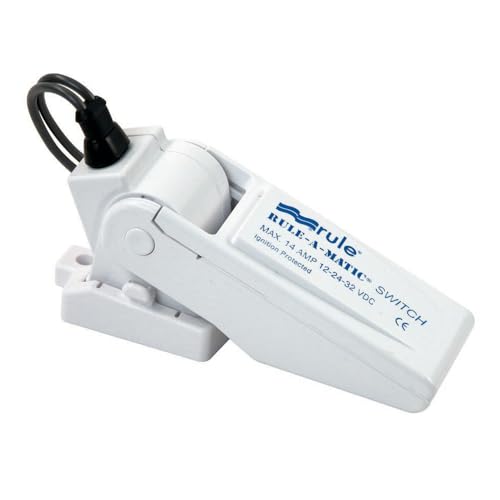
The ABYC recommends at least one primary bilge pump and one backup. The primary should handle worst-case scenarios. The backup provides redundancy and should be independently wired on its own circuit with a separate float switch.

  • Minimum 2 pumps: primary + backup on separate circuits
  • Larger boats (30+ ft) should have 3 pumps in separate bilge areas
  • Primary pump: sized for worst-case (this calculator helps)
  • Backup pump: at least 50–75% of primary pump capacity
  • Wire each pump to its own fuse and float switch
Q

What size bilge pump do I need for my boat length?

As a general guideline, boats under 20 ft need at least 1,000 GPH, 20–30 ft boats need 2,000 GPH, 30–45 ft boats need 3,500 GPH, and boats over 45 ft need 5,000+ GPH. These are minimum ratings at zero head.

  • Under 20 ft: 1,000 GPH minimum, 500 GPH backup
  • 20–30 ft: 2,000 GPH primary, 1,000 GPH backup
  • 30–45 ft: 3,500 GPH primary, 2,000 GPH backup
  • 45–60 ft: 5,000 GPH primary, 3,500 GPH backup
  • These are manufacturer ratings at 0 ft head — actual output is lower
Boat LengthMin Primary GPHBackup GPHTypical Amp Draw
Under 20 ft1,0005003–4A
20–30 ft2,0001,0006–8A
30–45 ft3,5002,00010–14A
45+ ft5,0003,50016–20A
Q

How fast will my boat flood from a thru-hull failure?

A failed 1.5-inch thru-hull fitting 2 feet below the waterline admits about 2,284 GPH. A typical 28 ft boat has roughly 209 gallons of bilge volume, meaning it could flood in about 5.5 minutes without an adequate bilge pump.

  • 1.5-inch thru-hull at 2 ft depth: ~2,284 GPH ingress
  • 28 ft boat bilge volume: roughly 209 gallons
  • Time to flood: 209 / 2,284 × 60 = 5.5 minutes
  • Deeper hulls flood faster — depth increases pressure and flow
  • Always have seacocks (ball valves) on every thru-hull fitting

Example Calculations

128 ft Boat with Broken 3/4" Hose

Inputs

Boat Length28 ft
Breach SizeBroken Hose (3/4 in)
Depth Below WL2 ft
Discharge Height3 ft
Number of Pumps1

Result

Recommended Pump1,502 GPH
Water Ingress571 GPH
Head Loss24%
Min. Required751 GPH rated
Time to Flood21.9 min

Area = 0.4418 sq in / 144 = 0.00307 sq ft. Velocity = sqrt(2 × 32.174 × 2) = 11.34 ft/s. Flow = 0.61 × 0.00307 × 11.34 × 3600 × 7.48 = 571 GPH. Head loss at 3 ft = 24%. Required rated = 571 / 0.76 = 751 GPH. Recommended = 751 × 2 = 1,502 GPH.

235 ft Boat with Failed 1.5" Thru-Hull

Inputs

Boat Length35 ft
Breach SizeFailed Thru-Hull (1.5 in)
Depth Below WL3 ft
Discharge Height4 ft
Number of Pumps2

Result

Recommended Pump2,059 GPH each
Water Ingress2,798 GPH
Head Loss32%
Min. Required2,059 GPH rated (total)
Time to Flood5.6 min

Area = 1.7671 sq in / 144 = 0.01227 sq ft. Velocity = sqrt(2 × 32.174 × 3) = 13.89 ft/s. Flow = 0.61 × 0.01227 × 13.89 × 3600 × 7.48 = 2,798 GPH. Head loss 4 ft = 32%. Required per pump = 2,798 / (0.68 × 2) = 2,058 GPH. Recommended = 2,058 × 2 = 4,117 GPH total.

Formulas Used

Water Ingress Rate

GPH = Cd × A × √(2 × g × h) × 3600 × 7.48

Calculates gallons per hour entering through a hull breach using Torricelli’s theorem.

Where:

Cd= Discharge coefficient (0.61 for sharp-edged orifice)
A= Breach area in square feet (sq inches / 144)
g= Gravitational acceleration (32.174 ft/s²)
h= Depth of breach below waterline in feet
7.48= Gallons per cubic foot conversion

Effective Pump Output

Effective GPH = Rated GPH × (1 - 0.08 × Discharge Height)

Estimates actual pump output after accounting for head loss from discharge height.

Where:

Rated GPH= Manufacturer’s GPH rating at zero head
0.08= Approximate loss factor per foot of discharge height
Discharge Height= Vertical distance from pump to discharge fitting in feet

Understanding Bilge Pump Sizing

Your bilge pump is the last line of defense against flooding. Sizing it correctly means understanding the worst-case water ingress rate your boat could experience and selecting a pump that can outpace that flow even with the output losses from lifting water to the discharge point above the waterline.

Water ingress rate depends on two factors: the size of the breach and the water pressure at that depth. Torricelli’s theorem calculates flow velocity from water head, and the orifice coefficient (0.61) accounts for flow contraction through a sharp-edged opening like a failed fitting or cracked hose barb.

The most common mistake is relying on the manufacturer’s GPH rating, which is measured at zero head (no lift). Real-world installations require pumping water 2–5 feet above the bilge to reach the discharge fitting. This reduces actual output by 16–40%, so always select a pump rated well above your calculated ingress rate.

Related Calculators

Marine Battery Calculator

Battery bank sizing

Boat Fuel Calculator

Fuel consumption & range

Hull Speed Calculator

Theoretical max speed

Anchor Chain Calculator

Rode length for anchoring

Dock Line Calculator

Calculate the right dock line diameter and length for your boat's displacement. Size bow, stern, breast, and spring lines with working load safety margins.

Marine Holding Tank Calculator

Calculate your boat's holding tank capacity needs from crew size and trip duration. Plan pump-out schedules and estimate days of use before reaching capacity.

Related Resources

Marine Battery Calculator

Size battery bank for bilge pump power needs

Boat Fuel Calculator

Estimate fuel consumption and cruising range

Hull Speed Calculator

Find maximum hull speed from waterline length

More Marine Calculators

Explore all marine and boating tools

View All

Last Updated: Mar 25, 2026

This calculator is provided for informational and educational purposes only. Results are estimates and should not be considered professional financial, medical, legal, or other advice. Always consult a qualified professional before making important decisions. UseCalcPro is not responsible for any actions taken based on calculator results.

UseCalcPro
FinanceHealthMath

© 2026 UseCalcPro