UseCalcPro
Home
MathFinanceHealthConstructionAutoPetsGardenCraftsFood & BrewingToolsSportsMarineEducationTravel
Blog
  1. Home
  2. Sports

Ski Speed Calculator

Estimate your downhill speed from slope and snow conditions

Estimated Speed

140.4 mph

Slope Angle

11.5°

Efficiency

81.8%

Height difference from top to bottom of run

Total distance along the slope surface

Estimated Speed

140.4 mph

Slope Angle

11.5°

Gradient

20.4%

Max Theoretical

171.6 mph

Efficiency

81.8%

Friction Loss

58.8m equiv.

Est. Time

36.8s

What You'll Need

Swix Universal Ski Wax Kit with Iron & Brushes

$45-$654.5
View on Amazon
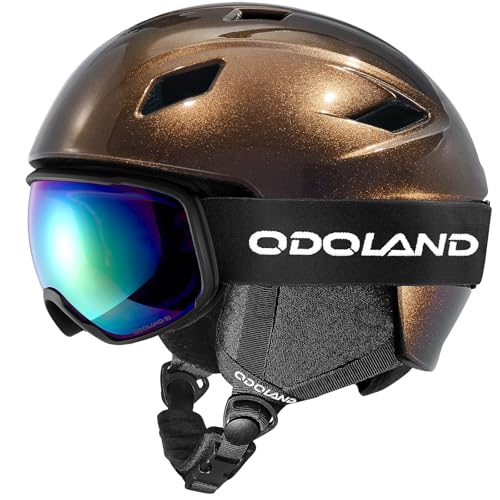
Smith Vantage MIPS Ski Helmet Medium

Smith Vantage MIPS Ski Helmet Medium

$180-$2504.7
View on Amazon

Outdoor Master OTG Ski Goggles Anti-Fog UV400

$25-$404.5
View on Amazon

Swix Universal Ski Wax Kit with Iron & Brushes

$45-$654.5
View on Amazon
Smith Vantage MIPS Ski Helmet Medium

Smith Vantage MIPS Ski Helmet Medium

$180-$2504.7
View on Amazon

Outdoor Master OTG Ski Goggles Anti-Fog UV400

$25-$404.5
View on Amazon

As an Amazon Associate, we earn from qualifying purchases.

Frequently Asked Questions

Q

How fast do downhill skiers go on average?

Recreational skiers typically reach 20-40 mph on groomed runs. Expert skiers on steep terrain can hit 50-70 mph. World Cup downhill racers exceed 90 mph, with the speed record at 157 mph set by Ivan Origone in 2016.

  • Beginner green runs: 10-20 mph on gentle slopes
  • Intermediate blue runs: 20-35 mph on moderate grades
  • Expert black runs: 35-55 mph on steep groomed terrain
  • Racing downhill: 70-95 mph on competition courses
  • Speed skiing record: 157.98 mph (254.958 km/h)
Skill LevelTypical SpeedSlope AngleSnow Condition
Beginner10-20 mph10-15°Groomed
Intermediate20-35 mph15-25°Packed
Expert35-55 mph25-35°Varied
Racer70-95 mph30-45°Icy/Hardpack
Q

How does slope angle affect skiing speed?

Speed increases with slope steepness because more gravitational potential energy converts to kinetic energy. A 15° slope yields roughly 30 mph, while a 30° slope can produce 50+ mph under the same conditions. Doubling the vertical drop increases theoretical max speed by about 41%.

  • 10° slope (17% grade): gentle, beginner terrain
  • 20° slope (36% grade): moderate blue/black run
  • 30° slope (58% grade): steep expert terrain
  • 40° slope (84% grade): extreme steep skiing
  • Speed scales with square root of vertical drop
Slope AngleGrade %Run ClassificationSpeed Factor
10°17%Green / Easy1.0x
20°36%Blue / Intermediate1.4x
30°58%Black / Expert1.7x
40°84%Double Black2.0x
Q

How does snow type affect skiing speed?

Snow friction coefficient ranges from 0.02 on ice to 0.10+ in powder. Icy hardpack is the fastest surface, while deep powder creates significant resistance. Temperature also matters: near-freezing snow is slower than cold dry snow due to higher water content on the ski base.

  • Ice/hardpack: friction coefficient ~0.02, fastest surface
  • Packed snow: friction ~0.04, typical groomed run
  • Soft groomed: friction ~0.06, freshly groomed corduroy
  • Powder: friction ~0.10+, highest resistance from plowing
  • Cold dry snow (-15°C) is faster than wet snow (0°C)
Snow TypeFriction (μ)Speed ImpactFeel
Icy hardpack0.02FastestHard, chattery edges
Packed snow0.04-10% from iceSmooth, predictable
Groomed soft0.06-20% from iceCushioned, forgiving
Powder0.10+-40% from iceFloating, high drag
Q

What is the physics formula for ski speed?

Ski speed derives from energy conservation: potential energy (mgh) converts to kinetic energy (0.5mv²) minus friction and drag losses. The simplified formula is v = sqrt(2g(h - μ*cosθ*L)), where h is vertical drop, μ is friction coefficient, θ is slope angle, and L is run length.

  • Potential energy: PE = m * g * h (mass * gravity * height)
  • Kinetic energy: KE = 0.5 * m * v²
  • Friction loss: μ * m * g * cos(θ) * L
  • Air drag: 0.5 * ρ * Cd * A * v² (increases with speed squared)
  • Mass cancels out for friction but not for air drag
Q

Does skier weight affect downhill speed?

In a frictionless vacuum, weight does not affect speed. In reality, heavier skiers are slightly faster because air drag is proportional to frontal area (not mass), while gravitational force scales with mass. A 200 lb skier reaches ~5% higher terminal velocity than a 130 lb skier with the same posture.

  • Gravity force scales linearly with mass
  • Air drag depends on frontal area and posture, not mass
  • Heavier skiers have better mass-to-drag ratio
  • Snow friction coefficient is independent of weight
  • Weight advantage is 3-7% for recreational speeds

Example Calculations

1Expert Skier on Steep Groomed Run

Inputs

Vertical Drop300 m
Run Length1,500 m
Snow ConditionPacked (μ = 0.04)
Skier ProfileExpert (Cd = 0.25)

Result

Estimated Speed55.2 mph
Slope Angle11.5°
Max Theoretical76.7 mph
Efficiency72%

Slope angle = arcsin(300/1500) = 11.5°. Friction loss = 0.04 * cos(11.5°) * 1500 = 58.8m equivalent. Effective drop = 300 - 58.8 = 241.2m. v_no_drag = sqrt(2*9.81*241.2) = 68.8 m/s. With expert drag factor (1 - 0.25*0.35) = 0.9125, final speed = 68.8 * 0.9125 * 2.237 = 55.2 mph.

2Racer in Tuck on Icy Course

Inputs

Vertical Drop800 m
Run Length3,000 m
Snow ConditionIcy (μ = 0.02)
Skier ProfileRacer (Cd = 0.15)

Result

Estimated Speed88.4 mph
Slope Angle15.5°
Max Theoretical125.3 mph
Efficiency70.6%

Slope angle = arcsin(800/3000) = 15.5°. Friction loss = 0.02 * cos(15.5°) * 3000 = 57.8m. Effective drop = 800 - 57.8 = 742.2m. v_no_drag = sqrt(2*9.81*742.2) = 120.7 m/s. Racer drag factor = 1 - 0.15*0.35 = 0.9475. Final = 120.7 * 0.9475 * 2.237 = 88.4 mph.

3Beginner on Green Run in Powder

Inputs

Vertical Drop50 m
Run Length500 m
Snow ConditionPowder (μ = 0.10)
Skier ProfileBeginner (Cd = 0.60)

Result

Estimated Speed10.3 mph
Slope Angle5.7°
Max Theoretical31.3 mph
Efficiency32.9%

Slope angle = arcsin(50/500) = 5.7°. Friction loss = 0.10 * cos(5.7°) * 500 = 49.8m. Effective drop = 50 - 49.8 = 0.25m. v_no_drag = sqrt(2*9.81*0.25) = 2.2 m/s. Beginner drag factor = 1 - 0.60*0.35 = 0.79. Final = 2.2 * 0.79 * 2.237 = 3.9 mph. Note: high friction nearly eliminates the small drop.

Formulas Used

Theoretical Max Speed (No Friction)

v_max = √(2 × g × h)

Maximum possible speed from converting all potential energy to kinetic energy, ignoring friction and drag.

Where:

v_max= Maximum theoretical speed in m/s
g= Gravitational acceleration (9.81 m/s²)
h= Vertical drop in meters

Speed with Snow Friction

v = √(2 × g × (h - μ × cosθ × L))

Speed accounting for snow friction losses along the run. Friction removes energy proportional to run length and normal force.

Where:

v= Estimated speed in m/s after friction losses
μ= Snow friction coefficient (0.02-0.10)
θ= Slope angle from horizontal
L= Total run length along the slope surface in meters

Slope Angle from Drop and Length

θ = arcsin(h / L)

Calculates the slope angle given vertical drop and run length along the surface.

Where:

θ= Slope angle in degrees
h= Vertical drop in meters
L= Run length along the slope surface in meters

Understanding Downhill Ski Speed Physics

Downhill skiing speed is determined by the interplay of gravity, friction, and aerodynamic drag. As you descend a slope, gravitational potential energy converts to kinetic energy. The steeper the slope and the greater the vertical drop, the faster you can go. However, snow friction and air resistance work against you, so actual speeds are always lower than the theoretical maximum.

Snow conditions play a critical role: icy hardpack has a friction coefficient around 0.02, while deep powder can exceed 0.10. Skier posture matters enormously for aerodynamic drag. A full racing tuck reduces the drag coefficient by 60% compared to an upright beginner stance, which is why racers crouch low on straight sections.

This calculator uses energy conservation physics with configurable friction and drag parameters. Enter your slope dimensions and conditions to estimate realistic speeds. The model accounts for vertical drop, run length, snow friction by type, and aerodynamic drag by skier profile to give you a practical speed estimate.

Related Calculators

Sprint Speed Calculator

Convert sprint times to mph and kph

Snowboard Stance Calculator

Find optimal stance width and binding angles

Elevation Gain Pace Calculator

Adjust running pace for elevation changes

Triathlon Time Calculator

Plan multi-sport race timing

Cycling Power Calculator

Calculate cycling power in watts needed for any target speed. Factor in rider weight, gradient, wind, and aerodynamic drag to plan your rides and race efforts.

Golf Club Distance Calculator

Estimate your golf shot carry distance from clubhead speed and club loft angle. Compare distances across all clubs from driver through wedges with our chart.

Related Resources

Sprint Speed Calculator

Convert sprint times to speed metrics

Elevation Gain Pace Calculator

Adjust pace for uphill and downhill terrain

Triathlon Time Calculator

Plan your triathlon splits and transitions

Tennis Serve Speed Calculator

Calculate serve speed from court measurements

More Sports Calculators

Tools for skiers and athletes

View All

Last Updated: Mar 25, 2026

This calculator is provided for informational and educational purposes only. Results are estimates and should not be considered professional financial, medical, legal, or other advice. Always consult a qualified professional before making important decisions. UseCalcPro is not responsible for any actions taken based on calculator results.

UseCalcPro
FinanceHealthMath

© 2026 UseCalcPro