1. Calculate
Choose your project scope and see the estimated price range.
Price a 2026 professional vinyl wrap by vehicle size, scope (partial / full color / PPF / chrome), vinyl brand, and finish — then line up certified installer bids.
Instant project estimate
The estimate is free. Additional details are optional.
Complete the project details and calculate to see a price range and next steps.
Clear next step
Choose your project scope and see the estimated price range.
Understand the cost drivers and what impacts your final quote.
Carry your scope into a local quote request if you choose.

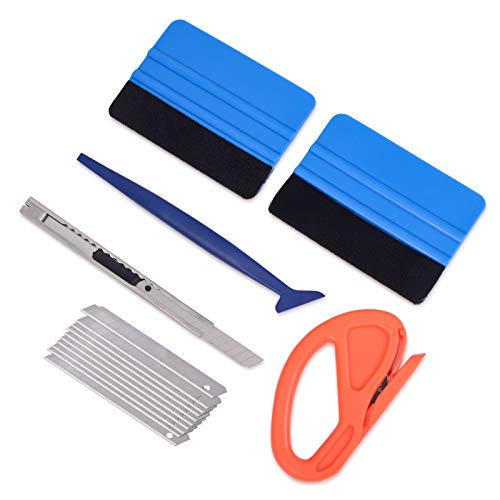

As an Amazon Associate, we earn from qualifying purchases.
Partial accent wraps run $500–$2,000. A full color change on a sedan costs $2,500–$5,000; SUVs and trucks jump to $3,500–$7,000 due to 25–40% more surface area. Full PPF clear paint-protection film starts around $5,000–$10,000 on a sedan. Chrome, color-shift, and satin-metallic flagship wraps run $7,000–$15,000 because the film alone is $15–$30 per sq ft.
| Wrap Scope | Sedan | SUV / Truck | Exotic |
|---|---|---|---|
| Partial accents | $500–$1,500 | $700–$2,000 | $1,500–$3,500 |
| Full color change (gloss) | $2,500–$5,000 | $3,500–$7,000 | $5,500–$11,000 |
| Full PPF clear | $5,000–$10,000 | $6,500–$12,500 | $9,000–$20,000 |
| Chrome / color-shift | $7,000–$12,000 | $9,000–$15,000 | $12,000–$25,000 |
3M 1080 / 2080 is the industry-standard cast film: 7–10 year durability, widest shop familiarity, and roughly neutral pricing. Avery Dennison SW900 runs 5–10% more with a wider color palette and identical durability. KPMF specializes in matte metallic and color-shift finishes (K75400, K88000) at a 10–20% premium. ORACAL 970 / 751 is the value tier — 5–7 year durability at 10–15% less than 3M, popular for DIY and budget shop installs.
| Vinyl Brand | Price Premium | Durability | Specialty |
|---|---|---|---|
| 3M 1080 / 2080 | Baseline | 7–10 years | Industry standard, widest shop support |
| Avery Dennison SW900 | +5–10% | 7–10 years | Color palette leader |
| KPMF K75400 / K88000 | +10–20% | 6–8 years | Matte metallic, color-shift |
| ORACAL 970 / 751 | -10–15% | 5–7 years | Value, DIY-friendly |
A properly installed 3M or Avery cast vinyl wrap lasts 5–7 years on a daily driver and 7–10 years on a garaged vehicle. Chrome and color-shift films degrade faster (2–4 years) because the metalized layer is UV-sensitive. Matte and satin finishes show wear at 3–5 years in Sun Belt climates. Hand-wash only, park in shade when possible, and apply a wrap-safe sealant every 3–6 months to hit the top of that range.
For lease-return drivers, exotic owners, and anyone planning to sell within 5 years, yes. PPF (XPEL Ultimate Plus, SunTek Ultra, 3M Pro Series) is a self-healing TPU that absorbs rock chips, fingernail scratches, and light keying — minor damage disappears with heat. The $5,000–$10,000 premium over a color change typically pays back at resale through preserved OEM paint and absence of chip damage. Pair it with a ceramic coating service for the highest-protection stack.
Certified installers (3M Preferred, Avery Supreme Wrap) complete brand training, pass inspection on test vehicles, and carry written labor warranties (typically 3–5 years) that non-certified shops do not offer. They also get priority access to new film releases, proper lifts for edge-tucking, and the authority to process warranty claims on film defects. The 20–30% premium buys warranty coverage and consistent edge-retention — the #1 failure point on cheap wraps.
Inputs
Result
A standard sedan color change with 3M matte film is the mass-market ticket. Matte adds 5–10% over gloss because it shows installer mistakes more and demands careful squeegee work.
Inputs
Result
Trucks consume 40–60% more film than sedans (bed, tailgate, larger sides) and require more install hours for the cab-to-bed seam. Avery SW900 is the premium Avery cast line.
Inputs
Result
Color-shift and satin-metallic films run $15–$30 per sq ft vs $4–$8 for standard gloss. Exotic geometry and mandatory show-finish edge work push labor to the top of the band.
Quote = (Vehicle base film area × Film price/sq ft) + Install labor + (Finish premium) + (Certified installer markup) ± Regional factorWrap quotes stack film material cost (driven by brand + finish), install labor (8–20 hours at $80–$200/hr), a specialty-finish premium on chrome/color-shift/metallic films, and an optional 15–30% premium for certified 3M Preferred or Avery Supreme Wrap installers. Regional metros add 25–40% over rural South / Midwest.
Where:
Vehicle base film area= Sedan 55–65 sq ft; SUV 65–75 sq ft; truck 70–85 sq ft; exotic 50–70 sq ft; add 10–15% waste factorFilm price/sq ft= Gloss / matte standard $4–$8; metallic $6–$10; chrome / color-shift $15–$30; PPF $18–$35Install labor= Partial 4–8 hrs; full color change 14–20 hrs; full PPF 20–30 hrs at $80–$200/hr shop rateFinish premium= Matte / satin +5–10%; chrome / metallic / color-shift +50–150% on filmCertified installer markup= +15–30% for 3M Preferred or Avery Supreme Wrap certification with labor warrantyProfessional vinyl wrap pricing spans a 30x range from a $500 racing-stripe accent on a compact sedan to $25,000 for a full satin-metallic color-shift wrap on an exotic at a Beverly Hills studio. Four clean scope tiers define the market: partial accent wraps ($500–$2,000), full color-change wraps ($2,500–$7,000 depending on vehicle size), full PPF clear paint-protection film ($5,000–$12,500), and chrome / color-shift / satin-metallic flagship wraps ($7,000–$15,000 with exotics reaching $25,000). 2026 pricing ran about 6–9% above 2024 due to cast-film material inflation and a shift toward certified-installer warranty coverage.
This 2026 guide walks the four scope tiers, the 3M vs Avery vs KPMF vs ORACAL brand decision that drives 10–20% of the film bill, finish economics (why chrome costs 3–4x gloss), certified-installer warranty math, and the wrap-vs-paint decision framework. Use the calculator above for a personalized estimate, then check your car value to make sure the wrap spend matches your vehicle’s economic window.
Wraps also intersect three adjacent cost decisions most buyers miss: the mandatory pre-wrap decontamination detail (any wax or silicone on the paint causes adhesion failure), the reversibility insurance at lease-return (vinyl comes off and OEM paint is preserved), and the ceramic coating top-coat that extends wrap life 1–2 years. The sections below close each of those loops.
| Wrap Scope | Sedan | SUV / Truck | Turnaround |
|---|---|---|---|
| Partial accents | $500–$1,500 | $700–$2,000 | 1–2 days |
| Full color change (gloss / matte) | $2,500–$5,000 | $3,500–$7,000 | 3–7 days |
| Full PPF clear | $5,000–$10,000 | $6,500–$12,500 | 5–10 days |
| Chrome / color-shift / satin-metallic | $7,000–$12,000 | $9,000–$15,000 | 7–12 days |
Before booking, always ask for a three-bid comparison. When the cheapest bid is 20%+ below the other two, it is almost always uncertified install, ORACAL substituted for 3M, or skipped edge-tuck operations — the #1 source of lifting failures in year two.
Tier 1 (partial wrap, $500–$2,000) covers accents only: racing stripes, hood, roof, mirror caps, pillars, or a two-tone with the lower half in body-matched vinyl. Film consumption is typically 5–20 sq ft, install time is 4–8 hours, and the bill is dominated by labor rather than material. This is the entry point for color customization without committing to a full wrap.
Tier 2 (full color change, $2,500–$7,000) is the mass-market ticket. A sedan takes 55–65 sq ft of film; an SUV 65–75 sq ft; a full-size pickup 70–85 sq ft with the bed and tailgate. Install runs 14–20 hours across 3–7 business days because the shop disassembles mirrors, handles, badges, and trim pieces to wrap underneath. Standard 3M gloss or matte film dominates this tier.
Tier 3 (full PPF clear, $5,000–$12,500) uses a self-healing TPU film (XPEL Ultimate Plus, SunTek Ultra, 3M Pro Series) instead of cast vinyl. The film is 8–10 mil thick — roughly 4x a color vinyl — and absorbs rock chips, light scratches, and fingernail keying. Installation takes 20–30 hours because the thicker film requires more heat-stretching and careful edge work. Tier 4 (chrome / color-shift / satin-metallic flagship, $7,000–$25,000) uses specialty films at $15–$30 per sq ft — the material alone can exceed $2,000 on a sedan. Install time is 50% longer because the stiffer film needs slower squeegee passes and more post-heat cure.
3M Controltac 1080 / 2080 is the industry-standard cast vinyl: 7–10 year durability, industry-widest shop familiarity, and the largest certified-installer network (3M Preferred). Pricing sits at the market baseline, which is why most shops default to 3M when a customer says "just pick a good one." 2080 replaced 1080 in 2022 with a slightly repositionable adhesive and a wider color palette — same durability.
Avery Dennison SW900 Supreme Wrapping Film runs 5–10% above 3M with a notably deeper color palette and the Avery Supreme Wrap certified-installer program (similar coverage to 3M Preferred). Durability matches 3M at 7–10 years. Pick Avery when the specific color you want (particularly in matte or satin) is not available in 3M, or when your regional shops are Avery-partnered.
KPMF (K75400 gloss, K88000 matte metallic, specialty color-shift lines) is the go-to for chromatic finishes: satin-metallic blues, color-shift flip-flops, and the specific matte metallics that 3M and Avery do not offer. Pricing runs 10–20% above 3M, durability is 6–8 years. ORACAL 970 / 751 is the value tier at 10–15% below 3M with 5–7 year durability — popular with DIY installers and budget shops. A certified pro installing ORACAL still produces an excellent result, but the warranty is typically shorter than on 3M or Avery. Compare the film spend to your vehicle’s value using the car depreciation calculator to keep the investment proportional.
| Brand | Premium vs 3M | Durability | Specialty |
|---|---|---|---|
| 3M 1080 / 2080 | Baseline | 7–10 years | Industry standard, widest shop support |
| Avery Dennison SW900 | +5–10% | 7–10 years | Deepest color palette |
| KPMF K75400 / K88000 | +10–20% | 6–8 years | Matte metallic, color-shift specialty |
| ORACAL 970 / 751 | -10–15% | 5–7 years | Value tier, DIY-friendly |
Finish drives roughly 30–70% of the material bill on the same vehicle. Gloss is the baseline ($4–$8 per sq ft for standard cast vinyl). Matte and satin add 5–10% in price and require more careful install because any squeegee stretch marks show permanently under the matte surface. Metallic flake films (solid color metallics, not color-shift) add 10–20% over gloss.
Chrome, color-shift, and satin-metallic are the premium tier. The film itself costs $15–$30 per sq ft — on a sedan that is $900–$1,800 in film material alone, versus $300–$500 for gloss. The metalized layer is stiffer and less conformable, which means 50% longer install time and a higher rate of edge-lift failures in year two. Durability drops to 2–4 years for chrome and color-shift because the metalized layer is UV-sensitive — a garaged car at the top of that range, a daily driver at the bottom.
Full PPF clear sits in its own category. The film is $18–$35 per sq ft for XPEL Ultimate Plus, SunTek Ultra, or 3M Pro Series. Install is 20–30 hours because the 8–10 mil thickness demands more heat-stretching and careful squeegee discipline. The self-healing polyurethane layer absorbs rock chips and light keying — minor damage disappears with sun exposure or a heat gun. For lease-return drivers and exotic owners, the $5,000–$10,000 PPF cost typically pays back at resale through preserved OEM paint. Pair PPF with a ceramic coating for maximum protection and easier cleaning.
The cleanest decision rule: wrap is reversible, paint is permanent, coating is invisible. A $3,500 full color change wrap comes off cleanly in 3–4 hours at the end of 5–7 years, restoring the OEM paint underneath. A $3,000–$8,000 auto paint job is permanent and locks in the diminished-value hit on a factory color change. A $1,500–$3,000 ceramic coating protects but does not change color.
For lease-return drivers, a wrap is almost always the right choice — turn the car in with factory paint and no color-change penalty. For long-term owners planning a specific color for 10+ years, paint is more cost-effective because wrap replacement every 5–7 years adds up. For owners who want maximum factory-paint preservation, the stack is PPF + ceramic coating — roughly $6,500–$12,000 total on a sedan, lasting 7–10 years with factory warranty on both layers.
The economic window matters: on a vehicle worth under $15,000 pre-wrap, a $5,000+ wrap rarely pencils out at resale. On a vehicle worth $30,000+, PPF especially pays back through preserved paint. Check your vehicle value and adjust the wrap spend proportionally — a good rule of thumb is keep the total protection stack under 15–20% of vehicle value, which also affects your auto insurance coverage limit.
A $5,000 wrap on a $10,000 car never pencils out at resale. A $5,000 wrap on a $40,000 car is perfectly reasonable and often increases perceived value at sale. Always price the wrap as a percentage of vehicle value — not as an absolute dollar number.
Unlike most trades, vinyl wrapping has two standardized certification programs that matter for both quality and warranty: 3M Preferred Installer and Avery Supreme Wrap Certified. Both require the installer to complete brand training, pass inspection on a test vehicle, and maintain annual recertification. Certified shops carry written 3–5 year labor warranties on install quality — edge lifting, bubbling, and adhesion failures are covered. Non-certified shops typically offer 30–90 days or no warranty at all.
Beyond certification, look for a physical shop with a proper wrap bay (climate-controlled 65–80°F, dust-minimized), a documented pre-wrap prep process (IPA wash, clay bar, solvent wipe), and a willingness to walk you through their previous work. Red flags that should end the conversation: no climate control (wrap applied in an open bay is the #1 cause of first-year lifting), demands for cash-only payment, deposits above 50% of total, refuses to write a scope-of-work invoice, or pressure to sign same-day without a 48-hour cooling period.
Three written bids is the minimum. When the cheapest bid is 20%+ below the other two, the shop is almost always substituting ORACAL for 3M, skipping the pre-wrap detail, skipping edge-tucks on mirrors/handles/badges, or using uncertified labor. The short-term savings become a full rewrap 18–30 months later. Before drop-off, budget a mandatory pre-wrap decontamination through the auto detailing service — any wax, silicone, or sealant on the paint will cause adhesion failure within the first 90 days.
Before your wrap appointment, run the car through a proper decontamination detail and budget for the car detailing calculator pre-wrap service — any residual wax or silicone on the paint causes adhesion failure within 90 days and voids the installer warranty.
The wrap material itself accounts for 30–45% of the total job cost, but most quotes list only the brand name without explaining the performance tier. 3M 2080 and Avery Dennison Supreme Wrapping Film are the two tier-1 cast vinyls used on premium and daily-driver wraps — they stretch properly around compound curves, carry a 7–10 year warranty, and come off cleanly with minimal residue. Tier-2 calendered films (ORACAL 751C, KPMF K88000) price 40–60% below tier-1 but have a 3–5 year outdoor life and risk shrinking away from edges by year 2, especially in hot climates. A "full wrap" quote under $2,500 for a sedan is almost always calendered film or a partial wrap sold as full.
Care routine affects both longevity and resale. Hand-wash only for the first 7 days post-install (the adhesive continues curing for up to 72 hours); avoid automated brush car washes permanently — touchless-only; pressure-wash at 1,200 PSI maximum and always perpendicular to seams; garage-park whenever possible since UV exposure is the #1 cause of premature failure. Wax and ceramic coating products formulated for vinyl (Gyeon Wrap Coat, Griot’s Wrap-Gard) extend life 18–24 months beyond bare vinyl and add 20–30% to resale price for the wrap itself as a transferable buyer benefit.
Removal is the cost most wrap shops don’t mention at the quote stage. Professional removal of a full wrap runs $500–$1,800 depending on how aged the vinyl is and whether it was tier-1 cast or budget calendered. Tier-1 cast vinyl within warranty removes cleanly in 6–10 hours; budget calendered film beyond 5 years can take 20–40 hours and require chemical adhesive remover that can affect the clear coat on older paint. Before committing to a wrap on a leased vehicle, confirm the removal cost in writing AND photograph every panel under direct sunlight — any pre-existing paint damage discovered at removal becomes your liability. Use the car detailing service cost calculator and ceramic coating service cost calculator to compare alternative paint-protection paths before spending $3,000+ on a wrap.
Price wraps, coatings, detailing, depreciation, insurance, and value — full toolkit for vehicle cost decisions.
Last Updated: Oct 15, 2026
This calculator is provided for informational and educational purposes only. Results are estimates and should not be considered professional financial, medical, legal, or other advice. Always consult a qualified professional before making important decisions. UseCalcPro is not responsible for any actions taken based on calculator results.