UseCalcPro
Home
MathFinanceHealthConstructionAutoPetsGardenCraftsFood & BrewingToolsSportsMarineEducationTravel
Blog
  1. Home
  2. Auto

Van Insulation Calculator — R-Value, Heat Loss & Dew Point

Calculate total R-value, BTU heat loss, and check for condensation risk in your van build

Total R-Value

R-9.8

Heat Loss

1,364 BTU/hr

Heater

400 W

Condensation

Safe

inches
°F
°F
%

Total R-Value

R-9.8

Heat loss: 1,364 BTU/hr (400 W)

R per inch

6.5

ΔT

38\u00B0F

Heater Needed to Offset Loss

400 W

(1,364 BTU/hr)

No Condensation Risk

Dew point: 48.7\u00B0F

Wall surface temp: 65.5\u00B0F

Frequently Asked Questions

Q

What R-value do I need for a camper van?

For comfortable four-season van living, aim for R-7 to R-13 in the walls and ceiling, and R-4 to R-8 in the floor. In mild climates (40°F+ winters), R-5 to R-8 may be sufficient. The limiting factor is usually wall cavity depth—1.5–3 inches in most vans.

  • Mild climate (40°F+): R-5 to R-8 walls, R-3 floor is adequate
  • Cold climate (0–40°F): R-8 to R-13 walls, R-5 to R-8 floor recommended
  • Extreme cold (below 0°F): R-13+ walls, vapor barrier is critical
  • Sprinter/Transit wall cavities are ~1.5–3 inches deep, limiting R-value
  • Polyiso at 1.5 inches gives R-9.75—best R per inch for van builds
ClimateWalls R-ValueFloor R-ValueTypical Material
Mild (40°F+)R-5 to R-8R-3 to R-5XPS or EPS foam
Cold (0–40°F)R-8 to R-13R-5 to R-8Polyiso or closed-cell spray
Extreme (<0°F)R-13+R-8+Closed-cell spray + polyiso
Q

What is the best insulation for a van conversion?

Polyiso rigid foam boards offer the best R-value per inch (R-6.5/in) and are the most popular choice for van builds. Closed-cell spray foam (R-6.0/in) is second-best and also acts as a vapor barrier. XPS foam (R-5.0/in) is better in extreme cold because polyiso loses R-value below 15°F.

  • Polyiso: R-6.5/in, best for mild-to-cold climates, loses R-value below 15°F
  • Closed-cell spray foam: R-6.0/in, doubles as vapor barrier, fills gaps perfectly
  • XPS (Extruded polystyrene): R-5.0/in, maintains R-value in extreme cold
  • Wool/Thinsulate (R-3.5/in): good for filling odd cavities, moisture-tolerant
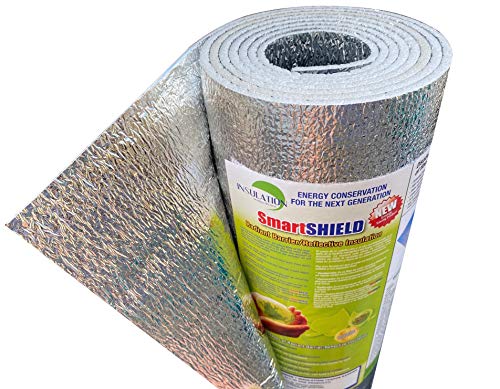
  • Reflectix alone is nearly useless (R-1/in) but works as a radiant barrier with an air gap
MaterialR/inchVapor Barrier?Best For
Polyiso6.5Foil-faced: yesWalls, ceiling (above 15°F)
Closed-Cell Spray6.0Yes (2+ inches)Irregular cavities, cold climates
XPS Foam5.0NoFloors, extreme cold areas
Wool/Thinsulate3.5NoCavity fill, sound deadening
Q

How do I prevent condensation in a van build?

Condensation occurs when warm humid air contacts a surface below the dew point temperature. In vans, this typically happens on the metal walls behind insulation. The solution is a combination of proper vapor barrier placement, adequate ventilation, and sufficient insulation thickness.

  • Install vapor barrier on the warm side (interior) of insulation
  • Use foil-faced polyiso or closed-cell spray foam as built-in vapor barriers
  • A roof vent fan (MaxxFan, Fan-tastic) is essential for removing moisture
  • Two sleeping adults produce ~1 pint of moisture per night from breathing
  • Keep interior humidity below 50% in cold weather to raise the safety margin
Q

How is R-value calculated for van insulation?

R-value equals the insulation thickness in inches multiplied by the material’s R-per-inch rating. For example, 1.5 inches of polyiso (R-6.5/in) gives R = 1.5 × 6.5 = R-9.75. Heat loss is then calculated as Q = Surface Area × ΔT / R in BTU per hour.

  • R = Thickness (inches) × R-per-inch of the material
  • 1.5 inches of polyiso: 1.5 × 6.5 = R-9.75
  • 2 inches of XPS foam: 2.0 × 5.0 = R-10.0
  • Heat loss Q = Surface Area × (T_inside – T_outside) / R-value
  • A Sprinter van (350 ft²) with R-10 and 38°F ΔT loses ~1,330 BTU/hr
Q

How much heater power do I need in an insulated van?

Heater wattage should match or exceed the calculated heat loss. A well-insulated Sprinter van (R-10) in 30°F weather loses about 1,300 BTU/hr (~380 watts). A diesel heater rated at 2,000–5,000 BTU/hr handles this easily. Poorly insulated vans may need 3,000+ BTU/hr.

  • Well-insulated (R-10): ~1,300 BTU/hr heat loss in 30°F (380W equivalent)
  • Moderately insulated (R-5): ~2,660 BTU/hr heat loss (780W equivalent)
  • Diesel heater (Webasto, Espar): 2,000–5,000 BTU/hr, ideal for van life
  • Propane heaters: 3,000–30,000 BTU/hr but add moisture to the air
  • Electric heater: 5,120 BTU/hr per 1,500W, only practical on shore power

Example Calculations

1Sprinter Van with 1.5" Polyiso

Inputs

Van TypeTransit / Sprinter (std)
MaterialPolyiso Foam
Thickness1.5 inches
Outside Temp30°F
Inside Temp68°F
Humidity50%

Result

Total R-ValueR-9.8
Heat Loss1,361 BTU/hr
Heater Needed399 W
CondensationNo risk

R = 1.5 × 6.5 = 9.75. Heat loss = 350 ft² × 38°F / 9.75 = 1,364 BTU/hr. × 0.293 = 400W. Dew point at 68°F/50% RH = 48.5°F. Wall surface = 68 - 38 × (0.68/10.43) = 65.5°F > 48.5°F, no condensation.

2Cargo Van with 1" XPS in Cold Weather

Inputs

Van TypeCargo Van
MaterialXPS Foam
Thickness1.0 inches
Outside Temp10°F
Inside Temp65°F
Humidity60%

Result

Total R-ValueR-5.0
Heat Loss3,080 BTU/hr
Heater Needed902 W
CondensationRisk!

R = 1.0 × 5.0 = 5.0. Heat loss = 280 ft² × 55°F / 5.0 = 3,080 BTU/hr. Dew point at 65°F/60% RH = 50.0°F. Wall surface = 65 - 55 × (0.68/5.68) = 58.4°F > 50.0°F. Close margin but safe in this case.

3Extended Sprinter with 2" Closed-Cell Spray Foam

Inputs

Van TypeTransit / Sprinter (ext)
MaterialClosed-Cell Spray Foam
Thickness2.0 inches
Outside Temp20°F
Inside Temp70°F
Humidity45%

Result

Total R-ValueR-12.0
Heat Loss1,750 BTU/hr
Heater Needed513 W
CondensationNo risk

R = 2.0 × 6.0 = 12.0. Heat loss = 420 ft² × 50°F / 12.0 = 1,750 BTU/hr. × 0.293 = 513W. Dew point at 70°F/45% RH = 47.5°F. Wall surface = 70 - 50 × (0.68/12.68) = 67.3°F > 47.5°F, safe.

Formulas Used

R-Value Calculation

R = Thickness × R-per-inch

Calculates the total thermal resistance of the insulation layer. Higher R-value means better insulating performance.

Where:

R= Total thermal resistance (hr·ft²·°F/BTU)
Thickness= Insulation thickness in inches
R-per-inch= Material’s R-value per inch of thickness

Heat Loss Formula

Q = SA × ΔT / R

Calculates heat loss through the insulated surface in BTU per hour. This determines the heater size needed to maintain interior temperature.

Where:

Q= Heat loss in BTU per hour
SA= Total insulated surface area in square feet
ΔT= Temperature difference between inside and outside (°F)
R= Total R-value of the insulation assembly

Dew Point (Magnus Formula)

T_dp = (237.7 × γ) / (17.27 – γ)

Calculates the dew point temperature where condensation forms. If the wall surface temperature drops below this, moisture will condense on the metal.

Where:

T_dp= Dew point temperature in °C
γ= ln(RH/100) + (17.27 × T) / (237.7 + T)
T= Air temperature in °C
RH= Relative humidity in percent

Van Insulation: R-Value, Heat Loss, and Condensation Control

Insulation is the foundation of a comfortable van build. The R-value of your insulation determines how much heat escapes through the walls, ceiling, and floor—directly affecting your heating costs, comfort, and the risk of condensation damage to the van’s metal body.

The heat loss formula Q = Surface Area × ΔT / R shows that there are only three ways to reduce heat loss: decrease surface area (smaller van), reduce the temperature difference (warmer climate), or increase the R-value (better insulation). Since van dimensions and climate are usually fixed, insulation thickness and material choice are your primary levers.

Condensation is the silent enemy of van builds. When warm interior air reaches the cold metal skin of the van, moisture condenses and causes rust. The dew point calculation tells you exactly where this will happen. If the wall surface temperature drops below the dew point, you need either more insulation or a vapor barrier to prevent moisture from reaching the cold surface.

Related Calculators

RV Refrigerator Calculator

Compare RV fridge power costs

R-Value Calculator

Calculate insulation R-values for buildings

BTU Calculator

Heating and cooling requirements

EV Savings Calculator

EV vs gas vehicle cost comparison

Van Conversion Cost Calculator \u2014 DIY vs Professional Build

Estimate your van conversion cost by component. Compare DIY materials versus professional build pricing for insulation, electrical, plumbing, and more.

RV Awning Size Calculator \u2014 Dimensions & Wind Load

Calculate the right RV awning size based on wall length, slide-outs, and projection depth. See wind load force, coverage area, and retraction warnings.

Related Resources

Insulation R-Value Guide: How Much Insulation Do I Need?

Read our guide

How to Build a Deck: Complete Materials & Cost Calculator Guide

Read our guide

RV Refrigerator Calculator

Compare RV fridge power costs across propane, 12V, and 120V

R-Value Calculator

Calculate insulation R-values for home construction

BTU Calculator

Calculate heating and cooling BTU requirements

EV Savings Calculator

Compare EV vs gas vehicle costs

More Auto Calculators

Explore all our free auto and vehicle calculators

View All Auto Calculators

Last Updated: Mar 25, 2026

This calculator is provided for informational and educational purposes only. Results are estimates and should not be considered professional financial, medical, legal, or other advice. Always consult a qualified professional before making important decisions. UseCalcPro is not responsible for any actions taken based on calculator results.

UseCalcPro
FinanceHealthMath

© 2026 UseCalcPro