Insulation R-Value by Climate Zone: Zone 1-7 Chart & Material Compare
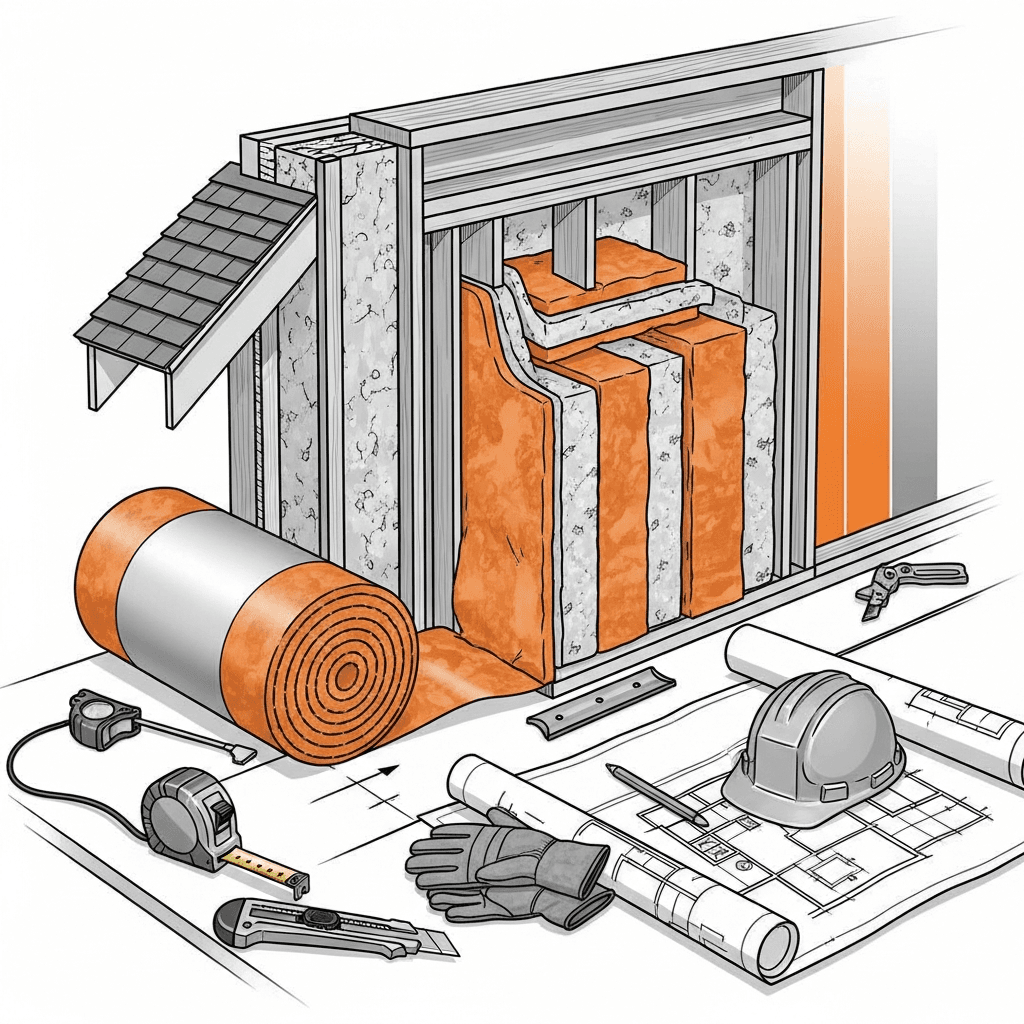
R-value measures insulation's resistance to heat flow -- the higher the number, the better the insulation. Most homes need R-38 to R-60 in the attic and R-13 to R-21 in walls, depending on your climate zone. The U.S. Department of Energy divides the country into seven climate zones, each with specific R-value recommendations that determine how much insulation your walls, attic, and floors require.
When I upgraded the attic insulation in my Portland home from R-19 to R-49 two winters ago, the project cost $1,800 in materials and a long weekend of work. My gas bill dropped by $340 the following year -- a payback period under six years, and the house stayed noticeably warmer during our typical 35-degree January nights. That project convinced me that upgrading insulation delivers the best return per dollar of any energy improvement a homeowner can make.
Use our Insulation Calculator to determine exactly how much insulation you need for your project, including material quantities and cost estimates.
What Is R-Value and Why It Matters
R-value stands for "resistance value" and measures how effectively a material resists the transfer of heat. The concept is straightforward: higher R-values mean better insulating performance.
Heat naturally flows from warm areas to cold areas. In winter, heat moves from your heated interior toward the cold outdoors. In summer, the process reverses, with exterior heat pushing inward. Insulation slows this transfer, keeping your home comfortable year-round and reducing the energy your HVAC system needs to maintain a set temperature.
How R-Value Is Calculated
R-value is measured per inch of material thickness. When you stack or layer insulation materials, their R-values add together:
- A 2x4 wall cavity (3.5 inches deep) filled with R-3.7/inch fiberglass = R-13 total
- A 2x6 wall cavity (5.5 inches deep) filled with R-3.7/inch fiberglass = R-20 total
- 16 inches of blown cellulose in an attic at R-3.2/inch = R-49 total (approximately)
Important
R-value is additive, but only when materials are installed without compression. Compressing a fiberglass batt into a smaller cavity reduces its R-value because you eliminate the air pockets that provide insulating performance.
Factors That Affect Real-World R-Value
The R-value printed on the packaging assumes ideal installation conditions. Several factors reduce actual performance:
- Compression -- Stuffing R-19 batts into a 3.5-inch cavity does not give you R-19
- Gaps and voids -- Even small gaps around wiring and pipes create thermal bridges
- Moisture -- Wet insulation loses most of its insulating ability
- Air movement -- Wind washing through uncovered insulation reduces effectiveness
- Thermal bridging -- Wood studs (about R-1.25 per inch) conduct heat faster than the insulation between them
According to the U.S. Department of Energy, proper installation matters as much as R-value selection. A wall insulated to R-13 with perfect installation outperforms one insulated to R-19 with gaps and compression.
R-Value Requirements by Climate Zone
The Department of Energy and the International Energy Conservation Code (IECC) establish minimum R-value requirements based on seven climate zones. Your zone determines how much insulation building codes require and how much you should install for optimal energy savings.
| Climate Zone | Representative Cities | Attic R-Value | Wall R-Value | Floor R-Value | Crawl Space R-Value |
|---|---|---|---|---|---|
| 1 | Miami, Honolulu, Key West | R-30 | R-13 | R-13 | R-13 |
| 2 | Houston, Phoenix, New Orleans | R-38 | R-13 | R-13 | R-13 |
| 3 | Atlanta, Dallas, Las Vegas | R-38 | R-13 | R-19 | R-19 |
| 4 | Portland, St. Louis, New York | R-49 | R-13 to R-21 | R-19 to R-25 | R-19 |
| 5 | Chicago, Denver, Pittsburgh | R-49 | R-13 to R-21 | R-25 to R-30 | R-25 |
| 6 | Minneapolis, Milwaukee, Burlington | R-49 to R-60 | R-21 | R-25 to R-30 | R-25 |
| 7 | Fairbanks, Duluth, International Falls | R-49 to R-60 | R-21 | R-25 to R-30 | R-25 |
Source: U.S. Department of Energy and IECC 2021
Tip
These are minimum code requirements. Many energy-efficiency experts recommend exceeding minimums by one R-value tier, especially in the attic, where the cost per R-value gained is lowest.
How to Find Your Climate Zone
The Department of Energy provides a climate zone map on its website. You can also determine your zone by ZIP code. As a general rule:
- Zones 1-2: Southern coastal regions and desert Southwest
- Zone 3: The deep South and warmer Southwest
- Zone 4: Mid-Atlantic, Pacific Northwest, and middle South
- Zone 5: Upper Midwest, Mountain West, and northern Mid-Atlantic
- Zones 6-7: Northern border states, Alaska, and extreme cold climates
Insulation Types Comparison: Fiberglass vs Mineral Wool vs Spray Foam vs Cellulose
Choosing the right insulation type depends on your project scope, budget, and specific application. Here is a detailed comparison of the six most common residential insulation materials.
| Insulation Type | R-Value per Inch | Cost per Sq Ft (installed) | Pros | Cons | Best For |
|---|---|---|---|---|---|
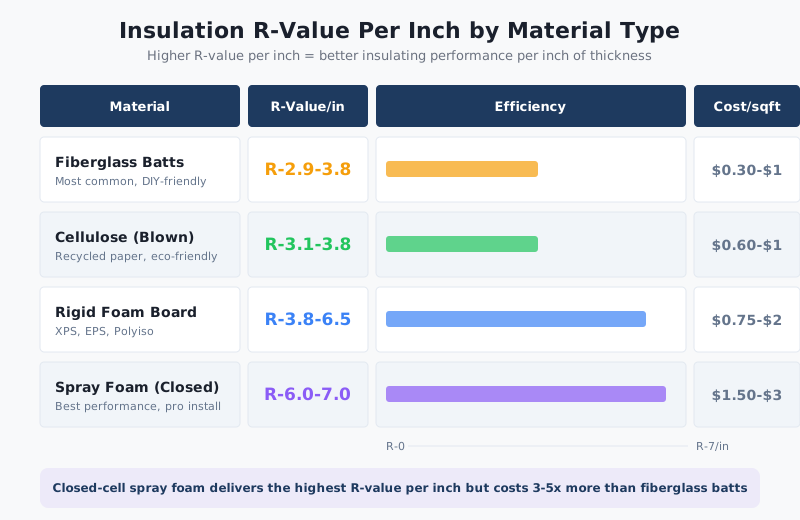
| Fiberglass batts | R-3.1 to R-3.7 | $0.60 - $1.20 | Affordable, widely available, DIY-friendly | Gaps around obstacles, loses performance if compressed | Standard wall cavities, attics |
| Blown fiberglass | R-2.2 to R-2.9 | $0.80 - $1.50 | Fills irregular spaces, good for retrofits | Settles over time, requires blowing equipment | Attic floors, enclosed cavities |
| Mineral wool (Rockwool) | R-3.3 to R-4.2 | $1.00 - $1.80 | Fire-resistant, moisture-resistant, soundproofing | Heavier, more expensive than fiberglass | Fire-rated walls, soundproofing, exterior |
| Cellulose (blown) | R-3.2 to R-3.8 | $0.70 - $1.30 | Eco-friendly (recycled paper), good air sealing | Can absorb moisture, settles 15-20% over time | Attic floors, dense-packed walls |
| Open-cell spray foam | R-3.5 to R-3.7 | $1.00 - $1.75 | Air seals while insulating, fills gaps perfectly | Absorbs moisture, requires professional install | Interior walls, cathedral ceilings |
| Closed-cell spray foam | R-6.0 to R-7.0 | $1.50 - $3.50 | Highest R-value per inch, moisture barrier, structural strength | Expensive, requires professional install, off-gasses during curing | Basement walls, rim joists, thin cavities |
Fiberglass Batts and Rolls
Fiberglass remains the most popular insulation material in the United States, used in roughly 90% of new residential construction. It is sold in pre-cut batts sized for standard stud spacing (16 or 24 inches on center) and in continuous rolls for attic applications.
Standard batt sizes:
- R-11: 3.5 inches thick (fits 2x4 walls)
- R-13: 3.5 inches thick (fits 2x4 walls, higher density)
- R-15: 3.5 inches thick (fits 2x4 walls, high density)
- R-19: 6.25 inches thick (fits 2x6 walls)
- R-21: 5.5 inches thick (fits 2x6 walls, high density)
- R-30: 9.5 inches thick (fits 2x10 joists)
- R-38: 12 inches thick (attic application)
Spray Foam: Open-Cell vs Closed-Cell
Spray foam insulation provides both insulating value and air sealing in a single application. The choice between open-cell and closed-cell depends on application and budget.
Open-cell spray foam expands to roughly 100 times its liquid volume, filling every gap and crack. At R-3.6 per inch, it provides moderate insulating value with excellent air sealing. It is permeable to moisture, so it should not be used below grade or in flood-prone areas.
Closed-cell spray foam is denser, with tiny sealed cells that resist moisture. At R-6.5 per inch, it delivers the highest R-value per inch of any common insulation. A 2-inch application also acts as a Class II vapor retarder. Its rigidity adds structural strength to walls and roofs.
Warning
Spray foam installation requires professional equipment and training. The chemicals involved (isocyanates) are hazardous before curing. Always hire a certified installer and ensure the home is ventilated for at least 24 hours after application.
Cellulose: The Green Alternative
Cellulose insulation is made from approximately 80% recycled newsprint treated with borate fire retardants. It can be blown into attic floors or dense-packed into wall cavities through small holes drilled in the exterior sheathing or interior drywall.
Dense-packed cellulose at 3.5 pounds per cubic foot achieves R-3.5 per inch and provides significant air sealing -- comparable to spray foam at a fraction of the cost. According to research from Oak Ridge National Laboratory, cellulose-insulated walls show 26-38% less air infiltration than fiberglass-insulated walls of the same R-value.
Calculating Insulation for Walls, Attics, and Floors
Accurate material estimation prevents waste and costly return trips to the supply house. The basic calculation depends on the application area and the insulation type you select.
Attic Insulation
Attic insulation is the most cost-effective upgrade because heat rises, making the ceiling your home's primary thermal boundary. To calculate:
- Measure the attic floor area -- length times width of the conditioned space below
- Check existing insulation depth and calculate current R-value
- Determine the target R-value based on your climate zone
- Calculate the additional R-value needed -- target minus existing
- Divide by R-value per inch of your chosen material to get the required depth
Example: A 1,500 sq ft attic in Zone 5 with existing R-19 insulation needs to reach R-49. That is an additional R-30 needed. Using blown cellulose at R-3.5 per inch, you need approximately 8.6 inches of additional insulation. At roughly $0.80 per square foot installed, the project costs about $1,200.
Use our Insulation Calculator to run these numbers for your specific situation.
Wall Insulation
Wall insulation calculations depend on the framing method:
- 2x4 framing (3.5-inch cavity): Maximum R-15 with high-density fiberglass batts
- 2x6 framing (5.5-inch cavity): Maximum R-21 with high-density fiberglass batts
- 2x4 + 1 inch rigid foam exterior: R-15 + R-5 = R-20 total
To calculate material quantity for walls, measure the total wall area and subtract window and door openings. Standard batt packages cover specific square footage, which is printed on the packaging.
Floor Insulation
For floors over unconditioned spaces (crawl spaces, garages), insulation is installed between the floor joists:
- 2x8 joists (7.25 inches): R-25 with standard-density batts
- 2x10 joists (9.25 inches): R-30 with standard-density batts
- 2x12 joists (11.25 inches): R-38 with standard-density batts
Floor insulation must be supported mechanically (stapled, wired, or held with support rods) since gravity works against you.
Drywall and Insulation: The Complete Wall Assembly
A finished wall is a layered assembly, and each layer contributes to the total R-value. Understanding the complete stack helps you make informed decisions about where to invest in insulation performance.
Typical 2x4 Wall Assembly (inside to outside)
| Layer | Thickness | R-Value |
|---|---|---|
| Interior drywall (1/2 inch) | 0.5 in | R-0.45 |
| Fiberglass batt (R-13) | 3.5 in | R-13.0 |
| OSB sheathing (7/16 inch) | 0.44 in | R-0.62 |
| House wrap | negligible | R-0.0 |
| Vinyl siding | varies | R-0.61 |
| Total | R-14.68 |
Typical 2x6 Wall Assembly (inside to outside)
| Layer | Thickness | R-Value |
|---|---|---|
| Interior drywall (1/2 inch) | 0.5 in | R-0.45 |
| Fiberglass batt (R-21) | 5.5 in | R-21.0 |
| OSB sheathing (7/16 inch) | 0.44 in | R-0.62 |
| House wrap | negligible | R-0.0 |
| Vinyl siding | varies | R-0.61 |
| Total | R-22.68 |
The drywall, sheathing, and siding contribute roughly R-1.7 to the total assembly. While that seems minor, it is "free" R-value that should be factored into your calculations. When planning your wall insulation, our Drywall Calculator can help you estimate drywall material needs for the project.
Tip
For new construction, consider adding a continuous layer of rigid foam board (R-5 to R-10) on the exterior of the sheathing. This eliminates thermal bridging through the studs, which can reduce the effective wall R-value by 15-25%.
Siding and Exterior Insulation Considerations
Your exterior cladding and any continuous insulation layer play a significant role in total wall performance. If you are replacing siding, it is an excellent time to add exterior insulation.
Insulated Siding Options
- Vinyl siding with foam backing: Adds R-2 to R-5 depending on thickness
- Insulated vinyl siding (contoured foam): R-2.7 to R-5.0
- Fiber cement with rigid foam underlayment: R-3 to R-10 (depending on foam thickness)
- Rigid foam board under any siding: R-3.8 to R-6.5 per inch (XPS or polyiso)
When planning a siding replacement, our Siding Calculator helps estimate material quantities and costs, and you can factor in the additional insulation value of the new assembly.
Continuous Exterior Insulation
Adding rigid foam board to the exterior of the sheathing, beneath the siding, is one of the most effective ways to boost wall R-value. This approach:
- Eliminates thermal bridging through studs
- Provides a secondary weather barrier
- Reduces condensation risk inside the wall cavity
- Can be added during a siding replacement project
Common exterior foam options include expanded polystyrene (EPS) at R-3.8 per inch, extruded polystyrene (XPS) at R-5.0 per inch, and polyisocyanurate (polyiso) at R-6.5 per inch. According to Energy Star, continuous exterior insulation is one of the most impactful upgrades for existing homes.
Electrical Considerations: Wire Gauge and Insulation Clearances
Insulation must be installed with proper clearances around electrical components. The National Electrical Code (NEC) specifies requirements that protect both your wiring and your insulation investment.
Key Electrical Clearances
- Recessed lighting: Non-IC-rated (insulation contact) fixtures require a minimum 3-inch clearance from insulation on all sides. IC-rated fixtures can be covered with insulation.
- Electrical panels: Maintain at least 3 feet of clear working space in front of electrical panels. Do not insulate over or against panels.
- Junction boxes: Insulation can be placed around junction boxes but should not be forced inside them.
- Knob-and-tube wiring: Older homes with knob-and-tube wiring must NOT have insulation in contact with the wiring. This is a fire hazard and a code violation.
Warning
If your home has knob-and-tube wiring, consult a licensed electrician before adding any insulation. In many jurisdictions, the wiring must be replaced before insulation can be installed in those areas.
When planning electrical work alongside insulation upgrades, our Wire Gauge Calculator helps ensure your wiring is properly sized for the circuits in your insulated spaces.
Heat Buildup and Wire Sizing
Insulation around wiring can cause conductors to retain heat, which is why the NEC includes ampacity derating tables for wires in insulated spaces. In heavily insulated attics, the ambient temperature can exceed 120 degrees Fahrenheit in summer, which reduces the safe current-carrying capacity of standard wiring. This is particularly relevant when running new circuits through insulated attic spaces for HVAC equipment, attic fans, or lighting.
Energy Savings ROI: When Insulation Pays for Itself
Insulation upgrades deliver measurable energy savings, and the payback period depends on your current insulation level, climate zone, and energy costs. The table below shows estimated savings for common upgrade scenarios.
| Current R-Value | Upgraded R-Value | Location | Est. Annual Savings | Typical Cost | Payback Period |
|---|---|---|---|---|---|
| R-11 | R-38 | Attic (1,200 sq ft) | 25-35% on heating | $800 - $1,400 | 2 - 4 years |
| R-19 | R-49 | Attic (1,500 sq ft) | 15-20% on heating | $1,200 - $2,000 | 4 - 6 years |
| R-30 | R-60 | Attic (1,500 sq ft) | 8-12% on heating | $1,800 - $2,800 | 6 - 10 years |
| None | R-13 | Walls (1,000 sq ft) | 20-30% on heating/cooling | $1,500 - $3,000 | 3 - 5 years |
| R-11 | R-21 | Walls (1,000 sq ft) | 8-15% on heating/cooling | $2,500 - $5,000 | 6 - 10 years |
| None | R-25 | Floor/crawl space | 10-15% on heating | $1,000 - $2,000 | 4 - 6 years |
Savings estimates based on national averages from the U.S. Department of Energy. Actual results vary based on local energy costs, home size, air sealing quality, and HVAC system efficiency.
The Law of Diminishing Returns
Each additional inch of insulation provides less incremental benefit than the one before it. Going from R-0 to R-13 in a wall produces dramatic energy savings. Going from R-38 to R-60 in an attic produces modest savings. However, because attic insulation is relatively inexpensive to install, even the incremental improvement at higher R-values can be worth the investment in cold climates.
Tip
Air sealing before adding insulation amplifies the return on your insulation investment. The Department of Energy estimates that air leaks account for 25-40% of a home's heating and cooling loss. Sealing gaps around penetrations, sill plates, and recessed fixtures before insulating maximizes performance.
Tax Credits and Incentives
The Inflation Reduction Act provides tax credits of up to 30% of insulation material costs (up to $1,200 per year) for qualifying upgrades. Many state and local utility programs offer additional rebates. Check the Energy Star rebate finder for programs in your area.
How to Use Our Insulation Calculator
Our Insulation Calculator simplifies the estimation process. Here is how to get accurate results:
Step 1: Select the area you are insulating -- attic, walls, floor, or crawl space.
Step 2: Enter the dimensions of the space. For attics, measure the floor area. For walls, measure height and total linear footage.
Step 3: Choose your insulation type from the dropdown. The calculator knows the R-value per inch for each material.
Step 4: Enter your target R-value based on your climate zone (refer to the table above).
Step 5: Review the results, which include total material quantity, estimated cost, and coverage area. The calculator accounts for standard stud spacing and framing factors.
The calculator also factors in waste percentages -- typically 5-10% for batts and rolls, and 10-15% for blown-in materials to account for settling.
Frequently Asked Questions
What R-value do I need for my attic?
The recommended attic R-value depends on your climate zone. In Zones 1-3 (southern states), R-30 to R-38 is adequate. In Zones 4-5 (mid-latitudes), you need R-49. In Zones 6-7 (northern states and Alaska), R-49 to R-60 is recommended. These recommendations come from the IECC building code and represent minimum standards -- exceeding them by one tier often provides worthwhile additional savings. Use our Insulation Calculator to determine the exact quantity for your attic dimensions.
Is higher R-value always better?
Not necessarily. There is a point of diminishing returns where additional insulation provides minimal energy savings relative to the cost. For attics, going beyond R-60 rarely justifies the expense. For walls, you are limited by cavity depth unless you add exterior insulation. The most cost-effective strategy is to meet or slightly exceed the DOE recommendations for your climate zone, and to prioritize air sealing alongside insulation upgrades.
Can I add new insulation over existing insulation?
Yes, in most cases you can layer new insulation over old. This is the standard approach for attic upgrades. The R-values of the two layers add together. However, check for these issues before adding a new layer: moisture damage or mold in the existing insulation, vermiculite insulation (which may contain asbestos), or compressed or water-damaged batts that should be removed first. Never place a vapor barrier between two layers of insulation, as this can trap moisture.
Spray foam vs fiberglass: which is better?
Each has advantages depending on the application. Fiberglass is more affordable ($0.60-$1.20 per sq ft vs $1.50-$3.50 for spray foam), widely available, and suitable for DIY installation. Spray foam provides superior air sealing, higher R-value per inch (especially closed-cell at R-6.5), and fills irregular cavities completely. For standard wall cavities with good air sealing, fiberglass delivers excellent value. For rim joists, cathedral ceilings, and irregular spaces where air sealing matters most, spray foam is the better choice despite the higher cost.
How much insulation do I need for a 2x4 wall?
A standard 2x4 wall has a 3.5-inch cavity depth. The maximum R-value you can achieve with batt insulation in this cavity is R-15 using high-density fiberglass or R-15 mineral wool. Standard-density fiberglass batts provide R-11 to R-13 in the same space. To exceed R-15 in a 2x4 wall, you need to add continuous exterior insulation (rigid foam board) to the outside of the sheathing, which can add R-5 to R-10 depending on thickness.
Does insulation reduce noise?
Yes, insulation reduces sound transmission, though some types are more effective than others. Mineral wool (Rockwool) is the best for soundproofing, with a Noise Reduction Coefficient (NRC) of 1.0 to 1.05, meaning it absorbs nearly all sound. Fiberglass batts have an NRC of 0.90 to 0.95. Spray foam provides moderate sound reduction (NRC 0.70 to 0.80) but excels at blocking airborne sound by sealing all air gaps. For dedicated soundproofing, mineral wool batts in interior partition walls, combined with staggered or double-stud framing, deliver the best results.
Related Calculators
- Insulation Calculator -- Calculate material quantities, costs, and R-values for any insulation project
- Drywall Calculator -- Estimate drywall sheets, mud, and tape for walls and ceilings
- Siding Calculator -- Calculate siding material quantities for exterior wall cladding
- Wire Gauge Calculator -- Determine the correct wire size for electrical circuits in insulated spaces
Related Articles
- How Much Concrete Do I Need? -- Calculate concrete quantities for foundations, slabs, and footings
- Tile Calculator Guide for Floors and Walls -- Estimate tile quantities with waste factors and layout patterns
- Paint Calculator Guide -- Calculate paint coverage for interior and exterior walls
This article provides general information for educational purposes. Insulation requirements vary by local building codes, home construction, and climate conditions. Consult a licensed contractor or energy auditor for recommendations specific to your home. Always follow local building codes and manufacturer installation guidelines.
This article is provided for informational and educational purposes only. Content should not be considered professional financial, medical, legal, or other advice. Always consult a qualified professional before making important decisions. UseCalcPro is not responsible for any actions taken based on the information in this article.
Try These Calculators
Determine how many insulation batts and rolls you need for walls and ceilings. Covers R-value selection, standard batt sizes, and material cost estimates.
Calculate attic insulation depth and cost by climate zone. Find R-value requirements, bags of blown cellulose or fiberglass needed, and energy savings estimate.
Estimate 2026 spray foam insulation cost by sqft and foam type. Open-cell runs $1.50-$3.50/sqft; closed-cell $3-$5/sqft; 1,500 sqft attic $4,500-$9,000.
Compare spray foam vs fiberglass insulation costs in 2026: upfront price, yearly bill savings, and break-even year. See which insulation actually pays off.
Estimate 2026 local duct replacement cost near you. Typical $4,000-$10,000; $10-$25/LF installed. Regional swing 20-50%; permits $100-$500; HERS $300-$450.