1. Calculate
Choose your project scope and see the estimated price range.
Get a realistic 2026 estimate for repairing a refrigerator, washer, dryer, dishwasher, or oven by problem severity, brand tier, and warranty — then compare local repair quotes.
Instant project estimate
The estimate is free. Additional details are optional.
Complete the project details and calculate to see a price range and next steps.
Clear next step
Choose your project scope and see the estimated price range.
Understand the cost drivers and what impacts your final quote.
Carry your scope into a local quote request if you choose.
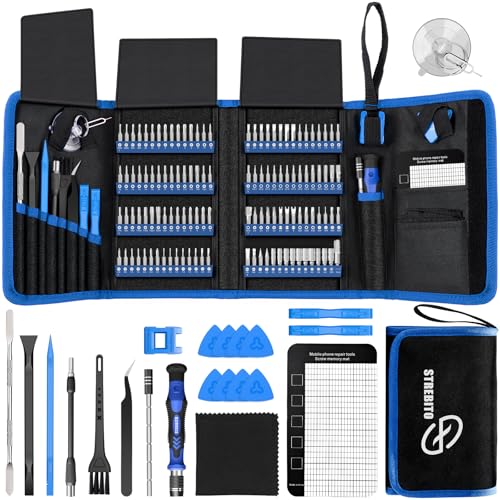


As an Amazon Associate, we earn from qualifying purchases.
Price as of Sep 17, 2026. Product prices and availability are accurate as of the date indicated and are subject to change. Any price and availability information displayed on Amazon at the time of purchase will apply.
Appliance repair costs $100-$650 total for most US homes in 2026, with an average near $175. A service-call/diagnostic fee runs $75-$150 (often waived if you approve the work), and parts plus labor add to it — from $150 for a washer fix to $700+ for a refrigerator compressor.
Most US appliance repairs cost $100 to $650 total in 2026, with a national average around $175. The bill is built from a service-call or diagnostic fee of $75 to $150 plus parts and labor, where labor runs $50 to $150 per hour. A minor fix like a thermostat or door seal sits near the floor, while a major sealed-system or control-board repair on a premium brand can climb past $700.
| Appliance | Typical Repair | Common Issue |
|---|---|---|
| Refrigerator | $200-$600 | Thermostat, sealed system |
| Washing machine | $150-$350 | Pump, belt, valve |
| Dryer | $150-$400 | Heating element, belt |
| Dishwasher | $100-$400 | Drain pump, motor |
| Oven / range | $140-$900 | Element, igniter, board |
A service-call or diagnostic fee is the flat charge a technician collects just for coming out and identifying the problem — $75 to $150 in most markets in 2026. Many companies waive or credit that fee toward the final bill if you approve the repair, so you only pay it outright when you decline the work. Always ask up front whether the diagnostic fee is applied to the repair, because that one policy changes the true cost of a small job by $100 or more.
Use the 50% rule: if the repair costs more than half the price of a comparable new appliance, replacement is usually the smarter financial choice. Age matters too — a sealed-system or motor repair on a unit past 8 years old often is not worth it, while the same fix on a 3-year-old machine almost always is. A $250 dishwasher repair is sensible; a $700 compressor on a 12-year-old fridge that costs $900 new is not.
| Scenario | Repair Cost | Decision |
|---|---|---|
| 3-yr washer, bad pump | $200 | Repair |
| 12-yr fridge, compressor | $800 | Replace |
| 5-yr dishwasher, drain | $180 | Repair |
| 10-yr dryer, motor | $350 | Borderline |
Premium brands like Sub-Zero, Viking, Miele, and built-in Bosch run 30 to 50 percent more to repair than standard Whirlpool, GE, Samsung, or LG units. Their parts are proprietary, often special-ordered, and marked up more, and fewer technicians are certified to service them so labor rates are higher. A control board that costs $180 on a mainstream brand can be $350 to $500 on a luxury model, and the diagnostic visit itself frequently carries a higher minimum.
If your appliance is still under the manufacturer's warranty, covered defects are repaired at no cost beyond possibly a shipping or trip charge. A home warranty (a service contract) typically covers the repair but charges a per-visit service fee of $75 to $125 regardless of the problem, and it may cap payouts or exclude pre-existing faults. Always confirm coverage before booking an independent technician, because paying out of pocket for a covered repair is money left on the table.
Inputs
Result
A defrost or water-valve repair on a mainstream fridge in a mid-cost market sits near the middle of the refrigerator range. The diagnostic fee is usually credited toward the total once you approve the work.
Inputs
Result
A worn hose or faulty lid switch on a nearly new washer is cheap parts and under an hour of labor. A low-cost region keeps the total near the floor, and replacement makes no sense this early in the machine's life.
Inputs
Result
A control-board failure on an older luxury range stacks premium-brand parts, higher certified-tech labor, and a premium-market multiplier. On an 8-plus-year-old unit this approaches the 50% rule, so a replacement quote is worth getting.
Total = Service-call fee + (Parts x brand multiplier) + (Labor hours x hourly rate)An appliance repair bill starts with the diagnostic/service-call fee, then adds parts adjusted for brand tier and labor priced by the hour. The diagnostic fee is frequently credited back once you approve the repair, so confirm that policy before comparing quotes.
Where:
Service-call fee= Flat diagnostic/trip charge of $75-$150; often waived or credited if you approve the repairParts= Component cost — from a few dollars for a switch to $400+ for a compressor or control boardbrand multiplier= Standard brands ~1.0; premium brands (Sub-Zero, Viking, Miele) run 1.3-1.5x on parts and laborLabor hours x hourly rate= Most jobs run 1-3 hours at $50-$150 per hour depending on region and complexityIf Repair cost > 0.5 x New appliance price, lean toward replacementThe standard decision framework: compare the quoted repair to half the cost of a comparable new unit, weighted by the appliance's remaining life. Older appliances tip toward replacement faster because more failures follow.
Where:
Repair cost= Total quoted repair including service-call fee, parts, and laborNew appliance price= Cost of a comparable replacement — fridge $600-$2,500, washer/dryer $500-$1,200, dishwasher $400-$1,0000.5 threshold= Repair past half the new price usually loses; under it, repair typically winsAge factor= Past 8-10 years, drop the threshold — major repairs rarely pay off on aging unitsWhen a refrigerator stops cooling or a washer floods the laundry room, the first question is always the same: how much is this going to cost? In 2026, the typical US appliance repair lands between $100 and $650 total, with a national average right around $175. That figure covers the most common breakdowns across the major appliance categories, but the spread is wide because the word "repair" can mean a ten-dollar door switch or a thousand-dollar sealed-system rebuild.
Every repair bill is built from the same three pieces: a service-call or diagnostic fee, the parts, and the labor. The service-call fee — the flat charge for a technician to drive out and identify the problem — runs $75 to $150 in most markets. Parts vary enormously by component and brand, and labor is billed at $50 to $150 per hour, with most jobs taking one to three hours. Use the calculator above to estimate your specific repair, then read on to understand what each input is really pricing.
It helps to know what is and is not bundled into a quote. The service-call fee is frequently waived or credited toward the final bill if you approve the work, so you only pay it outright when you decline the repair. Parts markups of 20 to 50 percent over wholesale are standard and legitimate. What a quote usually excludes is any follow-up visit if a second component fails, and any cleanup — a leaking dishwasher or washer that has caused water damage is a separate problem with its own cost.
| Appliance | Typical Repair | Major Repair | Common Issue |
|---|---|---|---|
| Refrigerator / freezer | $200-$600 | $700-$1,250 | Compressor, sealed system |
| Washing machine | $150-$350 | $400-$500 | Pump, motor, bearings |
| Dryer | $150-$400 | $400-$500 | Heating element, motor |
| Dishwasher | $100-$400 | $400-$500 | Drain pump, control board |
| Oven / range | $140-$200 | $400-$900 | Igniter, element, board |
Always ask whether the service-call fee is credited toward the repair before you book. That single policy can swing the real cost of a small job by $100 or more, and it is the easiest thing to get wrong when comparing two quotes.
Two homeowners with the same broken appliance can get quotes that differ by hundreds of dollars, and the variance is rarely arbitrary. A repair shop prices from the part and the labor the specific fault requires, then layers on the realities of your brand, your appliance's age, and your local market. Understanding the drivers below lets you read a quote critically instead of taking the first number on faith.
The single biggest lever is problem severity. A minor fault — a thermostat, a door seal, a worn hose, a faulty switch — is cheap parts and under an hour of labor. A moderate fault like a drain pump, water valve, heating element, or belt is a mid-range job. A major fault — a compressor, a main motor, or an electronic control board — is where bills cross into the hundreds, because the parts are expensive and the labor is intensive. The list below shows what each factor does to the price.
Ask the technician to separate parts from labor on the written estimate. A quote that is all one number hides whether you are paying for an expensive component or simply for time, and it makes a second opinion impossible to compare fairly.
The hardest call is not what a repair costs but whether to pay for it at all. The industry standard is the 50% rule: if the repair quote exceeds half the price of a comparable new appliance, replacement is usually the smarter financial move. A $250 fix on a dishwasher that costs $700 new is an easy yes; a $700 compressor on a refrigerator you could replace for $900 is an easy no. The rule is a starting point, not a law, and age is the variable that tips it.
Remaining life matters as much as the math. Most major appliances are engineered for roughly 10 to 15 years, and the failure rate climbs steeply in the back half of that window. A sealed-system or motor repair on a three-year-old machine almost always pays off, because you are buying many more years of service. The same repair on a twelve-year-old unit often does not, because a second expensive failure is likely to follow within a year or two. When you decide to replace and need to haul the old unit away, the junk removal service cost calculator prices appliance pickup by load size.
There are also non-financial reasons to replace even when the 50% rule says repair. A new appliance can cut energy and water use enough to partly pay for itself, comes with a fresh warranty, and ends the stress of a machine you no longer trust. If the failed unit is a major built-in like a wall oven or a cooktop, factor installation into the replacement side of the comparison, the same way the HVAC install cost calculator accounts for labor when a heating or cooling system reaches the end of its repairable life.
| Appliance Age | Minor Fault | Major Fault | Lean Toward |
|---|---|---|---|
| Under 3 years | Repair | Repair | Repair |
| 3-8 years | Repair | Borderline | Repair if under 50% |
| Over 8-10 years | Repair | Replace | Replace on major faults |
Run the 50% rule with the all-in repair quote, not just the parts. A $400 part plus $200 labor on a $1,000 appliance is a 60% repair — over the line — even though the part alone looked affordable.
Two inputs that quietly reshape a repair quote are your brand tier and your warranty status. Mainstream brands — Whirlpool, GE, Samsung, LG, Maytag — use widely available parts that any competent technician can source and install, which keeps both parts and labor near the national averages. Premium brands such as Sub-Zero, Viking, Miele, and high-end built-in Bosch run 30 to 50 percent more, because their components are proprietary and often special-ordered, the markups are higher, and far fewer technicians are factory-certified to touch them.
Warranty coverage can erase most of the bill, so check it before you call anyone. If the appliance is still inside the manufacturer's warranty, a covered defect is repaired at no cost beyond a possible shipping or trip charge — paying an independent shop in that window is money thrown away. A home warranty, which is really a service contract, typically covers the repair but collects a per-visit service fee of $75 to $125 regardless of the fault, and it may cap payouts or exclude pre-existing problems. Read the contract's covered-items list before assuming a claim will be honored.
When the failure is connected to a water leak — a split dishwasher hose, a washer that overflowed, a fridge ice-maker line that dripped behind the cabinet — the appliance repair is only half the job. Hidden moisture can seed mold inside walls and under flooring within days, and that is a separate professional remediation with its own price tag. The mold remediation service cost calculator estimates that work by affected area and severity, and the water heater install cost calculator covers the other big household appliance that routinely forces a repair-or-replace decision.
The cheapest repair is the one you do not have to pay for twice, so vet a technician on transparency as much as on price. Start by getting the model and serial number off the appliance's data plate — usually inside a door, on the back, or under the lid — because it lets a shop quote parts accurately over the phone and rules out vague guesses. Describe the symptom precisely (noises, error codes, what does and does not work) so the diagnostic call is efficient and the estimate is grounded in the real fault.
Collect two or three quotes for anything beyond a minor fix, and insist each one states the service-call fee, whether it is credited toward the repair, the parts-versus-labor split, and the warranty on the work. A reputable shop warranties its labor for at least 30 to 90 days and its parts per the manufacturer. Confirm the technician is certified for your brand, especially for premium units, and ask whether they carry common parts on the truck — a first-visit fix saves you a second trip charge and days without a working appliance.
Finally, weigh the diagnostic fee against the decision it informs. Paying $75 to $150 to learn that a twelve-year-old fridge needs an $800 compressor is money well spent if it stops you from sinking that $800 into a unit you should replace. Treat the service call as the price of a clear decision, follow the steps below in order, and you will avoid both the overpriced repair and the premature replacement that a panic phone call so often produces.
Never approve a major repair sight-unseen over the phone. Pay for the diagnostic, get the fault and the all-in number in writing, then decide — a clear estimate is worth far more than the fee it costs to obtain.
Get the model and serial number
Find the data plate (inside a door, on the back, or under the lid) so shops can quote parts accurately before they arrive.
Describe the symptom precisely
Note noises, error codes, and exactly what does and does not work so the diagnosis is fast and the estimate is grounded.
Collect two to three quotes
For anything beyond a minor fix, compare the service-call fee, the credit policy, and the parts-versus-labor split.
Confirm certification and warranty
Verify the tech is certified for your brand and warranties the labor at least 30-90 days and parts per the manufacturer.
Apply the 50% rule before approving
Use the diagnostic result to compare the all-in repair to half the cost of a comparable new appliance, weighted by age.
Read our guide
Read our guide
Read our guide
Price appliance repairs, installations, removals, and home-service work, then plan budgets and compare local contractor quotes.
Last Updated: Sep 17, 2026
This calculator is provided for informational and educational purposes only. Results are estimates and should not be considered professional financial, medical, legal, or other advice. Always consult a qualified professional before making important decisions. UseCalcPro is not responsible for any actions taken based on calculator results.