UseCalcPro
Home
MathFinanceHealthConstructionAutoPetsGardenCraftsFood & BrewingTools
Blog
  1. Home
  2. Construction

Closet Organizer Calculator — Rods, Shelves & Layout Planner

Plan your closet system with the right rod heights, shelf count, and brackets for any closet size

Total Rod Length

9.6 ft

Shelves

1

Brackets

4

Est. Cost

$125

Rod Length

9.6 ft

Shelves

1

Brackets

4

Est. Cost

$125

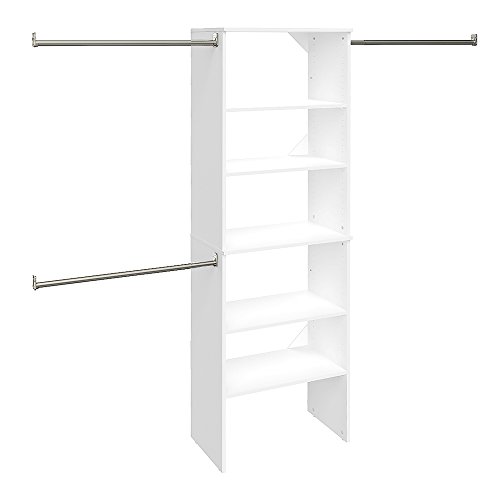
Hanging Rods

Upper Rod (80")3.6 ft
Lower Rod (40")3.6 ft
Long Hang Rod (68")2.4 ft
Total Rod9.6 ft

Shelving

Shelf Boards1
Total Linear Ft6.0 ft
Brackets/Supports4

Recommendations

Drawer Units1
Shoe Rack Tiers3

Cost Breakdown

Rods$34
Shelves$30
Brackets$16
Drawers$45
Total$125

Example Calculations

16 ft reach-in clothes closet

Inputs

Dimensions6 ft × 2 ft × 8 ft
TypeReach-in
UseClothes

Result

Total Rod Length10.8 ft
Shelves1 board
Brackets4
Drawer units1
Est. cost$137

Usable width = 6 ft. Double hang (60%): 3.6 ft upper + 3.6 ft lower = 7.2 ft. Long hang (40%): 2.4 ft. Total rod = 10.8 ft. 1 top shelf = 6 ft. Brackets: 4. Cost: rods $38 + shelves $30 + brackets $16 + drawer $45 = $129.

28×6 ft walk-in clothes closet

Inputs

Dimensions8 ft × 6 ft × 8 ft
TypeWalk-in
UseClothes

Result

Total Rod Length26.4 ft
Shelves1 board
Brackets9
Drawer units2
Est. cost$312

Walk-in usable width: 8×2 + 6 = 22 ft (U-shape). Double hang (60%): 13.2 ft × 2 rods = 26.4 ft. Long hang (40%): 8.8 ft. Total rod = 35.2 ft. Shelves: 1 × 22 ft. Brackets: 9.

Frequently Asked Questions

Q

How high should closet rods be?

For a double-rod configuration, install the upper rod at 80 inches and the lower rod at 40 inches from the floor. For long-hang items like dresses and coats, install a single rod at 68 inches. Always add a top shelf at 84 inches for storage.

  • Double rod upper: 80" (6 ft 8 in) for shirts, blouses, and folded-over pants
  • Double rod lower: 40" (3 ft 4 in) for pants, skirts, and short garments
  • Long hang single rod: 68" (5 ft 8 in) for dresses, coats, and robes
  • Top shelf: 84" (7 ft) for seasonal items, luggage, and bins
  • Children's closet: lower the upper rod to 60" and lower rod to 30"
ConfigurationRod HeightClearance BelowBest For
Double Upper80"40"Shirts, jackets
Double Lower40"40"Pants, skirts
Long Hang68"68"Dresses, coats
Q

How many linear feet of closet rod do I need?

A good rule of thumb is 48 inches (4 feet) of rod per person for everyday clothes. A 6-foot reach-in closet with double rods provides 12 total linear feet of hanging space. Walk-in closets with a U-shaped layout can provide 20+ feet of rod along three walls.

  • Minimum per person: 4 ft of rod for daily-use clothing
  • Average wardrobe: 6–8 ft of rod covers shirts, pants, and dresses
  • Each hanger takes about 2 inches of rod space (6 per foot)
  • Double rod sections double your hanging capacity in the same width
Q

How deep should closet shelves be?

Standard closet shelves for folded clothes should be 12 inches deep. Shoe shelves work best at 12 to 14 inches. Linen closets use 16 to 18-inch deep shelves for towels and bedding. Pantry shelves are typically 12 to 16 inches for cans and boxes.

  • Folded clothes: 12" deep shelves with 10–12" vertical spacing
  • Shoes: 12–14" deep angled shelves with 6–7" spacing between tiers
  • Towels/bedding: 16–18" deep shelves with 14–16" spacing
  • Pantry storage: 12–16" deep with 8–12" spacing for various can heights
Storage TypeShelf DepthVertical Spacing
Folded clothes12"10–12"
Shoes12–14"6–7"
Towels/bedding16–18"14–16"
Pantry items12–16"8–12"
Q

How much does a DIY closet organizer cost?

A basic DIY closet organizer for a standard 6-foot reach-in closet costs $150 to $400 in materials. Walk-in closets run $400 to $1,200 depending on size and features. Pre-made closet system kits from home improvement stores cost $200 to $800 for a reach-in.

  • Basic reach-in (6 ft): $150–$400 for rods, shelves, and brackets
  • Walk-in closet (8×6 ft): $400–$1,200 with drawers and shoe racks
  • Pre-made kit (reach-in): $200–$800 for modular wire or laminate system
  • Professional installation adds $200–$600 for a reach-in closet
Q

Should I use wire or wood closet shelving?

Wire shelving is cheaper ($2–$4/ft) and allows airflow, but items can snag and thin objects fall through. Wood or melamine shelving ($4–$8/ft) provides a flat surface, looks more polished, and supports heavier loads without sagging.

  • Wire shelving: $2–$4/ft, easy DIY install, good ventilation, items may tip or snag
  • Melamine/laminate: $4–$6/ft, smooth surface, available in multiple colors
  • Solid wood (pine/poplar): $5–$8/ft, paintable/stainable, strongest option
  • Wire is best for pantry and garage; wood is better for clothes and visible areas

Related Calculators

Shelf Sag Calculator

Check shelf deflection under load

Lumber Calculator

Calculate board feet for any project

Paint Calculator

Estimate paint coverage for walls

Curtain Calculator

Calculate curtain fabric and rod size

Baseboard Calculator — Trim Estimator

Calculate linear feet of baseboard trim and boards needed for any room. Get board counts, corner pieces, waste allowance, and material cost estimates.

Concrete Countertop Calculator

Calculate concrete mix, reinforcement, and finishing materials for DIY countertops. Compare total project costs vs granite, quartz, and professional install.

Related Resources

How Much Does a Closet Organizer Cost in 2026? (Custom vs. DIY Pricing)

Read our guide

How to Build a Deck: Complete Materials & Cost Calculator Guide

Read our guide

How Much Paint Do I Need for a Room? Complete Calculator Guide

Read our guide

Shelf Sag Calculator

Check if your shelf will sag under load

Paint Calculator

Estimate paint for closet interior walls

Lumber Calculator

Calculate lumber board feet for shelves

Drywall Calculator

Calculate drywall for closet walls

More Construction Calculators

Explore all construction and home improvement calculators

View All Construction

Last Updated: Mar 9, 2026

This calculator is provided for informational and educational purposes only. Results are estimates and should not be considered professional financial, medical, legal, or other advice. Always consult a qualified professional before making important decisions. UseCalcPro is not responsible for any actions taken based on calculator results.

UseCalcPro
FinanceHealthMath

© 2026 UseCalcPro