1. Calculate
Choose your project scope and see the estimated price range.
Get a 2026 crawl space encapsulation estimate by area, scope tier, and barrier type — then compare local contractor quotes before you commit.
Instant project estimate
The estimate is free. Additional details are optional.
Complete the project details and calculate to see a price range and next steps.
Clear next step
Choose your project scope and see the estimated price range.
Understand the cost drivers and what impacts your final quote.
Carry your scope into a local quote request if you choose.

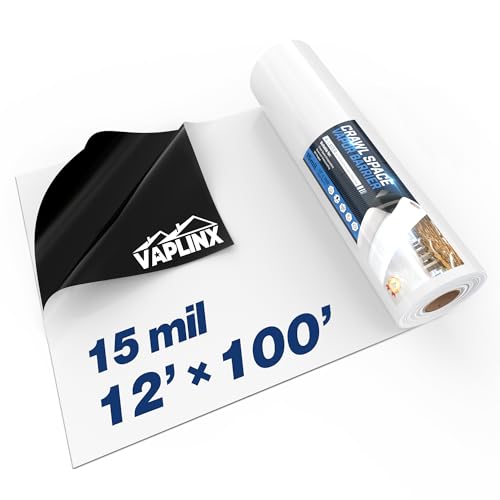

As an Amazon Associate, we earn from qualifying purchases.
Price as of Sep 18, 2026. Product prices and availability are accurate as of the date indicated and are subject to change. Any price and availability information displayed on Amazon at the time of purchase will apply.
Crawl space encapsulation costs $3–$7 per sq ft installed in 2026, or $3,500–$8,500 for a typical 1,000–1,500 sq ft crawl space. Vapor-barrier-only jobs run $2.50–$3.50/sqft; full encapsulation with sealed walls and rim joists $3.50–$5.00/sqft; encapsulation plus a dehumidifier and drainage system $5.50–$8.00/sqft. Severe moisture problems or mold remediation can push the total above $10,000.
| Scope | Low (1,000 sqft) | High (1,500 sqft) |
|---|---|---|
| Vapor barrier only | $2,500 | $5,250 |
| Full encapsulation | $3,500 | $7,500 |
| Encapsulation + systems | $5,500 | $12,000 |
A vapor barrier is a polyethylene sheet laid on the dirt floor to block ground moisture — effective but incomplete. Full encapsulation seals the floor, walls, and rim joists as an airtight envelope, dramatically reducing humidity, preventing wood rot, and keeping conditioned air in. Full encapsulation costs roughly 50–60% more than a barrier-only job but lasts 20–25 years versus 5–10 years for basic sheeting.
| Feature | Vapor Barrier Only | Full Encapsulation |
|---|---|---|
| Floor coverage | ✓ | ✓ |
| Wall coverage | ✗ | ✓ |
| Rim joist sealed | ✗ | ✓ |
| Typical lifespan | 5–10 yrs | 20–25 yrs |
| Cost per sqft | $2.50–$3.50 | $3.50–$5.00 |
Most encapsulation specialists recommend a dedicated crawl space dehumidifier for any humid climate (roughly the Southeast, Gulf Coast, and Mid-Atlantic). After sealing the space, the remaining trapped moisture needs active removal to stay below the 60% RH threshold that prevents wood rot and mold. A properly sized unit costs $1,200–$2,500 installed and removes 70–120 pints of water per day.
| Climate Zone | Dehumidifier Needed? | Typical RH Without It |
|---|---|---|
| Southeast / Gulf Coast | Yes — essential | 70–90% |
| Mid-Atlantic / Midwest | Recommended | 60–75% |
| Pacific Northwest | Often yes | 65–80% |
| Arid West (AZ, NV, CO) | Usually no | 30–45% |
Yes on both counts. A sealed crawl space reduces HVAC runtime by 10–15% in humid climates, saves $150–$400 per year in energy costs, and protects structural wood from decay that can cost $10,000–$50,000 to repair. Realtors report encapsulated crawl spaces improving sale speed and value, and a $5,500 investment typically recouped 75–90% at resale in Southeast and Mid-Atlantic markets.
| Benefit | Value Range | Timeframe |
|---|---|---|
| Annual energy savings | $150–$400 | Per year |
| Avoided wood rot repairs | $10,000–$50,000 | Lifetime |
| Resale value added | 75–90% of cost | At sale |
| HVAC runtime reduction | 10–15% | Ongoing |
Verify that the contractor carries general liability and workers’ comp insurance, offers a transferable warranty of at least 10 years on the barrier, and uses a liner rated 12-mil or heavier. Ask for three written bids and be wary of contractors who insist mold remediation is needed without letting an independent inspector confirm it — that is a documented upsell pattern in this trade.
| Contractor Claim | Green Flag | Red Flag |
|---|---|---|
| Warranty offered | 10–25 yr transferable | None or “lifetime” without terms |
| Liner spec | 12-mil minimum stated in contract | No mil rating mentioned |
| Mold assessment | Refers you to independent inspector | Diagnoses and quotes same visit |
| Deposit requested | <30% upfront | >50% or full payment before start |
Inputs
Result
A straight vapor-barrier-only job on a small, accessible crawl space lands near the national low. In a humid Carolina climate, most inspectors recommend upgrading to full encapsulation within 3–5 years as the unsealed walls still allow moisture infiltration.
Inputs
Result
This is the most common scenario and the national average anchor. A 20-mil liner on a 1,200 sqft space with floor, wall, and rim joist coverage lands right at the ~$5,500 typical midpoint. Adding a dehumidifier brings the total to $6,800–$9,100.
Inputs
Result
A severely moisture-damaged Gulf Coast crawl space with an active mold problem requires remediation before any barrier goes down, plus a high-capacity dehumidifier for ongoing RH control. The reinforced liner and full drainage system add up quickly, but the alternative — ignored structural wood rot — can cost $30,000–$50,000 in repairs.
Total cost = Crawl space area (sqft) × Per-sqft base rate × Barrier multiplier × Add-on multipliersThe dominant driver is crawl space floor area multiplied by the installed per-sqft rate for the chosen scope tier. Barrier thickness, dehumidifier, and mold treatment each apply multiplicative adjustments on top of the base rate.
Where:
Area= Crawl space floor area in sq ft — measure the outer footprint of the conditioned floor aboveBase rate= Vapor-barrier-only $2.50–$3.50/sqft; full encapsulation $3.50–$5.00/sqft; encapsulation + systems $5.50–$8.00/sqftBarrier multiplier= 12-mil = 1.0; 20-mil = 1.1 (+10%); reinforced laminate = 1.2 (+20%)Add-on multipliers= Dehumidifier included × 1.15; mold treatment × 1.20; compound togetherPint capacity needed ≥ (Crawl space volume × 0.025) for moderate conditions; × 0.035 for severeVolume = floor area × average headroom height (typically 2–4 ft). A 1,200 sqft crawl space with 3 ft headroom = 3,600 cubic ft; moderate conditions require at least a 90-pint/day unit.
Where:
Volume= Crawl space cubic feet = floor area × average height0.025 factor= DOE rule of thumb for moderate moisture (60–70% RH ambient)0.035 factor= Severe moisture factor (>70% RH, visible efflorescence or standing water history)Pint capacity= Daily water removal rating; most crawl space units are 70–120 pints/dayThe most common job — a full encapsulation of a 1,000–1,500 sqft dirt-floor crawl space with a 20-mil liner, sealed walls, and rim joist coverage — runs $3,500–$8,500 across the US, with the national midpoint around $5,500. That price assumes moderate moisture conditions, no existing mold, reasonable access (at least 24 inches of headroom), and a mid-tier licensed contractor. Push any of those assumptions and the cost moves: a severely moisture-damaged 2,000 sqft crawl space with active mold and poor access can exceed $20,000 before the dehumidifier is even discussed.
The table below translates per-sqft rates into full-project dollars for the three most common job sizes. All ranges are based on 2026 contractor pricing from Angi, HomeGuide, and regional labor surveys; they include materials, labor, disposal of debris, and a basic access panel if needed, but not mold remediation, drainage tile, or dehumidifier equipment unless the scope row explicitly says so.
| Scope Tier | 800 sqft | 1,200 sqft | 1,500 sqft |
|---|---|---|---|
| Vapor barrier only (12-mil) | $2,000–$2,800 | $3,000–$4,200 | $3,750–$5,250 |
| Full encapsulation (20-mil) | $2,800–$4,000 | $4,200–$6,000 | $5,250–$7,500 |
| Encapsulation + dehumidifier | $4,200–$6,200 | $5,600–$8,200 | $7,000–$10,500 |
| Full systems + mold treatment | $5,500–$10,000 | $8,000–$14,000 | $10,000–$19,500 |
The vapor-barrier-only price looks attractive, but unsealed walls still let moisture in through cinder block and rim joists. In humid climates most inspectors call it a half-measure — expect to be back in 5–10 years for a full seal or wood rot repairs that cost far more.
A vapor barrier is a polyethylene sheet — typically 6-mil to 12-mil thick — laid on the dirt floor to block ground moisture from evaporating into the crawl space. It is inexpensive ($2.50–$3.50/sqft installed) and suitable for dry climates or spaces that only see occasional dampness on the floor. The problem is what it does not do: a floor-only barrier leaves the foundation walls, block piers, and rim joists exposed to humidity that enters through the vents and cracks. In any climate with average summer humidity above 60%, a barrier-only installation buys time, not a solution.
Full encapsulation treats the crawl space as a sealed conditioned envelope. The installer tapes barrier material not just to the floor but up all foundation walls, across block piers, and across the rim joists at the top of the foundation walls where the floor framing sits. That rim joist zone is the single most critical area: it is where most wood rot and pest entry occurs, and it is what vapor-barrier-only jobs consistently skip. The additional labor and material add $1.00–$1.50/sqft over a floor-only barrier but extend the effective lifespan from 5–10 years to 20–25 years and dramatically reduce HVAC load.
If you are selling your home in the next five years, a full encapsulation with a transferable warranty is almost always the better ROI than a vapor barrier — buyers and their inspectors know the difference.
Polyethylene vapor barriers are rated in mils (thousandths of an inch). The minimum code standard in most jurisdictions is 6-mil, which most encapsulation contractors consider too thin for anything but temporary protection. Professional-grade installations start at 12-mil, the industry baseline that survives normal foot traffic from HVAC technicians and plumbers without tearing. A 20-mil barrier costs about 10% more per sqft but substantially resists puncture from pebbles, scrap lumber, and tool drops — the kind of damage that creates moisture pathways the homeowner will not notice for years.
Reinforced liners — sold under brand names like TerraBlock, CleanSpace, or CrossTuff — use a laminated scrim layer between polyethylene sheets. They are rated 20-mil to 40-mil equivalent and add another 10–20% to the material cost. For crawl spaces that will be used for storage, that have very rough gravel floors, or that require contractors to access HVAC or plumbing equipment frequently, the reinforced liner pays for itself by eliminating the need for a patch job within the first five years. The table below summarizes the trade-off.
| Liner Type | Mil Rating | Cost Multiplier | Best For |
|---|---|---|---|
| 12-mil polyethylene | 12 | 1.0× baseline | Dry climates, no storage use |
| 20-mil polyethylene | 20 | 1.1× (+10%) | Standard humid climates, recommended baseline |
| Reinforced laminate | 20–40 equiv. | 1.2× (+20%) | Heavy use, gravel floors, frequent contractor access |
Ask your contractor to specify the liner mil rating in the written contract — some bids say “heavy-duty vapor barrier” without stating a mil rating, which can mean anything from 8-mil to 20-mil.
After sealing a crawl space, the trapped air still contains moisture — both residual ground moisture and any humidity that entered before the seal was complete. In dry climates the sealed envelope handles this passively; in humid climates the sealed space can actually become wetter than before because the vapor pressure differential now drives moisture from the ground through any liner imperfection. This is why encapsulation specialists in the Southeast, Gulf Coast, Mid-Atlantic, and Pacific Northwest routinely insist on a dedicated crawl space dehumidifier as part of the system.
A proper crawl space dehumidifier is not a basement dehumidifier dragged under the floor. It must be rated for low temperatures (as low as 40°F without icing), configured for continuous drainage via a gravity line or condensate pump to the exterior, and sized to the cubic footage of the space. Most residential crawl spaces need a 70–120 pint-per-day unit. Installed cost ranges from $1,200 to $2,500 including the unit, wiring by a licensed electrician, and the drain line. Annual operating cost for a 70-pint unit runs about $100–$180 at 2026 average electricity rates.
| Crawl Space Volume | Recommended Capacity | Installed Cost |
|---|---|---|
| Up to 2,000 cu ft (800 sqft, 2.5 ft height) | 50–70 pints/day | $1,200–$1,600 |
| 2,000–4,000 cu ft (1,200 sqft, 3 ft height) | 70–90 pints/day | $1,500–$2,000 |
| 4,000–6,000 cu ft (1,500 sqft, 4 ft height) | 90–120 pints/day | $1,800–$2,500 |
Never rely on the home’s HVAC system to dehumidify the crawl space — most systems are not designed to handle the moisture load of an unconditioned under-floor space, and doing so voids the encapsulation warranty with most installers.
Installing a vapor barrier or encapsulation over active mold is one of the most common and costly mistakes in crawl space moisture control. The sealed environment traps spores and residual humidity at the wood surface, accelerating decay even as the homeowner believes the problem is solved. Any contractor who proposes to encapsulate without first addressing visible mold growth is either cutting corners or does not understand the fundamentals of the trade — and you should walk away.
Mold remediation before encapsulation adds $500–$4,000 to the project, depending on the affected square footage and whether antimicrobial treatment alone is sufficient or whether structural wood needs to be replaced. The right sequence is: mold inspection by an independent industrial hygienist (not the contractor quoting remediation), HEPA air scrubbing and antimicrobial treatment by a certified mold remediator, clearance testing to confirm spore counts are below threshold, and only then begin encapsulation. This adds 1–3 weeks to the project timeline but eliminates the risk of trapping an active biology problem under your new liner.
Mold remediation costs $500–$4,000 added to encapsulation. Skipping it and encapsulating over active mold typically leads to a full tear-out and redo within 5–7 years at 1.5×2 the original project cost.
Independent mold inspection
Hire a certified industrial hygienist (CIH) or independent inspector to assess scope — NOT the contractor bidding the remediation, whose financial incentive is to find more mold.
HEPA air scrubbing
Negative air pressure with HEPA filtration removes airborne spores before surface treatment begins; typically $300–$800 for a standard crawl space.
Antimicrobial treatment
EPA-registered fungicide applied to all affected surfaces and allowed to dry; includes light sanding of structural members if surface mold is present.
Clearance air testing
Post-treatment air samples confirm spore counts below the outdoor baseline before the crawl space is sealed — non-negotiable step before encapsulation.
Encapsulation proceeds
Only after clearance testing passes does the encapsulation contractor begin liner installation; budget an additional 1–3 weeks from inspection to clearance.
Crawl space encapsulation demand — and therefore contractor pricing — is highest in the Southeast, Gulf Coast, and Mid-Atlantic states where humid summers drive aggressive moisture infiltration. Ironically, demand concentration also means more competition, which keeps per-sqft rates closer to the national average in Atlanta, Charlotte, and Richmond than you might expect. The Northeast and Pacific Northwest see fewer encapsulation specialists, which drives prices 15–25% above the national average from simple supply constraints.
The most affordable markets for encapsulation are inland Southeast states (Tennessee, Alabama, Mississippi, Arkansas) where labor costs are low and the humid climate creates sufficient demand to support a healthy specialty contractor pool. Arid Western markets (Arizona, Nevada, interior Colorado) often have almost no crawl space encapsulation contractors at all because the climate does not justify the investment — if you have a dirt crawl space in Phoenix, a simple vapor barrier at $1.50–$2.00/sqft is usually the correct spec.
| Region | Typical Full Encapsulation Rate | Notes |
|---|---|---|
| Southeast (AL, MS, TN, AR) | $3.00–$4.50/sqft | High demand + low labor = most competitive pricing |
| Mid-Atlantic (VA, MD, NC, SC) | $3.50–$5.00/sqft | National average band; mold add-ons common |
| Gulf Coast (LA, TX Gulf, FL) | $4.00–$5.50/sqft | Severe humidity; dehumidifier almost always needed |
| Midwest (OH, IN, KY, MO) | $3.50–$5.00/sqft | Seasonal moisture; encapsulation growing in demand |
| Northeast (PA, NJ, NY, CT) | $4.50–$6.50/sqft | Fewer specialists; higher labor rate baseline |
| Pacific Northwest (WA, OR) | $4.50–$6.50/sqft | Year-round moisture; reinforced liner standard spec |
| Arid West (AZ, NV, CO plateau) | $1.50–$3.00/sqft | Vapor barrier often sufficient; few encap specialists |
Encapsulation quotes look straightforward but hide enormous variation in what is and is not included. The single most important thing to confirm is whether the quoted liner mil rating is stated in the contract — a contractor who promises “heavy-duty” without naming a mil spec can install 8-mil film and technically be correct. After the liner, check whether the quote includes wall coverage all the way to the sill plate, rim joist coverage, tape and adhesive at all seams, and a basic access panel if yours is currently inadequate. Each of those line items can add $300–$800 if they are missing from a low bid.
Common quote manipulation to watch for: quoting just floor area when the scope includes wall coverage (making per-sqft math appear lower), excluding the dehumidifier from a package quote and listing it as a separate option, or including a “basic mold treatment” line item without clarifying whether it is antimicrobial spray (appropriate for surface mold) or whether the quote includes replacement of any rotted structural members. Ask each bidding contractor to confirm in writing that their price includes a 10-year minimum transferable liner warranty and a post-installation inspection within 30 days.
Encapsulation quotes commonly spread 25–40% for identical scope. A low bid that excludes rim joist coverage, uses 8-mil film instead of 12-mil, and carries no warranty is not a deal — it is a setup for a redo in 5 years at full price.
Read our guide
Read our guide
Read our guide
Price materials and labor for waterproofing, insulation, framing, concrete, roofing, and dozens of other home improvement projects.
Last Updated: Sep 18, 2026
This calculator is provided for informational and educational purposes only. Results are estimates and should not be considered professional financial, medical, legal, or other advice. Always consult a qualified professional before making important decisions. UseCalcPro is not responsible for any actions taken based on calculator results.