1. Calculate
Choose your project scope and see the estimated price range.
Price a 2026 overnight cat boarding stay by facility type, number of cats, and trip length — then compare rates at licensed local catteries and cat condo suites.
Instant project estimate
The estimate is free. Additional details are optional.
Complete the project details and calculate to see a price range and next steps.
Clear next step
Choose your project scope and see the estimated price range.
Understand the cost drivers and what impacts your final quote.
Carry your scope into a local quote request if you choose.
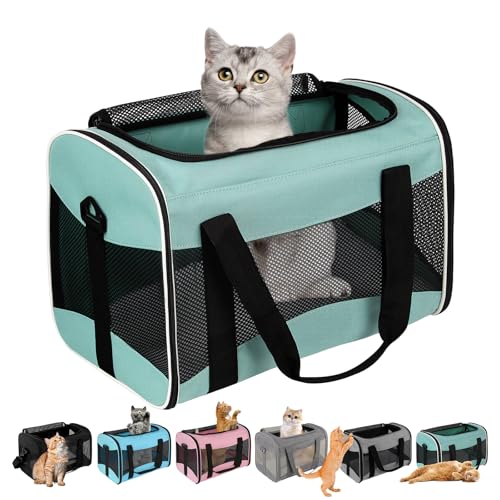
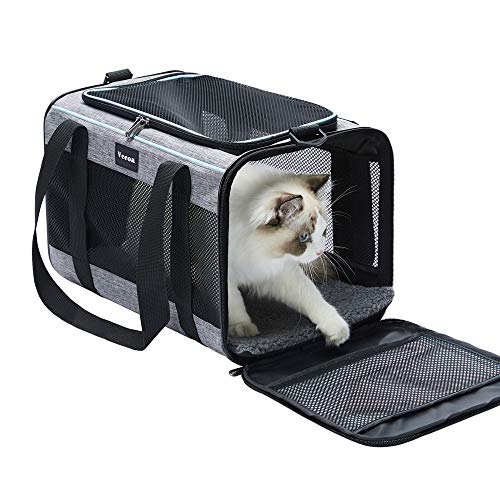

As an Amazon Associate, we earn from qualifying purchases.
Price as of Sep 15, 2026. Product prices and availability are accurate as of the date indicated and are subject to change. Any price and availability information displayed on Amazon at the time of purchase will apply.
Standard catteries (cat-only boarding facilities) run $15-$35 per night nationally. Cat condo or suite facilities run $20-$50 per night. Luxury cat hotels with private suites, webcams, and enrichment services run $30-$75 per night. In-home cat sitters who stay at your house overnight run $25-$60 per night. A typical 5-night stay for one healthy adult cat costs $75-$175 at a cattery, $100-$250 at a cat condo suite, and $150-$375 at a luxury cat hotel. Cat boarding is 30-50% cheaper than equivalent dog-boarding tiers.
| Facility Type | Per Night | Best For |
|---|---|---|
| Standard cattery | $15-$35 | Healthy adults, short to medium trips |
| Cat condo suite | $20-$50 | Active cats, enrichment and visibility |
| Luxury cat hotel | $30-$75 | Long stays, pampering, webcam access |
| In-home cat sitter | $25-$60 | Multi-cat, senior, high-stress cats |
Yes, cat boarding typically costs 30-50% less than comparable dog boarding. Standard catteries at $15-$35 per night are significantly cheaper than dog kennels at $30-$70 per night. Luxury cat hotels at $30-$75 per night are less than luxury dog hotels at $60-$150 per night. Cats require less space per animal, smaller staff-to-cat ratios, no off-leash group exercise yards, and shorter daily interaction sessions than dogs, which drives the lower price floor. Multi-cat discounts of 10-20% off the second cat further reduce total cost for households with multiple cats.
| Boarding Type | Cat Rate | Dog Rate | Cat Savings |
|---|---|---|---|
| Standard kennel/cattery | $15-$35/night | $30-$70/night | ~50% |
| Mid-tier condo/suite | $20-$50/night | $40-$90/night | ~40% |
| Luxury hotel | $30-$75/night | $60-$150/night | ~45% |
| In-home sitter | $25-$60/night | $60-$120/night | ~40-50% |
Most catteries and cat condo facilities offer 10-20% off the second cat from the same household and 15-25% off the third cat. In-home cat sitters typically charge a flat overnight or per-visit rate for the entire household regardless of cat count, usually covering up to 3-4 cats. Shared suites for bonded pairs at luxury cat hotels save $10-$25 per night compared to two separate suite bookings. Always confirm the discount structure in writing, including whether it applies per night and whether it requires both cats to share a unit.
| Cat Situation | Discount | Example Nightly Rate (Condo Suite) |
|---|---|---|
| First cat | Full rate | $20-$50 |
| Second cat from same household | -10-20% | $16-$45 |
| Third cat from same household | -15-25% | $15-$37 |
| In-home sitter (1-3 cats) | Flat household rate | $25-$60 total |
All cat boarding facilities require a current FVRCP vaccination (feline rhinotracheitis, calicivirus, panleukopenia — the 3-in-1 distemper combo). Most also require a current rabies vaccination. Facilities offering free-roam room time frequently add FeLV (Feline Leukemia Virus) and Bordetella requirements. Vaccination records must be presented at drop-off and most facilities require FVRCP administered at least 7-14 days before arrival. A cat whose vaccines are due for renewal within 30 days of the boarding stay should be reboostered by your vet first.
Senior cats (10+ years) incur a supplement of $5-$15 per night at facilities offering extended check-ins, heated bedding, and closer health monitoring. Daily oral medication (pill or liquid, once or twice daily) costs $5-$10 per dose, adding $5-$20 per night. Diabetic cats requiring subcutaneous insulin injections need a licensed vet tech on staff and are limited to specialty or vet-adjacent facilities that charge $15-$30 per injection plus a premium tier rate. Prescription food or special diet adds $5-$15 per day. Combined supplements for a senior diabetic cat on a prescription diet can add $40-$60 per night to the base rate.
| Cat Profile | Add-On Cost | Facility Requirement |
|---|---|---|
| Healthy adult (under 10 yr) | $0 | Any licensed cattery |
| Senior (10+ years) | +$5-$15/night | Cattery with senior monitoring |
| Oral medication (twice daily) | +$10-$20/night | Any staffed facility |
| Insulin injection (twice daily) | +$30-$60/night | Vet-adjacent facility only |
| Prescription diet | +$5-$15/day | Any facility with refrigeration |
Cat boarding fills less quickly than dog boarding for most of the year, but popular cattery and luxury cat hotel facilities in metro markets fill 3-5 weeks out for holiday periods. Book Thanksgiving week by late October and Christmas week by early November. Holiday surcharges at cat facilities run 15-30% per night — lower than the 25-50% surcharges common at dog boarding facilities. Some facilities impose a 4-7 night minimum during holiday weeks. A $25/night cattery at 20% holiday surcharge becomes $30/night, adding $25 to a 5-night stay.
| Season | Booking Deadline | Typical Surcharge |
|---|---|---|
| Standard weeks | Flexible | None |
| Thanksgiving | Late October | +15-30% |
| Christmas / New Year | Early November | +15-30% |
| Spring break | 4-6 weeks ahead | +10-20% |
Inputs
Result
Inputs
Result
Two bonded cats sharing a condo suite at $30/night base rate. Second cat at 20% discount: $24/night. Combined: $54/night. At 7 nights: $378 midpoint. Range reflects low-end cattery pricing versus high-end suite with enrichment add-ons.
Inputs
Result
Trip cost = Base nightly rate × Nights × Cat-count modifier + Special-needs add-onsBase nightly rate: standard cattery $15-$35, cat condo suite $20-$50, luxury cat hotel $30-$75, in-home sitter $25-$60. Cat-count modifier: first cat 1.0x, second cat from same household 0.80-0.90x, third cat 0.75-0.85x. In-home sitters use a flat household rate (modifier 1.0x regardless of cat count up to 3-4 cats). Special-needs add-ons stack on top of the base: senior supplement +$5-$15/night, oral medication +$5-$10/dose, prescription diet +$5-$15/day, holiday multiplier 1.15-1.30x during peak weeks.
Where:
Base rate= Cattery $15-$35; condo suite $20-$50; luxury hotel $30-$75; in-home sitter $25-$60Cat-count modifier= First cat 1.0x; second cat 0.80-0.90x; third cat 0.75-0.85xSenior supplement= +$5-$15 per night for cats 10 years old or olderHoliday multiplier= Standard weeks 1.0x; Thanksgiving and Christmas weeks 1.15-1.30xOvernight cat boarding in 2026 runs $15-$35 per night at a standard cattery (cat-only boarding facility), $20-$50 at a cat condo or multi-level suite facility, $30-$75 at a luxury cat hotel, and $25-$60 with an in-home cat sitter. These rates are consistently 30-50% below comparable dog-boarding tiers because cat facilities require less square footage per animal, operate with smaller staff-to-cat ratios, and have no off-leash group exercise areas to supervise. A typical 5-night trip for one healthy adult cat runs $75-$175 at a cattery, $100-$250 at a cat condo suite, $150-$375 at a luxury cat hotel, and $125-$300 with an in-home sitter. Multi-cat households from the same family receive discounts of 10-20% on the second cat and 15-25% on the third at most facilities, and in-home sitters charge a single flat household rate for up to 3-4 cats.
Cat boarding is fundamentally different from dog boarding in three ways that affect both pricing and facility selection. First, cats are solitary territory-holders who experience stress from unfamiliar environments — reputable cat-specific facilities minimize this by using solid-walled condos or private suites with opaque dividers that prevent visual and auditory contact between unrelated cats. This design standard is built into most dedicated catteries but is absent from most general pet boarding facilities that also board dogs, which is why cat owners should always choose a cat-only facility or a boarding operation with a physically separated cat wing. Second, healthy adult cats can comfortably manage stays of 5-14 nights in a cat-appropriate facility without the regression — appetite loss, diarrhea, weight loss — that dogs often show after 3-4 days in a kennel environment. Third, multi-cat households can usually share suites or condos, cutting the effective per-cat cost significantly on longer trips.
Regional pricing follows the metro-premium pattern seen across most pet services. Major urban markets — New York, San Francisco, Los Angeles, Boston, Seattle, Washington DC — run 20-40% above national averages due to higher real-estate costs and denser competition among premium cat facilities. The Southeast and rural Midwest generally run 10-20% below national averages. For comparison with overnight dog-boarding rates when both a dog and a cat need care on the same trip, the dog boarding service cost calculator covers canine pricing by kennel tier and dog size. Cat owners who prefer zero facility boarding and instead want someone to visit the home daily can compare boarding totals with in-home visit pricing via the pet sitting service cost calculator to find the lowest-stress option for their specific cat.
Cat boarding averages 30-50% less than dog boarding per night because cat facilities require less space, smaller staff ratios, and no group exercise management. The same trip budget that covers a mid-tier dog kennel usually covers a premium cat condo suite.
Standard catteries — cat-only boarding facilities — are the most common and affordable option at $15-$35 per night nationally. A typical cattery unit provides a private enclosed space of 4-8 square feet for sleeping plus an attached elevated shelf or activity area. Staff clean units twice daily, provide food twice daily using your food or the facility house food, and offer 15-30 minutes of human interaction per staff shift. Catteries are generally licensed and inspected by state veterinary or agriculture boards, carry liability insurance, and maintain an on-call procedure for after-hours emergencies. The main variable across cattery operators is unit size: the baseline 4 sq ft sleeping space in a budget cattery produces measurably more stress than a 10-12 sq ft unit with a window perch and a separate litter area, so asking for the specific square footage of the sleeping area and the attached activity shelf is the single most important pre-booking question for owners of active or curious cats.
Cat condo suites run $20-$50 per night and represent the mid-tier upgrade that reduces stress through increased space and environmental enrichment. Your cat stays in a multi-level condo unit — typically 12-25 square feet total across sleeping, perch, and activity levels — with a glass or screened front panel for visual engagement with the room environment. Many cat condo facilities pipe in classical music or nature sounds in the boarding area, offer 30-60 minutes of supervised free-roam room time daily in a cat-safe space, and provide enrichment toys as standard. Luxury cat hotels at $30-$75 per night take this further with full private-room enclosures of 50-100+ square feet, 24/7 webcam access for owners, premium bedding and cat furniture, spa-style services including cat massage and professional nail trimming, and gourmet meal options. The luxury tier is easiest to justify for stays of 7 or more nights, cats with high enrichment needs, or owners who manage travel anxiety by monitoring their cat remotely via live webcam.
Independent in-home cat sitters who stay overnight at your house or make 2-3 extended daily visits run $25-$60 per night and are the best option for multi-cat households, senior cats with limited mobility, or cats that show significant stress responses in any facility environment. The overnight sitter sleeps in your home, keeps your cat in familiar territory, and maintains the normal daily routine without the disruption of travel and a foreign environment. Prices are higher per trip than cattery base rates because the sitter is exclusively booked to your household for the entire stay, but for families with three or more cats the flat household rate makes in-home care cost-competitive at $8-$20 per cat per night effectively. For mixed-species households with both cats and dogs needing care on the same trip, pricing the dog side through the dog boarding service cost calculator and the cat side here often reveals that one in-home sitter covering both species is more economical than two separate facility bookings, especially for stays of 7 or more nights.
| Facility Type | Per Night | Typical Unit Size | Best For |
|---|---|---|---|
| Standard cattery | $15-$35 | 4-12 sq ft | Healthy adult cats, short to medium trips |
| Cat condo suite | $20-$50 | 12-25 sq ft | Active cats, enrichment needs |
| Luxury cat hotel | $30-$75 | 50-100+ sq ft | Long stays, webcam, pampering |
| In-home cat sitter | $25-$60 | Your home | Multi-cat, senior, high-stress cats |
Multi-cat households — two or more cats from the same family — receive discounts at most cattery and cat condo facilities that significantly reduce the per-cat effective nightly rate. The standard industry discount structure is 10-20% off the second cat and 15-25% off the third cat from the same household, assuming both cats can share a unit or are placed in adjacent units with brief supervised companionship sessions. This discount reflects the operational reality that pair-bonded cats board more calmly together — reducing stress-management labor for staff — require one feeding setup per unit rather than two, and can share a litter box, reducing cleaning frequency. Two bonded cats placed in a $30/night condo suite at the first-cat full rate plus the second cat at a 20% discount equals $54/night combined, versus $60/night for two separate individual bookings — a $30 saving on a 5-night stay before any longer-stay discount applies.
Not all facility types handle multi-cat bookings the same way. Standard catteries can typically expand two adjacent units by removing a divider panel to create a shared double unit running $25-$50/night for the bonded pair. Cat condo suites designed for multi-cat households often have a dedicated family condo tier at $35-$70/night that comfortably accommodates two cats. Luxury cat hotels charge the highest base rates for premium shared suite arrangements but frequently offer pair-booking packages at a discount because bonded pairs fill premium inventory more predictably than solo bookings. In-home cat sitters charge a flat household rate that does not increase per cat, making this the most cost-effective format for families with three or more cats: the sitter visits or stays overnight for the same rate whether caring for one cat or four, provided all cats live in the same household.
Before committing to a shared boarding arrangement, confirm four things to avoid unexpected charges and mid-stay complications. First, verify the facility has physically tested the pair sharing an enclosure in their environment — same-household cats that are usually bonded sometimes display stress-redirected aggression in an unfamiliar space, and a facility unprepared for this has no option except to separate them at individual full rates. Second, confirm that vaccination requirements apply per cat regardless of the multi-cat discount: both cats must individually be current on FVRCP and rabies. Third, ask whether medication administration is charged per dose or per cat per dose if one cat requires daily medication. Fourth, ask whether holiday booking minimums apply per cat or per booking — the difference on a 5-night minimum with three cats can be $100-$200. For households where multi-cat boarding represents a significant annual expense, the cat insurance quote calculator helps evaluate whether a policy covering emergency vet costs during boarding stays is worthwhile given the higher combined exposure when multiple cats are away from home.
All cat boarding facilities in the United States require proof of a current FVRCP vaccination (feline rhinotracheitis, calicivirus, and panleukopenia — commonly called the 3-in-1 distemper combo or core feline vaccine). Most facilities additionally require a current rabies vaccination and will not accept cats with a lapse in either record. Facilities that offer free-roam room time — supervised sessions where cats from different households briefly share a play space — frequently require Feline Leukemia Virus (FeLV) and Bordetella vaccinations as well. Vaccination records must be presented at drop-off, not just referenced at booking, and most facilities require the FVRCP vaccine to have been administered at least 7-14 days before the boarding start date to ensure adequate antibody response. A cat whose vaccinations are due for renewal within 30 days of the planned boarding stay should be reboostered by your vet before the stay begins, both to meet facility requirements and to provide genuine protection against the elevated respiratory pathogen exposure inherent in any group boarding environment.
Special-needs cats generate predictable add-on charges that most facilities are transparent about when asked directly. Oral medication administration — pill pockets, compounded liquid, or standard tablet — costs $5-$10 per dose at most facilities, so a twice-daily protocol adds $10-$20 per night to the base rate. Diabetic cats requiring subcutaneous insulin injections are the most complex boarding case: they need a licensed registered veterinary technician present during injection times, which in practice limits facility options to specialty catteries attached to a veterinary practice or luxury cat hotels that employ vet techs. Those facilities charge $15-$30 per injection plus a premium tier nightly rate, bringing total daily cost to $65-$120 for insulin-dependent cats at a luxury facility. Prescription food (Hill's Prescription Diet, Royal Canin Veterinary formulas, raw-frozen diet) adds $5-$15 per day, with refrigerated portioning for raw diets often triggering an additional handling charge.
Senior cats — generally considered 10 years and older — board safely at most facilities but with additional monitoring that increases cost and narrows facility options. Most cattery and condo suite operators charge a senior supplement of $5-$15 per night for extended twice-per-shift check-ins, heated sleeping pad provision, and closer appetite monitoring. Appetite loss is the most common health signal in boarding senior cats: a cat that stops eating for 24-48 hours needs veterinary attention, and facilities with an established referral relationship with a nearby veterinary practice can respond within hours rather than days. Cats managing chronic illness — hyperthyroidism, chronic kidney disease, arthritis, or post-surgical recovery — are often best served by an in-home sitter rather than any facility setting, because the disruption of travel and a foreign environment can set back disease management by weeks. Before any boarding stay for a senior or medically managed cat, a pre-travel wellness check provides documented baseline values for comparison if the cat needs veterinary attention during the stay — the vet visit cost calculator helps budget that pre-departure exam.
| Cat Profile | Additional Cost vs Base | Facility Constraint |
|---|---|---|
| Healthy adult (under 10 yr) | $0 | Any licensed cattery or facility |
| Senior (10+ years) | +$5-$15/night | Cattery with senior-level monitoring |
| Oral medication (once daily) | +$5-$10/night | Any staffed facility with trained staff |
| Oral medication (twice daily) | +$10-$20/night | Any staffed facility with trained staff |
| Insulin injection (twice daily) | +$30-$60/night | Vet-adjacent facility with vet tech on staff |
| Prescription or special diet | +$5-$15/day | Any facility with refrigeration |
| Post-surgical recovery | In-home sitter recommended | Disruption risk in any facility setting |
Cat boarding facilities fill significantly less quickly than dog boarding facilities for most of the year, but holiday periods and spring break are the exception. For Thanksgiving week, book cat boarding by late October at popular cattery and luxury cat hotel facilities in metro markets. For Christmas week and New Year, book by early to mid-November at premium facilities. Unlike dog boarding — where top facilities can waitlist by Halloween for December holidays — cat-only boarding typically has more inventory flexibility, but luxury cat hotels and highly reviewed cattery operations with 20 or fewer units can still fill 3-5 weeks ahead of popular holiday periods. Holiday surcharges at cat facilities run 15-30% per night, lower than the 25-50% surcharges at dog boarding facilities, because demand pressure is somewhat lower. Some facilities impose a 4-7 night minimum booking during holiday weeks: a $25/night cattery running a 20% holiday surcharge becomes $30/night, and a 5-night minimum means a 3-night trip still costs $150 rather than $90.
Deposits follow industry-standard patterns: most facilities require 25-50% of the total stay cost at reservation for bookings of 4 or more nights, with some luxury cat hotels requiring full prepayment for holiday weeks or for first-time clients without a prior stay record. Cancellation policies vary more among cat facilities than dog facilities because the lower base nightly rates mean operators are less willing to absorb full cancellation losses. A fair cancellation policy refunds the full deposit for cancellations 14 or more days before the stay begins, retains 50% for cancellations 7-14 days out, and retains 100% inside 7 days. A cat-specific scenario worth asking about explicitly: what is the policy if your cat is rejected at drop-off for insufficient vaccination documentation or for showing signs of an upper respiratory infection at intake. Common stress-related URI presentations at drop-off include sneezing, watery eyes, and mild nasal discharge, and most facilities retain a partial deposit (typically 25-50%) while offering a reschedule credit rather than a full refund in this situation.
Five contract points to verify in writing before any cat boarding stay. First, unit dimensions and configuration: the square footage of the sleeping area, the number of vertical levels, and whether the front panel is solid, screened, or glass — glass minimizes stress from neighboring cats while providing visual enrichment. Second, the feeding protocol: your food versus house food, exact meal portions, treat policy, and how feeding deviations are reported to you. Third, the emergency veterinary protocol: which practice the facility uses as its on-call vet partner, who authorizes emergency care on your behalf, and at what spending limit they contact you before proceeding with treatment. Fourth, the communication and update policy: daily text photos, owner-portal webcam access, or no routine updates during the stay. Fifth, the illness isolation protocol: most facilities isolate cats showing URI symptoms in a dedicated room or unit away from the general population, but smaller cattery operations that lack isolation space may ask for emergency pickup instead — which is nearly impossible to arrange reliably on short notice during a work trip. For households where annual cat care costs are significant, the cat insurance quote calculator evaluates coverage for boarding-related emergencies and the vet visit cost calculator helps budget the pre-boarding wellness exam that gives senior and medically managed cats the best boarding outcome.
A cat rejected at drop-off for sneezing or mild nasal discharge is almost always showing stress-triggered URI symptoms from the car ride, not a genuine contagious infection. Ask the facility in advance whether they offer a 30-minute calm observation window before enforcing the illness-exclusion policy. Reputable facilities with proper isolation infrastructure always do.
Read our guide
Read our guide
Read our guide
Price cat insurance, vet visits, spaying, pet sitting, grooming, and daily food costs across cats, dogs, and small pets.
Last Updated: Sep 15, 2026
This calculator is provided for informational and educational purposes only. Results are estimates and should not be considered professional financial, medical, legal, or other advice. Always consult a qualified professional before making important decisions. UseCalcPro is not responsible for any actions taken based on calculator results.