UseCalcPro
Home
MathFinanceHealthConstructionAutoPetsGardenCraftsFood & BrewingTools
Blog
  1. Home
  2. Pets

Reptile Heating & Lighting Calculator — Wattage, UVB & Cost

Find the right heat lamp wattage, UVB strength, and estimate monthly electricity cost for your reptile enclosure

Heat Lamp

100W

UVB

24" fixture

Monthly Cost

$9.48

Minimum for Bearded Dragon: 48" × 24" × 24"

US average: $0.16/kWh

Temperature Gradient

Basking
100–113°F
Cool Side
77–85°F
Night
65–75°F
Humidity
30–40%
Photoperiod
14h summer
10h winter

Heating Recommendation

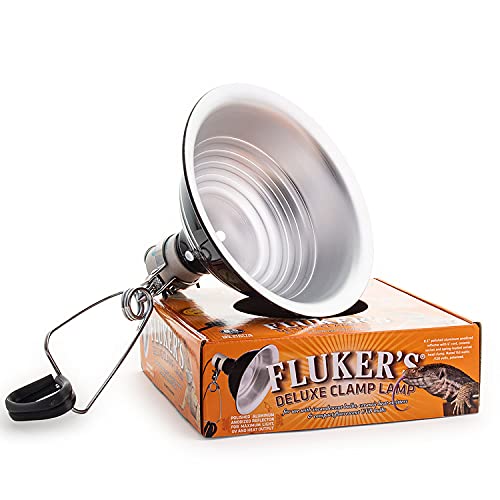
Basking Lamp100W halogen
Night heat: CHE only if room drops below 65°F

UVB Lighting

Ferguson ZoneZone 4 – Full Sun Basker
UVB BulbT5 HO 10.0 / 12%
Tube Size24" fixture
Fits 36–48" enclosures (T5 HO)
Replace T5 HO tubes every 12 months. UVB output drops before the bulb burns out.

Electricity Cost

Daily kWh1.95
Monthly $$9.48
Yearly $$113.65
Basking lamp (100W × 14h)1.40 kWh/day
UVB tube (39W × 14h)0.55 kWh/day

Bearded Dragon Notes

Halogen basking lamp preferred. Replace UVB tube every 12 months.

Always use a thermostat with any heat source. Verify temperatures with a digital thermometer or infrared temp gun.

Equipment Reference

TypeInfraredLight?Best For
HalogenIR-A + IR-BYesDaytime basking
CHEIR-C onlyNoNighttime heat
DHPIR-B + IR-CNo24/7 heat source
Heat MatIR-C contactNoNot recommended

Example Calculations

1Bearded Dragon in Standard 48x24x24 Glass Tank

Inputs

SpeciesBearded Dragon
Enclosure48" × 24" × 24" glass
Room Temperature72°F
Electricity Rate$0.16/kWh

Result

Heat Lamp100W halogen basking lamp
UVB Tube24" T5 HO 10.0/12%
Ferguson ZoneZone 4 – Full Sun Basker
Monthly Cost$9.47

A 48x24x24 glass tank needs about 100W to reach the 100–113°F basking range. The 24" T5 HO 12% tube covers half the enclosure for Zone 4 UVB. Total monthly electricity is about $9.47.

2Leopard Gecko in 36x18x18 PVC Enclosure

Inputs

SpeciesLeopard Gecko
Enclosure36" × 18" × 18" PVC
Room Temperature72°F
Electricity Rate$0.16/kWh

Result

Heat Lamp50W halogen basking lamp
UVB Tube22" T5 ShadeDweller 2.5%
Ferguson ZoneZone 1 – Shade Dweller
Monthly Cost$5.03

PVC insulation reduces the wattage needed. A 50W lamp reaches the 94–97°F basking range in this setup. Zone 1 species need only a low-output ShadeDweller UVB.

3Veiled Chameleon in 24x24x48 Mesh Cage

Inputs

SpeciesVeiled Chameleon
Enclosure24" × 24" × 48" mesh
Room Temperature72°F
Electricity Rate$0.16/kWh

Result

Heat Lamp75W halogen basking lamp
UVB Tube12" Nano T5 HO 6%
Ferguson ZoneZone 3 – Open/Partial Basker
Monthly Cost$5.16

Mesh cages lose heat quickly (1.4x factor), requiring more wattage despite lower basking temps. The 12" nano tube covers the top basking area of this tall arboreal setup.

Frequently Asked Questions

Q

What wattage heat lamp does my reptile need?

Heat lamp wattage depends on enclosure size, material, room temperature, and species. A bearded dragon in a 48x24x24 glass tank with a 72°F room needs about a 100W halogen basking lamp. Smaller enclosures and insulated materials like wood or PVC need less wattage.

  • Bearded dragon (48x24x24 glass): 100W halogen basking lamp
  • Leopard gecko (36x18x18 glass): 50–75W halogen basking lamp
  • Ball python (48x24x24 glass): 75–100W halogen basking lamp
  • Crested gecko (18x18x36): often no heat lamp needed if room is 72–78°F
  • Wood/PVC enclosures need 25–30% less wattage than glass due to better insulation
SpeciesBasking TempTypical WattageFerguson Zone
Bearded Dragon100–113°F100WZone 4
Leopard Gecko94–97°F50–75WZone 1
Ball Python88–92°F75–100WZone 1
Blue-Tongued Skink100–105°F100WZone 3
Q

What Ferguson zone is my reptile in and why does it matter?

Ferguson zones classify reptiles by their natural UV exposure. Zone 1 species like leopard geckos are shade dwellers needing minimal UVB, while Zone 4 species like bearded dragons bask in full sun and need strong UVB. The zone determines what UVB bulb strength to use.

  • Zone 1 (shade dweller): leopard gecko, ball python, corn snake – use T5 ShadeDweller 2.5% or 5.0/6%
  • Zone 2 (partial sun): green anole, box turtle – use T5 HO 5.0/6%
  • Zone 3 (open basker): blue-tongued skink, veiled chameleon, red-eared slider – use T5 HO 10.0/12%
  • Zone 4 (full sun): bearded dragon, uromastyx – use T5 HO 10.0/12% or 14% Dragon
  • UVB tubes lose output before they burn out – replace every 12 months for T5, 6 months for T8
ZoneUVI RangeUVB BulbExample Species
Zone 10–1.4ShadeDweller 2.5% / 5.0Leopard Gecko, Ball Python
Zone 20.7–3.0T5 HO 5.0/6%Green Anole, Box Turtle
Zone 31.0–7.4T5 HO 10.0/12%Blue-Tongue Skink, Chameleon
Zone 42.6–9.5T5 HO 12% or 14%Bearded Dragon, Uromastyx
Q

How much does it cost to run reptile heating and lighting?

A typical bearded dragon setup with a 100W basking lamp and 39W UVB tube running 14 hours per day costs about $9.47 per month at the US average of $0.16/kWh. Species needing less heat or shorter photoperiods cost significantly less.

  • Bearded dragon (100W + 39W UVB, 14h): about $9.47/month ($113.68/year) at $0.16/kWh
  • Leopard gecko (50W + 24W UVB, 14h): about $5.03/month at $0.16/kWh
  • Crested gecko (no heat + 24W UVB, 13h): about $1.52/month at $0.16/kWh
  • Adding a CHE for night heat adds $1–3/month depending on wattage and hours
  • Wood and PVC enclosures reduce heating costs 25–30% vs glass tanks
Species SetupDaily kWhMonthly CostYearly Cost
Bearded Dragon1.95 kWh$9.47$113.68
Leopard Gecko1.04 kWh$5.03$60.37
Ball Python1.17 kWh$5.70$68.40
Q

Should I use a heat mat or a heat lamp for my reptile?

Modern reptile care strongly recommends overhead heating from halogen basking lamps over under-tank heat mats. Halogen lamps produce IR-A and IR-B infrared which penetrate tissue deeply, mimicking natural sunlight. Heat mats only produce IR-C surface heat and cannot warm the air.

  • Halogen basking lamp: produces IR-A + IR-B (deepest tissue penetration), best for daytime
  • Ceramic heat emitter (CHE): IR-C only, no light, good for nighttime supplemental heat
  • Deep heat projector (DHP): IR-B + IR-C, no light, 24/7 option for snakes
  • Heat mat: IR-C contact heat only, not recommended as primary – fire risk without thermostat
  • Always use a thermostat with any heat source to prevent overheating and burns
Heat SourceInfrared TypeEmits LightRecommended Use
Halogen LampIR-A + IR-BYesDaytime basking (best)
CHEIR-C onlyNoNighttime supplemental
DHPIR-B + IR-CNo24/7 moderate heat
Heat MatIR-C contactNoNot recommended
Q

What size UVB tube do I need for my enclosure?

The UVB tube should cover 50–66% of the enclosure length, placed on the warm/basking end. For a 48-inch enclosure, use a 24-inch tube. Use T5 HO for enclosures 18 inches or taller, T8 for shorter ones.

  • 18–24" enclosure: 12" nano UVB tube
  • 24–36" enclosure: 22" UVB tube
  • 36–48" enclosure: 24" UVB tube
  • 48–60" enclosure: 34" UVB tube
  • T5 HO for enclosures 18"+ tall (stronger output), T8 for shorter enclosures
Enclosure LengthUVB Tube SizeBulb TypeCoverage
18–24"12" NanoT5 or T850–66%
36–48"24"T5 HO50–66%
48–60"34"T5 HO50–66%

Related Calculators

Reptile Enclosure Size Calculator

Find the right tank dimensions for your snake, lizard, or gecko based on adult length.

Terrarium Builder Calculator

Calculate substrate, drainage, and mesh quantities for tropical or arid terrarium builds.

Electricity Cost Calculator

Estimate the monthly and yearly electricity cost of any appliance.

Aquarium Calculator

Calculate tank volume, stocking levels, and filtration needs for freshwater or saltwater.

Reptile Substrate Calculator

Calculate reptile substrate volume, bag count, weight, top-up schedule, and cost from enclosure size, depth, and substrate type. Plan aspen to bioactive.

Livestock Water Calculator \u2014 Daily Water Needs by Species

Calculate daily water needs for cattle, horses, sheep, goats, pigs, and chickens. Adjust for heat, lactation, and work level to size tanks and estimate costs.

Related Resources

Reptile Enclosure Size Calculator

Terrarium Builder Calculator

Aquarium Calculator

Electricity Cost Calculator

Explore Pet Calculators

Discover tools for feeding, housing, and caring for dogs, cats, fish, reptiles, and more.

View All Pet Calculators

Last Updated: Mar 16, 2026

This calculator is provided for informational and educational purposes only. Results are estimates and should not be considered professional financial, medical, legal, or other advice. Always consult a qualified professional before making important decisions. UseCalcPro is not responsible for any actions taken based on calculator results.

UseCalcPro
FinanceHealthMath

© 2026 UseCalcPro