UseCalcPro
Home
MathFinanceHealthConstructionAutoPetsGardenCraftsFood & BrewingToolsSportsMarineEducationTravel
Blog
  1. Home
  2. Pets

Aquarium Calculator

Calculate tank volume and fish stocking levels

Units

Tank Volume

20.0 gal

Max Fish

17"

Stocking

48%

Heater

100W

e.g., Tetras, Guppies, Corys

Add up adult sizes of all fish (e.g., 5 tetras × 2" = 10")

Tank Volume

20.0 gal

Actual Volume

16.5 gal

Max Fish

17"

Stocking

48%

understocked

Room for more fish. Consider adding compatible species.

8 inmax 17 in

Equipment

Heater

76-80°F

100W

Filter

5x turnover

100 GPH

Water Change

20% weekly

3.3 gal

Volume Breakdown

Total Volume20.0 gal
Actual (after substrate)16.5 gal

Stocking Capacity

8 of 17 inches used48%
UnderstockedIdeal (50-75%)Overstocked

What You'll Need

Fluval 307 Performance Canister Filter

Fluval 307 Performance Canister Filter

$120-$1604.6
View on Amazon
Saltwater Master Test Kit 550-Test with Sea Salt

Saltwater Master Test Kit 550-Test with Sea Salt

$48-$554.5
View on Amazon
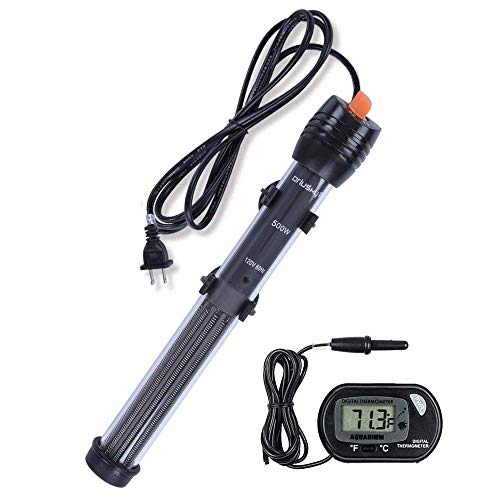
HITOP 100W Adjustable Aquarium Heater Submersible

HITOP 100W Adjustable Aquarium Heater Submersible

$12-$184.3
View on Amazon
Fluval 307 Performance Canister Filter

Fluval 307 Performance Canister Filter

$120-$1604.6
View on Amazon
Saltwater Master Test Kit 550-Test with Sea Salt

Saltwater Master Test Kit 550-Test with Sea Salt

$48-$554.5
View on Amazon
HITOP 100W Adjustable Aquarium Heater Submersible

HITOP 100W Adjustable Aquarium Heater Submersible

$12-$184.3
View on Amazon

As an Amazon Associate, we earn from qualifying purchases.

Frequently Asked Questions

Q

How many fish can I put in my aquarium?

The general rule is 1 inch of fish per gallon for small fish, but this varies. A better approach: 1" per 2 gallons for active swimmers, and consider adult size. A 20-gallon tank might hold 10-12 small fish (1-2") or 4-5 medium fish (3-4").

  • Neon tetras (1.5"): up to 12 in a 20-gallon tank, schooling fish need groups of 6+
  • Betta fish: 1 male per tank, minimum 5 gallons, can coexist with small peaceful species
  • Goldfish: need 20 gallons for the first fish plus 10 gallons per additional fish (they produce 3× the waste of tropical fish)
  • Always research adult size before buying; a 1" Oscar at the store grows to 12–14" and needs 75+ gallons
Q

How do I calculate aquarium volume?

For rectangular tanks: Length × Width × Height (in inches) ÷ 231 = US gallons. For example: 24" × 12" × 16" = 4,608 ÷ 231 = 19.9 gallons. Subtract 10% for gravel and decorations.

  • Rectangular: L × W × H (inches) ÷ 231 = US gallons
  • Cylindrical: π × r² × H (inches) ÷ 231 = US gallons
  • Bow-front tanks hold roughly 10–15% more than a rectangular tank with the same footprint
  • Subtract 2" of substrate depth (about 12.5% volume loss in a 16" tall tank) from actual water volume
Q

What size heater do I need for my fish tank?

Use 3-5 watts per gallon. 10-gallon tank: 50W heater. 29-gallon: 100W. 55-gallon: 200W. For rooms colder than 70°F, use 5 watts/gallon. Consider two smaller heaters for tanks over 50 gallons.

  • Tropical fish need 76–82°F; a heater must raise water 10–15°F above room temperature
  • Two 100W heaters are safer than one 200W for a 55-gallon tank (redundancy if one fails)
  • Adjustable heaters cost $15–$30 and are more reliable than preset models
  • Place heater near filter outflow for even heat distribution; check with a separate thermometer
Tank SizeRoom 72–76°FRoom Below 70°F
10 gallon50W75W
20 gallon75W100W
29 gallon100W150W
55 gallon200W2 × 150W
75 gallon250W2 × 200W
Q

What GPH filter do I need?

Filter should cycle tank 4-6 times per hour. A 20-gallon tank needs 80-120 GPH filter. Heavily stocked tanks need higher turnover. Planted tanks can use lower flow (3-4x). Canister filters are best for tanks over 30 gallons.

  • HOB (hang-on-back) filters: best for 10–30 gallon tanks, easy maintenance, $15–$40
  • Canister filters: best for 30–150 gallon tanks, quieter, more media capacity, $60–$200
  • Sponge filters: ideal for breeding tanks and shrimp tanks, driven by air pump, under $10
  • Oversize your filter by 1.5×; a 30-gallon tank benefits from a filter rated for 45+ gallons
Q

How often should I change aquarium water?

Change 10-25% weekly for most tanks. Heavily stocked tanks need 25-30% weekly. Lightly stocked planted tanks can do 15% every 2 weeks. Never change more than 50% at once to avoid shock.

  • Use a gravel vacuum to siphon debris during each water change (removes trapped waste from substrate)
  • Match new water temperature within 2°F of tank water to avoid thermal shock
  • Treat tap water with dechlorinator (2 drops per gallon) before adding; chloramine is toxic to fish
  • Test ammonia, nitrite, and nitrate weekly; nitrate above 40 ppm signals you need more frequent changes
  • Invest in a Python no-spill system ($30–$50) for tanks 29+ gallons to avoid carrying heavy buckets

Example Calculations

120-Gallon Tropical Community Tank

Inputs

Dimensions24" × 12" × 16" (rectangular)
Substrate Depth2 inches
Fish TypeTropical Community
Current Fish8 inches total

Result

Tank Volume19.9 gallons
Actual Volume16.5 gal (after substrate/decor)
Max Fish Capacity16 inches
Stocking Level49%
Heater80W
Filter100 GPH

Volume = (24 × 12 × 16) / 231 = 19.9 gal. Substrate loss = (2/16) × 19.9 = 2.49 gal. Decor loss = 19.9 × 0.05 = 1.0 gal. Actual = 16.5 gal. Max fish = 16.5 × 1.0 = 16 inches. Heater = 80W (4W/gal). Filter = 100 GPH (5x turnover).

255-Gallon Goldfish Tank

Inputs

Tank Size55 gallons (preset)
Substrate Depth2 inches
Fish TypeColdwater (Goldfish)
Current Fish12 inches total

Result

Tank Volume55.0 gallons
Actual Volume45.2 gal (after substrate/decor)
Max Fish Capacity23 inches
Stocking Level53%
Heater220W
Filter275 GPH

Preset 55 gal tank (standard dims ~48" × 12" × 16"). Substrate and decor reduce to ~45.2 gal usable. Goldfish rule = 0.5"/gal, max = 23 inches. With 12" of fish, stocking is 53% (ideal range). Filter = 275 GPH for 5x turnover.

Formulas Used

Rectangular Tank Volume

Gallons = (Length × Width × Height) / 231

Calculates tank volume in gallons from dimensions in inches. 231 cubic inches equals 1 US gallon.

Where:

Length= Tank length in inches
Width= Tank width in inches
Height= Tank height in inches
231= Cubic inches per US gallon

Actual Volume (after substrate)

Actual Gallons = Volume - (Substrate Depth / Height × Volume) - (Volume × 0.05)

Subtracts volume lost to substrate and decorations (estimated 5%) from total volume.

Where:

Substrate Depth= Gravel/sand depth in inches
Height= Tank height in inches
0.05= 5% volume loss for decorations

Max Fish Capacity

Max Fish Inches = Actual Gallons × Inches per Gallon

Uses the inches-per-gallon rule for the selected fish type to determine total fish capacity.

Where:

Actual Gallons= Usable water volume
Inches per Gallon= Stocking rule (tropical = 1, coldwater = 0.5)

Guide to Aquarium Stocking and Equipment

1

Fish Stocking Rules and Limits

The classic "1 inch of fish per gallon" rule breaks down for fish over 3 inches: a 10-inch Oscar produces far more waste than ten 1-inch neon tetras despite occupying the same total inches. A better approach allocates by body mass and activity level: 1 inch per gallon for small tetras and rasboras, 1 inch per 2 gallons for active swimmers like danios, and 1 inch per 3 gallons for large-bodied fish like cichlids and goldfish.

A 20-gallon community tank typically supports 10–12 small fish (neon tetras, guppies, corydoras) or 4–5 medium fish (dwarf gouramis, ram cichlids). Schooling fish need groups of 6+ to display natural behavior and reduce stress. Mixing aggressive species with peaceful ones causes fin-nipping, hiding, and starvation — always check compatibility before combining species.

Adult size, not purchase size, determines tank requirements. A 1-inch juvenile Oscar will grow to 12–14 inches and needs a 75-gallon tank minimum. A 2-inch plecostomus (common pleco) reaches 18–24 inches. Research every species before buying. The Betta Tank Calculator provides species-specific sizing for betta fish setups.

Stocking density depends on species size, waste output, and activity
Fish TypeRule20-Gal CapacityNotes
Neon tetra (1.5")1"/gal12–13 fishSchool of 6+ minimum
Guppy (2")1"/gal8–10 fishMales only or breeding
Dwarf gourami (3.5")1"/2gal3–4 fish1 male per tank
Goldfish (6–12")1"/3gal1–2 fish20 gal first + 10 per extra
2

Equipment Sizing: Heaters, Filters, and Lighting

Heater wattage follows the 3–5 watts per gallon rule. A 20-gallon tropical tank needs a 75–100W heater; a 55-gallon tank needs 200W. For rooms below 70°F, use 5 watts/gallon. Tanks over 50 gallons benefit from two smaller heaters for redundancy — if one fails, the other prevents catastrophic temperature drops overnight.

Filter flow rate should cycle the tank 4–6 times per hour. A 29-gallon tank needs 115–175 GPH. Over-filtering is always better than under-filtering: a filter rated for 50 gallons on a 29-gallon tank provides excellent water quality with the same electricity cost. HOB filters suit tanks under 30 gallons; canister filters are superior for 30+ gallon tanks due to greater media capacity and quieter operation.

Lighting depends on planted vs. fish-only tanks. Fish-only tanks need 6–8 hours of moderate light for a natural day/night cycle. Planted tanks require 8–10 hours of high-intensity light (30–50 PAR at substrate) for photosynthesis. LED fixtures have largely replaced fluorescent tubes due to lower energy use, longer lifespan (50,000+ hours), and adjustable spectrum. The Aquarium Filter Size Calculator provides detailed filter recommendations by tank volume and stocking level.

Equipment sizing guidelines for freshwater aquariums
Tank SizeHeater (W)Filter (GPH)Light Timer
10 gallon50W40–606–8 hours
20 gallon75–100W80–1206–8 hours
29 gallon100–150W115–1758–10 hours (planted)
55 gallon200W (or 2×100W)220–3308–10 hours (planted)
3

The Nitrogen Cycle and Water Quality

Fish produce ammonia (NH₃) through respiration and waste. At concentrations above 0.02 ppm, ammonia damages gill tissue and can be lethal within 24–48 hours. Beneficial bacteria (Nitrosomonas) convert ammonia to nitrite (NO₂⁻), which is equally toxic. A second group (Nitrobacter) converts nitrite to nitrate (NO₃⁻), which is relatively harmless below 40 ppm and removed by water changes.

Cycling a new tank takes 4–6 weeks. Add ammonia source (fish food or pure ammonia to 2 ppm), test daily, and wait for ammonia and nitrite to spike then drop to zero while nitrate rises. Only then is the tank safe for fish. Adding fish to an uncycled tank exposes them to ammonia and nitrite spikes that kill 50–80% of fish in new setups — the leading cause of beginner fishkeeping failure.

Weekly 20–25% water changes maintain nitrate below 40 ppm and replenish trace minerals. Use a dechlorinator (sodium thiosulfate) to neutralize chlorine and chloramine in tap water. Vacuum the gravel during each change to remove trapped waste. Test water weekly with a liquid test kit (API Master Kit, $25–30) for ammonia, nitrite, nitrate, and pH. The Aquarium Water Change Calculator schedules changes based on tank size and stocking density.

Never change more than 50% of the water at once. Large water changes shock fish with sudden parameter swings (pH, temperature, mineral content). If nitrate is extremely high (80+ ppm), do multiple 25% changes over several days rather than one large change.

Related Calculators

Pet Calorie Calculator

Pet feeding calculator

Volume Calculator

Calculate volumes

Water Intake

Daily hydration needs

Unit Converter

Convert measurements

Aquarium Stocking Calculator

Determine how many fish your tank can safely hold based on species type and tank size. Get stocking limits, filter recommendations, and bioload ratings.

Betta Fish Tank Calculator

Calculate betta fish tank setup: heater wattage, filter size, water change schedule, and plant count. Get recommendations by tank size and room temperature.

Related Resources

Gas Mileage Calculator: How to Calculate MPG and Fuel Economy

Read our guide

Drywall Calculator Guide: Sheets, Mud, Tape & Cost for Any Room

Read our guide

Rain Barrel Calculator: How Many Barrels Do You Need for Rainwater Harvesting?

Read our guide

BMI Calculator

Calculate your body mass index

Calorie Calculator

Find your daily calorie needs

TDEE Calculator

Calculate total daily energy expenditure

More Useful Calculators

See all pet calculators for animal owners

View All

Last Updated: Mar 26, 2026

This calculator is provided for informational and educational purposes only. Results are estimates and should not be considered professional financial, medical, legal, or other advice. Always consult a qualified professional before making important decisions. UseCalcPro is not responsible for any actions taken based on calculator results.

UseCalcPro
FinanceHealthMath

© 2026 UseCalcPro