Gas Mileage Calculator: How to Calculate MPG and Fuel Economy
To calculate MPG (miles per gallon), divide the miles driven by the gallons of gas used. If you drove 300 miles and used 10 gallons, your car gets 30 MPG. Track this over multiple fill-ups for an accurate picture of your true fuel economy.
Tracking MPG on a 2020 Accord over 18 months and 22,000 miles shows how EPA ratings hold up against real-world driving: an EPA-rated 33 MPG combined actually averaged 29.4 MPG in real-world driving — 11% below the sticker. Checking tire pressure weekly and easing off the gas pedal brought it up to 31.2 MPG, saving roughly $180 a year at current gas prices.
Use our Gas Mileage Calculator to instantly calculate your MPG and compare it to EPA estimates.
How to Calculate Miles Per Gallon
The Basic Formula
MPG = Miles Driven ÷ Gallons Used
Step-by-Step Calculation
Step 1: Fill your tank completely and record the odometer reading
Step 2: Drive normally until you need to refuel
Step 3: Fill the tank again and record:
- New odometer reading
- Gallons added to fill the tank
Step 4: Calculate:
Miles Driven = New Odometer - Previous Odometer
MPG = Miles Driven ÷ Gallons Added
Example Calculation
Previous odometer: 45,230 miles
New odometer: 45,580 miles
Gallons to fill: 12.5 gallons

Miles driven: 45,580 - 45,230 = 350 miles
MPG: 350 ÷ 12.5 = 28 MPG
Tip
Track over multiple fill-ups. A single tank can be affected by driving conditions, weather, and routes. Average 3-5 fill-ups for your true MPG.
Understanding Fuel Economy Ratings
EPA Fuel Economy Numbers
The EPA provides three ratings for every vehicle:
| Rating | What It Means |
|---|---|
| City MPG | Stop-and-go driving, speeds under 45 mph |
| Highway MPG | Steady speeds, typically 45-65 mph |
| Combined MPG | 55% city + 45% highway weighted average |
Why Real-World MPG Differs from EPA
| Factor | Effect on MPG |
|---|---|
| Aggressive driving | -15% to -30% |
| Cold weather | -10% to -20% |
| Short trips | -10% to -25% |
| Excess weight | -1% to -2% per 100 lbs |
| Roof cargo | -5% to -25% |
| A/C use | -5% to -10% |
| Under-inflated tires | -1% to -3% |
Info
Most drivers get 10-15% less than EPA ratings. This is normal. EPA testing uses controlled conditions that don't reflect typical driving.
MPG vs. L/100km: Converting Units
Different countries use different fuel economy measures:
Conversion Formulas
MPG to L/100km:
L/100km = 235.215 ÷ MPG
L/100km to MPG:
MPG = 235.215 ÷ L/100km
Quick Reference Table
| MPG (US) | L/100km | Description |
|---|---|---|
| 15 | 15.7 | Large truck/SUV |
| 20 | 11.8 | Older sedan, small SUV |
| 25 | 9.4 | Average car |
| 30 | 7.8 | Efficient sedan |
| 35 | 6.7 | Very efficient |
| 40 | 5.9 | Hybrid territory |
| 50 | 4.7 | Efficient hybrid |
| 60+ | <4.0 | Plug-in hybrid (gas only) |
US vs. Imperial Gallons
Important: US and UK gallons are different:
- US gallon = 3.785 liters
- Imperial gallon = 4.546 liters
UK MPG is about 20% higher than US MPG for the same fuel consumption.
What's Good Gas Mileage?
By Vehicle Type (2026 Standards)
| Vehicle Type | Poor | Average | Good | Excellent |
|---|---|---|---|---|
| Compact car | <28 | 28-35 | 35-45 | 45+ |
| Midsize sedan | <25 | 25-32 | 32-40 | 40+ |
| Full-size sedan | <22 | 22-28 | 28-35 | 35+ |
| Small SUV/Crossover | <24 | 24-30 | 30-38 | 38+ |
| Large SUV | <18 | 18-23 | 23-28 | 28+ |
| Pickup truck | <16 | 16-22 | 22-26 | 26+ |
| Sports car | <20 | 20-26 | 26-32 | 32+ |
| Hybrid | <40 | 40-50 | 50-55 | 55+ |
| Plug-in hybrid | <35 | 35-50 | 50-90 | 90+ |
If you are considering switching to electric, our EV vs gas cost comparison guide breaks down how fuel economy translates into long-term savings.
Fuel Economy Trends
Average new vehicle fuel economy (US):
- 1975: 13.5 MPG
- 1990: 20.2 MPG
- 2000: 20.1 MPG
- 2010: 23.5 MPG
- 2020: 25.7 MPG
- 2026: ~28 MPG (projected)
Calculating Fuel Costs
Cost Per Mile
Cost per Mile = Gas Price ÷ MPG
Example (30 MPG at $3.50/gallon):
$3.50 ÷ 30 = $0.117 per mile
Annual Fuel Cost
Annual Cost = (Annual Miles ÷ MPG) × Gas Price
Example (12,000 miles, 28 MPG, $3.50/gallon):
(12,000 ÷ 28) × $3.50 = 428.6 × $3.50 = $1,500/year
Cost Comparison Between Vehicles
| MPG | 12,000 mi @ $3.50/gal | 15,000 mi @ $3.50/gal |
|---|---|---|
| 20 | $2,100 | $2,625 |
| 25 | $1,680 | $2,100 |
| 30 | $1,400 | $1,750 |
| 35 | $1,200 | $1,500 |
| 40 | $1,050 | $1,313 |
| 50 | $840 | $1,050 |
For trip-specific calculations, see our Road Trip Cost Calculator or read our road trip cost planning guide.
Factors That Affect Gas Mileage
Driving Habits
| Habit | MPG Impact |
|---|---|
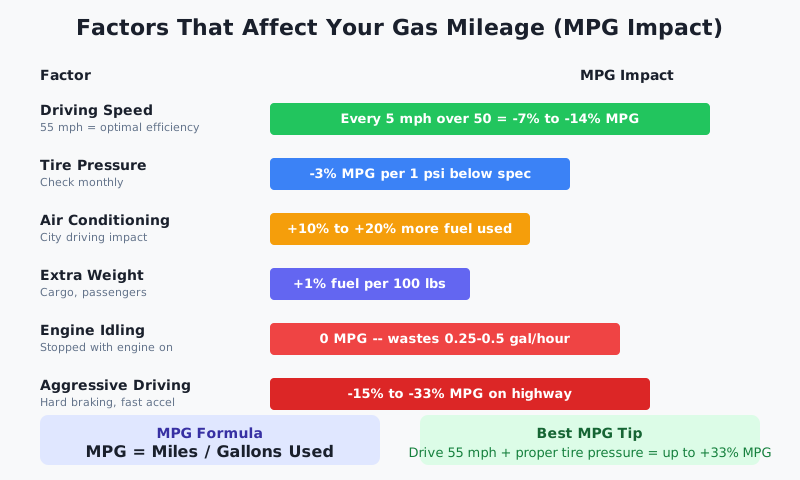
| Aggressive acceleration | -10% to -33% |
| Speeding (65+ mph) | -7% per 5 mph over 50 |
| Excessive idling | -0.5 to 1 gal/hour wasted |
| Cruise control on highway | +5% to +10% |
| Anticipating stops | +5% to +15% |
Vehicle Maintenance
| Issue | MPG Impact |
|---|---|
| Under-inflated tires | -0.2% per 1 psi below optimal |
| Dirty air filter | -1% to -10% |
| Wrong motor oil grade | -1% to -2% |
| Worn spark plugs | -2% to -4% |
| Misaligned wheels | -2% to -10% |
| Dragging brakes | -5% to -10% |
Environmental Factors
| Factor | MPG Impact |
|---|---|
| Cold weather (20°F) | -10% to -20% |
| Hot weather with A/C | -5% to -10% |
| Hilly terrain | -5% to -20% |
| Headwinds | -5% to -10% |
| Rain/wet roads | -5% |
Tip
The first few miles matter most. Your engine is least efficient when cold. Combine short trips when possible to maximize economy.
How to Improve Your Gas Mileage
Immediate Improvements
-
Check tire pressure weekly
- Underinflated tires increase rolling resistance
- Check when tires are cold
- Use the door jamb sticker pressure, not tire sidewall
-
Remove excess weight
- 100 extra pounds = 1-2% MPG loss
- Clear trunk of unnecessary items
-
Remove roof racks when not in use
- Roof cargo boxes reduce MPG by 6-17% at highway speeds
- Even empty racks create drag
-
Use cruise control on highways
- Maintains steady speed
- Prevents unconscious speeding
Driving Technique Changes
| Technique | Expected Improvement |
|---|---|
| Gradual acceleration | 5-10% |
| Coast to red lights | 5-10% |
| Reduce max speed by 5 mph | 5-7% |
| Avoid jackrabbit starts | 10-20% |
| Turn off engine if idling >60 sec | Varies |
Maintenance Priorities
- Replace air filter (when dirty): +1-10%
- Use correct oil viscosity: +1-2%
- Keep engine tuned: +4%
- Fix oxygen sensor if faulty: +up to 40%
- Ensure proper wheel alignment: +2-10%
Tracking Your Gas Mileage
Manual Tracking Method
Create a log with these columns:
- Date
- Odometer reading
- Gallons filled
- Price per gallon
- Miles since last fill
- Calculated MPG
Using Apps and Technology
| Method | Pros | Cons |
|---|---|---|
| Fuel tracking apps | Easy, calculates automatically | Requires data entry |
| OBD2 scanner | Real-time MPG, engine data | Upfront cost |
| Trip computer | Built-in, convenient | Often 5-10% optimistic |
| Credit card statements | Automatic record | Less detail |
What Your MPG Tells You
| Pattern | Possible Cause |
|---|---|
| Sudden drop | Driving conditions, maintenance issue |
| Gradual decline | Wear, maintenance needed |
| Better than usual | Good conditions, efficient driving |
| Inconsistent | Varied driving conditions |
How to Use Our Gas Mileage Calculator
Our Gas Mileage Calculator makes tracking easy:
- Enter miles driven — from odometer or trip meter
- Enter gallons used — from pump receipt
- Get your MPG — instant calculation
The calculator also provides:
- L/100km conversion
- Comparison to EPA ratings
- Cost per mile at current gas prices
- Estimated annual fuel cost
Frequently Asked Questions
How do I calculate miles per gallon?
Divide the miles you drove by the gallons of gas used. Example: 300 miles ÷ 12 gallons = 25 MPG. For best accuracy, fill the tank completely before and after your measurement period.
What is the average MPG for a car?
The average new car in the US gets about 28 MPG combined. Sedans typically achieve 30-40 MPG, SUVs 25-30 MPG, and trucks 18-24 MPG. Hybrids can reach 45-60 MPG.
Why is my MPG lower than the EPA rating?
EPA tests use ideal conditions that don't reflect real-world driving. Aggressive driving, cold weather, short trips, heavy cargo, and city driving all reduce MPG below EPA estimates by 10-25%.
How can I improve my gas mileage?
The biggest improvements come from: maintaining proper tire pressure (+1-3%), removing excess weight (+1-2%), driving at moderate speeds (+5-15%), accelerating gently (+5-10%), and keeping up with maintenance (+up to 10%).
Is premium gas worth it for better MPG?
Only if your car requires it. Premium won't improve MPG in vehicles designed for regular gas. If your car requires premium, using regular can reduce performance and efficiency.
How accurate is my car's MPG display?
Most dashboard MPG displays are optimistic by 5-10%. Calculate your actual MPG by dividing miles by gallons at fill-up for the most accurate reading.
Related Calculators
- Road Trip Cost Calculator — Plan fuel costs for any trip
- Car Payment Calculator — Calculate monthly auto loan payments
- EV vs Gas Cost Calculator — Compare electric vs gas vehicle costs
Conclusion
Knowing your true MPG helps you understand your car's efficiency, budget for fuel, and identify when something's wrong. Track your mileage over multiple fill-ups for an accurate picture, and use the improvement tips to squeeze more miles from every gallon.
Use our Gas Mileage Calculator to easily calculate your MPG and compare it to expected performance. A few simple changes in driving habits and maintenance can save you hundreds of dollars per year.
Fuel economy calculations are estimates based on standard formulas. Actual results vary based on driving conditions, vehicle maintenance, and individual driving habits.
This article is provided for informational and educational purposes only. Content should not be considered professional financial, medical, legal, or other advice. Always consult a qualified professional before making important decisions. UseCalcPro is not responsible for any actions taken based on the information in this article.
Try These Calculators
Find out your real MPG and what it costs you per mile. Enter distance driven and fuel used to get fuel economy, cost per mile, and yearly gas spending.
Calculate RV fuel economy adjusted for terrain, wind, and cargo load. See gallons needed, total fuel cost, and cost-per-mile for any RV type and trip distance.
Find out what it really costs to charge an EV at home versus public charging stations. Compare annual charging costs to gas and see your projected savings.
Calculate car shipping costs by distance, vehicle type, and transport method. Compare open vs enclosed rates and get transit time estimates instantly.
Calculate road trip gas cost and split it per person. Enter distance, MPG, and number of travelers to estimate your total fuel budget and carpool savings.