
Michael Roberts
Senior Financial Analyst & CFP
I bought my first home at 28 and made every mistake in the book — overpaid on PMI, didn't shop rates, and nearly maxed out my budget. Those $47,000 in "lessons learned" turned me into a Certified Financial Planner obsessed with helping others avoid my path. After 12 years in mortgage consulting (including 5 years at Wells Fargo Home Lending), I now write the guides I wish I had. Based in Denver suburbs with my wife Elena and two kids who think "amortization" is a spell from Harry Potter.
Articles by Michael Roberts (42)
Impulse Spending: How to Stop Wasting $5,400 a Year on Things You Don't Need
Impulse Spending: How to Stop Wasting $5,400 a Year on Things You Don't Need The average American spends $314 per month — or $5,400 per year — on impulse purchases they later regret. The top impulse categories are food and dining ($73/month), clothing ($57/month), and household items ($52/month). Research shows that more than half of U.S. shoppers have spent $100 or more on a single impulse buy, and 20% have crossed the $1,000 threshold at least once. I decided to track every unplanned purchase I made for 30 days. The result was a gut punch: $487 in impulse spending I could not justify. Three Amazon orders totaling $134 that I had completely forgotten about by the time they arrived. Eleven coffee shop visits at an average of $6.18 each — $68 on lattes I made purely out of habit. Four fast food lunches at $12-$16 a pop when I had...
No-Buy Challenge Calculator: Complete Guide to Saving Thousands in 2026
No-Buy Challenge Calculator: Complete Guide to Saving Thousands in 2026 A no-buy challenge is a commitment to stop purchasing non-essential items for a set period, typically 30 days to a full year. The average American household spends over $18,000 annually on discretionary purchases including dining out, clothing, entertainment, and impulse buys. By eliminating or reducing these categories, participants routinely save $5,000 to $15,000 per year. When I tried a 3-month no-buy challenge last spring, I was skeptical it would stick. I cut coffee shop visits ($135/month), dining out ($400/month), and impulse online shopping ($265/month). By the end of those 90 days, I had saved $2,400 -- money that went straight into my emergency fund. The hardest part was the first two weeks. After that, I stopped browsing Amazon out of boredom and started actually appreciating what I already owned. Use our No-Buy Challenge Calculator(/finance/no-buy-challenge-calculator) to calculate your personal savings potential...
How Trump Tariffs Affect Your Household Budget in 2026: A Complete Breakdown
How Trump Tariffs Affect Your Household Budget in 2026: A Complete Breakdown The average American household will pay an estimated $1,300 to $2,100 per year in higher costs due to 2026 tariffs, according to analyses from the Tax Foundation and the Tax Policy Center. Tariffs function as a hidden consumption tax — they are paid by US importers, but the cost is passed directly to consumers through higher retail prices on everything from groceries to electronics to clothing. Last fall, I sat down with a family earning $65,000 a year who felt like their money was disappearing faster than ever. When we ran the numbers together, we found they were paying roughly $2,100 more per year than they would have without the current tariffs. Their grocery bill had climbed about $18 per week — roughly $940 a year — and clothing for their two kids was costing 15-20% more across...
Valentine's Day Budget 2026: How Much to Spend Without Going Broke
Valentine's Day Budget 2026: How Much to Spend Without Going Broke Americans will spend a record $29.1 billion on Valentine's Day 2026 — $199.78 per person on average. The biggest categories: jewelry ($7B), dining out ($6.3B), clothing ($3.5B), and flowers ($3.1B). Whether you are planning a grand romantic gesture or a thoughtful evening on a budget, knowing these numbers helps you spend intentionally instead of emotionally. My first Valentine's Day with my partner cost me $380. I booked a prix fixe dinner at a steakhouse downtown ($165 for two), grabbed a premium bouquet of two dozen red roses on February 13 ($95 at a local florist — marked up 40% from the week before), and panic-bought a gold bracelet at the mall ($120) because I felt like the flowers and dinner were not "enough." My partner loved it, but when I saw the credit card statement, I felt sick. The...
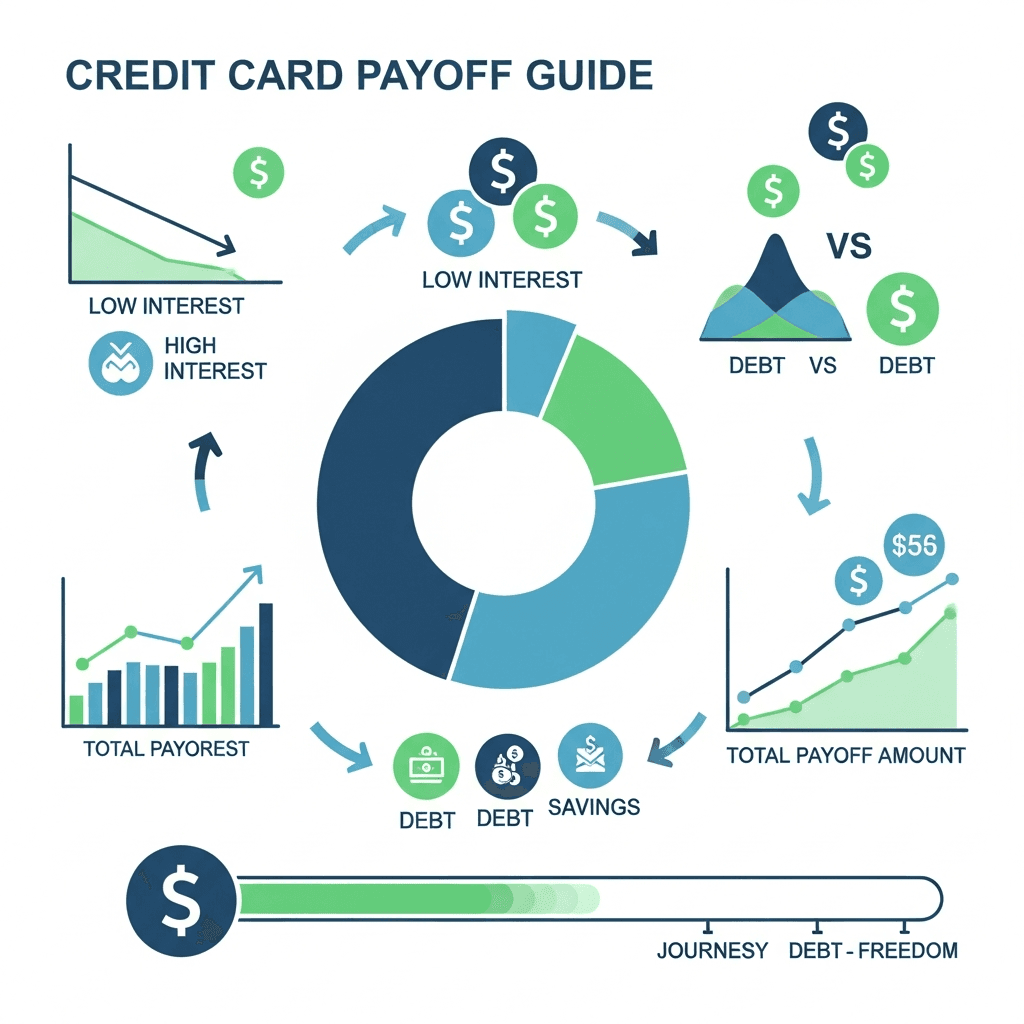
How to Pay Off Credit Card Debt: A Step-by-Step Calculator Guide
A credit card payoff calculator shows exactly how long it will take to eliminate your credit card balance based on your current balance, APR, and monthly payment. With the average credit card APR exceeding 22% in 2026, a $7,000 balance with minimum-only payments takes over 17 years to pay off and costs $10,600+ in interest. Use our Credit Card Calculator(/finance/credit-card-calculator) to see your exact payoff timeline. I learned the hard way how credit card interest compounds. In my mid-20s, I charged $6,200 for a kitchen renovation onto a 24.99% APR card, telling myself I'd pay it off "in a few months." Eighteen months later, I'd paid $2,800 and still owed $5,100 — nearly all my payments had gone to interest. That experience taught me to always run the numbers before carrying a balance. How Credit Card Interest Actually Works Credit card interest isn't simple interest — it compounds daily, meaning...
Credit Score FAQ: How Scores Work, What Affects Them, and How to Improve
Your credit score is a three-digit number (300-850) that represents your creditworthiness, calculated from five factors: payment history (35%), credit utilization (30%), length of credit history (15%), credit mix (10%), and new credit inquiries (10%). A score of 740+ qualifies you for the best loan rates and credit card offers, potentially saving you tens of thousands in interest over your lifetime. Check your estimated score with our Credit Score Calculator(/finance/credit-score-calculator). In 2018, my credit score dropped 87 points — from 761 to 674 — after I missed a single mortgage payment during a job transition. That one 30-day late payment cost me $4,200 in higher interest when I refinanced my auto loan six months later. It took 18 months of perfect payments to recover those points. The experience taught me that understanding your credit score isn't optional — it's financial self-defense. How Is Your Credit Score Calculated? The FICO score...
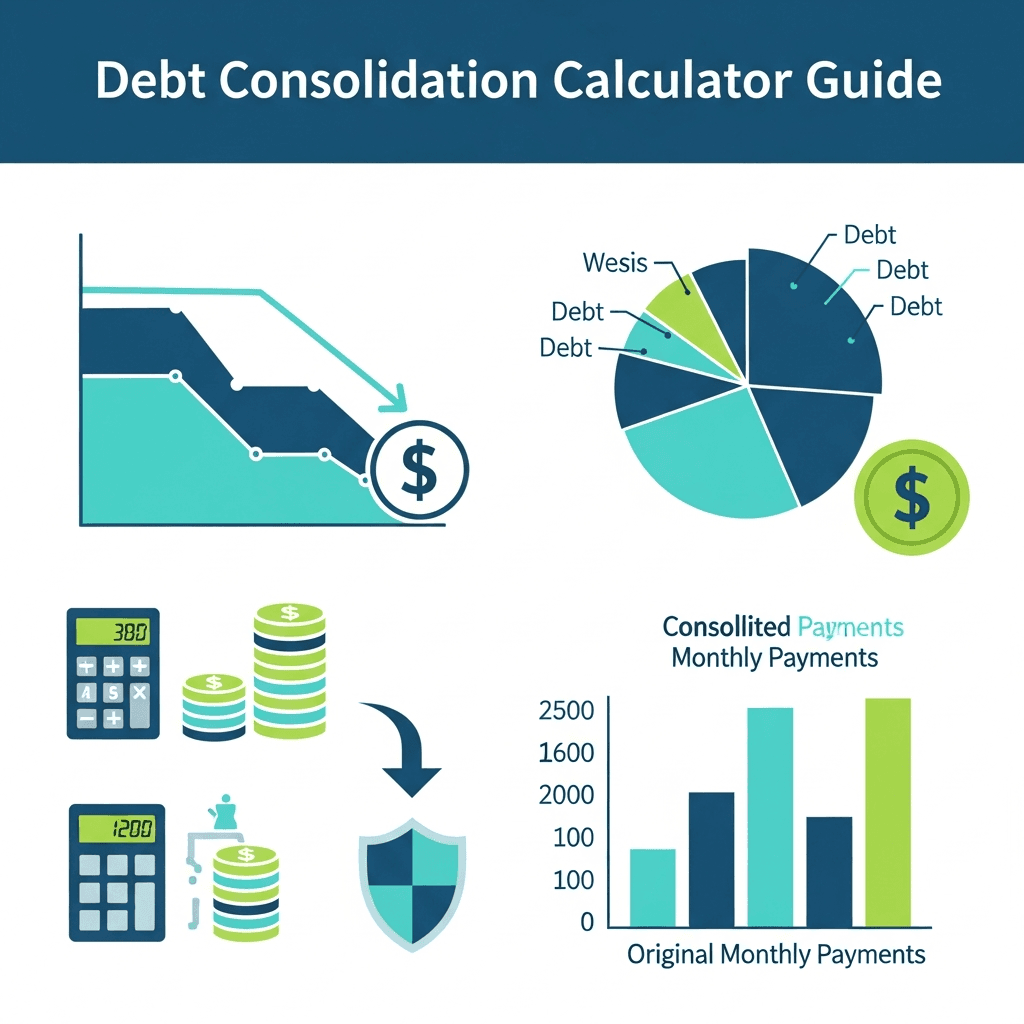
Debt Consolidation Calculator Guide: How to Combine Debts and Save
Debt consolidation combines multiple debts into a single loan with one monthly payment, ideally at a lower interest rate than your current debts. For example, consolidating $20,000 in credit card debt from 22% APR to a 10% personal loan saves $6,800 in interest over a 4-year term. Use our Debt Consolidation Calculator(/finance/debt-consolidation-calculator) to see your specific savings. A client I advised in 2021 was juggling five credit cards totaling $27,000 with rates from 18% to 26%. She was spending $640/month across all minimum payments and making almost no progress — $480 of that went to interest. After consolidating into a single 11% personal loan, her payment dropped to $590/month with a guaranteed 5-year payoff date, saving her $9,200 in total interest. How Debt Consolidation Works Debt consolidation replaces multiple debts with a single new loan. You use the new loan to pay off all existing debts, then make one monthly...
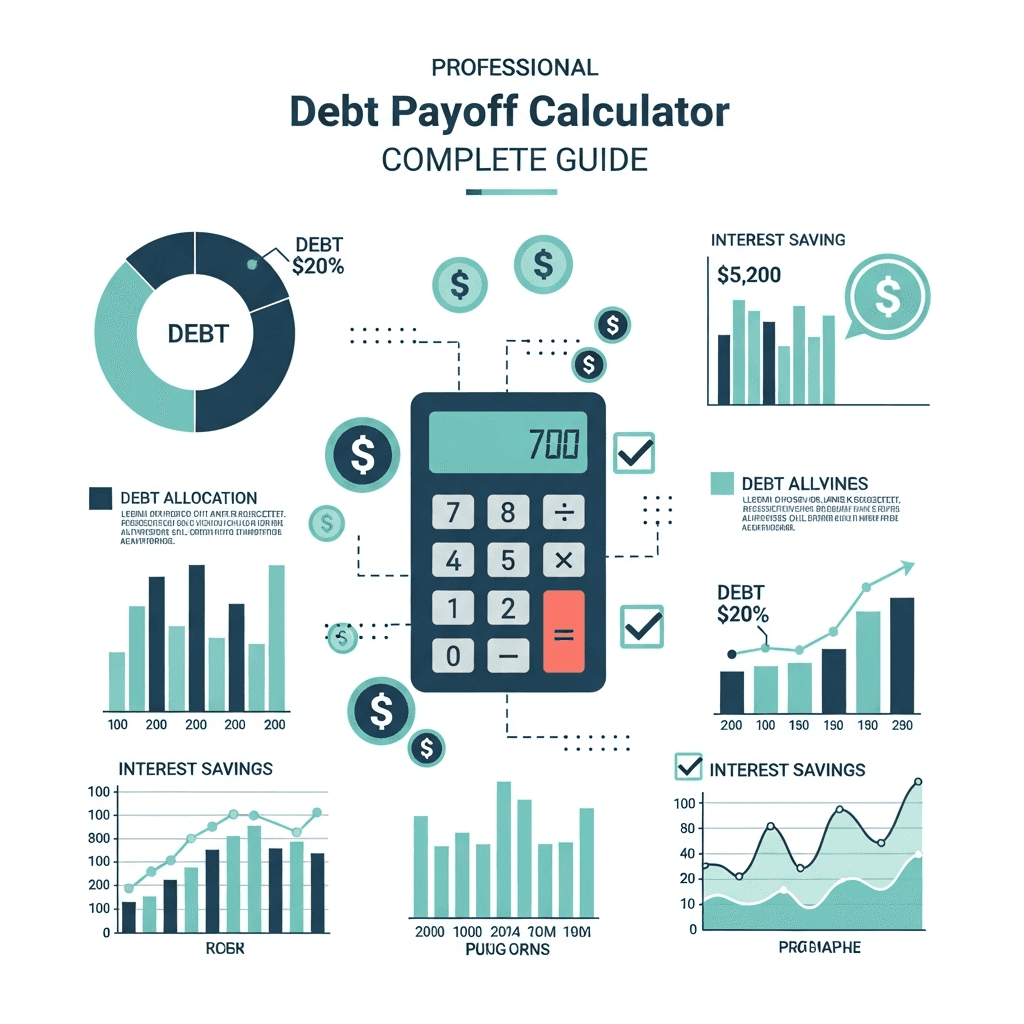
Debt Payoff Calculator: Complete Guide to Becoming Debt-Free
A debt payoff calculator estimates how long it will take to eliminate your debt based on your balance, interest rate, and monthly payment amount. For example, $15,000 in credit card debt at 22% APR with $400 monthly payments takes 52 months and costs $5,719 in interest — but increasing to $600/month cuts that to 31 months and saves $2,673. Use our free Debt Payoff Calculator(/finance/debt-payoff-calculator) to build your personalized payoff plan. When I consolidated my own credit card debt in 2019, I was carrying $23,000 across four cards with rates between 19% and 26%. I spent hours with spreadsheets before realizing a calculator could show me the exact payoff date — and the $8,400 I'd save by switching from minimum payments to the avalanche method. That single afternoon of planning changed my entire financial trajectory. How Debt Payoff Calculators Work A debt payoff calculator uses the amortization formula to determine...
Personal Loan Comparison: Rates, Terms, and Lender Types Explained
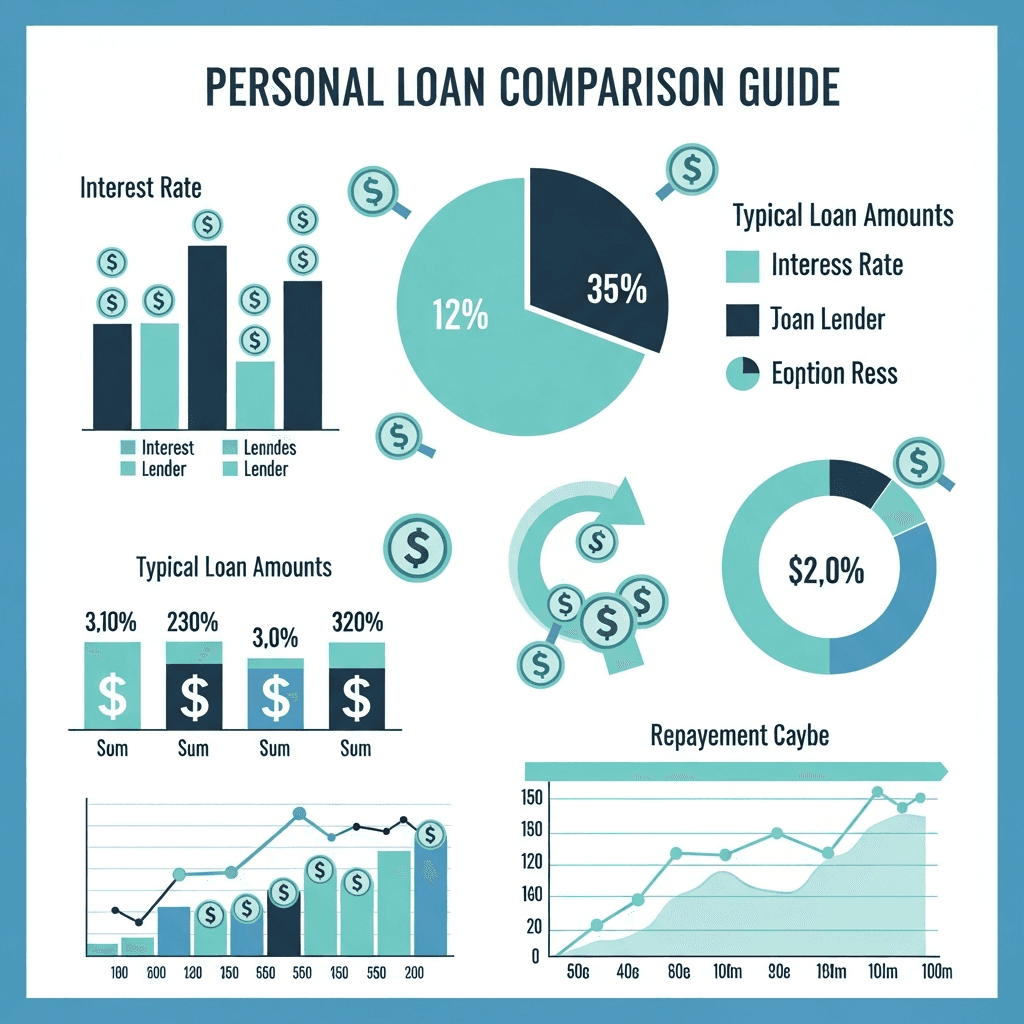
A personal loan is a fixed-rate, fixed-term unsecured loan that you repay in equal monthly installments, typically ranging from $1,000 to $100,000 with terms of 2-7 years. Rates vary widely — from 7% for excellent credit to 36% for poor credit — so comparing lenders is essential. Use our Personal Loan Calculator(/finance/personal-loan-calculator) to calculate exact payments for any rate and term combination. When I helped a friend refinance $18,000 in credit card debt into a personal loan in 2022, the rate difference between the first offer (16.5% from his bank) and the best offer (9.9% from an online lender) saved him $3,400 in interest over 4 years. That 30-minute comparison literally paid $3,400 — yet most people accept the first offer they get. Personal Loan Rates by Credit Score Your credit score is the single biggest factor determining your personal loan rate. Here's what to expect in 2026: | Credit...
Student Loan Repayment Guide: Plans, Forgiveness, and Payoff Strategies
A student loan repayment calculator estimates your monthly payment, total interest, and payoff date based on your loan balance, interest rate, and repayment plan. On a standard 10-year plan, a $35,000 federal loan at 6.53% costs $397/month and $12,680 in total interest — but income-driven plans can reduce payments to as low as $150/month, with remaining balances forgiven after 20-25 years. Use our Student Loan Calculator(/finance/student-loan-calculator) to model different scenarios. I spent the first three years after college making minimum payments on $42,000 in student loans without understanding my options. When I finally sat down and compared repayment plans, I realized I could have been on an income-driven plan that would have saved me $340/month during my low-income years — roughly $12,000 I overpaid because I didn't know what was available. That experience is why I now urge every borrower to run the numbers before choosing a plan. Understanding Your...
Car Payment Calculator: How to Calculate Monthly Auto Loan Payments
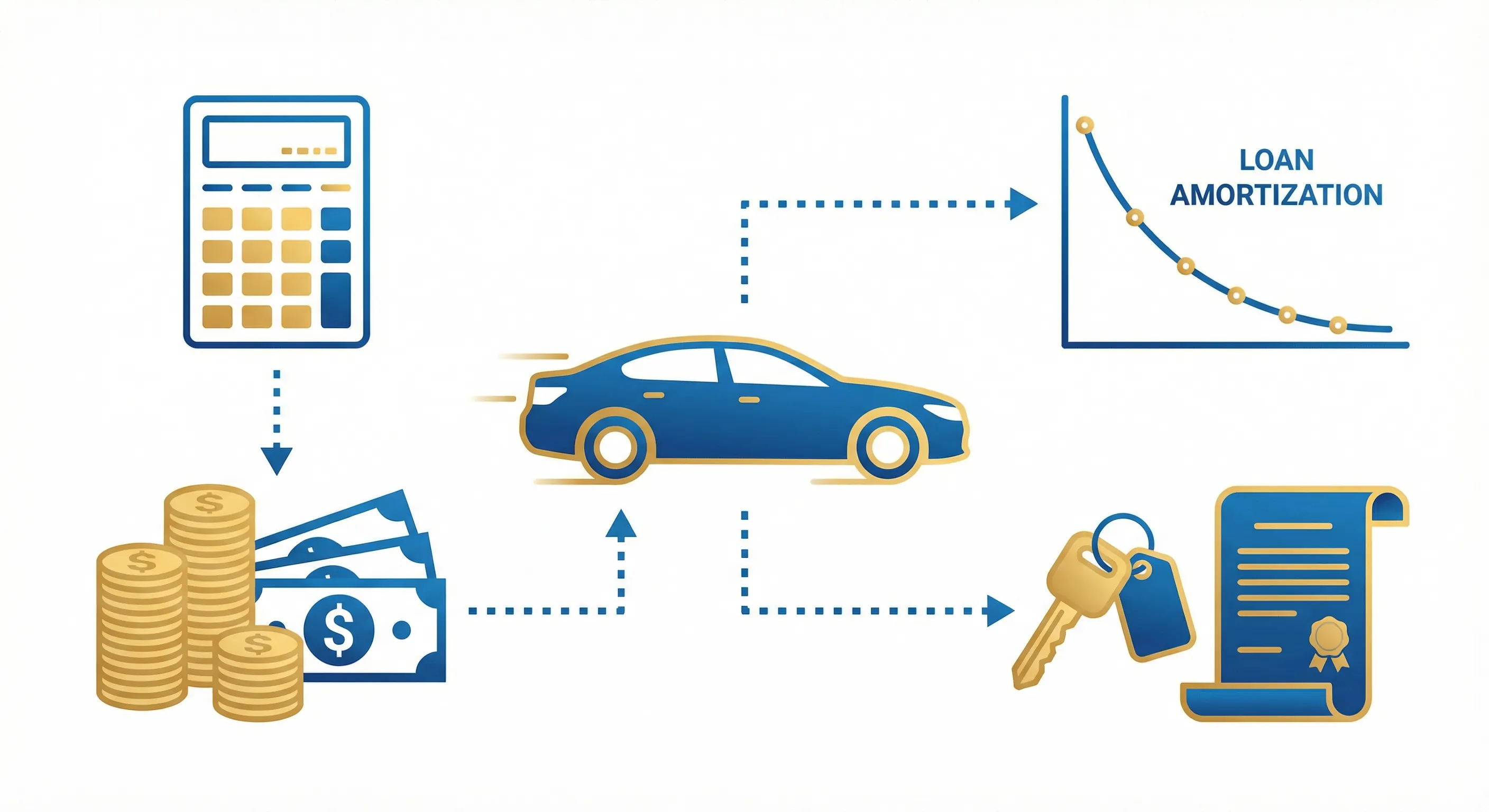
Car Payment Calculator: How to Calculate Monthly Auto Loan Payments Your monthly car payment depends on the loan amount, interest rate, and term length. A $30,000 car with $5,000 down, 6% APR, and a 60-month term has a payment of about $483/month. Changing any variable significantly affects your payment. When I financed my last car — a $28,500 Mazda CX-5 with $6,000 down — I initially accepted the dealer's 7.2% APR offer, which put my payment at $446/month. After getting pre-approved at my credit union for 5.4%, I renegotiated and dropped it to $428/month, saving $1,080 over the 60-month term. Those few hours of rate shopping were the easiest money I have ever saved. Use our Car Payment Calculator(/auto/car-payment-calculator) to see exactly what you'll pay for any vehicle. How to Calculate Your Car Payment The Standard Formula M = P × r(1+r)^n / (1+r)^n — 1 Where: M = Monthly...
EV vs Gas Car Cost Calculator: Electric vs Gasoline Comparison
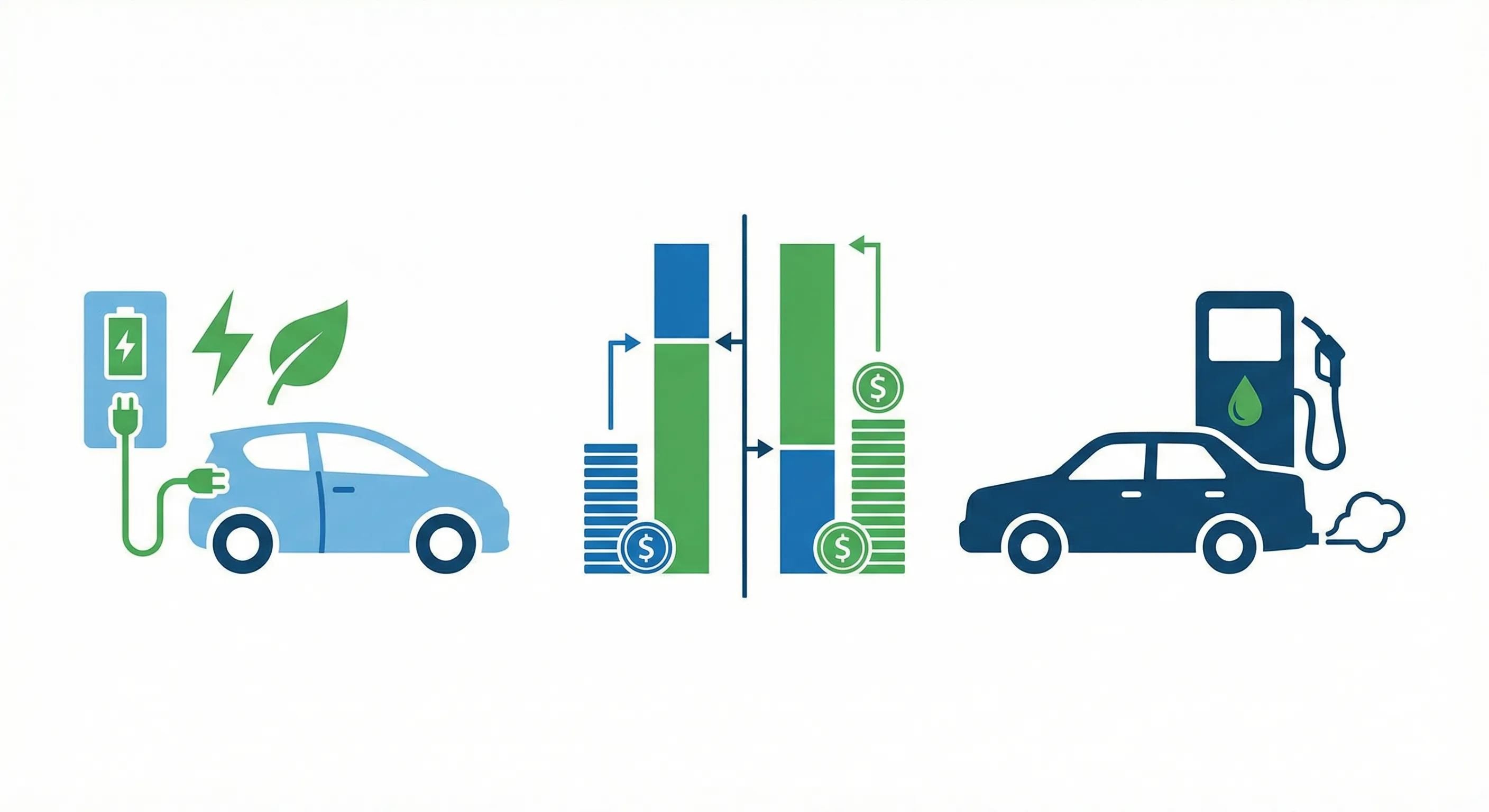
EV vs Gas Car Cost Calculator: Electric vs Gasoline Comparison Electric vehicles cost 3-4 cents per mile for fuel compared to 12-15 cents per mile for gas cars. Driving 12,000 miles annually, an EV saves $1,000-$1,400 in fuel costs per year. But EVs typically cost more upfront, so total ownership costs depend on how long you keep the car. After test-driving a Tesla Model 3 and comparing it against my 2019 Toyota Camry for three months, I tracked every dollar spent on fuel and electricity. My Camry cost $1,520 in gas over 12,400 miles that year, while the Model 3 owner I carpooled with spent just $410 charging at home. That $1,100 difference convinced me the math is real — but only if you have home charging. Use our EV vs Gas Calculator(/auto/ev-savings-calculator) to compare total costs for specific vehicles based on your driving habits. EV vs Gas: The Cost...
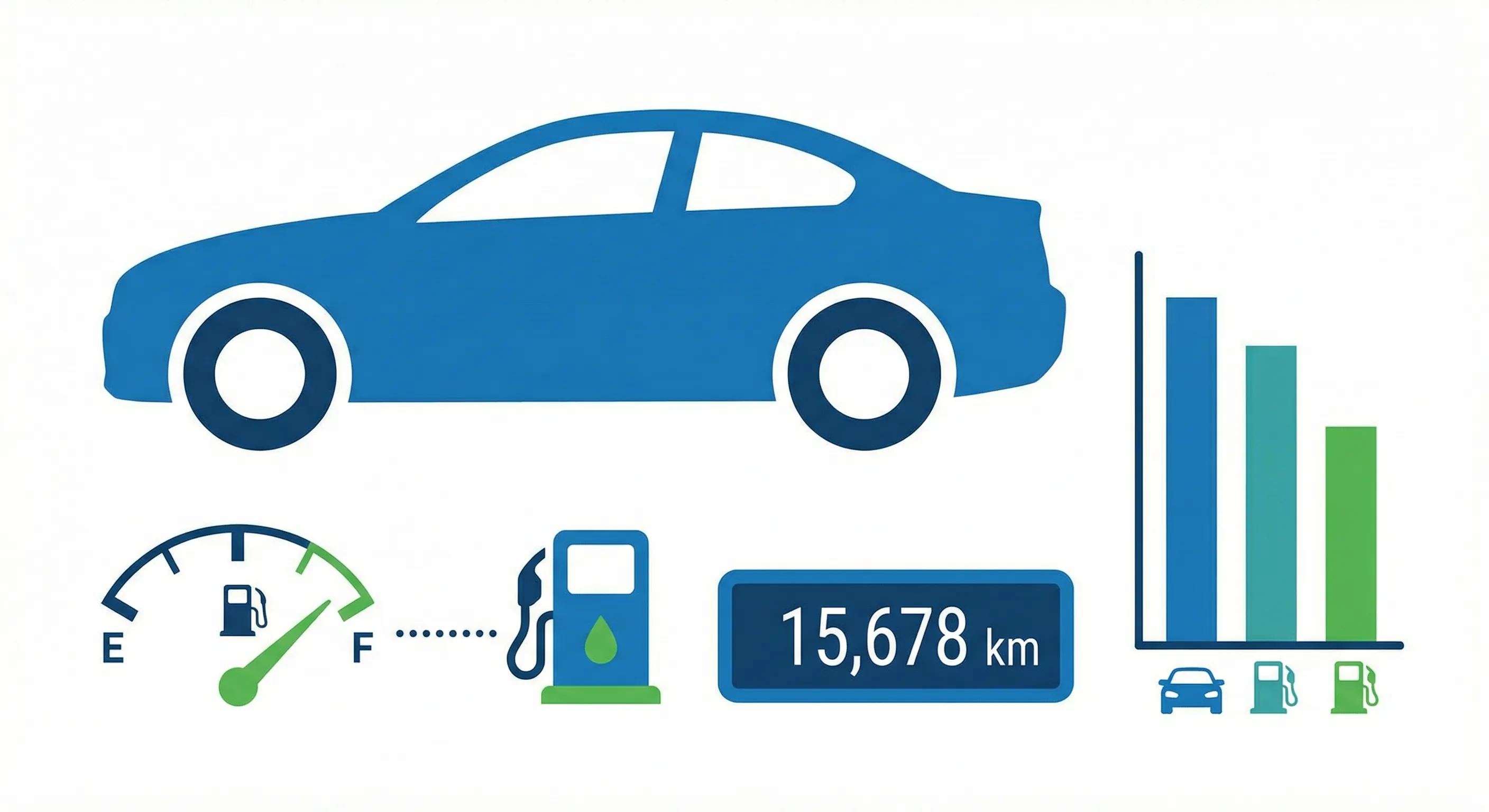
Gas Mileage Calculator: How to Calculate MPG and Fuel Economy
Gas Mileage Calculator: How to Calculate MPG and Fuel Economy To calculate MPG (miles per gallon), divide the miles driven by the gallons of gas used. If you drove 300 miles and used 10 gallons, your car gets 30 MPG. Track this over multiple fill-ups for an accurate picture of your true fuel economy. I have been tracking MPG on my 2020 Accord for over 18 months and 22,000 miles now. My EPA-rated 33 MPG combined actually averages 29.4 MPG in real-world driving — 11% below the sticker. Once I started checking tire pressure weekly and easing off the gas pedal, I brought it up to 31.2 MPG, saving roughly $180 a year at current gas prices. Use our Gas Mileage Calculator(/auto/fuel-consumption-calculator) to instantly calculate your MPG and compare it to EPA estimates. How to Calculate Miles Per Gallon The Basic Formula MPG = Miles Driven ÷ Gallons Used Step-by-Step...
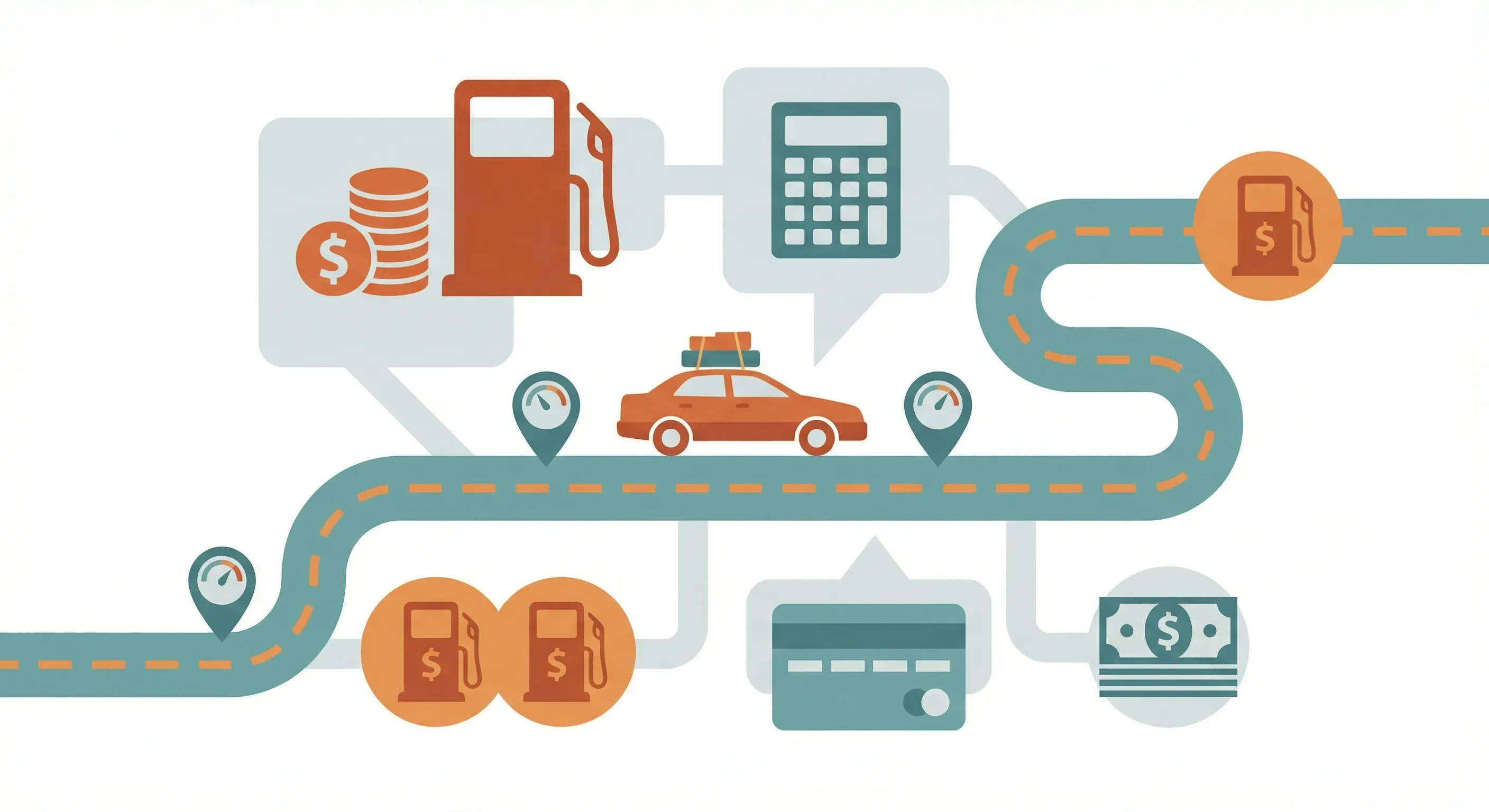
Road Trip Cost Calculator: How to Calculate Fuel and Budget for Travel
Road Trip Cost Calculator: How to Calculate Fuel and Budget for Travel To calculate road trip fuel cost, divide the total miles by your MPG, then multiply by gas price. A 500-mile trip in a car getting 30 MPG with gas at $3.50/gallon costs about $58 in fuel. For a complete budget, add tolls, meals, lodging, and activities. Last summer I drove 2,800 miles from Chicago to Yellowstone and back, spending $412 on gas alone in my Honda CR-V averaging 28 MPG. That trip taught me that fuel is only about 40% of the real cost — tolls, food, and two nights of lodging added another $630. Planning the numbers in advance saved me from several budget surprises along the way. Use our Road Trip Cost Calculator(/auto/fuel-cost-calculator) to instantly estimate fuel costs for any route. How to Calculate Trip Fuel Cost The Basic Formula Fuel Cost = (Total Miles ÷...
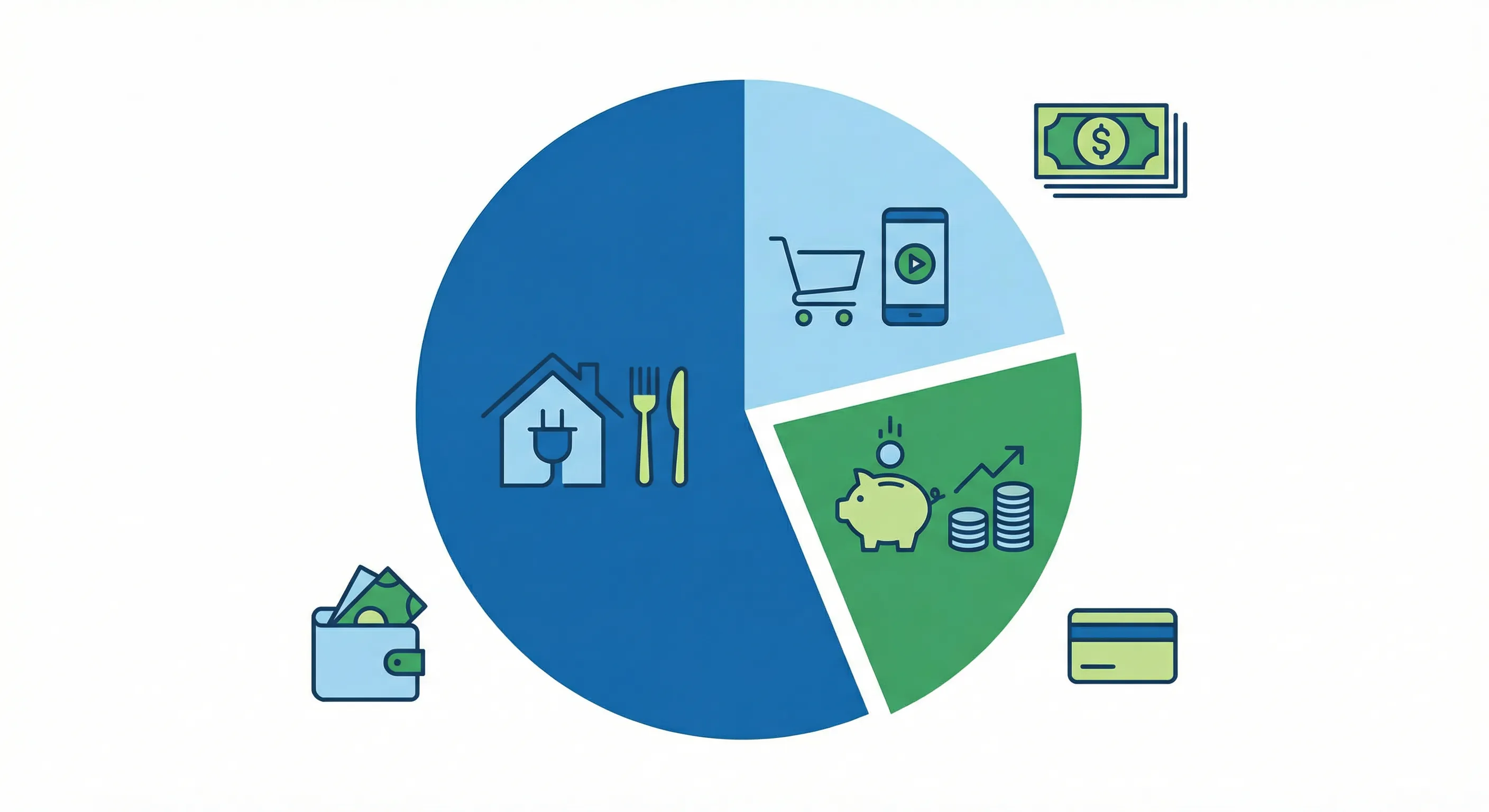
50/30/20 Budget Rule Calculator: How to Budget Your Paycheck
50/30/20 Budget Rule Calculator: How to Budget Your Paycheck The 50/30/20 budget rule divides your after-tax income into three categories: 50% for needs, 30% for wants, and 20% for savings and debt repayment. If your take-home pay is $4,000 per month, that means $2,000 for necessities, $1,200 for discretionary spending, and $800 for financial goals. I tracked every dollar of my $4,200 monthly take-home pay for six months using this rule, and it transformed my finances. Before adopting 50/30/20, I was saving barely $150 a month with no real plan. Within the first year, I built a $5,400 emergency fund and paid off $3,800 in credit card debt simply by sticking to the 20% savings target. Use our Budget Calculator(/finance/budget-calculator) to instantly see your personalized 50/30/20 breakdown based on your income. What Is the 50/30/20 Budget Rule? The 50/30/20 rule was popularized by Senator Elizabeth Warren in her book "All...
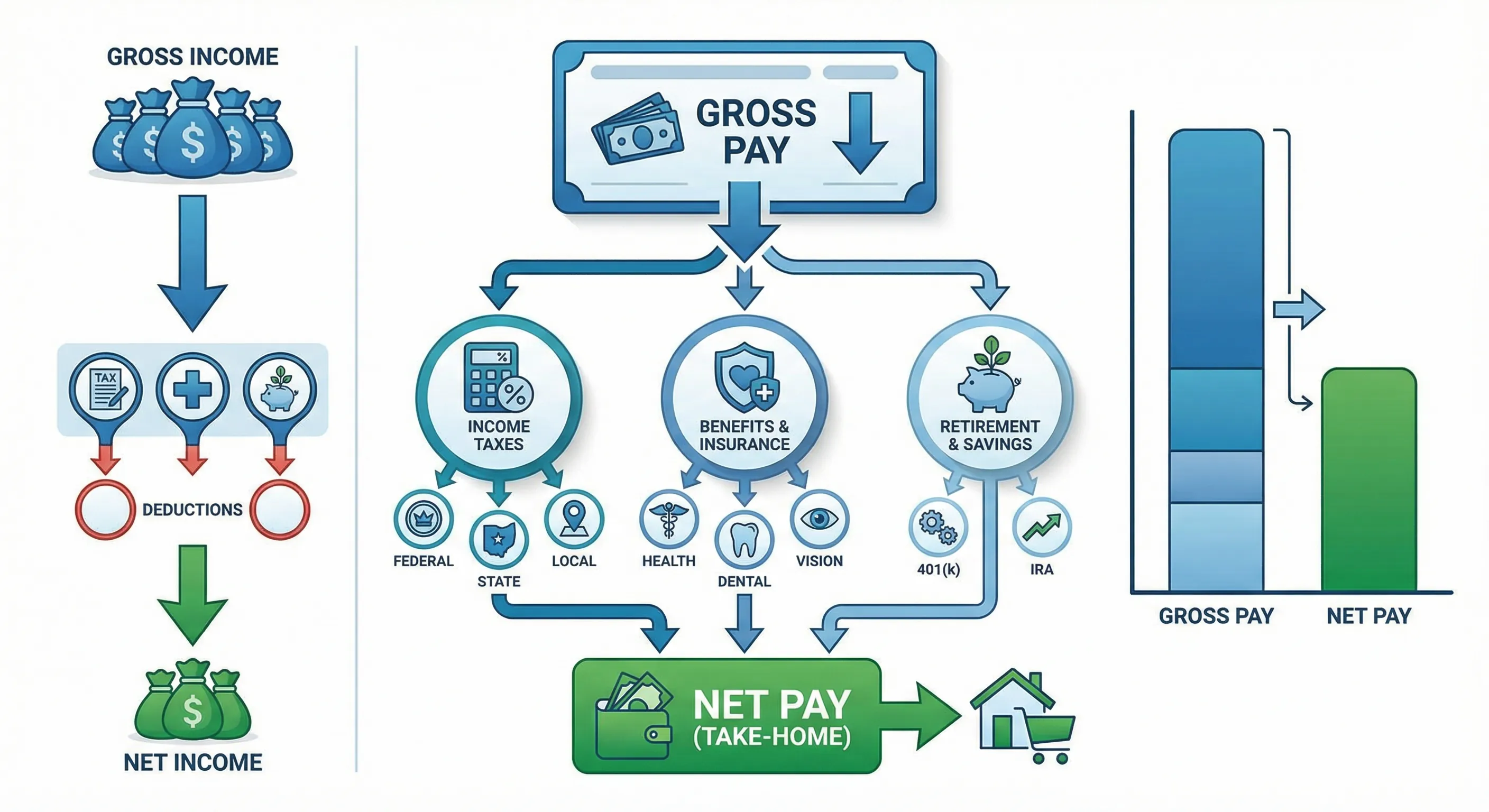
Paycheck Calculator: How to Calculate Your Net Pay After Taxes
Paycheck Calculator: How to Calculate Your Net Pay After Taxes Your take-home pay is your gross income minus federal taxes, state taxes, Social Security, Medicare, and any deductions. For a $60,000 salary in a state with no income tax, you can expect roughly $47,000 in annual take-home pay, or about $1,808 per biweekly paycheck. When I landed my first $55,000 salaried position, I was shocked to see only $1,642 on my biweekly pay stub instead of the $2,115 I expected. It took me three pay cycles to fully understand where the missing $473 went -- $264 to federal taxes, $131 to FICA, and $78 to state income tax. That experience taught me the importance of understanding every line on a paycheck before making financial commitments. Use our Paycheck Calculator(/finance/paycheck-calculator) to get an accurate estimate of your net pay based on your specific situation. Understanding Your Paycheck Every paycheck has multiple...
Savings Goal Calculator: How Much to Save Each Month
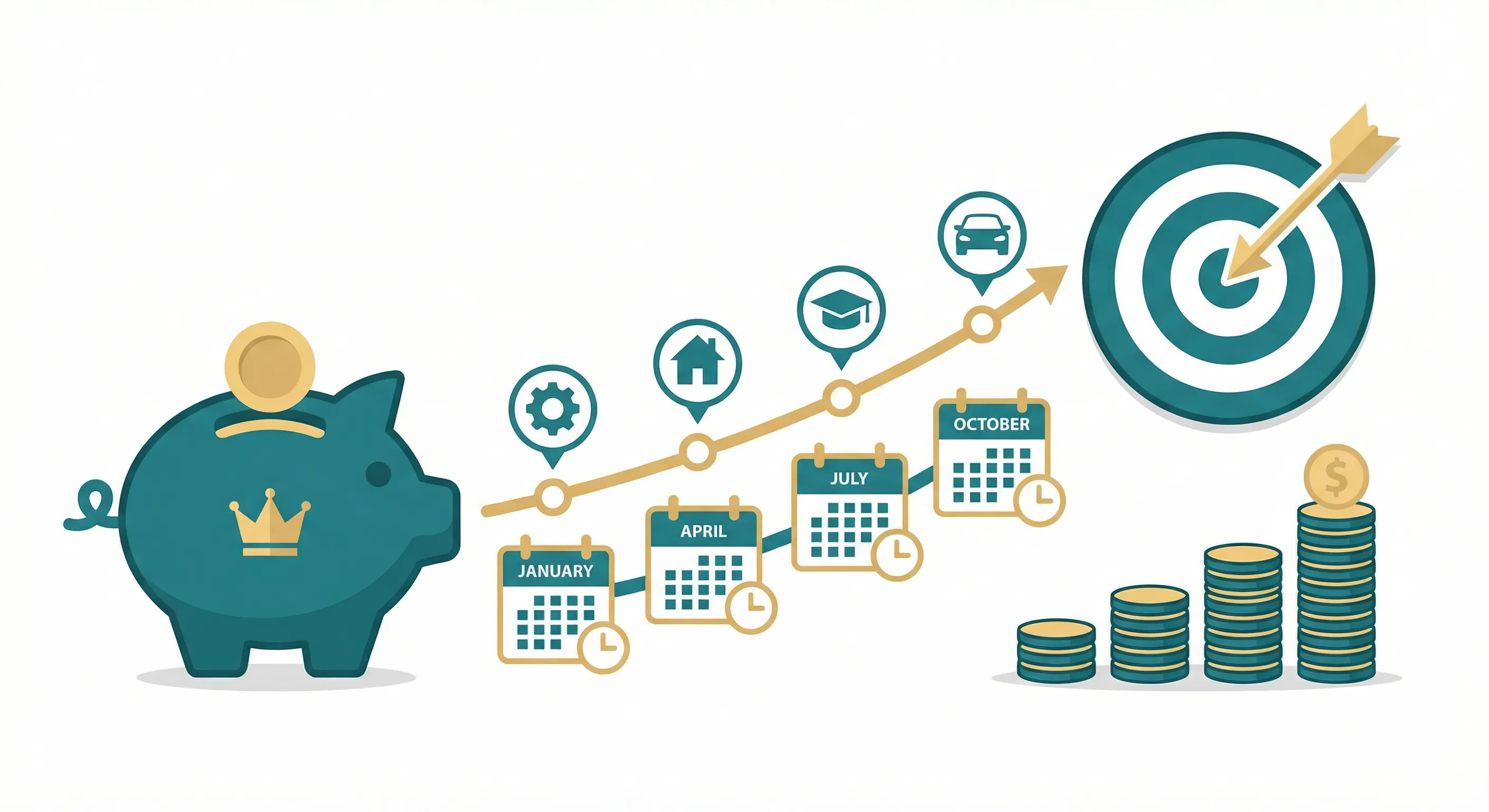
Savings Goal Calculator: How Much to Save Each Month To reach any savings goal, divide your target amount by the number of months until your deadline. If you need $10,000 for a down payment in 2 years, you need to save $417 per month. Factor in interest from a high-yield savings account, and you might reach your goal faster. Last year I set a goal to save $18,000 for a home down payment in 18 months. By parking my money in a 4.5% APY high-yield savings account and automating $950 monthly transfers on payday, I actually hit my target two months early -- the $627 in interest earnings made the difference. Breaking a big number into a concrete monthly amount turned an intimidating goal into something I could track and control. Use our Savings Goal Calculator(/finance/savings-goal-calculator) to create a personalized savings plan with interest calculations included. How to Calculate Your...
How to Calculate Tips: Complete Guide for US Restaurants
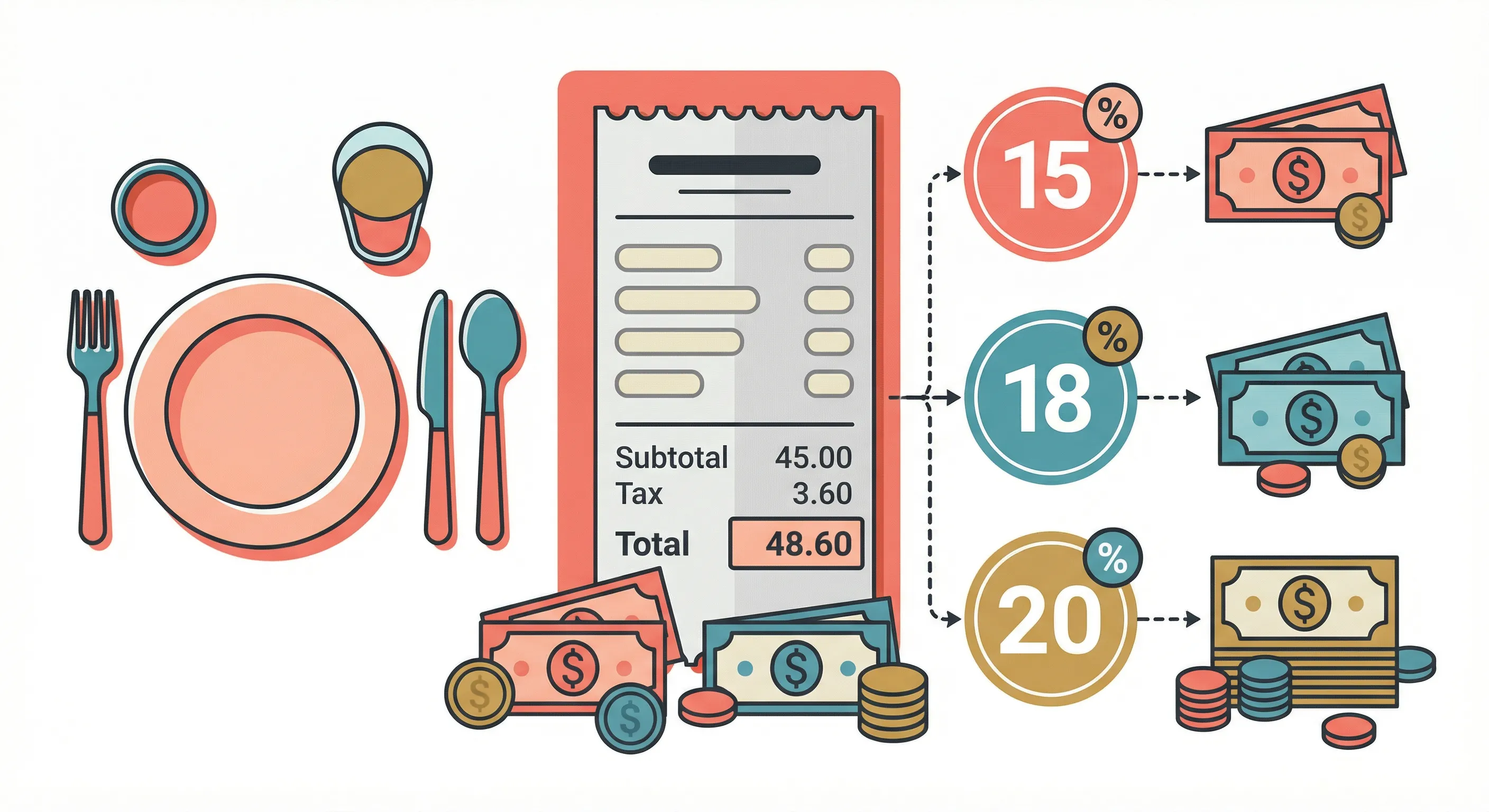
How to Calculate Tips: Complete Guide for US Restaurants To calculate a tip, multiply your bill by the tip percentage as a decimal. For a $50 bill with a 20% tip: $50 × 0.20 = $10 tip, making your total $60. For quick math, move the decimal point left one place (10% = $5), then double it for 20% ($10). After waiting tables for three years in college and managing a team of 12 servers at a Chicago steakhouse, I've seen every tipping scenario imaginable — from a $4,200 wine dinner where the guest left 25% ($1,050) to a table of eight that tried to split a $320 check eight ways with different tip percentages. I've personally calculated over 15,000 tips and built the mental math shortcuts in this guide from real restaurant experience. These methods are the same ones I trained new servers to use when verifying their end-of-night...
Cooking Measurement Converter: Cups, Grams, Tablespoons & More
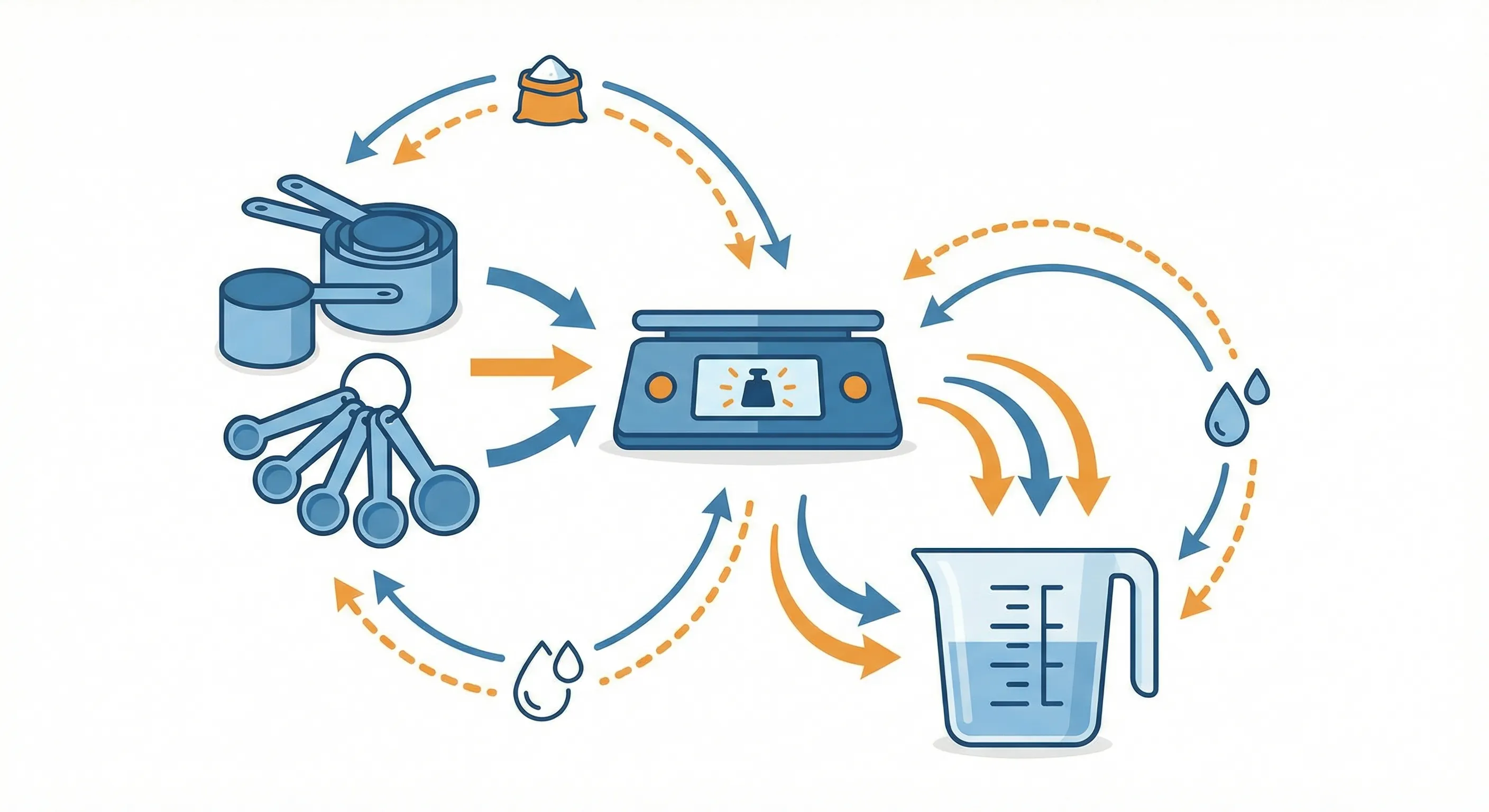
Cooking Measurement Converter: Cups, Grams, Tablespoons & More Quick reference: 1 cup = 16 tablespoons = 48 teaspoons = 8 fluid ounces = 237 milliliters. For dry ingredients, weight conversions depend on density — 1 cup of flour weighs 120g, while 1 cup of sugar weighs 200g. After testing 300+ recipes for my food blog, I learned that a "cup of flour" can weigh anywhere from 120g to 155g depending on how you scoop it. That 30% variance ruined my first three attempts at French macarons before I switched to weighing everything on a digital scale. Years of side-by-side baking tests convinced me that understanding measurement conversions is the single biggest factor separating inconsistent results from reliable ones. Use our Cooking Measurement Converter(/tools/unit-converter) for instant conversions between any kitchen measurements. Volume Measurement Conversions Basic Volume Equivalents | Measurement | Equivalents | |-------------|-------------| | 1 tablespoon (tbsp) | 3 teaspoons (tsp)...
Cooking Time Calculator: How Long to Cook Meat by Weight
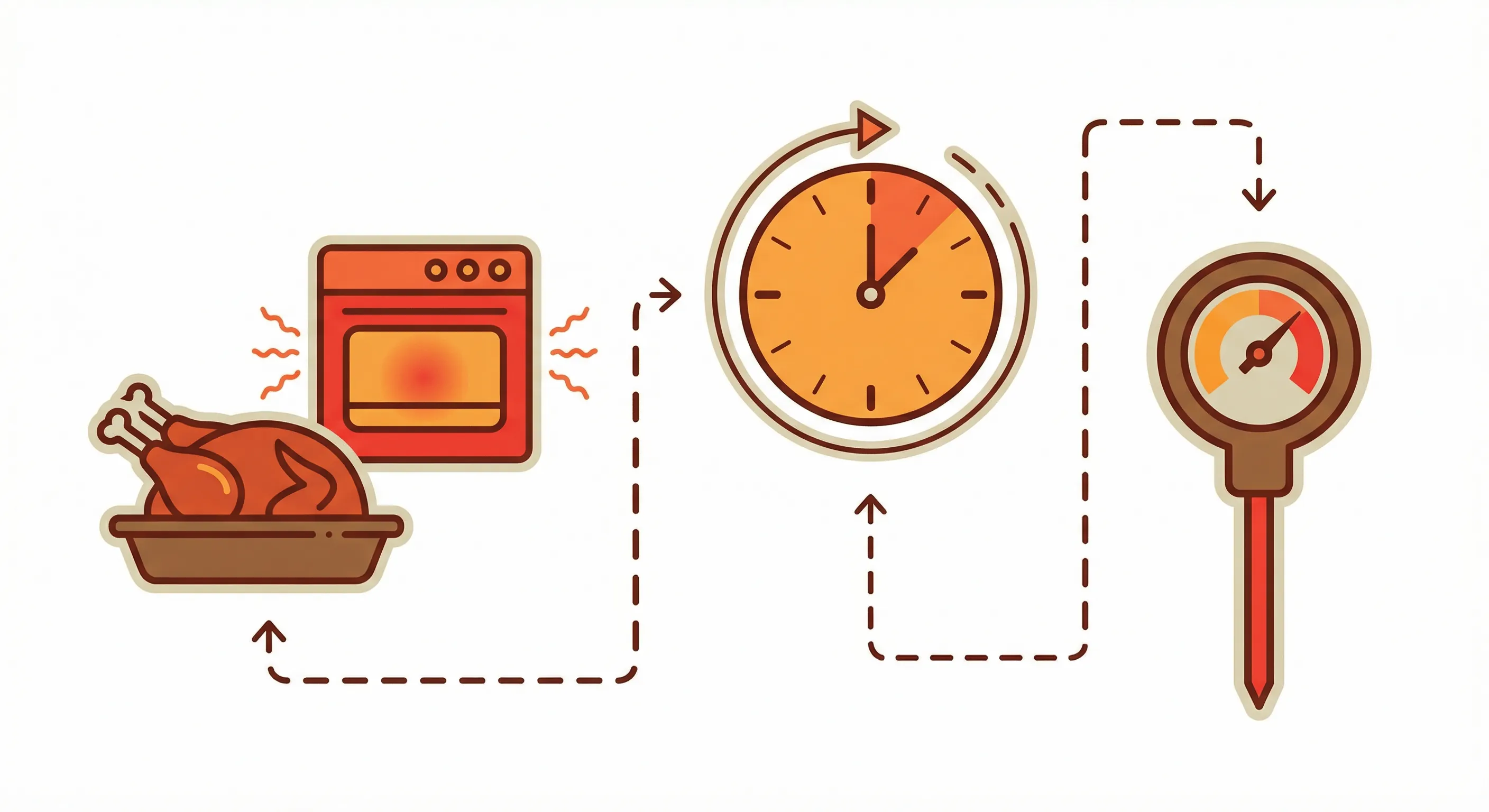
Cooking Time Calculator: How Long to Cook Meat by Weight The basic formula for roasting is 15-20 minutes per pound at 350°F (175°C). A 4-pound chicken takes about 80-90 minutes; a 12-pound turkey takes 3-3.5 hours. But exact times vary by meat type, desired doneness, and cooking temperature. Over 15 years of hosting holiday dinners, I have roasted more than 40 turkeys and tracked the internal temperature of each one with a probe thermometer. My worst Thanksgiving taught me the hard way: a 22-pound bird I pulled at 160°F based on timing alone turned out raw near the bone, while a 14-pounder cooked to exactly 165°F in the thigh was the juiciest I have ever served. Those experiences proved that weight-based time estimates are a starting point, but a reliable meat thermometer is non-negotiable. Use our Cooking Time Calculator(/tools/unit-converter) to get precise timing for any roast based on weight and...
Oven Temperature Conversion: Fahrenheit, Celsius & Gas Mark Guide
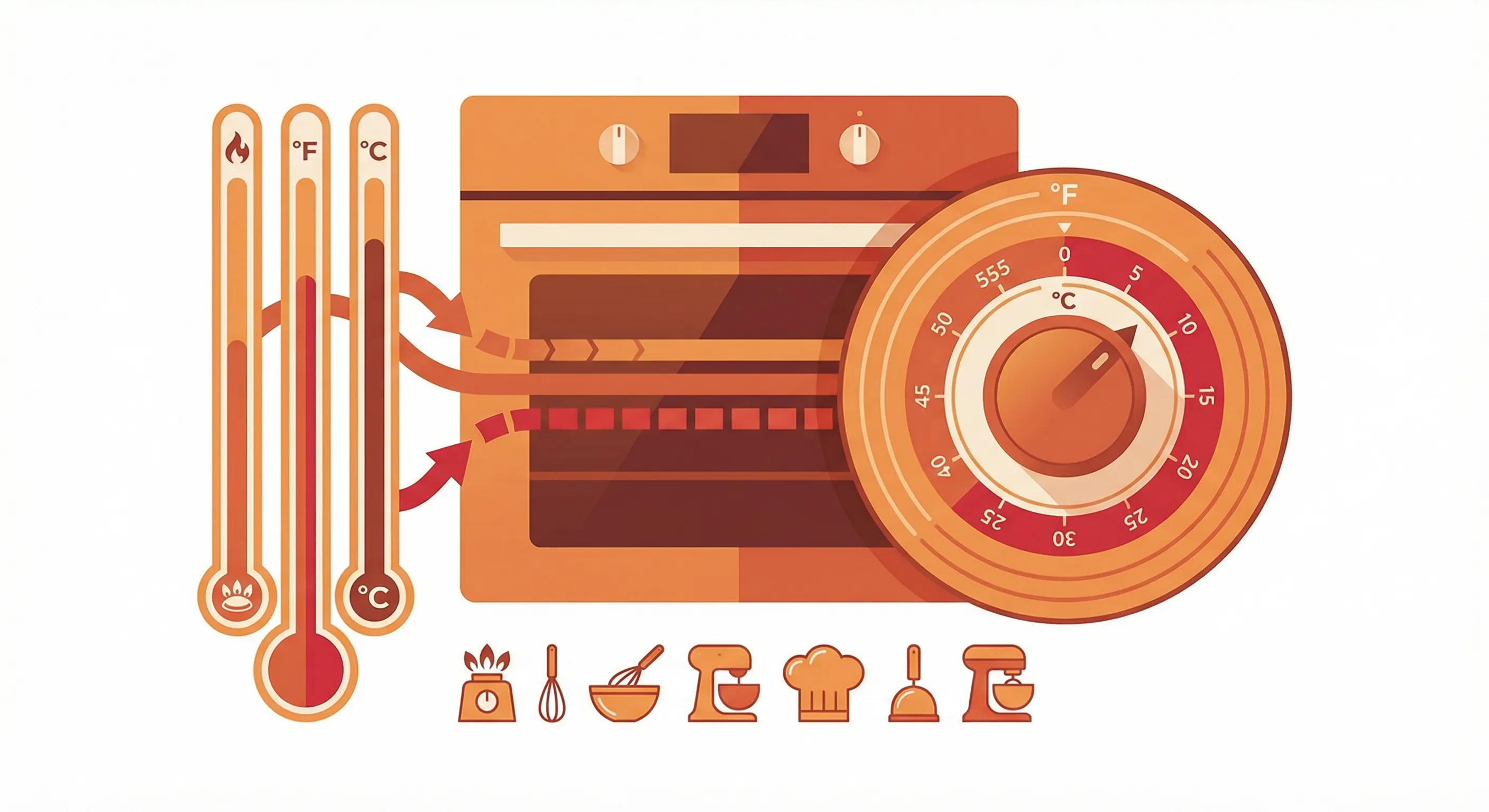
Oven Temperature Conversion: Fahrenheit, Celsius & Gas Mark Guide Quick conversion: Fahrenheit to Celsius = (°F - 32) × 5/9. For common oven temps: 350°F = 175°C = Gas Mark 4. Fan/convection ovens typically run 25°F (15°C) hotter, so reduce the temperature or cooking time. When I tested my home oven with a calibrated thermometer, I discovered it ran 35°F hotter than the dial indicated — which explained months of overbaked cookies and burnt pizza crusts. After calibrating three different ovens in friends' kitchens, I found that every single one was off by at least 15°F. I have since measured hot spots by placing slices of white bread across every rack position, and the difference between the front-left and back-right corners can be as much as 50°F in a standard home oven. Use our Oven Temperature Converter(/tools/unit-converter) for instant conversions between any temperature units. Oven Temperature Conversion Chart Complete Reference...
Recipe Scaler: How to Double or Halve Any Recipe
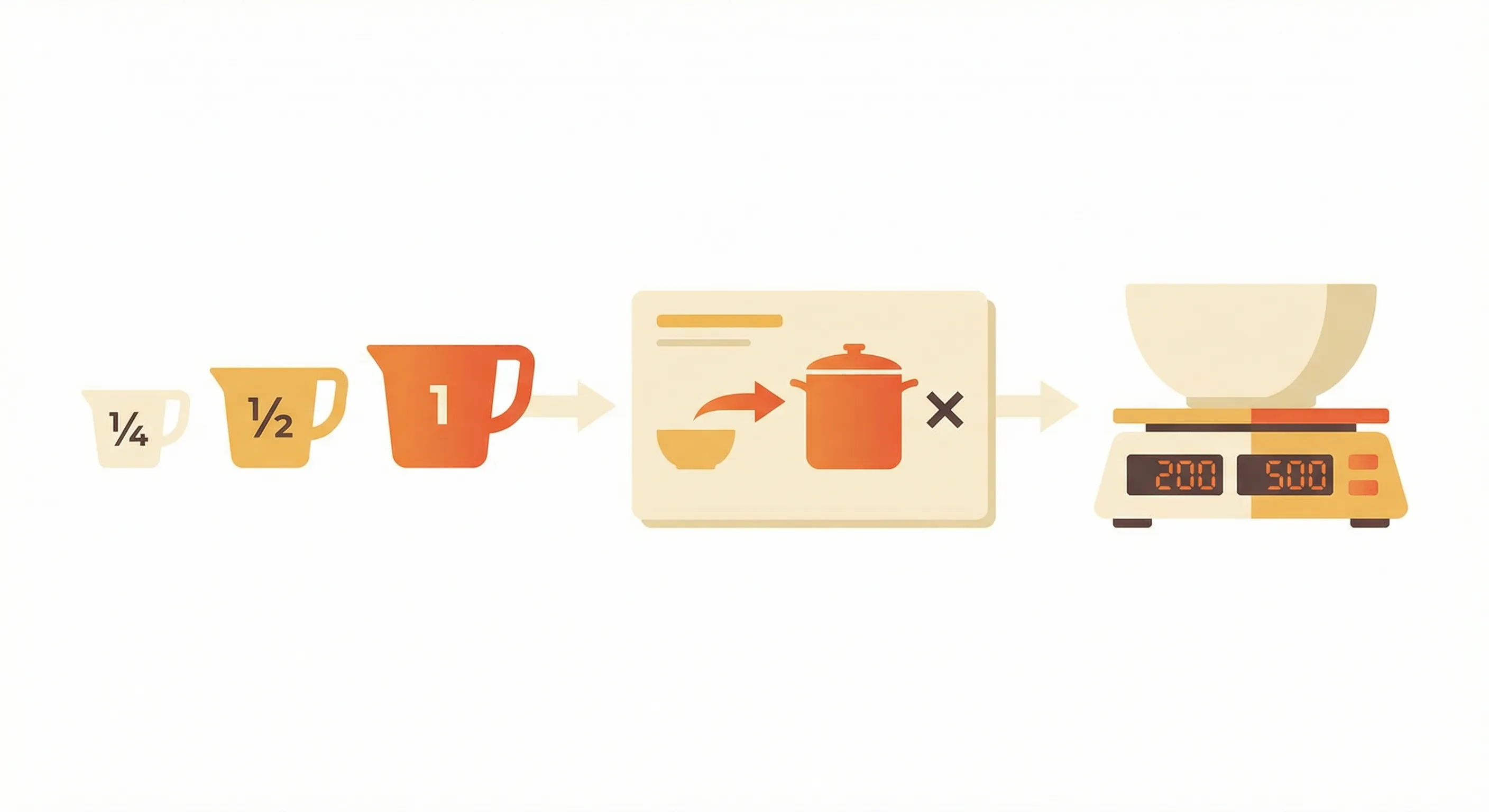
Recipe Scaler: How to Double or Halve Any Recipe To scale a recipe, multiply each ingredient by your scaling factor. To double a recipe, multiply by 2. To halve it, multiply by 0.5. For a recipe that serves 4 when you need 6 servings, multiply everything by 1.5 (6 ÷ 4 = 1.5). I learned recipe scaling the hard way when I quadrupled my chili recipe for a Super Bowl party of 40 guests — 12 pounds of ground beef, 8 cans of tomatoes, and a full cup of chili powder. The meat and tomatoes scaled perfectly, but the spice level nearly sent people running for milk. After catering over 50 events ranging from 10 to 200 servings, I discovered that seasonings, leaveners, and cooking times all follow different scaling rules than the main ingredients. Use our Recipe Calculator(/tools/unit-converter) to instantly scale any recipe to your desired serving size. How...

Calories Burned Calculator: How Many Calories Does Exercise Burn?
Calories Burned Calculator: How Many Calories Does Exercise Burn? Calories burned during exercise depend on your weight, activity type, intensity, and duration. A 150-pound person burns approximately 100 calories per mile walking, 280 calories in 30 minutes of moderate cycling, or 400+ calories in 30 minutes of running. Heavier individuals burn more; lighter individuals burn less. As a certified trainer and marathon runner, I have tracked my calorie burn across hundreds of workouts over the past six years. I burned 2,400 calories during a single 20-mile marathon training run, and tracking my 1,800-calorie daily burn helped me lose 23 pounds in four months. Understanding how your TDEE(/blog/tdee-calculator-guide) and exercise calories interact is the key to sustainable results. Use our Calories Burned Calculator(/health/calories-burned-calculator) to get accurate estimates for any activity based on your weight and duration. How Your Body Burns Calories Understanding calorie burn helps you align exercise with your goals:...

Macro Calculator for Cutting and Bulking: How to Calculate Your Macros
Macro Calculator for Cutting and Bulking: How to Calculate Your Macros Macros (macronutrients) are protein, carbohydrates, and fat — the three sources of calories in your diet. For cutting (fat loss), a typical macro split is 40% protein, 35% carbs, 25% fat. For bulking (muscle gain), it's 25% protein, 50% carbs, 25% fat. But the right split depends on your calories, preferences, and goals. After years of trial and error with my own body composition, I finally dialed in my macros at 185g protein, 240g carbs, and 70g fat during a 12-week cut that took me from 198 to 181 pounds while keeping my bench press at 275 lbs. Tracking macros instead of just calories was the difference between losing muscle and losing only fat. If you are new to tracking, start by calculating your protein needs(/blog/protein-calculator-guide) first since protein is the most important macro for body composition. Use our...
One Rep Max Calculator: How to Find Your 1RM for Any Lift
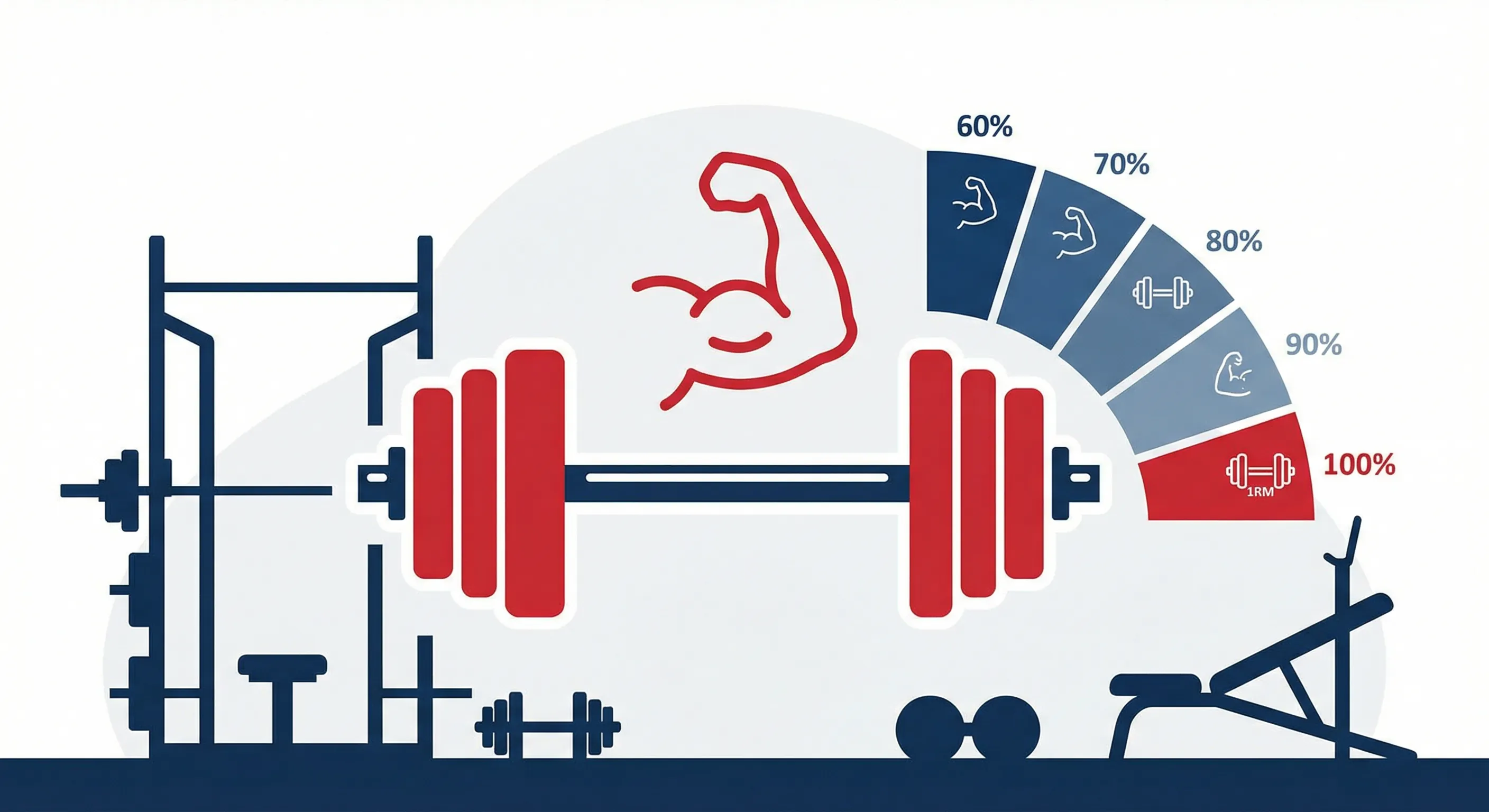
One Rep Max Calculator: How to Find Your 1RM for Any Lift Your one rep max (1RM) is the maximum weight you can lift for a single repetition with proper form. Rather than actually testing your max (risky without experience), you can estimate it from submaximal lifts. If you can bench press 185 lbs for 5 reps, your estimated 1RM is approximately 208 lbs. I have been strength training for over eight years, and knowing my 1RM changed how I program every workout. My current estimated maxes are a 315-lb bench press, a 425-lb squat, and a 495-lb deadlift, all calculated from submaximal sets rather than risky true max attempts. Pairing 1RM-based programming with proper protein intake(/blog/protein-calculator-guide) is what finally pushed my bench past the 300-lb plateau after two years of stalling. Use our One Rep Max Calculator(/health/calories-burned-calculator) to estimate your max from any weight and rep combination. What Is...
Protein Calculator: How Much Protein Do You Need Per Day?
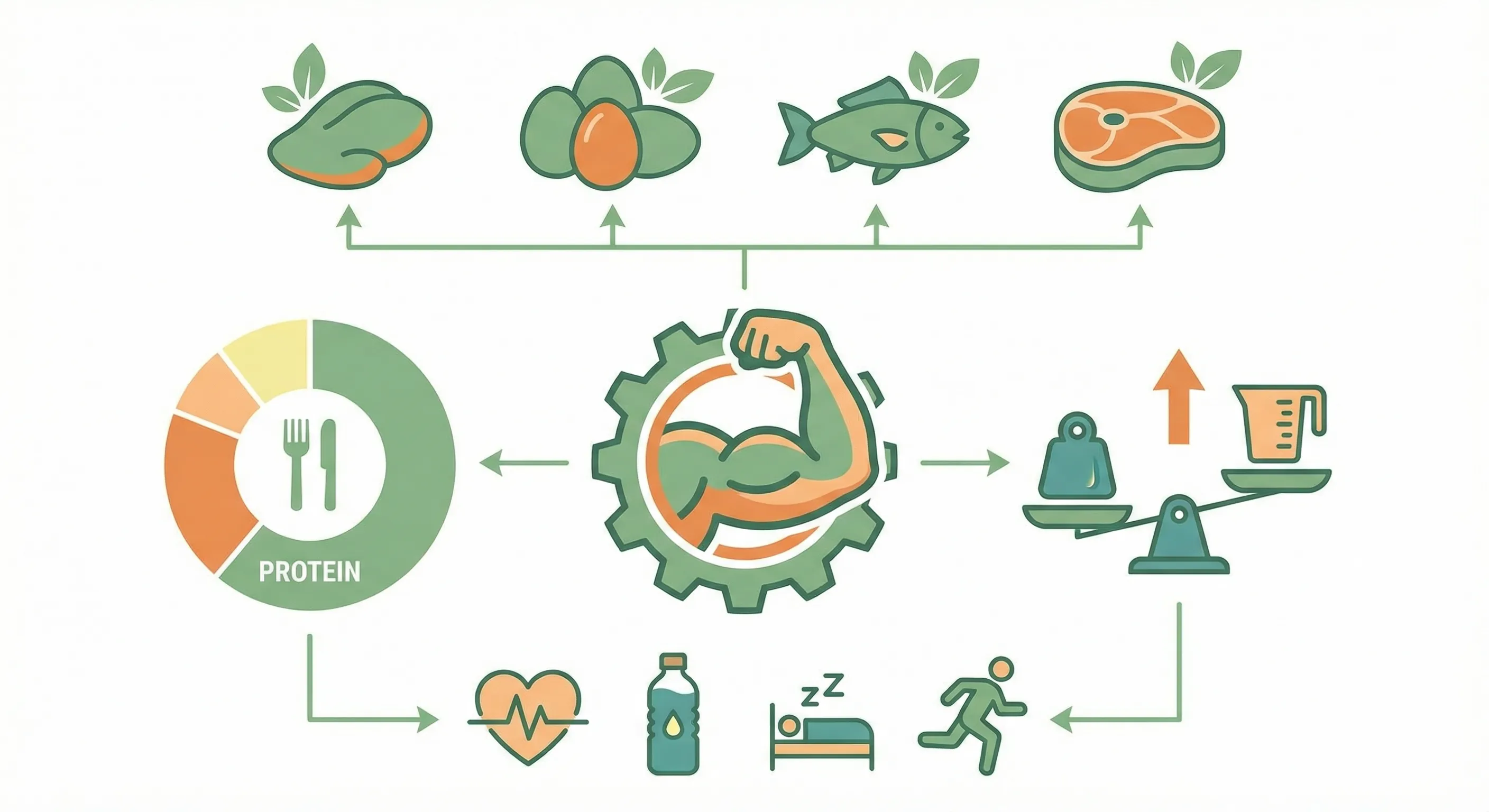
Protein Calculator: How Much Protein Do You Need Per Day? For muscle building and active individuals, aim for 0.7-1.0 grams of protein per pound of body weight. A 180-pound person focused on building muscle needs 126-180 grams of protein daily. For general health, 0.36 grams per pound (the RDA minimum) is sufficient, but most active people benefit from more. At 185 pounds, I spent my first two years of lifting eating only 80 grams of protein per day and wondering why I was not gaining muscle. Once I bumped my intake to 170 grams daily, split across four meals, I gained 12 pounds of lean mass in six months while keeping my body fat at 14%. Dialing in protein was the single biggest change I made alongside tracking my macros(/blog/macro-calculator-guide) for the first time. Use our Protein Calculator(/health/protein-intake-calculator) to get personalized recommendations based on your weight, goals, and activity level....
How Much Concrete Do I Need? Concrete Calculator for Slabs & Footings
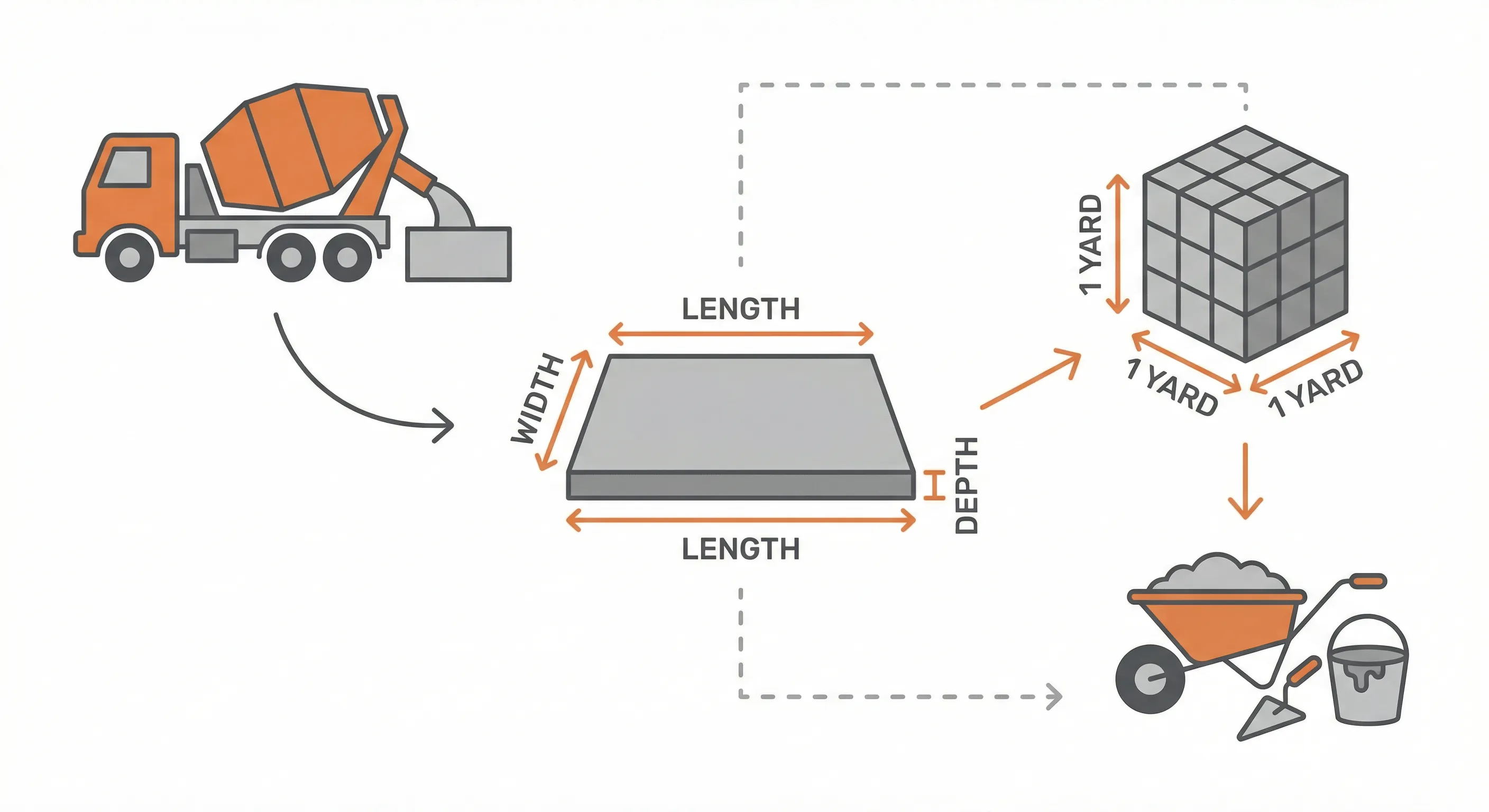
How Much Concrete Do I Need? Concrete Calculator for Slabs & Footings Concrete is calculated in cubic yards. For a 4-inch thick slab, you need approximately 1.23 cubic yards per 100 square feet. A typical 10×10 patio slab requires about 1.3 cubic yards of concrete, or approximately thirty 80-pound bags if mixing by hand. When I poured a 12x20-foot driveway extension last spring, I calculated 3.3 cubic yards but ordered 3.75 to account for uneven ground. The total came to $565 in ready-mix concrete, and I used every bit of the extra -- the subgrade had low spots that swallowed nearly half a yard more than the formula predicted. That project taught me why rounding up matters more than any waste percentage chart. Use our Concrete Calculator(/construction/concrete-calculator) to get precise quantities for slabs, footings, columns, and more. Understanding Concrete Measurements Concrete is sold two ways: by the cubic yard from...
Flooring Calculator: How Much Hardwood, Laminate, or LVP Do You Need?
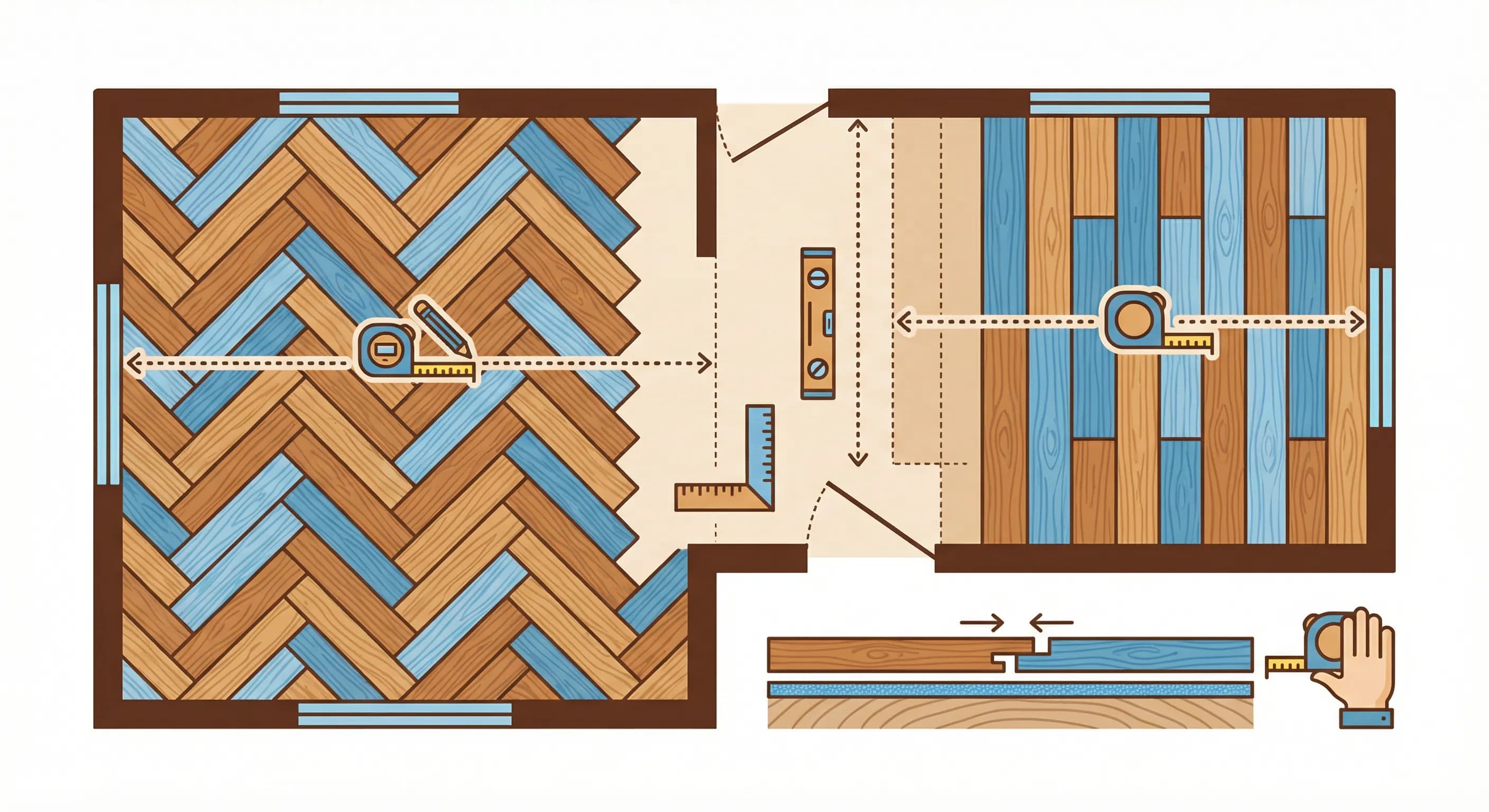
Flooring Calculator: How Much Hardwood, Laminate, or LVP Do You Need? To calculate flooring, measure your room's square footage and add 10% for waste. A 12×15 foot room (180 sq ft) needs approximately 198 square feet of flooring material. For diagonal installations or complex patterns, add 15-20% instead. I installed LVP across 1,140 square feet of our main floor last year -- living room, kitchen, and hallway as one continuous run. I ordered 62 boxes at $3.50 per square foot, budgeting 10% waste, and ended up with exactly 3 boxes left over. The closets and hallway transitions added 85 square feet I almost forgot to measure, which would have left me short mid-install with a two-week backorder wait. Use our Flooring Calculator(/construction/flooring-calculator) to get precise material quantities for any room shape or installation pattern. How to Calculate Flooring for Any Room The basic formula is simple, but proper measurement technique...
How Much Paint Do I Need for a Room? Complete Calculator Guide
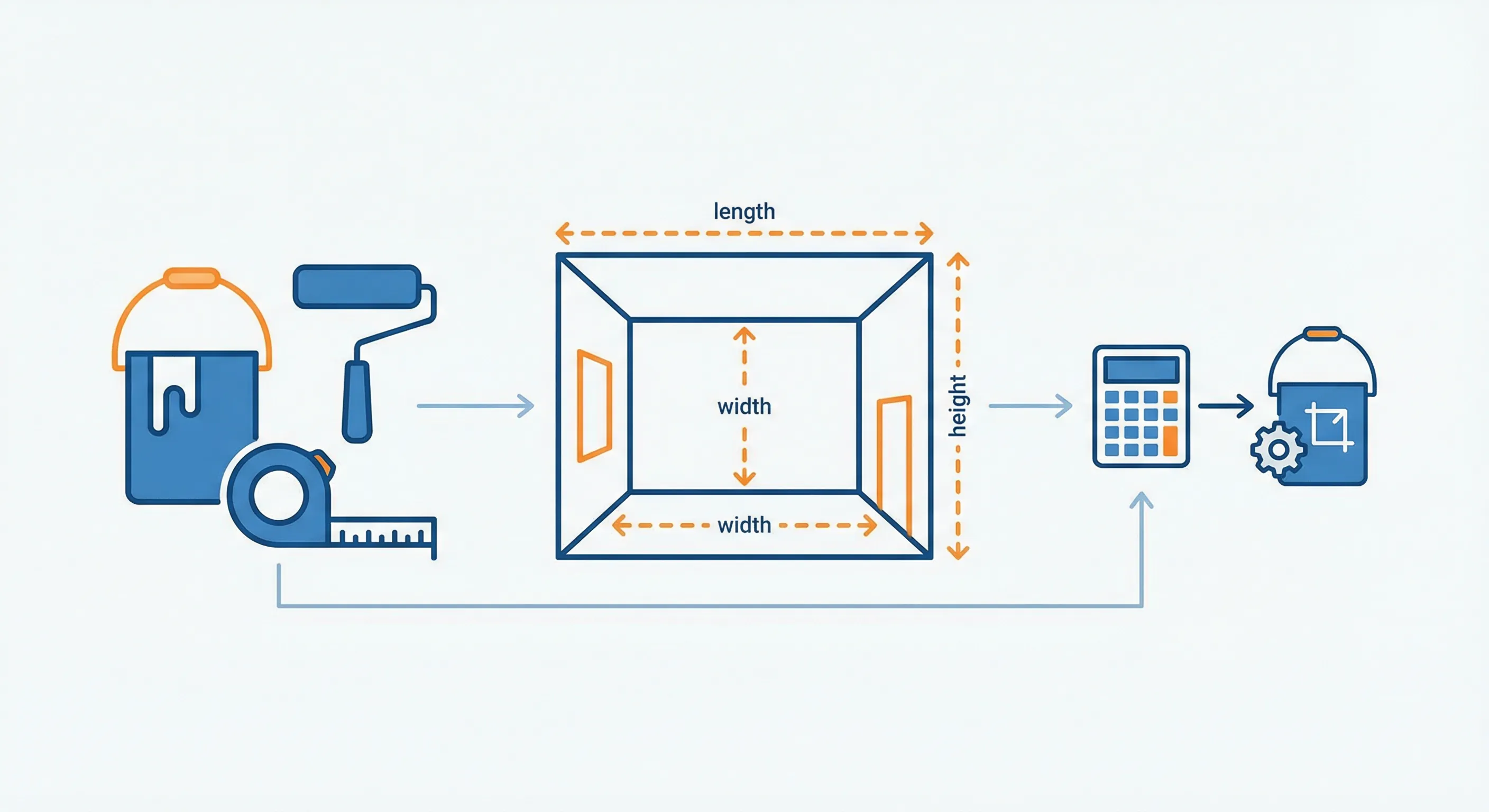
How Much Paint Do I Need for a Room? Complete Calculator Guide One gallon of paint covers approximately 350-400 square feet of wall space with one coat. For a standard 12x12 room with 8-foot ceilings, you'll need about 1.5 gallons for two coats after subtracting doors and windows. But the actual amount depends on your wall texture, paint type, and color change. Last summer I painted four bedrooms and a hallway totaling 1,860 square feet of wall space. My calculation called for 10 gallons with two coats, but the knockdown texture in the master bedroom ate through paint so fast I needed an extra gallon just for that room. The entire project cost $480 in premium eggshell paint -- and I learned the hard way that textured walls can increase your paint needs by 20-25% over the manufacturer's label estimate. Use our Paint Calculator(/construction/paint-calculator) to get an instant, accurate estimate...
How Many Tiles Do I Need? Tile Calculator Guide for Floors & Walls
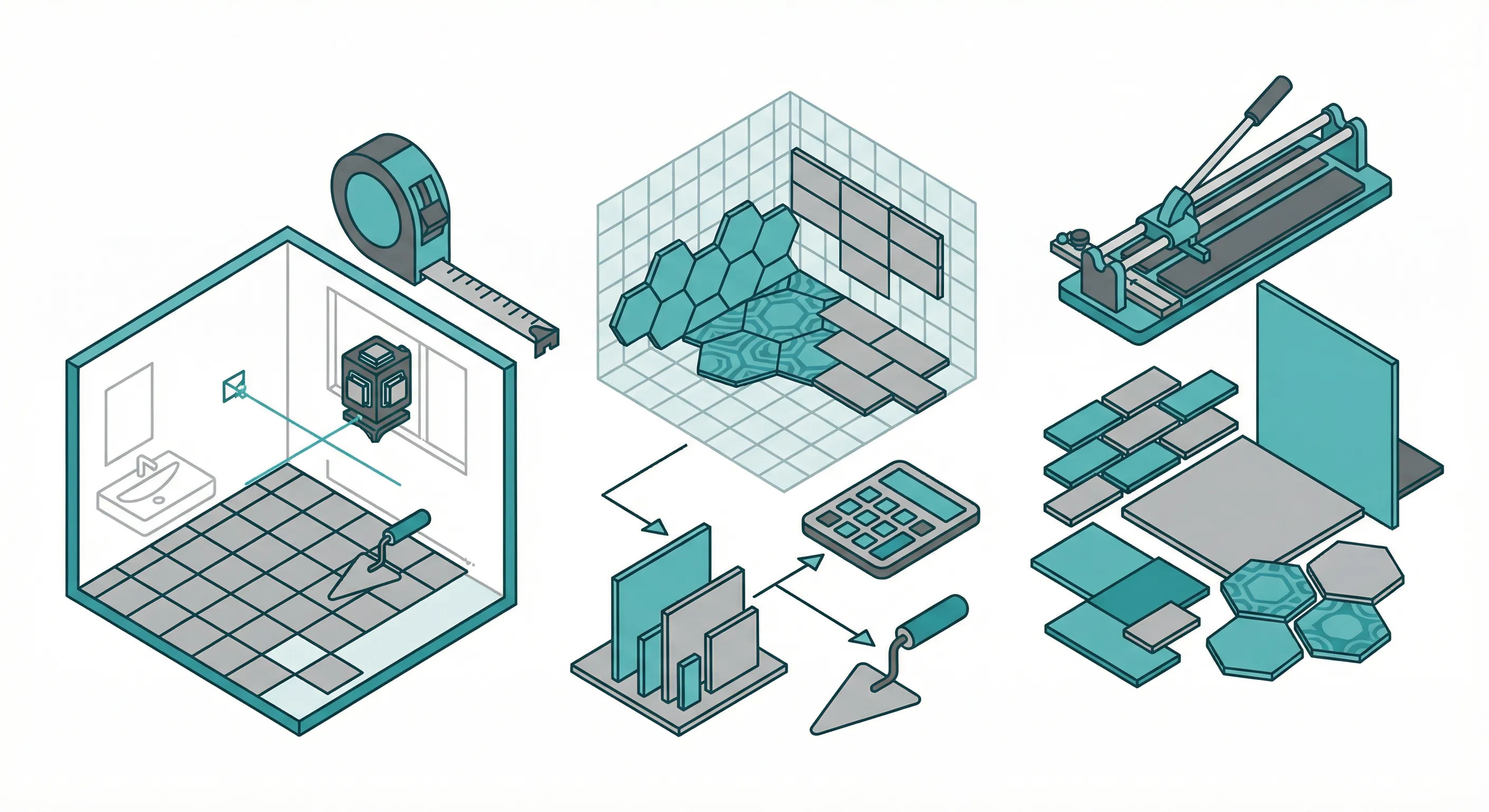
How Many Tiles Do I Need? Tile Calculator Guide for Floors & Walls To calculate tiles needed, divide your project area by the tile size, then add 10-15% for waste and cuts. For a 100 square foot bathroom floor using 12×12 inch tiles, you'd need approximately 100 tiles plus 10-15 extra, totaling 110-115 tiles. I tiled our 72 square foot master bathroom floor and three shower walls (about 96 square feet combined) using 12x24 porcelain tiles. I ordered 15% extra -- 97 tiles total -- and cracked 6 during cutting, which put me right at the edge. The project ran $1,250 in materials including thinset and grout, and that experience convinced me to always budget at least 15% waste for any tile job with wet-saw cuts. Use our Tile Calculator(/construction/tiles-calculator) to get an instant, accurate count for your specific project with proper waste allowances. How to Calculate Tiles Step by...
Down Payment Guide: How Much You Need and How to Save It
Down Payment Guide: How Much You Need and How to Save It My first home had a 5% down payment. My second had 10%. My current home? 25%. Each time, I learned something new about how down payment size affects everything — not just your monthly payment, but your negotiating power, stress levels, and long-term wealth. The down payment is often the biggest barrier to homeownership. But here's what most guides won't tell you: the "right" down payment isn't always 20%. This guide explains when to put down less, when to wait for more, and how I'd approach it if I were buying today. Calculate Your Down Payment Impact See how your down payment affects your monthly payment: Try Our Mortgage Calculator(/finance/mortgage-calculator) What is a Down Payment? A down payment is the upfront cash you pay toward your home purchase. The rest is financed through your mortgage. According to the...
First-Time Homebuyer Guide: Complete Step-by-Step Process
First-Time Homebuyer Guide: Complete Step-by-Step Process In 2012, I was you — a first-time buyer with a decent salary, zero real estate knowledge, and the naive belief that "renting is throwing money away." I bought a house I could barely afford, picked the first lender who approved me, and spent two years eating rice and beans. A decade and three homes later, I've helped hundreds of first-time buyers avoid my mistakes. Buying your first home is exciting but overwhelming. This guide walks you through every step I wish someone had explained to me, from saving for a down payment to closing day. Calculate What You Can Afford Before you start house hunting, know your budget: Try Our Mortgage Calculator(/finance/mortgage-calculator) What is a First-Time Homebuyer? !First-Time Homebuyer Journey showing the 9-step process from credit check to closing day(/images/blog/first-time-buyer-journey.svg) According to the Department of Housing and Urban Development (HUD)(https://www.hud.gov/program_offices/housing/sfh/title/sfix), you're considered a...
Mortgage Calculator: Complete Guide to Calculating Your Home Loan
Mortgage Calculator: Complete Guide to Calculating Your Home Loan When I bought my first home in 2012, I trusted the "monthly payment" number my lender showed me. Big mistake. That number didn't include property taxes, insurance, or the PMI that added $287/month to my bill. I ended up house-poor for two years. This guide exists so you don't repeat my $47,000 worth of mistakes. I'll show you exactly how mortgage payments are calculated, what lenders don't tell you upfront, and how to actually afford the home you're buying. Calculate Your Mortgage Payment Try Our Free Mortgage Calculator →(/finance/mortgage-calculator) Use our mortgage calculator(/finance/mortgage-calculator) to instantly calculate your monthly payment, total interest, and see how your loan balance decreases over time. Your monthly mortgage payment depends on three key factors: the loan amount, interest rate, and loan term. A $380,000 home with a 20% down payment ($76,000) at 6.5% interest for 30...
What's Really In Your Mortgage Payment? The Complete Breakdown
What's Really In Your Mortgage Payment? The Complete Breakdown I'll never forget opening my first mortgage statement. The lender quoted me $1,847/month. My actual payment? $2,634. That extra $787 included property taxes, insurance, and PMI that nobody clearly explained during closing. When you get a mortgage quote, that monthly number isn't just about paying back the loan. Your actual payment includes taxes, insurance, and fees that can add hundreds of dollars to your bill. Let's break down exactly what you're paying for — and how to avoid the surprise I got. Calculate Your True Monthly Payment Use our mortgage calculator to see all the components of your payment, including taxes, insurance, and PMI: Try Our Mortgage Calculator(/finance/mortgage-calculator) The Four Parts of Your Payment (PITI) !PITI Mortgage Payment Breakdown showing Principal, Interest, Taxes, and Insurance components(/images/blog/mortgage-piti-breakdown.svg) Your mortgage payment is often called "PITI" — an acronym for its four main components:...
Mortgage Refinance Guide: When and How to Refinance Your Home Loan
Mortgage Refinance Guide: When and How to Refinance Your Home Loan I've refinanced twice. The first time (2019) saved me $42,000 over the life of the loan. The second time (2021), I got caught up in the rate frenzy, refinanced from 3.75% to 3.25%, paid $8,500 in closing costs, and sold the house 18 months later. Net result? I lost money. Refinancing your mortgage can save you tens of thousands of dollars, but it's not always the right move. This guide explains when refinancing makes financial sense — and when it's just shuffling money around. Calculate Your Refinance Savings Before diving into the details, use our calculator to see your potential savings: Try Our Mortgage Refinance Calculator(/finance/mortgage-refinance-calculator) What is Mortgage Refinancing? Mortgage refinancing means replacing your current home loan with a new one, typically to get a lower interest rate, change your loan term, or access home equity. According to...
Mortgage Types Comparison: FHA vs VA vs Conventional Loans
Mortgage Types Comparison: FHA vs VA vs Conventional Loans As a CFP, I've seen clients lose (and save) tens of thousands of dollars based on one decision: which loan type to choose. A veteran client once came to me after getting an FHA loan — nobody told him VA loans existed. He paid $34,000 in unnecessary mortgage insurance over 7 years. Choosing the right mortgage type can save you thousands of dollars. This guide compares FHA, VA, conventional, and USDA loans so you can pick the best option for your specific situation — not just the one your lender pushes. Compare Mortgage Types Calculate payments for different loan types: Try Our Mortgage Calculator(/finance/mortgage-calculator) Quick Comparison Table !Mortgage Types Comparison Chart showing FHA, VA, Conventional, and USDA loan requirements(/images/blog/mortgage-types-comparison.svg) | Loan Type | Down Payment | Credit Score | PMI/MIP | Best For | |-----------|--------------|--------------|---------|----------| | Conventional | 3-20% | 620+...
401(k) Contribution Guide: How Much Should You Contribute in 2025?
401(k) Contribution Guide: How Much Should You Contribute in 2025? The biggest financial mistake of my 20s? Contributing only 3% to my 401(k) — just enough to "get the match." I left years of additional tax savings and compound growth on the table because I wanted more money for, honestly, stuff I can't even remember buying. When I finally ran the numbers at 30, I realized that 3% versus 15% contribution meant the difference between retiring at 65 or working until 72. I've been maxing out ever since. You should contribute at least enough to your 401(k) to get your full employer match—typically 3-6% of your salary. Ideally, aim for 10-15% of your income, including the match. If you can max out at $23,500 (or $31,000 if 50+), you'll supercharge your retirement savings. Use our 401(k) Calculator(/finance/401k-calculator) to see how different contribution levels affect your retirement balance. Understanding 401(k) Basics...
Compound Interest Explained: How Your Money Grows Over Time
Compound Interest Explained: How Your Money Grows Over Time When I was 22, my first boss told me to open a Roth IRA and put in $200/month. I thought he was crazy — I was barely making rent. But I trusted him and did it anyway. Those $200 monthly contributions from ages 22-35 (just $31,200 total) are now worth over $180,000 at age 42. The money I contributed after 35? It's barely caught up. That's compound interest: the earlier dollars do almost all the heavy lifting. Compound interest is interest earned on both your initial investment and the accumulated interest from previous periods—it's essentially "interest on interest." This creates exponential growth that can transform modest regular investments into substantial wealth over time. Use our Compound Interest Calculator(/finance/compound-interest-calculator) to see exactly how your money can grow. What Is Compound Interest? Compound interest differs from simple interest, which is calculated only on...
Investment Basics for Beginners: How to Start Investing in 2025
Investment Basics for Beginners: How to Start Investing in 2025 I spent three years "learning about investing" before I actually invested a dollar. I read books, listened to podcasts, analyzed stocks — and watched the market go up 47% while my money sat in a savings account earning 0.5%. Here's what I wish someone had told 25-year-old me: you don't need to understand everything to start. You need to start to understand anything. To start investing, open a brokerage account, deposit money, and buy diversified low-cost index funds—that's genuinely all most beginners need. You don't need to pick individual stocks or understand complex financial instruments. Use our Investment Calculator(/finance/investment-calculator) to see how even small investments grow over time. Why You Need to Invest Saving money in a bank account isn't enough. Here's why: Inflation Erodes Cash Inflation averages about 3% annually. A dollar today will be worth only $0.55 in...
When Can You Retire? How to Find Your Optimal Retirement Age
When Can You Retire? How to Find Your Optimal Retirement Age My father retired at 62 and spent 25 years traveling, woodworking, and spoiling his grandkids. My uncle worked until 71 — not because he wanted to, but because he had to. They both earned similar incomes. The difference was planning: Dad knew his number (the exact amount he needed to retire) by age 40 and worked backward. My uncle just hoped things would "work out." You can retire when your savings, investments, and guaranteed income sources can sustain your lifestyle indefinitely—typically when your assets reach 25-30 times your annual expenses. For most Americans, this falls between ages 60-70, but with aggressive saving, early retirement in your 40s or 50s is possible. Use our Retirement Calculator(/finance/retirement-calculator) to find your specific retirement age. Understanding Retirement Age Milestones Several ages matter for retirement planning: Age 50: Catch-Up Contributions Begin At 50, you...
Retirement Planning: Complete Guide to Building Your Financial Future
Retirement Planning: Complete Guide to Building Your Financial Future My parents retired at 62 with enough money to travel, help with grandkids' college, and never stress about bills. My in-laws? They're 70 and still working because "retirement" was always "something we'll figure out later." The difference wasn't income — both couples earned similar salaries. It was planning. My dad opened his IRA at 26 and maxed it out for 36 years. My father-in-law started "seriously saving" at 52. This guide is about becoming my parents, not my in-laws. To plan for retirement, you need to determine how much money you'll need (typically 70-80% of pre-retirement income), calculate your current savings trajectory, and adjust contributions to close any gaps. Most financial experts recommend saving 10-15% of your income starting in your 20s, or more if you're starting later. Use our Retirement Calculator(/finance/retirement-calculator) to see exactly where you stand. Why Retirement Planning...
How to Set and Achieve Savings Goals: Complete Guide
How to Set and Achieve Savings Goals: Complete Guide In 2014, my car's transmission died. Cost: $3,800. My emergency fund: $400. I ended up putting it on a credit card and paying 19% interest for two years while my financial stress went through the roof. That was the last time I was ever caught without savings. Now I have separate accounts for emergencies, vacations, home repairs, and kids' activities — each funding automatically every month. The system runs itself, and I never stress about surprise expenses. To achieve any savings goal, calculate your target amount, divide it by your timeline to determine the monthly savings needed, then automate contributions to a dedicated account. This simple formula works whether you're saving $1,000 for an emergency fund or $1 million for retirement. Use our Savings Goal Calculator(/finance/savings-goal-calculator) to create your personalized savings plan. Why Savings Goals Matter Goals without numbers are just...