How Trump Tariffs Affect Your Household Budget in 2026: A Complete Breakdown
The average American household will pay an estimated $1,300 to $2,100 per year in higher costs due to 2026 tariffs, according to analyses from the Tax Foundation and the Tax Policy Center. Tariffs function as a hidden consumption tax — they are paid by US importers, but the cost is passed directly to consumers through higher retail prices on everything from groceries to electronics to clothing.
Last fall, I sat down with a family earning $65,000 a year who felt like their money was disappearing faster than ever. When we ran the numbers together, we found they were paying roughly $2,100 more per year than they would have without the current tariffs. Their grocery bill had climbed about $18 per week — roughly $940 a year — and clothing for their two kids was costing 15-20% more across the board. The mother said, "I knew things were more expensive, but I had no idea this much of it was tariffs." That conversation is why I wrote this guide.
Use our Tariff Impact Calculator to estimate exactly how much tariffs are costing your specific household based on your income and spending patterns.
What Are Tariffs and How Do They Affect Prices?
A tariff is a tax imposed by the federal government on goods imported from other countries. When a US company imports a product — say, a washing machine from South Korea or avocados from Mexico — the company must pay the tariff to US Customs before the goods enter the country.
Here is the critical point most people misunderstand: the foreign country does not pay the tariff. The US importing company pays it. And in nearly every case, that company passes the cost to consumers through higher prices.
Important
Tariffs are paid by US importers, not by the exporting country. According to the Tax Foundation, tariffs function as a tax on American consumers and businesses, raising retail prices by an average of 4.9 percentage points relative to pre-tariff trends.
How tariffs flow to your wallet
- Government sets tariff rate — e.g., 145% on Chinese imports
- US importer pays the tariff at the border when goods arrive
- Importer raises wholesale prices to recover the tariff cost
- Retailer raises shelf prices to maintain margins
- You pay more at checkout for the same product
Even domestically produced goods often rise in price. When imported competitors become more expensive, domestic manufacturers face less competitive pressure and can raise their own prices. The Tax Foundation found that domestic goods rose 4.3 percentage points in price alongside the 6.0 percentage point increase on imported goods.
Current US Tariff Rates in 2026
The United States now maintains the highest effective tariff rate since 1946. Here is a breakdown of the major tariff rates currently in effect as of early 2026:
| Country/Region | Tariff Rate | Key Products Affected |
|---|---|---|
| China | 145% | Electronics, appliances, furniture, toys, clothing |
| Canada | 25% | Lumber, oil, auto parts, dairy, aluminum |
| Mexico | 25% | Auto parts, produce, beer, avocados, appliances |
| European Union | 20% | Automobiles, wine, cheese, machinery, pharmaceuticals |
| Japan | 24% | Automobiles, electronics, steel, machinery |
| South Korea | 25% | Automobiles, electronics, steel, semiconductors |
| India | 26% | Textiles, pharmaceuticals, IT services, spices |
| All other imports | 10% minimum | Baseline tariff on all remaining countries |
Source: Yale Budget Lab, State of U.S. Tariffs, January 2026
According to the Yale Budget Lab, the weighted average applied tariff rate on all imports has risen to 13.5%, up from just 1.5% before the current tariff regime. The average effective tariff rate, accounting for behavioral responses like import substitution, stands at 9.9%.
The 145% rate on Chinese goods is particularly significant because China has historically been the largest source of US consumer goods imports. Electronics, toys, small appliances, furniture, and a massive share of clothing all flow through Chinese supply chains.
How Much Do Tariffs Cost Your Household?
The cost of tariffs varies significantly depending on your household income — not because tariff rates change, but because spending patterns differ. Lower-income households spend a larger share of their income on goods (as opposed to services), and goods are what tariffs hit hardest.
Multiple economic research organizations have estimated the annual household burden. The figures below synthesize analyses from the Tax Foundation, Yale Budget Lab, and the Penn Wharton Budget Model:
| Household Income | Estimated Annual Tariff Cost | Tariff Burden as % of Income |
|---|---|---|
| $30,000 | $830 | 2.8% |
| $40,000 | $1,050 | 2.6% |
| $50,000 | $1,280 | 2.6% |
| $65,000 | $1,600 | 2.5% |
| $80,000 | $1,850 | 2.3% |
| $100,000 | $2,100 | 2.1% |
| $125,000 | $2,350 | 1.9% |
| $150,000 | $2,600 | 1.7% |
| $200,000+ | $3,000+ | 1.5% or less |
These numbers represent the additional cost above what households would pay in a no-tariff environment. They include both direct price increases on imported goods and indirect price increases on domestic goods that rise in response to reduced competition.
Use our Tariff Impact Calculator to get a personalized estimate based on your specific spending categories.
Why the percentage shrinks as income rises
A household earning $30,000 might spend 85-90% of its income on goods and services, with a significant portion going to physical goods like groceries, clothing, and household items. A household earning $200,000 might spend only 60-65% of income, with more going to services (which are largely untariffed), savings, and investments.
This makes tariffs a regressive tax — they take a larger bite from people who can least afford it.
Tariff Impact by Category: Where You Feel It Most
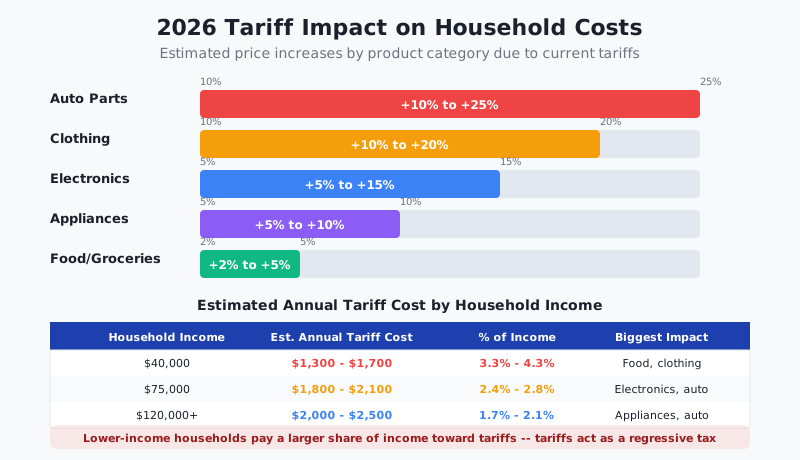
Not all product categories are affected equally. Here is a breakdown of estimated price increases by major spending category due to the current tariff regime:
| Spending Category | Estimated Price Increase | Primary Source Countries |
|---|---|---|
| Consumer electronics | 18-25% | China, South Korea, Japan |
| Automobiles & parts | 15-22% | Japan, South Korea, Mexico, EU |
| Clothing & footwear | 15-20% | China, Vietnam, India, Bangladesh |
| Furniture & home goods | 12-18% | China, Vietnam, Canada |
| Toys & sporting goods | 15-22% | China |
| Groceries & food | 5-10% | Mexico, Canada, EU, China |
| Appliances | 12-20% | China, South Korea, Mexico |
| Building materials | 8-15% | Canada, China, Mexico |
| Pharmaceuticals | 3-8% | India, EU, China |
The Yale Budget Lab notes that tariffs fall most heavily on "apparel and leather products like shoes and handbags, products with high metal content like electrical equipment and electronics, and motor vehicles."
What this means in real dollar terms
For a family of four spending $60,000 per year on goods and services:
- Electronics (phones, laptops, TVs): $200-$400 more per year
- Vehicle costs (new car payment or parts): $300-$600 more per year
- Clothing (especially children's): $250-$450 more per year
- Groceries: $500-$950 more per year
- Furniture and household items: $100-$250 more per year
Tip
Buying American-made products can help you avoid tariffs — but only on goods that are truly manufactured domestically with domestic materials. Many "American" brands still source components or raw materials from tariffed countries. Look for "Made in USA" labels and check whether the company discloses its supply chain sourcing.
Groceries and Food: The Hidden Tariff Tax
Food prices get less attention in tariff discussions than electronics or cars, but the impact on grocery bills is substantial and felt weekly. The 25% tariffs on Mexico and Canada directly affect the American food supply because the US imports roughly 15% of its food, according to the USDA Economic Research Service.
Products most affected
From Mexico (25% tariff):
- Avocados (80% of US avocados come from Mexico)
- Tomatoes, peppers, berries, and other produce
- Beer (including popular brands like Corona, Modelo)
- Beef and pork products
From Canada (25% tariff):
- Dairy products and milk
- Maple syrup
- Canola oil
- Potatoes and grain products
- Certain seafood
From China (145% tariff):
- Processed foods and ingredients
- Canned goods
- Spices and seasonings
- Tea and specialty foods
- Frozen seafood (particularly shrimp and tilapia)
From the EU (20% tariff):
- Olive oil
- Cheese (Parmesan, Gouda, Brie)
- Wine and spirits
- Chocolate and confections
- Specialty meats
The ripple effect on domestic food prices
Even domestically produced food rises in price due to tariffs. Agricultural equipment imported from tariffed countries costs more. Packaging materials cost more. Fertilizer ingredients cost more. These input cost increases flow through to shelf prices on everything, including food grown entirely in the United States.
According to the Bureau of Labor Statistics Consumer Price Index data, food-at-home prices have risen faster than the overall inflation rate, with tariff-affected categories like produce, meat, and dairy showing the sharpest increases.
Our Budget Calculator can help you track how much of your monthly spending goes to groceries, so you can see the impact in context of your overall budget.
Who Pays More: The Income Inequality of Tariffs
Tariffs are among the most regressive forms of taxation. The Yale Budget Lab's distributional analysis found that the burden on the lowest income decile (bottom 10% of earners) is more than three times that of the top decile when expressed as a share of post-tax-and-transfer income — 2.6% versus 0.8%.
Why tariffs hit lower-income households harder
- Higher goods-to-income ratio — Lower-income families spend nearly all their income, and a larger share goes to physical goods (food, clothing, household essentials) rather than services
- Less ability to substitute — Wealthier households can shift to premium domestic brands or absorb price increases; lower-income households are already buying the most affordable options, which are often imported
- No investment buffer — Higher-income households have investment returns and savings that dilute the tariff impact as a percentage of total resources
- Essential spending dominance — When 70-80% of your income goes to necessities, and those necessities rise 5-15% in price, the math is brutal
The Tax Foundation calculates that the current tariff regime represents the largest tax increase as a percentage of GDP (0.54%) since 1993. But unlike income taxes, which are progressive, this tax increase falls disproportionately on those least able to afford it.
Warning
Even if tariffs are reduced or removed in the future, prices typically do not drop immediately. Research from the Federal Reserve shows that prices tend to be "sticky" — once they rise, companies are slow to lower them, even after the tariff that caused the increase is lifted. This means the full cost of tariffs extends well beyond their active period.
Track your spending patterns with our Inflation Calculator to see how price increases compound over time, and use the Budget Calculator to adjust your monthly plan accordingly.
5 Ways to Reduce Your Tariff Burden
While you cannot avoid tariffs entirely, these practical strategies can reduce how much they cost your household:
Step 1: Identify your highest-tariff spending categories
Before you can cut costs, you need to know where tariffs hit your budget hardest. Use our Tariff Impact Calculator to get a personalized breakdown, then review your bank and credit card statements for the past three months.
Look for spending in these high-tariff categories: electronics, clothing, imported food and beverages, automotive parts, and home furnishings. Rank them by dollar amount. The biggest category is where your effort will pay off most.
Step 2: Shift to domestic or low-tariff alternatives
For groceries, buy seasonal and locally grown produce instead of imported fruits and vegetables. Farmers' markets and local co-ops often offer produce that bypasses international supply chains entirely.
For clothing, look for brands that manufacture in the US, Central America, or countries with lower tariff rates. Second-hand and thrift shopping also avoids the tariff entirely since the tariff was paid when the item was first imported.
For electronics, timing purchases around sales events can offset some of the tariff-driven price increase, even if you cannot avoid the tariff itself.
Step 3: Buy used, refurbished, or second-hand
Tariffs apply at the point of import. Once a product is in the United States, reselling it does not trigger another tariff. Buying refurbished electronics, used vehicles, second-hand furniture, and thrift-store clothing is one of the most effective ways to sidestep tariff costs entirely.
Consider our No-Buy Challenge Calculator to set spending limits on high-tariff categories and track your savings.
Step 4: Stock up strategically before rate increases
When new tariffs are announced but have a delayed effective date, buying non-perishable items before the tariff takes effect can save meaningful money. This applies to durable goods like appliances, electronics, and clothing — items that will not spoil.
However, do not go into debt to stock up. The interest on credit card debt will likely exceed any tariff savings. See our guide on the 50/30/20 budget rule for structuring purchases within your budget.
Step 5: Adjust your overall budget to account for tariff costs
Tariff costs are not going away soon. Rather than absorbing them through reduced savings, formally adjust your budget to account for higher prices on goods. This might mean:
- Increasing your grocery budget line by 8-10% and offsetting with cuts elsewhere
- Setting a quarterly clothing budget rather than buying ad hoc
- Building a "tariff buffer" of $100-$150/month into your needs category
- Reviewing subscriptions and recurring purchases for opportunities to cancel or downgrade
Tariffs vs Sales Tax: Key Differences
Many people compare tariffs to sales tax, but there are important structural differences:
| Feature | Tariffs | Sales Tax |
|---|---|---|
| Who pays | Importers (passed to consumers) | Consumers (at point of sale) |
| Visibility | Hidden in product price | Shown separately on receipt |
| Rate consistency | Varies by country and product | Fixed rate by state/locality |
| Revenue destination | Federal government | State and local governments |
| Exemptions | Varies by trade agreement | Food, medicine often exempt |
| Economic effect | Reduces imports, raises all prices | Reduces consumer spending |
| Progressivity | Highly regressive | Somewhat regressive |
The most important difference is visibility. When you pay sales tax, you see it on your receipt. When you pay a tariff, it is invisible — baked into the sticker price. This makes tariffs politically easier to impose but harder for consumers to track and understand.
Another crucial difference: sales tax exempts necessities in most states. Groceries, prescription drugs, and children's clothing are exempt from sales tax in many jurisdictions. Tariffs offer no such protection — they hit essentials and luxuries alike.
How to Calculate Your Personal Tariff Burden
Step 1: Gather your monthly spending across major categories (groceries, clothing, electronics, auto, home goods).
Step 2: Identify which categories are most affected by tariffs (use the category table above).
Step 3: Apply the estimated price increase percentage to each category.
Step 4: Sum the tariff-driven cost increases across all categories.
Step 5: Divide by your annual household income to find your tariff burden as a percentage.
Or skip the manual math and use our Tariff Impact Calculator — it does all five steps instantly and gives you a breakdown by category.
Frequently Asked Questions
How much do tariffs cost the average American household?
The average American household pays an estimated $1,300 to $2,100 per year in additional costs due to current tariffs, depending on which analysis you reference. The Tax Foundation estimates $1,300 for 2026, while the Tax Policy Center puts the figure closer to $2,100. The actual cost for your household depends on your income level and spending patterns — lower-income households pay less in absolute dollars but more as a percentage of income. Use our Tariff Impact Calculator for a personalized estimate.
Do tariffs affect food and grocery prices?
Yes. The 25% tariffs on imports from Mexico and Canada directly impact food prices because the US imports approximately 15% of its food supply. Products most affected include avocados, tomatoes, berries, and other produce from Mexico; dairy, canola oil, and potatoes from Canada; and processed food ingredients from China (subject to 145% tariffs). Even domestically produced food rises in price because tariffs increase the cost of agricultural inputs like equipment, fertilizer, and packaging materials.
Who pays for tariffs — the US or the exporting country?
The United States pays. Specifically, US-based importing companies pay the tariff to US Customs when goods arrive at the border. The exporting country's companies do not pay any portion of the tariff. In virtually all cases, the importing company passes the tariff cost to consumers through higher retail prices. The Penn Wharton Budget Model models scenarios ranging from consumers bearing the full burden to a 50/50 split between consumers and businesses, but in either case, it is Americans — not foreign countries — who pay.
Are tariffs permanent or temporary?
Tariffs can be either, depending on how they are enacted. The current tariffs were imposed via executive authority under the International Emergency Economic Powers Act (IEEPA) and other trade statutes, which means a future president could modify or remove them without congressional action. However, tariffs have historically tended to persist. Once industries adjust to tariff protection, they lobby to keep it. The Tax Foundation notes that even if current IEEPA tariffs were permanently enjoined by courts, households would still face about $400 in additional annual tariff costs from other duties that remain in place.
How are 2026 tariffs different from previous tariffs?
The current tariff regime is historically unprecedented in both scope and magnitude. The average effective tariff rate of 9.9% is the highest since 1946, according to the Yale Budget Lab. Previous tariff actions (such as the 2018-2019 tariffs on Chinese goods) targeted specific product categories and countries. The 2025-2026 tariffs include a baseline 10% tariff on virtually all imports from all countries, with much higher rates for specific nations — up to 145% for China. The Tax Foundation calls this the largest tax increase as a percentage of GDP since 1993.
Can I avoid paying tariffs as a consumer?
You cannot directly avoid tariffs since they are embedded in product prices, but you can reduce your exposure. Buying American-made products with domestic supply chains avoids tariffs. Purchasing used, refurbished, or second-hand goods avoids them entirely since the tariff was paid at initial import. Shopping at farmers' markets for locally grown produce bypasses imported food tariffs. Strategic timing of major purchases and adjusting your overall budget to account for higher prices can also help. Our No-Buy Challenge Calculator can help you set and track spending limits in high-tariff categories.
Related Articles
- 50/30/20 Budget Rule Guide — Learn the most popular budgeting framework to manage your money after accounting for tariff-driven price increases
- Paycheck Calculator Guide — Understand exactly where your take-home pay goes, including the hidden tariff tax embedded in your spending
Related Calculators
- Tariff Impact Calculator — Calculate your household's specific annual tariff burden by income and spending category
- Budget Calculator — Build a monthly budget that accounts for higher prices on tariffed goods
- Inflation Calculator — See how tariff-driven price increases compound over time and erode purchasing power
- No-Buy Challenge Calculator — Set spending limits on high-tariff product categories and track your savings
This article provides general information about trade policy impacts for educational purposes. Tariff rates and economic projections may change. Consult official government sources for current rates.
This article is provided for informational and educational purposes only. Content should not be considered professional financial, medical, legal, or other advice. Always consult a qualified professional before making important decisions. UseCalcPro is not responsible for any actions taken based on the information in this article.
Try These Calculators
Calculate how much Trump tariffs cost your household in 2026. Enter your real monthly spending to see your personal annual tariff cost breakdown by category.
Calculate how much the 2026 egg price surge really costs your family weekly and yearly. With eggs at $5.90/dozen, see your extra annual spending impact.
Plan your Super Bowl or game day party budget. Calculate food, drinks, and decoration costs per guest. Average party costs $175 — see how yours compares.
Enter your income, debts, and savings goal to find out how much rent you can afford. Uses the 30% rule with adjustments for your debt-to-income ratio.
Enter your income and deductions to see your federal and state tax breakdown. Shows marginal vs effective rate and after-tax income for 2026 brackets.