50/30/20 Budget Rule Calculator: How to Budget Your Paycheck
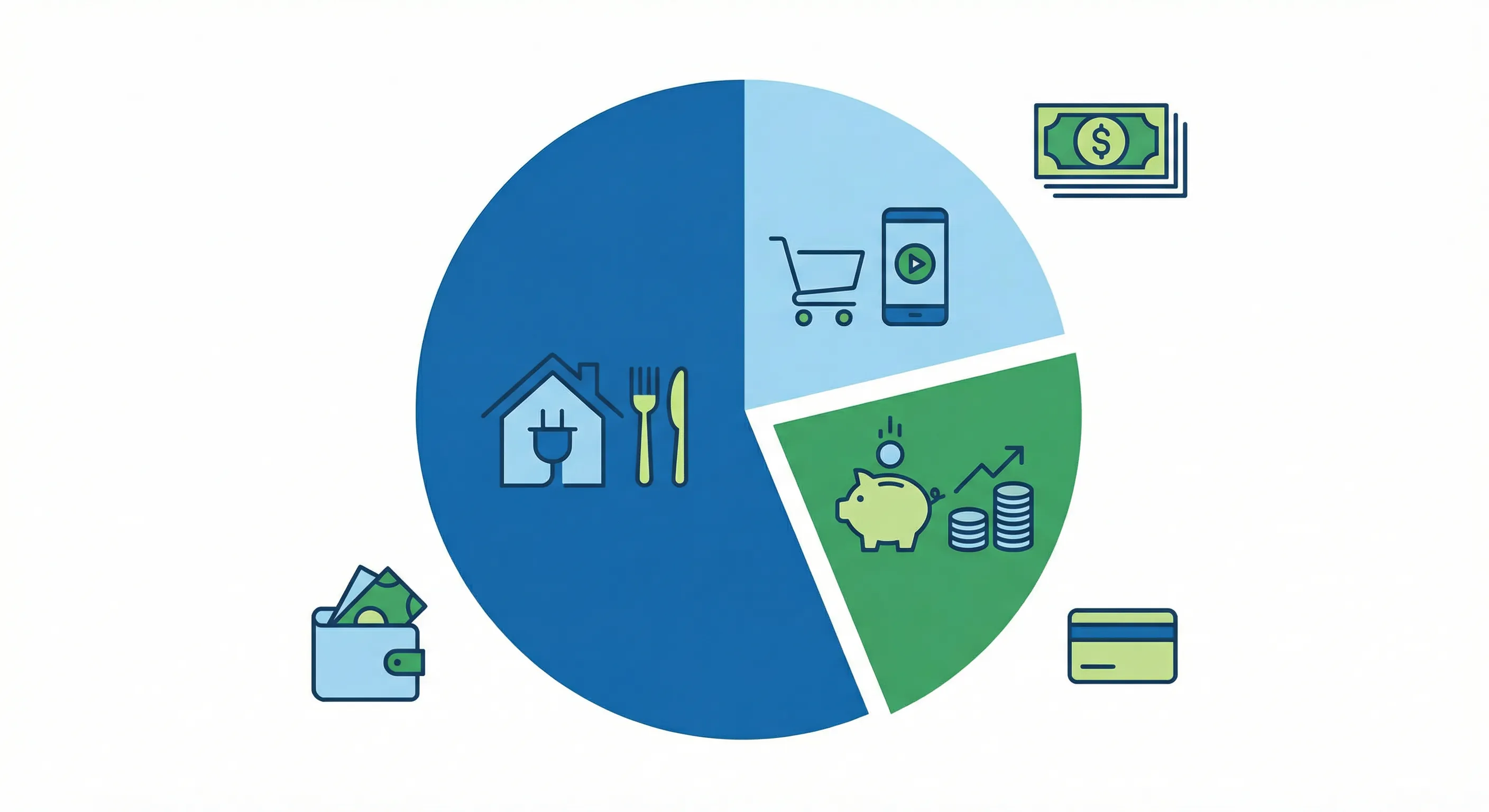
The 50/30/20 budget rule divides your after-tax income into three categories: 50% for needs, 30% for wants, and 20% for savings and debt repayment. If your take-home pay is $4,000 per month, that means $2,000 for necessities, $1,200 for discretionary spending, and $800 for financial goals.
Consider a typical case: tracking every dollar of a $4,200 monthly take-home paycheck for six months using this rule. Before adopting 50/30/20, monthly savings ran barely $150 with no real plan. Within the first year, sticking to the 20% savings target built a $5,400 emergency fund and paid off $3,800 in credit card debt.
Use our Budget Calculator to instantly see your personalized 50/30/20 breakdown based on your income.
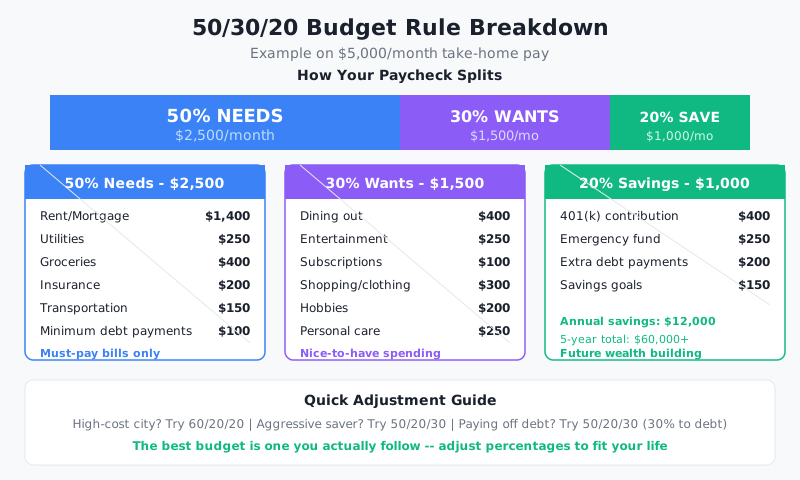
What Is the 50/30/20 Budget Rule?
The 50/30/20 rule was popularized by Senator Elizabeth Warren in her book "All Your Worth: The Ultimate Lifetime Money Plan." It provides a simple framework for managing money without tracking every dollar.
The Three Categories
| Category | Percentage | Purpose |
|---|---|---|
| Needs | 50% | Essential expenses you must pay |
| Wants | 30% | Non-essential spending for enjoyment |
| Savings | 20% | Building wealth and paying off debt |
Tip
Start with your after-tax income. The 50/30/20 rule applies to take-home pay, not gross salary. If you're paid $5,000 gross but take home $4,000, use $4,000 as your baseline.
How to Calculate Your 50/30/20 Budget
Step 1: Determine Your After-Tax Income
Your after-tax income is your paycheck after federal taxes, state taxes, Social Security, and Medicare are deducted.
Include:
- Regular paychecks
- Side income (after taxes)
- Regular bonuses (averaged monthly)
Exclude:
- Pre-tax retirement contributions
- Health insurance premiums (if deducted pre-tax)
- FSA contributions
Use our Paycheck Calculator if you need to calculate your take-home pay. Our paycheck guide walks through every deduction line by line so you understand exactly where your money goes.
Step 2: Calculate Each Category
Formula:
Needs = After-Tax Income × 0.50
Wants = After-Tax Income × 0.30
Savings = After-Tax Income × 0.20
Example Budget Breakdown
| Monthly Income | Needs (50%) | Wants (30%) | Savings (20%) |
|---|---|---|---|
| $3,000 | $1,500 | $900 | $600 |
| $4,000 | $2,000 | $1,200 | $800 |
| $5,000 | $2,500 | $1,500 | $1,000 |
| $6,000 | $3,000 | $1,800 | $1,200 |
| $7,500 | $3,750 | $2,250 | $1,500 |
| $10,000 | $5,000 | $3,000 | $2,000 |
Needs: The 50% Category
Your needs are expenses required for basic living. If you didn't pay them, your life would be seriously disrupted.
What Counts as Needs
| Expense | Included | Notes |
|---|---|---|
| Rent/Mortgage | Yes | Include property tax and insurance |
| Utilities | Yes | Electric, gas, water, trash |
| Groceries | Yes | Basic food only, not restaurant meals |
| Health Insurance | Yes | Premiums and necessary medical costs |
| Transportation | Yes | Car payment, insurance, gas, or transit |
| Minimum Debt Payments | Yes | The minimum required, not extra |
| Childcare | Yes | If required for work |
| Phone/Internet | Partial | Basic plans only |
What's NOT a Need
| Expense | Category |
|---|---|
| Netflix, streaming services | Want |
| Dining out | Want |
| Gym membership | Want |
| Upgraded phone plan | Want |
| New clothes (beyond basics) | Want |
| Coffee shop visits | Want |
Important
Be honest about needs vs. wants. A car might be a need, but a luxury car is a want. A phone is a need, but the latest iPhone is a want. Basic groceries are a need, but organic everything is partially a want.
Wants: The 30% Category
Wants are expenses that improve your quality of life but aren't essential for survival.
What Counts as Wants
| Category | Examples |
|---|---|
| Entertainment | Streaming services, concerts, movies |
| Dining Out | Restaurants, takeout, coffee shops |
| Shopping | Clothes beyond basics, electronics, hobbies |
| Travel | Vacations, weekend trips |
| Fitness | Gym memberships, fitness classes |
| Personal Care | Salon visits, spa treatments |
| Subscriptions | Magazines, premium apps |
| Upgrades | Better car, larger apartment |
The Wants Category Is Flexible
The 30% for wants is your lifestyle spending. If you're struggling with needs over 50%, you can temporarily reduce wants. Conversely, if needs are well under 50%, you might have more room for enjoyment.
Tip
Prioritize your wants. You don't have to spend the full 30% on wants. Identify what truly brings you joy and cut spending on things that don't. That gym membership you never use? Cancel it and redirect to something meaningful.
Savings: The 20% Category
The savings category includes all money directed toward future financial goals.
What Counts as Savings
| Type | Priority | Notes |
|---|---|---|
| Emergency Fund | High | 3-6 months of expenses |
| 401(k)/IRA Contributions | High | Especially if employer matches |
| Extra Debt Payments | High | Above minimum payments |
| General Savings | Medium | House down payment, car fund |
| Investment Accounts | Medium | Brokerage, index funds |
| HSA Contributions | Medium | If eligible |
Building Your Savings Priority
- First: Minimum debt payments (already in needs)
- Second: Emergency fund (aim for $1,000 starter, then 3-6 months)
- Third: 401(k) up to employer match (free money!)
- Fourth: High-interest debt payoff (credit cards)
- Fifth: Max out retirement accounts
- Sixth: Other financial goals
For detailed retirement planning, see our Retirement Planning Guide.
50/30/20 Budget Examples by Income
Example 1: $40,000 Salary ($3,100/month take-home)
| Category | Amount | Example Allocation |
|---|---|---|
| Needs (50%) | $1,550 | Rent: $900, Utilities: $150, Groceries: $300, Car/Insurance: $200 |
| Wants (30%) | $930 | Dining: $200, Entertainment: $100, Shopping: $300, Personal: $330 |
| Savings (20%) | $620 | Emergency fund: $300, 401(k): $320 |
Example 2: $60,000 Salary ($4,200/month take-home)
| Category | Amount | Example Allocation |
|---|---|---|
| Needs (50%) | $2,100 | Rent: $1,200, Utilities: $200, Groceries: $350, Car/Insurance: $350 |
| Wants (30%) | $1,260 | Dining: $300, Entertainment: $150, Shopping: $400, Travel: $410 |
| Savings (20%) | $840 | Emergency fund: $300, 401(k): $400, Roth IRA: $140 |
Example 3: $100,000 Salary ($6,500/month take-home)
| Category | Amount | Example Allocation |
|---|---|---|
| Needs (50%) | $3,250 | Mortgage: $1,800, Utilities: $300, Groceries: $500, Car/Insurance: $650 |
| Wants (30%) | $1,950 | Dining: $400, Entertainment: $300, Shopping: $500, Travel/Hobbies: $750 |
| Savings (20%) | $1,300 | 401(k): $600, Roth IRA: $500, Brokerage: $200 |
When 50/30/20 Doesn't Work
The 50/30/20 rule doesn't fit everyone. Here's when you might need adjustments:
High Cost of Living Areas
In cities like San Francisco, New York, or Boston, housing alone may exceed 50% of income.
Adjustments:
- Consider 60/20/20 or 70/20/10 temporarily
- Increase income through side hustles
- Reduce wants aggressively
- Consider roommates or smaller living spaces
High Debt Situations
If you have significant debt, the standard percentages may need modification.
Aggressive Debt Payoff (60/10/30):
- 60% needs
- 10% wants
- 30% debt repayment + savings
Low Income Situations
When income barely covers basics, any savings feels impossible.
Modified approach:
- Focus on covering essential needs first
- Save even $25-50 per month to build the habit
- Seek ways to increase income
- Access assistance programs if eligible
Warning
Don't sacrifice savings entirely. Even in tight situations, saving something — anything — maintains the habit and mindset. An emergency fund prevents small problems from becoming financial disasters.
Alternative Budget Rules
If 50/30/20 doesn't fit your situation, consider these alternatives:
80/20 Rule (Simpler Version)
- 80% spending (needs + wants combined)
- 20% savings
Good for: People who don't want to track detailed categories
70/20/10 Rule
- 70% needs and wants
- 20% savings and investments
- 10% giving/charity
Good for: Those who prioritize charitable giving
60/10/10/10/10 Rule
- 60% committed expenses
- 10% retirement
- 10% irregular expenses
- 10% short-term savings
- 10% fun money
Good for: Detailed planners who want more structure
Zero-Based Budget
Every dollar is assigned a purpose until your budget equals $0.
Good for: People who want maximum control
How to Use Our Budget Calculator
Our Budget Calculator makes the 50/30/20 rule easy:
- Enter your after-tax income — monthly or annual
- View your breakdown — instant calculation of all three categories
- List your expenses — categorize current spending
- Compare to guidelines — see where adjustments are needed
- Create your plan — export or save your personalized budget
The calculator also shows alternative rule breakdowns and tracks your progress over time.
Tips for Sticking to the 50/30/20 Budget
Automate Everything
- Set up automatic transfers to savings on payday
- Automate bill payments for needs
- Give yourself a "wants" allowance that auto-transfers to a separate account
Use Separate Accounts
- Main checking: For needs and bills
- Fun money account: For wants spending
- Savings account: For savings category (ideally high-yield)
Track Monthly
At month-end, review:
- Did needs stay under 50%?
- What did I actually spend on wants?
- Did I hit my 20% savings goal?
Adjust Quarterly
Every 3 months, review and adjust:
- Has income changed?
- Have any needs increased or decreased?
- Are my wants aligned with my values?
Frequently Asked Questions
What income do I use for the 50/30/20 rule?
Use your after-tax income (take-home pay). This is what hits your bank account after federal and state taxes, Social Security, and Medicare are deducted. Don't include pre-tax deductions like 401(k) contributions.
What if my needs are more than 50% of my income?
If needs exceed 50%, you have three options: reduce needs (roommate, cheaper car, move to lower cost area), temporarily reduce wants to accommodate, or increase income. High-cost cities often require a modified 60/25/15 or similar approach.
Should I count 401(k) contributions as savings?
Pre-tax 401(k) contributions are already removed before you receive your paycheck, so they're essentially "savings" that happen before you apply the 50/30/20 rule. Post-tax Roth contributions from your take-home pay would count toward the 20%.
Is 20% savings really necessary?
For most people, 20% is the minimum for building long-term wealth and security. This includes retirement savings, emergency funds, and debt repayment beyond minimums. If you can save more, you'll reach financial independence faster.
How do I categorize something that's both a need and want?
Split it. For example, a basic phone plan ($40) is a need, but your $120 unlimited plan includes $80 of "want." Basic groceries are needs; premium items are wants. Be honest about the distinction.
What about irregular expenses like car repairs or annual insurance?
Include these in your needs category. Either average them monthly or set aside money each month in a "sinking fund" for these predictable-but-irregular expenses.
Related Calculators
- Paycheck Calculator — Calculate your take-home pay
- Savings Goal Calculator — Plan your savings timeline (see our savings goal guide for strategies)
- Tip Calculator — Budget for dining out expenses
Conclusion
The 50/30/20 budget rule provides a simple framework for managing money without micromanaging every dollar. By allocating 50% to needs, 30% to wants, and 20% to savings, you create a sustainable balance between living today and preparing for tomorrow.
Use our Budget Calculator to see your personalized breakdown and start building a budget that works for your life. Remember: the best budget is one you'll actually stick to.
This guide provides general budgeting information. Your personal situation may require adjustments based on debt levels, cost of living, and financial goals. Consider consulting a financial advisor for personalized advice.
This article is provided for informational and educational purposes only. Content should not be considered professional financial, medical, legal, or other advice. Always consult a qualified professional before making important decisions. UseCalcPro is not responsible for any actions taken based on the information in this article.
Try These Calculators
List your income and expenses to see where your money goes each month. Shows savings rate, category breakdown, and how you compare to the 50/30/20 rule.
Enter your income, debts, and savings goal to find out how much rent you can afford. Uses the 30% rule with adjustments for your debt-to-income ratio.
Enter your age, savings, and monthly contributions to see if you are on track for retirement. Includes 4% rule projections and Social Security estimates.
Type in the original price and discount percentage to see your sale price, total savings, and cost per item when buying multiples. Handles stacked discounts.
Calculate your DTI ratio to assess mortgage qualification. See front-end and back-end ratios, compare to lender limits, and get tips to improve your DTI.