Savings Goal Calculator: How Much to Save Each Month
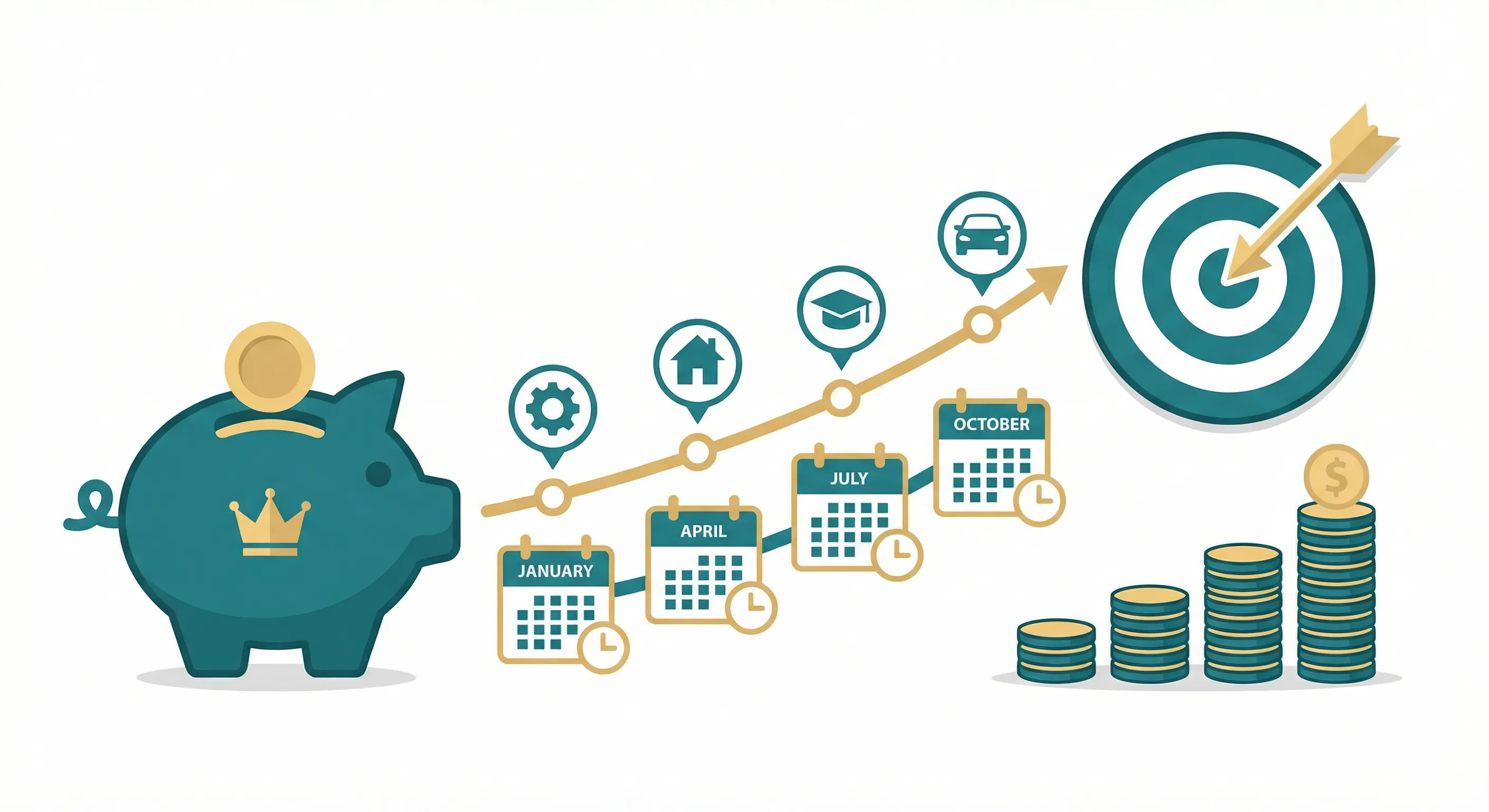
To reach any savings goal, divide your target amount by the number of months until your deadline. If you need $10,000 for a down payment in 2 years, you need to save $417 per month. Factor in interest from a high-yield savings account, and you might reach your goal faster.
Last year I set a goal to save $18,000 for a home down payment in 18 months. By parking my money in a 4.5% APY high-yield savings account and automating $950 monthly transfers on payday, I actually hit my target two months early -- the $627 in interest earnings made the difference. Breaking a big number into a concrete monthly amount turned an intimidating goal into something I could track and control.
Use our Savings Goal Calculator to create a personalized savings plan with interest calculations included.
How to Calculate Your Monthly Savings
The basic formula is straightforward:
Monthly Savings = Goal Amount ÷ Number of Months
But a smarter approach includes the interest you'll earn:
Monthly Savings = (Goal - (Current Savings × Future Value Factor)) ÷ Payment Factor
Don't worry — our calculator handles the complex math. Here's a simpler approach:
Step-by-Step Savings Calculation
Step 1: Define your goal amount Step 2: Set your deadline (months) Step 3: Note your starting balance Step 4: Determine expected interest rate Step 5: Calculate monthly contribution
Example: Emergency Fund
Goal: $15,000 emergency fund Timeline: 24 months Starting balance: $2,000 Interest rate: 4.5% APY (high-yield savings)
Simple calculation (no interest):
($15,000 - $2,000) ÷ 24 = $542/month
With interest included (4.5% APY):
Required monthly: ~$515/month
Interest earned: ~$650 total
Total saved: $2,000 + ($515 × 24) + $650 = $15,010
Tip
High-yield savings accounts make a difference. At 4.5% APY vs 0.01% at a traditional bank, you'd earn about $650 more over 2 years on this example. Shop around for the best rates.
Common Savings Goals and Timelines
Emergency Fund
Financial experts recommend 3-6 months of expenses:
| Monthly Expenses | 3-Month Fund | 6-Month Fund |
|---|---|---|
| $3,000 | $9,000 | $18,000 |
| $4,000 | $12,000 | $24,000 |
| $5,000 | $15,000 | $30,000 |
| $6,000 | $18,000 | $36,000 |
Recommended timeline: 12-24 months for a full emergency fund
Priority: This should be your first savings goal before investing.
Home Down Payment
Conventional mortgages prefer 20% down to avoid PMI:
| Home Price | 5% Down | 10% Down | 20% Down |
|---|---|---|---|
| $250,000 | $12,500 | $25,000 | $50,000 |
| $350,000 | $17,500 | $35,000 | $70,000 |
| $500,000 | $25,000 | $50,000 | $100,000 |
Recommended timeline: 3-5 years
For mortgage planning, see our Mortgage Calculator.
New Car
Experts recommend 20% down on a car to avoid negative equity:
| Car Price | 10% Down | 20% Down |
|---|---|---|
| $25,000 | $2,500 | $5,000 |
| $35,000 | $3,500 | $7,000 |
| $45,000 | $4,500 | $9,000 |
Recommended timeline: 12-24 months
Important
Consider buying used. A 2-3 year old car with low mileage can cost 30-40% less than new, significantly reducing your savings goal.
Vacation
Travel costs vary widely. Budget for transportation, accommodations, food, and activities:
| Vacation Type | Per Person | Family of 4 |
|---|---|---|
| Weekend getaway | $500-$800 | $1,500-$2,500 |
| Week at beach | $1,500-$2,500 | $4,000-$7,000 |
| Europe trip (10 days) | $3,000-$5,000 | $10,000-$18,000 |
| Disney World (5 days) | $1,500-$2,500 | $5,000-$8,000 |
Recommended timeline: 6-18 months before departure
Wedding
Average US wedding costs continue to rise:
| Wedding Size | Budget Range |
|---|---|
| Intimate (under 50 guests) | $5,000-$15,000 |
| Medium (50-100 guests) | $15,000-$30,000 |
| Large (100-150 guests) | $30,000-$50,000 |
| Luxury (150+ guests) | $50,000+ |
Recommended timeline: 12-24 months engagement
College Fund
529 plan contributions grow tax-free when used for education:
| Child's Age | Years Until College | Monthly for $50k | Monthly for $100k |
|---|---|---|---|
| Newborn | 18 years | $150 | $300 |
| 5 years old | 13 years | $225 | $450 |
| 10 years old | 8 years | $400 | $800 |
| 15 years old | 3 years | $1,300 | $2,600 |
Assumes 6% annual returns in a 529 plan
Monthly Savings Quick Reference
Here's how long it takes to save common amounts at different monthly contributions:
Saving $5,000
| Monthly Savings | Time to Goal |
|---|---|
| $100 | 50 months (4.2 years) |
| $200 | 25 months (2.1 years) |
| $300 | 17 months (1.4 years) |
| $500 | 10 months |
Saving $10,000
| Monthly Savings | Time to Goal |
|---|---|
| $200 | 50 months (4.2 years) |
| $300 | 33 months (2.8 years) |
| $500 | 20 months |
| $750 | 13 months |
Saving $25,000
| Monthly Savings | Time to Goal |
|---|---|
| $400 | 63 months (5.2 years) |
| $600 | 42 months (3.5 years) |
| $800 | 31 months (2.6 years) |
| $1,000 | 25 months (2.1 years) |
These don't include interest — actual time may be shorter with high-yield savings
The Power of Interest on Savings Goals
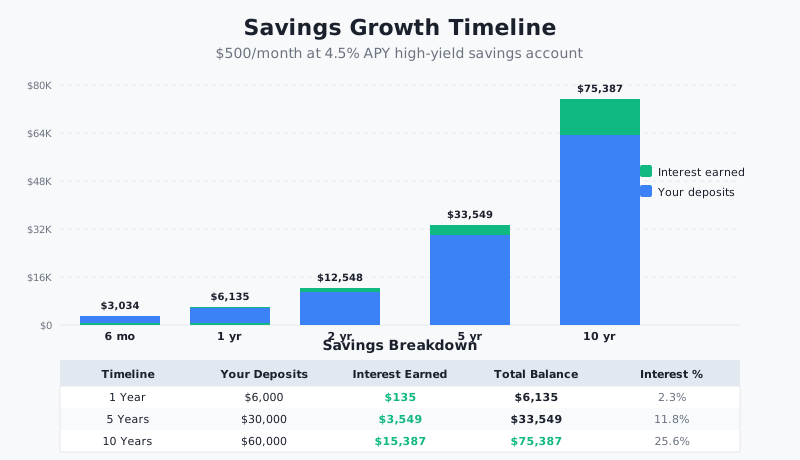
Interest compounds your efforts. Here's how different rates affect a $10,000 goal with $400/month savings:
| APY | Months to Goal | Interest Earned |
|---|---|---|
| 0.01% (traditional bank) | 25 months | $5 |
| 1.00% | 25 months | $52 |
| 3.00% | 24 months | $156 |
| 4.50% | 24 months | $235 |
| 5.00% | 24 months | $261 |
Info
High-yield savings accounts currently offer 4-5% APY. That's 400-500x more than the 0.01% at many traditional banks. The switch is usually free and takes minutes.
Strategies to Reach Your Goal Faster
1. Automate Your Savings
Set up automatic transfers on payday:
- Money you never see is money you won't spend
- Treats savings like a bill that must be paid
- Removes willpower from the equation
2. Use Separate Accounts
Create dedicated accounts for each goal:
- Prevents "borrowing" from one goal for another
- Makes progress visible and motivating
- Many banks allow free sub-accounts or buckets
3. Increase Savings with Windfalls
Redirect unexpected money to your goal:
- Tax refunds
- Work bonuses
- Cash gifts
- Selling unused items
4. Round Up Savings
Some apps round up purchases and save the difference:
- $3.75 coffee rounds to $4.00 → $0.25 saved
- Small amounts add up over thousands of transactions
5. Challenge Yourself
Monthly savings challenges can boost your total:
- 52-week challenge: Save $1 week 1, $2 week 2... = $1,378/year
- No-spend weekends: Redirect typical weekend spending to savings
- Subscription audit: Cancel unused services, redirect to savings
When to Save vs. When to Invest
| Timeframe | Recommended Account | Why |
|---|---|---|
| Under 1 year | High-yield savings | Need guaranteed access |
| 1-3 years | High-yield savings or CDs | Market volatility too risky |
| 3-5 years | Mix of savings and bonds | Some growth potential |
| 5+ years | Investment accounts | Can recover from downturns |
Warning
Don't invest emergency funds. Your emergency fund needs to be accessible immediately without risk of being down when you need it. Keep it in a high-yield savings account.
How to Use Our Savings Goal Calculator
Our Savings Goal Calculator creates your personalized plan:
- Enter your goal amount — the total you need to save
- Set your deadline — months or a target date
- Add current savings — your starting balance
- Input interest rate — expected APY on your savings
- Get your plan — monthly amount needed and projected growth
The calculator also shows:
- Total interest you'll earn
- Month-by-month balance projections
- Alternative timelines with different contribution amounts
Adjusting When Life Changes
If You Can't Meet Your Monthly Target
Options:
- Extend your timeline
- Reduce your goal amount
- Find additional income
- Cut expenses elsewhere
If You Receive a Windfall
Options:
- Lump sum toward goal (reduce monthly going forward)
- Maintain monthly contributions (reach goal early)
- Split between acceleration and other goals
If Interest Rates Change
High-yield savings rates fluctuate. If rates drop:
- Your timeline extends slightly
- Consider increasing monthly contributions
If rates rise:
- You may reach your goal faster
- Enjoy the bonus or reduce monthly contributions
Multiple Savings Goals Strategy
When saving for multiple goals simultaneously:
Prioritization Framework
- First: Emergency fund (1-2 months expenses minimum)
- Second: Employer 401(k) match (if applicable)
- Third: High-interest debt payoff
- Fourth: Full emergency fund (3-6 months)
- Fifth: Other savings goals by priority
Percentage-Based Allocation
Divide your total savings budget across goals:
Example ($800/month total savings):
- Emergency fund (50%): $400
- Vacation (25%): $200
- New car (25%): $200
Once the emergency fund is complete, reallocate that $400 to other goals.
Frequently Asked Questions
How much should I save each month?
A common guideline is saving 20% of your after-tax income (per the 50/30/20 rule). However, specific goals may require more or less. Use our Savings Goal Calculator to find your target monthly amount for any goal.
How long does it take to save $10,000?
At $400/month, you'll reach $10,000 in about 25 months without interest, or around 24 months with a 4.5% APY high-yield savings account. At $600/month, you'll reach it in 17 months.
Should I save or pay off debt first?
Generally: save a small emergency fund first ($1,000-$2,000), then attack high-interest debt (credit cards), then build a full emergency fund. For low-interest debt (mortgage, federal student loans), you can save and pay debt simultaneously.
What's the best account for savings goals?
For goals under 3-5 years, use a high-yield savings account (currently 4-5% APY). For longer-term goals, consider CDs for guaranteed rates or investment accounts for growth potential (with more risk).
How can I save more money?
Start by tracking spending to find cuts, automate transfers to savings, redirect windfalls to your goal, and consider increasing income through side hustles. Even small increases compound over time.
Should I have one savings account or multiple?
Multiple accounts (or sub-accounts/buckets) help separate goals and track progress. Many online banks offer these features for free. Seeing dedicated balances grow is motivating.
Related Calculators
- Budget Calculator — Plan your monthly spending and savings allocation (see our 50/30/20 budget guide for the full framework)
- Compound Interest Calculator — See how savings grow over time
- Paycheck Calculator — Calculate how much of your pay to allocate to savings (our paycheck guide explains every deduction)
Conclusion
Reaching any savings goal comes down to simple math: target amount, timeline, and monthly contributions. High-yield savings accounts accelerate your progress with meaningful interest. Automation removes the mental effort of saving.
Use our Savings Goal Calculator to create a plan for your specific goal. Whether it's an emergency fund, vacation, or down payment, knowing exactly how much to save each month transforms a wish into an achievable plan.
Savings calculations assume consistent monthly contributions and stable interest rates. Actual results may vary based on contribution consistency and rate changes. This is educational information, not financial advice.
This article is provided for informational and educational purposes only. Content should not be considered professional financial, medical, legal, or other advice. Always consult a qualified professional before making important decisions. UseCalcPro is not responsible for any actions taken based on the information in this article.
Try These Calculators
Calculate how long it will take to reach your savings goal or how much you need to save monthly. Plan for major purchases, emergencies, or retirement.
Set a savings goal, enter your monthly deposit and interest rate, and see exactly how long it takes to reach your target with a month-by-month breakdown.
Enter your monthly expenses and savings rate to find your emergency fund target. Shows how many months you can cover now and how long to reach 3-6 months.
Type in the original price and discount percentage to see your sale price, total savings, and cost per item when buying multiples. Handles stacked discounts.
Calculate how much you'll save with a no-buy or low-buy challenge in 2026. Enter your actual discretionary spending to see your total savings potential.