Macro Calculator for Cutting and Bulking: How to Calculate Your Macros
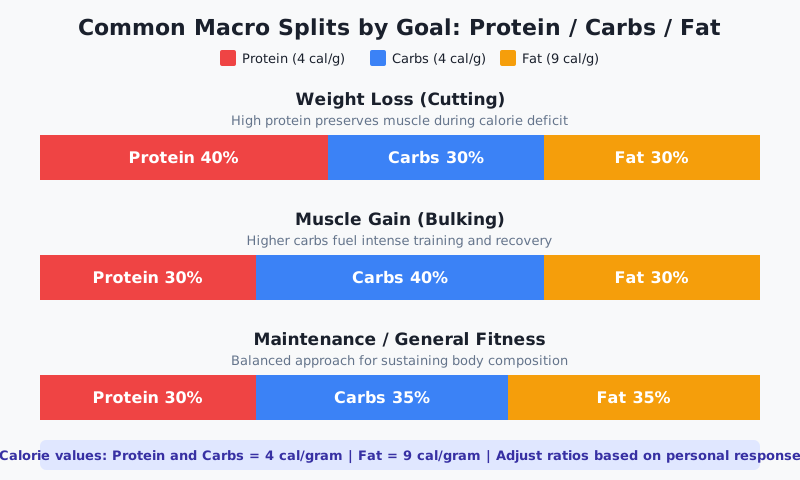
Macros (macronutrients) are protein, carbohydrates, and fat — the three sources of calories in your diet. For cutting (fat loss), a typical macro split is 40% protein, 35% carbs, 25% fat. For bulking (muscle gain), it's 25% protein, 50% carbs, 25% fat. But the right split depends on your calories, preferences, and goals.
Dialing in macros usually takes some trial and error, but the payoff shows up in results like this: a 12-week cut at 185g protein, 240g carbs, and 70g fat can take someone from 198 to 181 pounds while keeping bench press steady at 275 lbs. Tracking macros instead of just calories is the difference between losing muscle and losing only fat. If you are new to tracking, start by calculating your protein needs first since protein is the most important macro for body composition.
Use our Macro Calculator to get personalized macro targets based on your body and goals.
What Are Macros and Why Do They Matter?
Each macronutrient serves specific functions:
| Macro | Calories per Gram | Primary Functions |
|---|---|---|
| Protein | 4 | Muscle building/repair, satiety |
| Carbohydrates | 4 | Primary energy source, performance |
| Fat | 9 | Hormone production, absorption, satiety |
Why Track Macros Instead of Just Calories?
| Calories Only | Macros |
|---|---|
| Weight changes | Body composition changes |
| May lose muscle | Preserves/builds muscle |
| Energy may fluctuate | Stable energy levels |
| Missing key nutrients | Balanced nutrition |
| All foods equal | Food quality matters |
Tip
Macros are calories with a purpose. 1,800 calories from mostly protein and vegetables produces different results than 1,800 calories from mostly sugar and fat.
How to Calculate Your Macros
Step 1: Calculate Your TDEE
Your Total Daily Energy Expenditure determines your calorie needs:
TDEE = BMR × Activity Multiplier
| Activity Level | Multiplier |
|---|---|
| Sedentary | 1.2 |
| Lightly active (1-3 workouts/week) | 1.375 |
| Moderately active (3-5 workouts/week) | 1.55 |
| Very active (6-7 workouts/week) | 1.725 |
| Extremely active (athlete) | 1.9 |
Use our TDEE Calculator for a precise calculation, or read our TDEE guide for a full explanation of how total daily energy expenditure works.
Step 2: Set Your Calorie Target
| Goal | Calories |
|---|---|
| Weight loss (slow) | TDEE - 250 |
| Weight loss (moderate) | TDEE - 500 |
| Weight loss (aggressive) | TDEE - 750 |
| Maintenance | TDEE |
| Muscle gain (lean) | TDEE + 200-300 |
| Muscle gain (moderate) | TDEE + 400-500 |
Step 3: Calculate Protein
Protein is calculated first, based on body weight:
| Goal | Protein per lb of Body Weight |
|---|---|
| Weight loss | 0.8-1.2 g/lb |
| Maintenance | 0.6-0.8 g/lb |
| Muscle building | 0.7-1.0 g/lb |
Example (180 lb person cutting at 2,000 calories):
Protein: 180 × 1.0 = 180g
Protein calories: 180 × 4 = 720 calories
Step 4: Calculate Fat
Fat should be at least 0.3-0.4 g/lb for hormone health:
| Goal | Fat per lb of Body Weight |
|---|---|
| Weight loss | 0.3-0.4 g/lb |
| Maintenance | 0.35-0.45 g/lb |
| Muscle building | 0.35-0.5 g/lb |
Example (continuing):
Fat: 180 × 0.35 = 63g
Fat calories: 63 × 9 = 567 calories
Step 5: Fill Remaining with Carbs
Carbs fill whatever calories remain:
Remaining calories = Total - Protein calories - Fat calories
Carbs (g) = Remaining calories ÷ 4
Example (continuing):
Remaining: 2,000 - 720 - 567 = 713 calories
Carbs: 713 ÷ 4 = 178g
Final macros: 180g protein, 178g carbs, 63g fat = 2,000 calories
Macro Ratios by Goal
For Cutting (Fat Loss)
Cutting requires a calorie deficit with high protein to preserve muscle:
| Macro | Percentage | Why |
|---|---|---|
| Protein | 35-40% | Preserve muscle, high satiety |
| Carbs | 25-35% | Support training, flexibility |
| Fat | 25-35% | Hormone health, satisfaction |
Example cutting macros (2,000 calories):
| Macro | Grams | Calories |
|---|---|---|
| Protein | 175g | 700 |
| Carbs | 150g | 600 |
| Fat | 78g | 700 |
| Total | 2,000 |
Important
Don't drop fat too low. Fat below 0.3 g/lb can affect hormone production, especially testosterone and estrogen. Keep fat at 20%+ of calories minimum.
For Bulking (Muscle Gain)
Bulking requires a surplus with enough protein and carbs for training:
| Macro | Percentage | Why |
|---|---|---|
| Protein | 20-25% | Sufficient for muscle building |
| Carbs | 45-55% | Fuel workouts and recovery |
| Fat | 20-30% | Hormone health, calorie density |
Example bulking macros (3,000 calories):
| Macro | Grams | Calories |
|---|---|---|
| Protein | 170g | 680 |
| Carbs | 400g | 1,600 |
| Fat | 80g | 720 |
| Total | 3,000 |
For Maintenance
Maintenance allows more flexibility:
| Macro | Percentage | Why |
|---|---|---|
| Protein | 20-30% | Support muscle retention |
| Carbs | 40-50% | Energy and enjoyment |
| Fat | 25-35% | Satiety and health |
For Recomposition (Build Muscle + Lose Fat)
Recomp is challenging but possible for beginners or those returning to training:
| Macro | Percentage | Why |
|---|---|---|
| Protein | 30-35% | Maximum muscle support |
| Carbs | 35-45% | Training fuel |
| Fat | 25-30% | Balance |
Key: Eat at maintenance or slight deficit, prioritize protein, train hard with progressive overload.
Macro Splits for Different Diets
Standard Balanced Diet
- Protein: 25-30%
- Carbs: 40-50%
- Fat: 25-30%
High Protein Diet
- Protein: 35-40%
- Carbs: 30-40%
- Fat: 25-30%
Low Carb Diet
- Protein: 30-35%
- Carbs: 15-25%
- Fat: 40-50%
Keto Diet
- Protein: 20-25%
- Carbs: 5-10%
- Fat: 65-75%
High Carb (Endurance Athletes)
- Protein: 15-20%
- Carbs: 55-65%
- Fat: 20-25%
Sample Macro Meal Plans
Cutting: 1,800 Calories (175P/120C/70F)
| Meal | Foods | Macros |
|---|---|---|
| Breakfast | 3 eggs, 2 egg whites, spinach, 1 slice toast | 32P / 15C / 16F |
| Lunch | 6 oz chicken breast, large salad, olive oil dressing | 45P / 15C / 18F |
| Snack | Greek yogurt (1 cup), berries | 20P / 20C / 5F |
| Dinner | 6 oz salmon, asparagus, 1/2 cup rice | 40P / 30C / 18F |
| Pre-bed | Casein shake or cottage cheese | 30P / 10C / 6F |
| Total | 167P / 90C / 63F |
Bulking: 3,200 Calories (180P/420C/100F)
| Meal | Foods | Macros |
|---|---|---|
| Breakfast | 4 eggs, oatmeal w/ banana, PB | 30P / 70C / 25F |
| Post-workout | Whey shake, 2 bananas | 30P / 60C / 5F |
| Lunch | 8 oz chicken, 2 cups rice, vegetables | 50P / 100C / 12F |
| Snack | Beef jerky, granola bar, apple | 25P / 50C / 12F |
| Dinner | 8 oz steak, potato, vegetables, butter | 55P / 60C / 30F |
| Pre-bed | Cottage cheese, almonds | 25P / 15C / 15F |
| Total | 215P / 355C / 99F |
Maintenance: 2,400 Calories (150P/280C/80F)
| Meal | Foods | Macros |
|---|---|---|
| Breakfast | Protein oatmeal, eggs | 35P / 50C / 18F |
| Lunch | Turkey sandwich, fruit, chips | 35P / 80C / 20F |
| Snack | Protein bar, banana | 25P / 40C / 10F |
| Dinner | 6 oz chicken, pasta, vegetables | 45P / 80C / 22F |
| Snack | Greek yogurt | 15P / 15C / 5F |
| Total | 155P / 265C / 75F |
Tracking and Hitting Your Macros
Flexible Dieting / IIFYM
"If It Fits Your Macros" allows food flexibility while hitting targets:
The 80/20 rule:
- 80% whole, nutrient-dense foods
- 20% whatever you enjoy
This prevents feeling deprived while ensuring nutrition quality.
Macro Tracking Apps
Popular options for tracking:
- MyFitnessPal (most comprehensive database)
- Cronometer (best micronutrient tracking)
- MacroFactor (adaptive algorithms)
- Carbon Diet Coach (AI-adjusted)
How Precise Do You Need to Be?
| Goal | Precision Needed |
|---|---|
| General health | Within 20% of targets |
| Weight loss | Within 10% of targets |
| Competition prep | Within 5% of targets |
Tip
Protein is the priority macro. If you hit your protein target, being within range on carbs and fat is usually sufficient for good results.
Common Macro Mistakes
Mistake 1: Ignoring Protein
Problem: Prioritizing carbs and fat while protein falls short.
Solution: Plan protein first. Build meals around protein sources, then add carbs and fat.
Mistake 2: Fat Too Low
Problem: Cutting fat below 0.3 g/lb to "save calories."
Solution: Maintain minimum fat for hormones. Reduce carbs instead if needed.
Mistake 3: Not Adjusting Over Time
Problem: Using the same macros as your body changes.
Solution: Recalculate every 4-6 weeks or when progress stalls.
Mistake 4: Weekend Blowouts
Problem: Perfect weekday macros destroyed by untracked weekends.
Solution: Track weekends too, or at least estimate. One 4,000-calorie day can erase a week's deficit.
Mistake 5: Obsessing Over Perfection
Problem: Stress over hitting exact numbers creates an unhealthy relationship with food.
Solution: Aim for 90% consistency. Small daily variations balance out over time.
Adjusting Macros When Progress Stalls
For Weight Loss Plateaus
If fat loss stalls for 2+ weeks:
- Check tracking accuracy — Are you weighing food? Counting everything?
- Reduce calories by 100-200 — Cut from carbs or fat, maintain protein
- Increase activity — Add steps or cardio before cutting more food
For Bulking Plateaus
If muscle gain stalls:
- Verify you're actually eating enough — Track diligently
- Add 100-200 calories — Primarily from carbs
- Assess training — Progressive overload is essential
How to Use Our Macro Calculator
Our Macro Calculator creates your personalized plan:
- Enter your stats — weight, height, age, sex
- Select activity level — how active you are
- Choose your goal — lose fat, build muscle, maintain
- Get your macros — daily targets for protein, carbs, fat
The calculator also shows:
- Calorie breakdown by macro
- Meal-by-meal distribution suggestions
- Adjustment recommendations for plateaus
Frequently Asked Questions
What's the best macro ratio for weight loss?
For weight loss, aim for 35-40% protein, 25-35% carbs, and 25-35% fat. High protein preserves muscle and increases satiety. The exact split matters less than maintaining a calorie deficit.
Do I need to hit my macros exactly?
No, being within 5-10% of your targets is sufficient. Prioritize protein (hit it daily), then be approximately accurate on carbs and fat. Perfect daily accuracy isn't required for results.
Should I eat the same macros every day?
Consistency helps, but slight daily variations are fine. Some people cycle carbs (higher on training days, lower on rest days) for optimization, but it's not required.
How do I know if my macros are working?
Track progress over 2-4 weeks:
- Weight trending in the right direction
- Strength maintained or increasing
- Energy levels stable
- Hunger manageable
If any of these are off, adjust macros accordingly.
Can I still eat out and hit my macros?
Yes, with strategies:
- Look up restaurant nutrition in advance
- Prioritize protein when ordering
- Skip calorie-dense sides and sauces
- Save calories during the day for dining out
What if I'm vegan/vegetarian?
Same macro principles apply. Focus on varied plant proteins (legumes, tofu, tempeh, seitan, plant protein powders) and combine complementary amino acid sources throughout the day.
Related Calculators
- TDEE Calculator — Calculate your calorie needs
- Protein Calculator — Detailed protein recommendations
- Calorie Calculator — For weight loss or gain targets
- Calorie Deficit Guide — Complete guide to creating a sustainable deficit
Conclusion
Calculating and tracking macros gives you control over your body composition in a way calorie counting alone doesn't. Whether you're cutting, bulking, or maintaining, the right balance of protein, carbs, and fat supports your goals while allowing dietary flexibility.
Use our Macro Calculator to get your personalized targets. Start by hitting protein consistently, stay approximately accurate on carbs and fat, and adjust based on results every few weeks.
Macro recommendations are general guidelines based on nutrition science and fitness research. Individual needs vary based on health conditions, preferences, and specific goals. Consult a registered dietitian for personalized advice.
This article is provided for informational and educational purposes only. Content should not be considered professional financial, medical, legal, or other advice. Always consult a qualified professional before making important decisions. UseCalcPro is not responsible for any actions taken based on the information in this article.
Try These Calculators
Calculate your optimal daily macros (protein, carbs, fat) based on your goals - weight loss, maintenance, or muscle gain. Get personalized macro ratios.
Set your calorie deficit and get protein, carb, and fat targets tuned for fat loss. Adjusts macros to preserve muscle while cutting with IIFYM flexibility.
Check your BMI and see which weight category you fall into based on WHO standards. View health ranges, get personal recommendations, and track your metrics.
How much protein do you need per day? Enter your weight, activity level, and goal to get a daily gram target for muscle gain, fat loss, or maintenance.
Look up your ideal body weight using Devine, Robinson, Miller, and Hamwi formulas. Compare results across all four clinical equations in a single report.