Calories Burned Calculator: How Many Calories Does Exercise Burn?
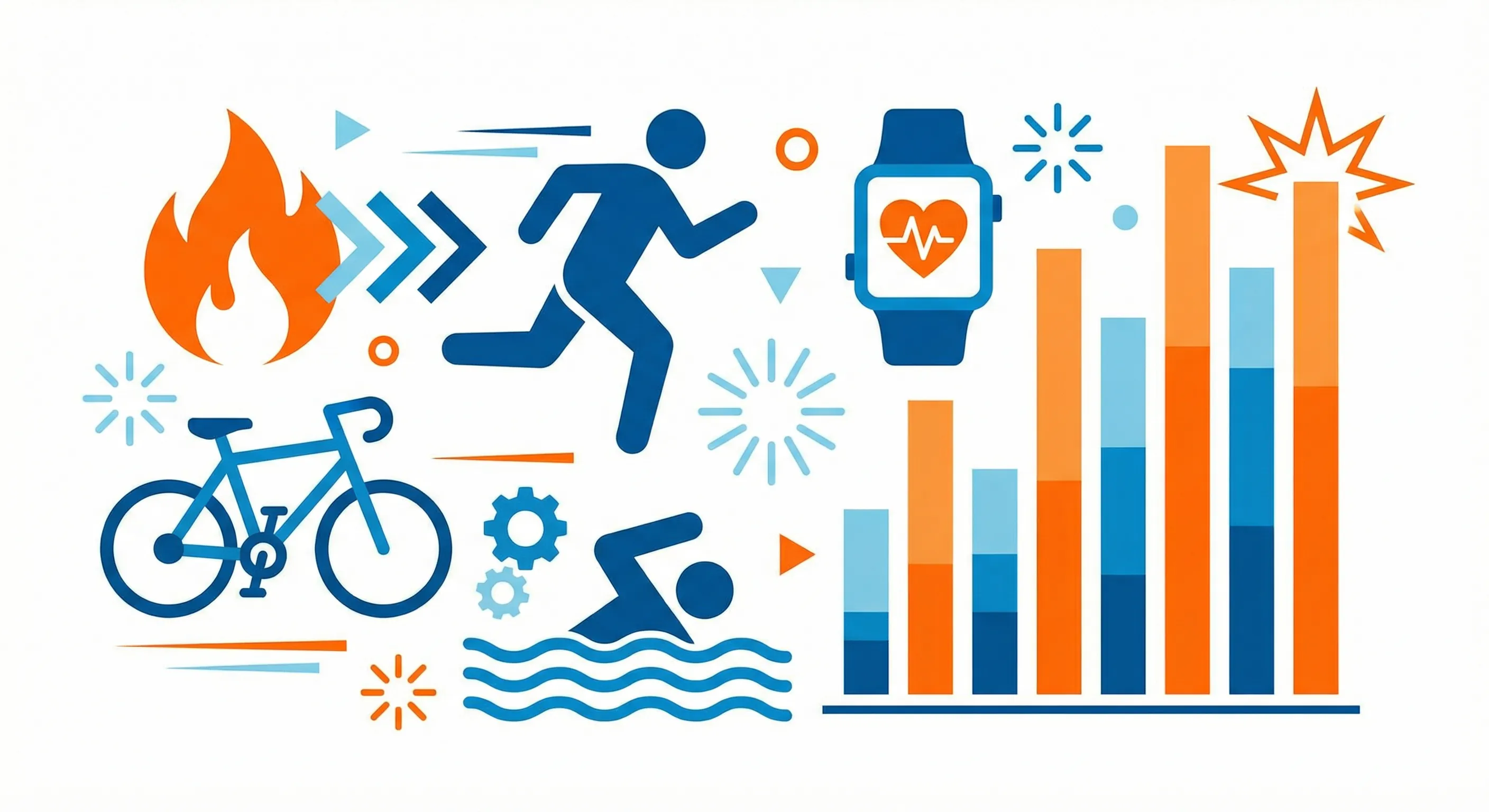
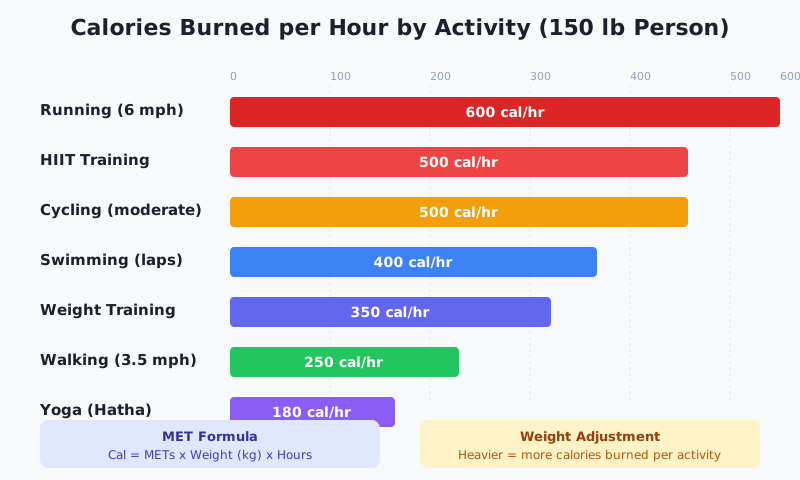
Calories burned during exercise depend on your weight, activity type, intensity, and duration. A 150-pound person burns approximately 100 calories per mile walking, 280 calories in 30 minutes of moderate cycling, or 400+ calories in 30 minutes of running. Heavier individuals burn more; lighter individuals burn less.
Tracking calorie burn across hundreds of workouts over six years shows how the numbers add up over time. A single 20-mile marathon training run can burn 2,400 calories, and consistently tracking a 1,800-calorie daily burn can support results like losing 23 pounds in four months. Understanding how your TDEE and exercise calories interact is the key to sustainable results.
Use our Calories Burned Calculator to get accurate estimates for any activity based on your weight and duration.
How Your Body Burns Calories
Understanding calorie burn helps you align exercise with your goals:
Components of Daily Calorie Burn
| Component | % of Daily Burn | Description |
|---|---|---|
| BMR | 60-70% | Calories burned at complete rest |
| TEF | ~10% | Calories burned digesting food |
| NEAT | 15-30% | Non-exercise daily movement |
| Exercise | 5-15% | Intentional physical activity |
Info
Exercise is a smaller part than you'd think. Most calories are burned just keeping you alive (BMR). This is why nutrition matters more than exercise for weight loss, though exercise has countless other benefits.
How to Calculate Calories Burned
The standard formula uses METs (Metabolic Equivalents):
Calories Burned = METs × Weight (kg) × Duration (hours)
What Are METs?
METs represent energy expenditure relative to rest:
- 1 MET = calories burned sitting quietly
- 3 METs = 3× resting burn rate
- 10 METs = 10× resting burn rate
Example (150 lb person running for 30 minutes at 6 METs):
Weight: 150 lbs ÷ 2.2 = 68 kg
Duration: 30 minutes = 0.5 hours
Calories: 6 × 68 × 0.5 = 204 calories
Calories Burned by Activity
Walking
The most accessible exercise. Calories scale with speed and body weight:
| Speed | METs | 150 lbs (30 min) | 180 lbs (30 min) |
|---|---|---|---|
| 2.0 mph (stroll) | 2.5 | 85 | 102 |
| 2.5 mph (casual) | 3.0 | 102 | 123 |
| 3.0 mph (moderate) | 3.5 | 119 | 143 |
| 3.5 mph (brisk) | 4.3 | 146 | 176 |
| 4.0 mph (fast) | 5.0 | 170 | 204 |
| 4.5 mph (very fast) | 7.0 | 238 | 286 |
Rule of thumb: ~100 calories per mile for a 150 lb person
Running
Running burns significantly more calories than walking at the same duration:
| Pace | METs | 150 lbs (30 min) | 180 lbs (30 min) |
|---|---|---|---|
| 12 min/mile (5 mph) | 8.0 | 272 | 327 |
| 10 min/mile (6 mph) | 9.8 | 333 | 400 |
| 9 min/mile (6.7 mph) | 10.5 | 357 | 429 |
| 8 min/mile (7.5 mph) | 11.5 | 391 | 469 |
| 7 min/mile (8.5 mph) | 12.8 | 435 | 523 |
| 6 min/mile (10 mph) | 14.5 | 493 | 592 |
Tip
Running burns calories faster, but walking is more sustainable. A 30-minute run burns more than a 30-minute walk, but a 60-minute walk burns similar calories to a 30-minute run — and is easier on joints.
Cycling
Cycling calories depend on speed, terrain, and resistance:
| Activity | METs | 150 lbs (30 min) | 180 lbs (30 min) |
|---|---|---|---|
| Stationary, light | 3.5 | 119 | 143 |
| Stationary, moderate | 7.0 | 238 | 286 |
| Stationary, vigorous | 10.0 | 340 | 408 |
| Road cycling, 12-14 mph | 8.0 | 272 | 327 |
| Road cycling, 14-16 mph | 10.0 | 340 | 408 |
| Road cycling, 16-19 mph | 12.0 | 408 | 490 |
| Mountain biking | 8.5 | 289 | 347 |
Swimming
Swimming is excellent for calorie burn with minimal joint impact:
| Stroke/Style | METs | 150 lbs (30 min) | 180 lbs (30 min) |
|---|---|---|---|
| Leisurely | 6.0 | 204 | 245 |
| Moderate freestyle | 7.0 | 238 | 286 |
| Vigorous freestyle | 10.0 | 340 | 408 |
| Backstroke | 7.0 | 238 | 286 |
| Breaststroke | 10.0 | 340 | 408 |
| Butterfly | 13.8 | 469 | 563 |
| Treading water | 3.5 | 119 | 143 |
Strength Training
Weightlifting burns fewer calories during the session but builds muscle, which increases BMR:
| Activity | METs | 150 lbs (30 min) | 180 lbs (30 min) |
|---|---|---|---|
| Light weight lifting | 3.5 | 119 | 143 |
| Moderate weight lifting | 5.0 | 170 | 204 |
| Vigorous weight lifting | 6.0 | 204 | 245 |
| Circuit training | 8.0 | 272 | 327 |
| CrossFit/HIIT | 8.0-12.0 | 272-408 | 327-490 |
Important
Strength training has afterburn effects. Weight training continues burning extra calories for 24-48 hours post-workout as muscles recover. This isn't captured in simple calorie counts.
HIIT and Group Fitness
High-intensity activities burn more in less time:
| Activity | METs | 150 lbs (30 min) | 180 lbs (30 min) |
|---|---|---|---|
| Aerobics, low impact | 5.0 | 170 | 204 |
| Aerobics, high impact | 7.3 | 248 | 298 |
| Step aerobics | 8.5 | 289 | 347 |
| Kickboxing | 10.0 | 340 | 408 |
| HIIT workouts | 8.0-15.0 | 272-510 | 327-612 |
| Spinning class | 8.5 | 289 | 347 |
| Zumba | 7.0 | 238 | 286 |
| Yoga (power) | 4.0 | 136 | 163 |
| Pilates | 3.0 | 102 | 122 |
Sports
Recreational sports can be great calorie burners:
| Sport | METs | 150 lbs (30 min) | 180 lbs (30 min) |
|---|---|---|---|
| Basketball (game) | 8.0 | 272 | 327 |
| Soccer (casual) | 7.0 | 238 | 286 |
| Tennis (singles) | 8.0 | 272 | 327 |
| Golf (walking, carrying clubs) | 4.5 | 153 | 184 |
| Golf (with cart) | 3.5 | 119 | 143 |
| Volleyball | 4.0 | 136 | 163 |
| Skiing (downhill) | 6.0 | 204 | 245 |
| Hockey (ice) | 8.0 | 272 | 327 |
| Rock climbing | 8.0 | 272 | 327 |
Daily Activities
Non-exercise activities contribute to your daily burn:
| Activity | METs | 150 lbs (30 min) | 180 lbs (30 min) |
|---|---|---|---|
| Sitting (working) | 1.5 | 51 | 61 |
| Standing (working) | 2.0 | 68 | 82 |
| Cleaning house | 3.5 | 119 | 143 |
| Cooking | 2.5 | 85 | 102 |
| Gardening | 4.0 | 136 | 163 |
| Mowing lawn (push) | 5.5 | 187 | 224 |
| Shoveling snow | 6.0 | 204 | 245 |
| Moving furniture | 6.0 | 204 | 245 |
Factors That Affect Calorie Burn
Body Weight
Heavier bodies burn more calories for the same activity:
| Weight | Walking 30 min (3.5 mph) | Running 30 min (6 mph) |
|---|---|---|
| 120 lbs | 117 calories | 267 calories |
| 150 lbs | 146 calories | 333 calories |
| 180 lbs | 176 calories | 400 calories |
| 210 lbs | 205 calories | 467 calories |
Intensity Level
Higher intensity dramatically increases burn:
| Intensity | Heart Rate Zone | Calorie Multiplier |
|---|---|---|
| Light | 50-60% max HR | 1.0× |
| Moderate | 60-70% max HR | 1.5× |
| Vigorous | 70-85% max HR | 2.0× |
| Maximum | 85-100% max HR | 2.5×+ |
Fitness Level
Counterintuitively, fitter individuals burn fewer calories for the same activity:
- Bodies become more efficient at familiar movements
- Heart rate stays lower at same intensity
- Muscles require less energy for trained movements
Solution: Increase intensity, duration, or try new activities to keep challenging yourself.
Muscle Mass
More muscle mass = higher metabolic rate:
- Muscle burns ~6 calories/lb/day at rest
- Fat burns ~2 calories/lb/day at rest
- Building 10 lbs of muscle increases daily burn by ~40 calories
Tip
Resistance training pays dividends beyond the gym. While cardio burns more during the session, muscle from strength training burns calories 24/7.
Using Calorie Burns for Weight Loss
Creating a Deficit
Weight loss requires burning more calories than you consume:
Calorie Deficit = Calories Burned (total) - Calories Eaten
- 3,500 calorie deficit ≈ 1 lb of fat loss
- 500 calorie daily deficit ≈ 1 lb/week loss
- 750 calorie daily deficit ≈ 1.5 lb/week loss
Exercise vs. Diet for Deficits
| Approach | Pros | Cons |
|---|---|---|
| Diet only | Easier to create large deficit | No fitness benefits, may lose muscle |
| Exercise only | Fitness benefits, preserves muscle | Hard to out-exercise a bad diet |
| Combined | Most sustainable, balanced approach | Requires tracking both sides |
Recommended: Create your deficit 80% through diet, 20% through exercise. For a deeper dive into deficit strategies, see our complete calorie deficit guide.
For comprehensive calorie planning, see our Calorie Calculator.
Common Calorie Burn Mistakes
Mistake 1: Trusting Machine Displays
Problem: Gym machines and fitness trackers often overestimate calorie burn by 20-50%.
Solution: Use conservative estimates. If your machine says 400 calories, assume 280-320 actual.
Mistake 2: Eating Back All Burned Calories
Problem: Overestimating burn and eating it all back negates the exercise benefit.
Solution: If you eat back exercise calories, start with 50% of what you think you burned.
Mistake 3: Ignoring NEAT
Problem: Focusing only on gym time while being sedentary the other 23 hours.
Solution: Increase daily movement: take stairs, walk during calls, park farther away.
Mistake 4: Only Counting Cardio
Problem: Ignoring strength training because it shows lower calorie burns.
Solution: Value strength training for muscle building, metabolism boosting, and long-term health — not just session calories.
How to Use Our Calories Burned Calculator
Our Calories Burned Calculator gives you accurate estimates:
- Enter your weight — in pounds or kilograms
- Select activity type — from 100+ activities
- Input duration — minutes of activity
- Get calories burned — based on MET values and your data
The calculator also shows:
- Comparison across different activities
- Calories burned at different intensities
- Equivalent in food terms (for perspective)
Frequently Asked Questions
How many calories does 10,000 steps burn?
For a 150-pound person, 10,000 steps (approximately 5 miles) burns about 400-500 calories. This varies based on walking speed, terrain, and body weight.
Which exercise burns the most calories?
Running, jumping rope, and high-intensity interval training (HIIT) burn the most calories per minute. However, the "best" exercise is one you'll do consistently — even if it burns fewer calories per session.
Do you burn more calories walking or running the same distance?
Running burns more calories for the same distance (approximately 20-30% more) due to higher intensity and energy cost of the running motion. However, walking is more sustainable for longer distances.
How accurate are calorie burn estimates?
MET-based calculations are reasonably accurate (±10-20%) for most activities. Individual variation due to fitness level, efficiency, and genetic factors can affect actual burn. Use estimates as guidelines, not precise measurements.
Does sweating mean I'm burning more calories?
Not necessarily. Sweating is your body's cooling mechanism and doesn't directly indicate calorie burn. You can burn significant calories without sweating (swimming in cool water) or sweat heavily with minimal burn (sitting in a sauna).
Why does my fitness tracker show different calories?
Fitness trackers use different algorithms, some accounting for heart rate, others just motion. They're often optimistically calibrated. MET-based calculations from our calculator may differ from tracker estimates.
Related Calculators
- TDEE Calculator — Calculate your total daily energy expenditure
- Calorie Calculator — Determine daily calorie needs for your goals
- Macro Calculator — Plan nutrition to complement your training
- BMR Explained — Understand your basal metabolic rate
Conclusion
Understanding how many calories exercise burns helps you make informed decisions about your fitness routine. While exercise is valuable for health, mood, and muscle preservation, remember that nutrition plays the larger role in weight management.
Use our Calories Burned Calculator to estimate burn for any activity. But more importantly, choose activities you enjoy — consistency matters more than maximizing every calorie burned.
Calorie estimates are based on MET values from the Compendium of Physical Activities. Individual results vary based on fitness level, efficiency, intensity, and biological factors. Use estimates as guidelines, not precise measurements.
This article is provided for informational and educational purposes only. Content should not be considered professional financial, medical, legal, or other advice. Always consult a qualified professional before making important decisions. UseCalcPro is not responsible for any actions taken based on the information in this article.
Try These Calculators
Select an activity, enter your weight and duration, and see exactly how many calories you burned. Covers running, walking, cycling, swimming, and more.
Find out how many calories you burn each day with a TDEE calculation. Enter your stats to get maintenance, weight loss, and muscle gain calorie targets.
Calculate calories burned hiking based on body weight, duration, terrain, elevation gain, and pack weight. Uses MET values adjusted for real trail conditions.
Calculate ruck march pace and calorie burn based on pack weight, body weight, distance, and terrain. Plan rucking workouts with accurate time estimates.
Find out how many calories your body burns at rest with the Mifflin-St Jeor equation. Enter age, weight, and height to see your BMR and daily targets.