Cooking Measurement Converter: Cups, Grams, Tablespoons & More
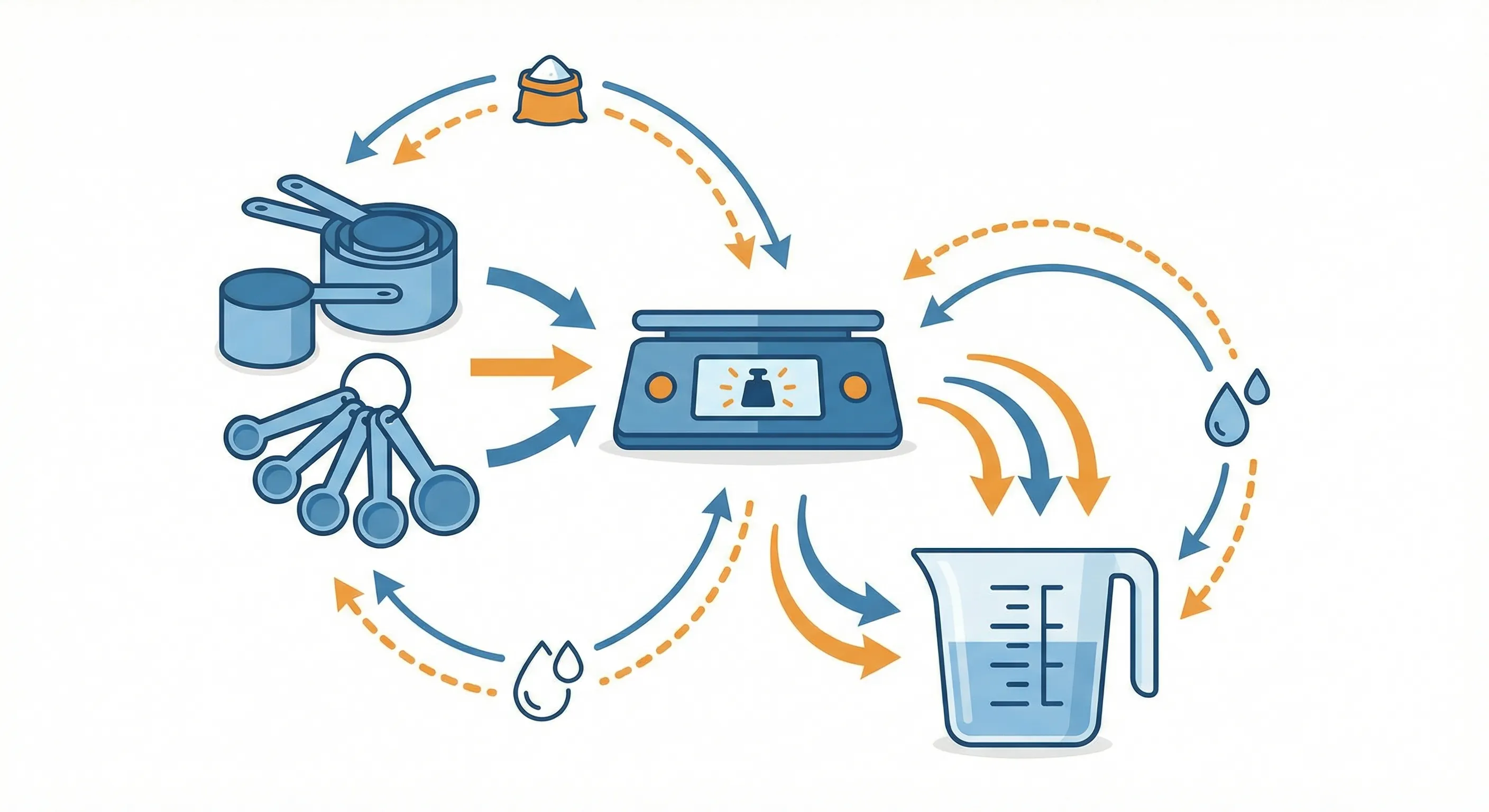
Quick reference: 1 cup = 16 tablespoons = 48 teaspoons = 8 fluid ounces = 237 milliliters. For dry ingredients, weight conversions depend on density — 1 cup of flour weighs 120g, while 1 cup of sugar weighs 200g.
Testing 300+ recipes shows that a "cup of flour" can weigh anywhere from 120g to 155g depending on how it's scooped. That 30% variance is enough to ruin a batch of French macarons, which is why so many bakers eventually switch to weighing everything on a digital scale. Side-by-side baking tests consistently show that understanding measurement conversions is one of the biggest factors separating inconsistent results from reliable ones.
Use our Cooking Measurement Converter for instant conversions between any kitchen measurements.
Volume Measurement Conversions
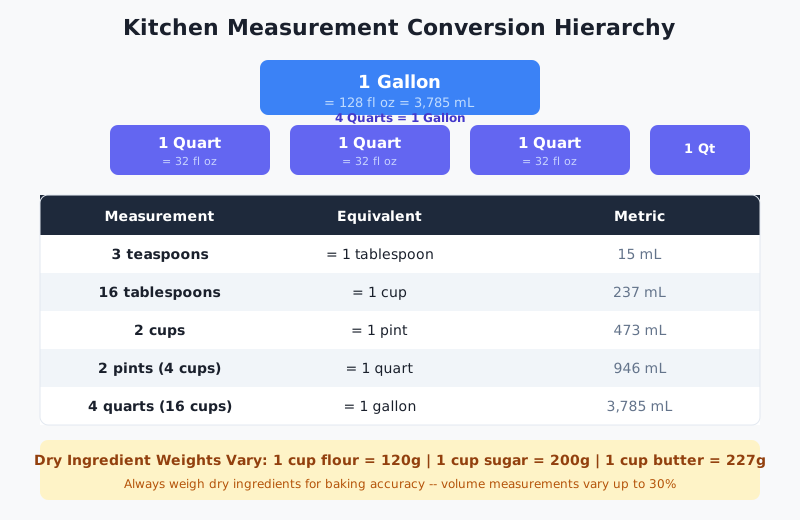
Basic Volume Equivalents
| Measurement | Equivalents |
|---|---|
| 1 tablespoon (tbsp) | 3 teaspoons (tsp) |
| 1 fluid ounce | 2 tablespoons |
| ¼ cup | 4 tablespoons = 12 teaspoons |
| â…“ cup | 5 tbsp + 1 tsp |
| ½ cup | 8 tablespoons = 24 teaspoons |
| â…” cup | 10 tbsp + 2 tsp |
| ¾ cup | 12 tablespoons = 36 teaspoons |
| 1 cup | 16 tablespoons = 48 teaspoons = 8 fl oz |
US to Metric Volume
| US Measurement | Metric Equivalent |
|---|---|
| 1 teaspoon | 5 mL |
| 1 tablespoon | 15 mL |
| 1 fluid ounce | 30 mL |
| ¼ cup | 60 mL |
| â…“ cup | 79 mL |
| ½ cup | 118 mL |
| â…” cup | 158 mL |
| ¾ cup | 177 mL |
| 1 cup | 237 mL |
| 1 pint | 473 mL |
| 1 quart | 946 mL |
| 1 gallon | 3.78 L |
Tip
For practical purposes, round these: 1 cup ≈ 240 mL, ½ cup ≈ 120 mL, ¼ cup ≈ 60 mL. The small differences won't affect most recipes.
Weight Conversions (Dry Ingredients)
Weight is more accurate than volume for baking. Here's why: flour can be packed loosely or tightly, changing the amount by up to 25%. If you are scaling a recipe up or down, precise measurements become even more critical — see our guide to scaling recipes for tips on adjusting quantities.
Common Ingredient Weights
| Ingredient | 1 Cup Weight | 1 Tablespoon |
|---|---|---|
| All-purpose flour | 120g (4.25 oz) | 8g |
| Bread flour | 127g (4.5 oz) | 8g |
| Cake flour | 114g (4 oz) | 7g |
| Whole wheat flour | 113g (4 oz) | 7g |
| Granulated sugar | 200g (7 oz) | 12.5g |
| Powdered sugar | 120g (4.25 oz) | 8g |
| Brown sugar (packed) | 220g (7.75 oz) | 14g |
| Butter | 227g (8 oz) = 2 sticks | 14g |
| Honey | 340g (12 oz) | 21g |
| Milk | 245g (8.6 oz) | 15g |
| Heavy cream | 238g (8.4 oz) | 15g |
| Vegetable oil | 218g (7.7 oz) | 13.6g |
| Rolled oats | 90g (3.2 oz) | 6g |
| Cocoa powder | 85g (3 oz) | 5g |
| Salt (table) | 288g (10 oz) | 18g |
| Salt (kosher, Morton) | 241g (8.5 oz) | 15g |
| Salt (kosher, Diamond) | 136g (4.8 oz) | 8.5g |
Important
Not all kosher salts are equal. Diamond Crystal is half as dense as Morton kosher salt. If a recipe specifies one brand, using the other without adjusting will significantly affect saltiness.
Butter Measurements
| Amount | Weight | Volume |
|---|---|---|
| 1 stick | 113g (4 oz) | ½ cup = 8 tbsp |
| ½ stick | 57g (2 oz) | ¼ cup = 4 tbsp |
| 2 sticks | 227g (8 oz) | 1 cup = 16 tbsp |
| 4 sticks | 454g (1 lb) | 2 cups |
Egg Measurements
| Egg Size | Whole Egg | White | Yolk |
|---|---|---|---|
| Large (US standard) | 50g (2 oz) | 30g | 18g |
| Medium | 44g | 26g | 16g |
| Extra-Large | 56g | 34g | 20g |
| Jumbo | 63g | 38g | 22g |
Substitutions:
- 1 large egg = 2 medium yolks (for richness)
- 2 large eggs = 3 medium eggs (approximately)
Tablespoon and Teaspoon Quick Reference
Tablespoons to Teaspoons
| Tablespoons | Teaspoons |
|---|---|
| ¼ tbsp | ¾ tsp |
| ½ tbsp | 1½ tsp |
| 1 tbsp | 3 tsp |
| 2 tbsp | 6 tsp |
| 3 tbsp | 9 tsp |
Tablespoons to Cups
| Tablespoons | Cups |
|---|---|
| 2 tbsp | â…› cup |
| 4 tbsp | ¼ cup |
| 5â…“ tbsp | â…“ cup |
| 8 tbsp | ½ cup |
| 10â…” tbsp | â…” cup |
| 12 tbsp | ¾ cup |
| 16 tbsp | 1 cup |
International Cup Sizes
Be aware that "cup" measurements vary by country:
| Country | Cup Size |
|---|---|
| US | 237 mL |
| UK (imperial) | 284 mL |
| Australia | 250 mL |
| Japan | 200 mL |
| Metric (international) | 250 mL |
Warning
Check recipe origin. An Australian recipe calling for 1 cup uses a 250 mL cup, which is about 5% more than a US cup. For baking, this difference matters.
Converting Between US and UK Measurements
| US Term | UK Equivalent |
|---|---|
| All-purpose flour | Plain flour |
| Powdered sugar | Icing sugar |
| Superfine sugar | Caster sugar |
| Heavy cream | Double cream |
| Light cream | Single cream |
| Stick butter | N/A (use 113g or 4 oz) |
| Cilantro | Fresh coriander |
| Arugula | Rocket |
| Zucchini | Courgette |
| Eggplant | Aubergine |
Liquid vs. Dry Measuring Cups
These are different tools designed for different purposes:
Liquid Measuring Cups
- Clear with pour spout
- Measure at eye level
- Fill to line, not to rim
- Best for: milk, water, oil, broth
Dry Measuring Cups
- Opaque with flat rim
- Fill and level off
- Pack brown sugar firmly
- Best for: flour, sugar, oats, rice
Tip
Don't substitute one for the other. Dry ingredients measured in liquid cups (filling to a line) are typically inaccurate. Liquids in dry cups spill when leveling.
How to Measure Correctly
Flour (Spoon and Level Method)
- Fluff flour in container
- Spoon into dry measuring cup
- Level with straight edge
- Never scoop directly — this packs the flour
Weight comparison:
- Spooned and leveled: ~120g per cup
- Scooped directly: ~140-160g per cup
Brown Sugar (Pack Method)
- Spoon into dry measuring cup
- Press firmly with back of spoon
- Continue until cup is full and level
- Sugar should hold shape when dumped out
Liquids
- Place cup on flat surface
- Pour liquid in
- Bend to read at eye level
- Meniscus (bottom of curve) should touch the line
Butter (Wrapper Marks or Water Displacement)
Wrapper method:
- Most butter sticks have tablespoon markings
- Cut along the line
Water displacement:
- For odd amounts, add cold water to measuring cup
- Add butter until water rises to total needed
- Drain water, use butter
Common Kitchen Math
Quick Mental Conversions
| If you know... | Multiply by... | To get... |
|---|---|---|
| Tablespoons | 3 | Teaspoons |
| Cups | 16 | Tablespoons |
| Cups | 8 | Fluid ounces |
| Ounces | 28 | Grams |
| Pounds | 454 | Grams |
| Inches | 2.54 | Centimeters |
Halving and Doubling Common Amounts
| Original | Halved | Doubled |
|---|---|---|
| 1 cup | ½ cup | 2 cups |
| ¾ cup | â…œ cup (6 tbsp) | 1½ cups |
| â…” cup | â…“ cup | 1â…“ cups |
| ½ cup | ¼ cup | 1 cup |
| â…“ cup | 2 tbsp + 2 tsp | â…” cup |
| ¼ cup | 2 tbsp | ½ cup |
| 1 tbsp | 1½ tsp | 2 tbsp |
| 1 tsp | ½ tsp | 2 tsp |
| ½ tsp | ¼ tsp | 1 tsp |
| ¼ tsp | â…› tsp | ½ tsp |
Substitution Measurements
When you're out of something:
Dairy Substitutions
| Need | Substitute |
|---|---|
| 1 cup milk | ½ cup evaporated milk + ½ cup water |
| 1 cup buttermilk | 1 cup milk + 1 tbsp lemon juice (rest 5 min) |
| 1 cup heavy cream | ¾ cup milk + â…“ cup melted butter |
| 1 cup sour cream | 1 cup Greek yogurt |
Baking Substitutions
| Need | Substitute |
|---|---|
| 1 cup cake flour | 1 cup AP flour - 2 tbsp + 2 tbsp cornstarch |
| 1 cup self-rising flour | 1 cup AP flour + 1½ tsp baking powder + ¼ tsp salt |
| 1 cup bread flour | 1 cup AP flour + 1 tsp vital wheat gluten |
| 1 cup brown sugar | 1 cup white sugar + 1 tbsp molasses |
Leavening Substitutions
| Need | Substitute |
|---|---|
| 1 tsp baking powder | ¼ tsp baking soda + ½ tsp cream of tartar |
| 1 tsp baking soda | 4 tsp baking powder (reduce salt in recipe) |
How to Use Our Cooking Measurement Converter
Our Cooking Measurement Converter handles all conversions:
- Enter the amount — the quantity you have
- Select the unit — cups, grams, ounces, etc.
- Choose the ingredient — for weight-based conversions
- Select target unit — what you want to convert to
- Get your answer — instant conversion
The converter includes:
- 100+ common ingredients
- Volume and weight conversions
- US, UK, and metric units
- Practical rounding
Frequently Asked Questions
How many tablespoons in a cup?
There are 16 tablespoons in 1 cup. Half a cup equals 8 tablespoons, and a quarter cup equals 4 tablespoons.
How do I convert cups to grams?
It depends on the ingredient. For flour: 1 cup = 120g. For sugar: 1 cup = 200g. For butter: 1 cup = 227g. Use our Cooking Converter for specific ingredients.
Why do professional bakers use weight instead of volume?
Weight is more precise. A cup of flour can vary from 100-160g depending on how it's measured. Weight gives consistent results regardless of measuring technique.
What's the difference between a fluid ounce and a dry ounce?
Fluid ounces measure volume (like water). Dry ounces measure weight. They're the same for water (1 fl oz = 1 oz by weight), but not for other ingredients.
How do I measure sticky ingredients like honey?
Spray your measuring cup with cooking spray first, or lightly oil it. The honey will slide right out. Alternatively, measure by weight for accuracy.
Are Australian cups the same as US cups?
No. Australian cups are 250 mL; US cups are 237 mL. For most cooking, this difference is negligible, but for baking, it can matter.
Related Calculators
- Recipe Scaler — Double, halve, or scale any recipe
- Cooking Time Calculator — Calculate cooking times by weight
- Oven Temperature Converter — Convert between Fahrenheit, Celsius, and Gas Mark
Conclusion
Kitchen measurements can be confusing, but the fundamentals are simple once you memorize a few key conversions: 3 teaspoons per tablespoon, 16 tablespoons per cup, and rough gram weights for common ingredients. Once you have your measurements right, make sure you are also using the correct oven temperature and proper cooking times for the best results.
Use our Cooking Measurement Converter for instant conversions when you're in the middle of a recipe. And when baking, consider investing in a kitchen scale — it's the most accurate way to measure and will improve your results.
Measurement conversions are based on US standard measurements unless otherwise noted. Weight conversions for ingredients are approximate and may vary by brand and measuring technique.
This article is provided for informational and educational purposes only. Content should not be considered professional financial, medical, legal, or other advice. Always consult a qualified professional before making important decisions. UseCalcPro is not responsible for any actions taken based on the information in this article.
Try These Calculators
Convert between units of length, weight, volume, temperature, area, and speed. Supports metric, imperial, and international measurement systems instantly.
Convert fresh herbs to dried and back with accurate spice-specific ratios. Covers basil, cilantro, rosemary, ginger, garlic, thyme, and more for any recipe.
Convert oven recipes to air fryer settings instantly. Reduce temperature by 25°F and time by 20% with automatic adjustments for frozen, dense, and thin foods.
Scale any recipe up or down for a different number of servings. Automatically adjusts all ingredient measurements with kitchen-friendly fraction display.
Convert cake recipes between pan shapes and sizes. Calculate batter volume for round, square, and rectangular pans and scale ingredients to fit any pan.