Recipe Scaler: How to Double or Halve Any Recipe
To scale a recipe, multiply each ingredient by your scaling factor. To double a recipe, multiply by 2. To halve it, multiply by 0.5. For a recipe that serves 4 when you need 6 servings, multiply everything by 1.5 (6 ÷ 4 = 1.5).
Quadrupling a chili recipe for a Super Bowl party of 40 guests — 12 pounds of ground beef, 8 cans of tomatoes, and a full cup of chili powder — is a common lesson in why scaling is not pure multiplication. The meat and tomatoes scale perfectly, but the spice level can turn overwhelming fast. Seasonings, leaveners, and cooking times all follow different scaling rules than the main ingredients.
Use our Recipe Calculator to instantly scale any recipe to your desired serving size.
How to Calculate Recipe Scaling
The Basic Formula
Scaling Factor = Desired Servings ÷ Original Servings
New Amount = Original Amount × Scaling Factor
Common Scaling Factors
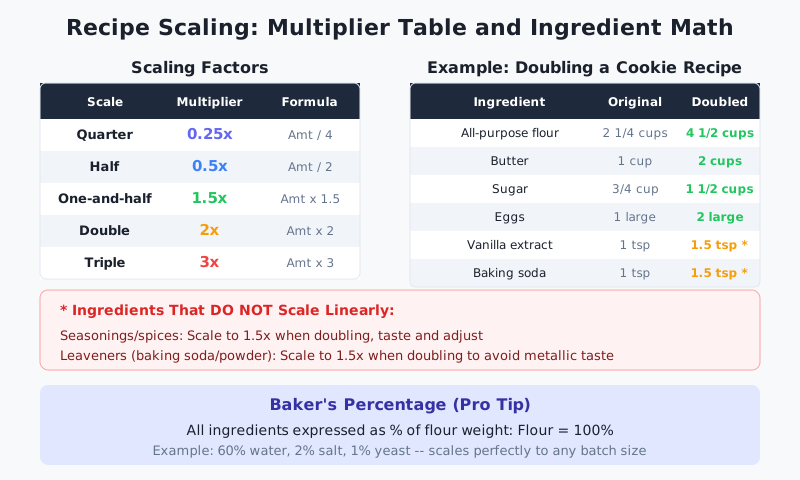
| Original | Desired | Scaling Factor |
|---|---|---|
| 4 servings | 2 servings | 0.5 (halve) |
| 4 servings | 6 servings | 1.5 |
| 4 servings | 8 servings | 2.0 (double) |
| 4 servings | 12 servings | 3.0 (triple) |
| 6 servings | 4 servings | 0.67 |
| 8 servings | 2 servings | 0.25 (quarter) |
Example: Doubling a Cookie Recipe
Original recipe (24 cookies):
- 1 cup butter
- 1 cup sugar
- 2 eggs
- 2 cups flour
- 1 tsp vanilla
Doubled (48 cookies):
- 2 cups butter
- 2 cups sugar
- 4 eggs
- 4 cups flour
- 2 tsp vanilla
Tip
Round to practical measurements. If your calculation gives you 1.33 cups, round to 1â…” cups. Kitchen precision doesn't require decimals to the hundredth.
{
  “type”: “slider-comparison”,
  “id”: “recipe-scaler”,
  “title”: “Recipe Scaling Quick Reference”,
  “description”: “Scale a recipe that calls for 2 cups flour, 1 cup sugar, 3 eggs”,
  “config”: {
    “slider”: {
      “label”: “Servings Multiplier”,
      “min”: 0.5,
      “max”: 4,
      “step”: 0.25,
      “default”: 1,
      “suffix”: “x”,
      “format”: “number”
    },
    “outputs”: [
      {
        “label”: “Flour (cups)”,
        “formula”: “round(2 * value * 100) / 100”,
        “format”: “number”,
        “color”: “#f59e0b”
      },
      {
        “label”: “Sugar (cups)”,
        “formula”: “round(1 * value * 100) / 100”,
        “format”: “number”,
        “color”: “#3b82f6”
      },
      {
        “label”: “Eggs”,
        “formula”: “round(3 * value)”,
        “format”: “number”,
        “color”: “#22c55e”
      }
    ]
  }
}
Scaling Different Types of Recipes
Baking Recipes (Most Sensitive)
Baking is chemistry — precision matters more here than in cooking.
What scales linearly:
- Flour, sugar, butter (main ingredients)
- Chocolate chips, nuts, mix-ins
- Extracts and flavorings (roughly)
What needs adjustment:
| Ingredient | Scaling Rule |
|---|---|
| Leaveners (baking powder/soda) | Scale ¾ of the factor (2× recipe = 1.5× leavener) |
| Salt | Scale ¾ of the factor |
| Spices | Scale ½ to ¾ (taste and adjust) |
| Eggs | Round to whole eggs |
Example: Tripling a cake recipe
- Original: 1 tsp baking powder
- Tripled (3×): Use 2-2.5 tsp (not 3 tsp)
Important
Oven adjustments for larger batches. A doubled cake batter in a larger pan may need 10-15% more baking time at 25°F lower temperature to cook evenly without burning edges.
Soups and Stews (Most Forgiving)
Liquid-based dishes scale easily:
What scales linearly:
- Proteins (meat, beans)
- Vegetables
- Stock/broth (mostly)
- Grains (rice, pasta)
What needs adjustment:
| Ingredient | Scaling Rule |
|---|---|
| Liquids | Scale slightly less (evaporation changes) |
| Salt | Scale ¾ and taste-adjust |
| Herbs/spices | Scale ½ to ¾ |
| Garlic | Scale less (flavor compounds intensify) |
Marinades and Sauces
Marinades: Scale based on the amount of protein being marinated, not the original recipe.
Sauces:
- Butter/oil: Scale linearly
- Aromatics (garlic, shallots): Scale less (½ to ¾)
- Acid (lemon, vinegar): Scale ¾ and adjust
- Salt/seasoning: Scale ¾ and taste
Bread and Yeast Recipes
Yeast recipes have special considerations:
| Ingredient | Scaling Rule |
|---|---|
| Flour | Scale linearly |
| Water | Scale linearly |
| Yeast | Scale ¾ of factor |
| Salt | Scale linearly (controls yeast) |
| Sugar | Scale linearly |
Example: Doubling pizza dough
- Original: 1 packet (2¼ tsp) yeast
- Doubled: 1.5-1.75 packets (3.5-4 tsp yeast)
Rise time: Larger batches may need slightly longer rise times in the same conditions.
Dealing with Tricky Measurements
Scaling Eggs
Eggs don't divide evenly. Here's how to handle it:
| Original | Halved | Notes |
|---|---|---|
| 1 egg | ½ egg | Beat egg, use half (2-3 tbsp) |
| 2 eggs | 1 egg | Exact |
| 3 eggs | 1.5 eggs | Use 1 egg + 1 yolk or 2 eggs |
How to use half an egg:
- Beat the whole egg
- Measure out ~2 tablespoons (about half)
- Save the rest for scrambled eggs
Scaling Butter
| Original | Doubled | Halved |
|---|---|---|
| 1 stick (½ cup) | 2 sticks (1 cup) | ½ stick (¼ cup) |
| â…“ cup | â…” cup | 2â…” tbsp |
| ¼ cup (4 tbsp) | ½ cup (8 tbsp) | 2 tbsp |
Scaling Small Measurements
When scaling creates awkward amounts:
| Calculation | Round to |
|---|---|
| â…› teaspoon | Pinch |
| ¼ teaspoon | ¼ teaspoon (smallest practical) |
| â…œ teaspoon | ½ teaspoon |
| â… teaspoon | ½ teaspoon + pinch |
| 1.25 teaspoons | 1¼ teaspoons |
Tip
Get measuring spoons that include small sizes. Having â…› tsp and ½ tbsp spoons makes scaling much easier.
Common Scaling Conversions
Volume Conversions
| Measurement | Equivalents |
|---|---|
| 1 tablespoon | 3 teaspoons |
| ¼ cup | 4 tablespoons |
| â…“ cup | 5 tbsp + 1 tsp |
| ½ cup | 8 tablespoons |
| 1 cup | 16 tablespoons |
| 1 cup | 8 fluid ounces |
| 1 pint | 2 cups |
| 1 quart | 4 cups |
Weight Conversions (More Accurate)
| Ingredient | 1 Cup Weighs |
|---|---|
| All-purpose flour | 120g (4.25 oz) |
| Bread flour | 130g (4.5 oz) |
| Sugar (granulated) | 200g (7 oz) |
| Brown sugar (packed) | 220g (7.75 oz) |
| Butter | 227g (8 oz) |
| Milk | 245g (8.6 oz) |
| Honey | 340g (12 oz) |
For precise conversions, see our Cooking Measurement Converter or read our complete measurement conversion guide.
Pan Size Adjustments
When scaling, you may need different pan sizes:
Round Cake Pans
| Original | Doubled | Area Ratio |
|---|---|---|
| 8" round | Two 8" or one 10" | 1× or 1.56× |
| 9" round | Two 9" or one 12" | 1× or 1.78× |
| 6" round | 8" round | 1.78× |
Rectangular Pans
| Original | Doubled | Notes |
|---|---|---|
| 8×8" | 9×13" | Not quite doubled (1.83×) |
| 9×13" | Two 9×13" | Full sheet pan works too |
| 11×7" | 9×13" | Approximately 1.5× |
Adjusting Bake Time for Different Pans
| Pan Change | Time Adjustment |
|---|---|
| Same pan, more batter | +10-20% time |
| Larger pan, same batter | -15-25% time |
| Deeper pan | +15-25% time at lower temp |
| Shallower pan | -10-20% time |
Warning
Watch, don't just time. When scaling, use visual cues (golden brown, pulling from edges, toothpick test) rather than relying solely on calculated times.
Scaling Up for Parties
When cooking for crowds, consider these factors:
Equipment Limitations
| Bottleneck | Solution |
|---|---|
| Oven space | Stagger cooking times, use multiple ovens |
| Pot size | Split into batches, use larger pots |
| Mixing bowl | Mix in batches, don't overfill |
| Burner power | Allow more time for large pots |
Dishes That Scale Well
- Soups and stews
- Casseroles
- Slow cooker meals
- Sheet pan dinners
- Pasta bakes
- Salads
Dishes to Avoid Scaling
- Delicate sauces (hollandaise, beurre blanc)
- Soufflés
- Precise custards
- Stir-fries (pan gets crowded)
Scaling Down for Small Households
Halving and quartering recipes for 1-2 people:
Tips for Small Batches
- Use a kitchen scale — More accurate for small amounts
- Choose half-able recipes — Recipes with 2 eggs are easier to halve
- Make full batch, freeze half — Sometimes easier than scaling
- Adjust pan size — Use smaller bakeware
Freezer-Friendly Approach
Instead of scaling down, make full batch and freeze:
| Food | Freezer Life |
|---|---|
| Soups/stews | 3-4 months |
| Cookie dough | 3 months |
| Casseroles | 2-3 months |
| Bread | 3 months |
| Muffins | 2-3 months |
| Marinated raw meat | 3-4 months |
How to Use Our Recipe Calculator
Our Recipe Calculator makes scaling easy:
- Enter original servings — what the recipe makes
- Enter desired servings — what you want
- Input ingredient amounts — current recipe amounts
- Get scaled amounts — automatically calculated
The calculator handles:
- Automatic unit conversions
- Rounding to practical measurements
- Multiple ingredients at once
Troubleshooting Scaled Recipes
Baked Goods Turn Out Wrong
| Problem | Likely Cause | Fix |
|---|---|---|
| Dense | Too much flour/liquid ratio off | Measure by weight, reduce flour slightly |
| Flat | Leavener not scaled right | Use ¾ scaling for leaveners |
| Burnt outside, raw inside | Pan too small, oven too hot | Use larger pan, reduce temp 25°F |
| Dry | Too much flour | Weigh ingredients next time |
Savory Dishes Taste Off
| Problem | Likely Cause | Fix |
|---|---|---|
| Too salty | Salt scaled linearly | Use ¾ scaling for salt |
| Too garlicky | Garlic scaled linearly | Use ½ scaling for garlic |
| Bland | Seasonings not adjusted | Taste and season at the end |
| Watery | Liquid scaled too high | Reduce liquid by 10-15% |
Frequently Asked Questions
Can you double a baking recipe?
Yes, but with adjustments. Scale main ingredients (flour, sugar, butter) directly. Scale leaveners and salt to ¾ of the factor. Use appropriate pan sizes and adjust baking time.
How do you scale a recipe for 3 people when it serves 4?
Multiply each ingredient by 0.75 (3 ÷ 4 = 0.75). For 2 cups flour, use 1½ cups. For 1 egg, use about ¾ of a beaten egg (roughly 2½ tablespoons).
Why do my doubled recipes taste different?
Common reasons: seasonings (especially salt and aromatics) become too strong when doubled, leaveners become too powerful, and cooking times need adjustment. Scale seasonings at ¾ and taste-adjust.
Should I scale cooking time when doubling?
Not proportionally. If you're using the same pan size with double batter, add 10-20% more time. If using a larger pan with the same batter depth, time stays similar. Watch for doneness cues.
How do I halve a recipe with 1 egg?
Beat the whole egg and use about half (2-3 tablespoons). Alternatively, use just the yolk (richer) or just the white (lighter). Save the unused portion for another use.
Can you scale slow cooker recipes?
Yes, but liquid may need adjustment. Slow cookers don't allow evaporation like stovetop cooking. Scale solids normally, reduce liquid slightly, and ensure your slow cooker isn't more than â…” full.
Related Calculators
- Cooking Measurement Converter — Convert between cups, grams, and more
- Cooking Time Calculator — Adjust cooking times by weight
- Oven Temperature Converter — Convert Fahrenheit, Celsius, and Gas Mark
Conclusion
Scaling recipes is mostly straightforward multiplication, with a few exceptions for leaveners, salt, and aromatics. The key is understanding that not everything scales linearly — flavors concentrate, leavening becomes stronger, and cooking times shift. Be sure to also check the correct oven temperature for your scaled recipe (larger batches often need lower temps), and use our cooking time guide when adjusting roast sizes.
Use our Recipe Calculator for instant scaling of any recipe. And when in doubt, start with less seasoning and adjust at the end — you can always add more, but you can't take it back.
Recipe scaling is approximate and may require adjustment based on specific recipes, equipment, and altitude. Baking in particular benefits from trial and adjustment.
This article is provided for informational and educational purposes only. Content should not be considered professional financial, medical, legal, or other advice. Always consult a qualified professional before making important decisions. UseCalcPro is not responsible for any actions taken based on the information in this article.
Try These Calculators
Scale any recipe up or down for a different number of servings. Automatically adjusts all ingredient measurements with kitchen-friendly fraction display.
Convert between units of length, weight, volume, temperature, area, and speed. Supports metric, imperial, and international measurement systems instantly.
Convert fresh herbs to dried and back with accurate spice-specific ratios. Covers basil, cilantro, rosemary, ginger, garlic, thyme, and more for any recipe.
Calculate exact pie crust ingredients by pan size and dough style. Get flour, butter, and water amounts in cups and grams for single, double, or lattice crust.
Calculate vital wheat gluten, liquid, and seasoning amounts for homemade seitan. Covers basic, chicken-style, sausage, and deli slice recipes and methods.