Cooking Time Calculator: How Long to Cook Meat by Weight
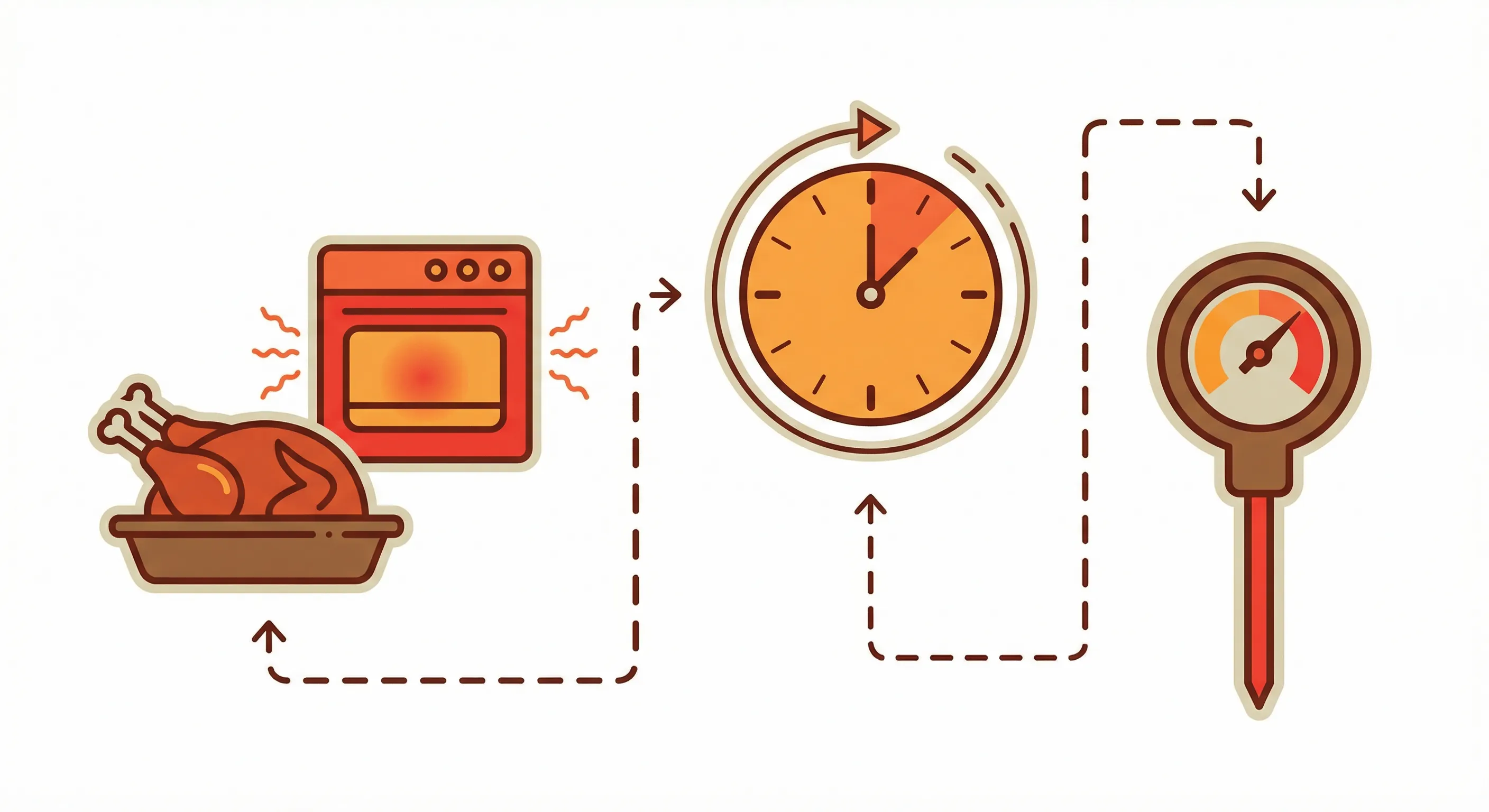
The basic formula for roasting is 15-20 minutes per pound at 350°F (175°C). A 4-pound chicken takes about 80-90 minutes; a 12-pound turkey takes 3-3.5 hours. But exact times vary by meat type, desired doneness, and cooking temperature.
Timing alone is a common trap: a 22-pound turkey pulled at 160°F based on timing alone can turn out raw near the bone, while a 14-pound turkey cooked to exactly 165°F in the thigh comes out juicy every time. Weight-based time estimates are a starting point, but a reliable meat thermometer is non-negotiable.
Use our Cooking Time Calculator to get precise timing for any roast based on weight and target temperature.
How to Calculate Cooking Time
The Basic Formula
Cooking Time = Weight (lbs) × Minutes per Pound
The "minutes per pound" varies by:
- Meat type and cut
- Desired doneness
- Oven temperature
- Whether the meat is stuffed or unstuffed
Temperature Method (Most Accurate)
Rather than timing alone, use internal temperature:
Cook until internal temp reaches target
Rest meat (temp rises 5-10°F during rest)
Tip
Invest in a meat thermometer. It's the only way to know your meat is both safe and cooked to your preferred doneness. Time calculations are estimates; temperature is definitive.
Beef Cooking Times
Beef Roasts
| Cut | Oven Temp | Minutes/lb | Target Internal Temp |
|---|---|---|---|
| Prime rib (standing) | 325°F | 15-17 (rare) | 120-125°F |
| Prime rib (standing) | 325°F | 17-20 (medium-rare) | 130-135°F |
| Prime rib (standing) | 325°F | 22-25 (medium) | 140-145°F |
| Ribeye roast | 350°F | 15-18 (med-rare) | 130-135°F |
| Tenderloin | 425°F | 10-12 | 125-130°F |
| Sirloin roast | 325°F | 20-25 | 135-140°F |
| Chuck roast | 325°F | 30-40 (braised) | 190-200°F (fork tender) |
| Brisket | 250°F | 60-90 | 195-205°F |
Beef Steaks
| Thickness | Rare | Medium-Rare | Medium | Medium-Well |
|---|---|---|---|---|
| ¾ inch | 3-4 min/side | 4-5 min/side | 5-6 min/side | 6-7 min/side |
| 1 inch | 4-5 min/side | 5-6 min/side | 6-7 min/side | 8-9 min/side |
| 1.5 inch | 5-6 min/side | 6-7 min/side | 8-9 min/side | 10-11 min/side |
Internal temperatures for doneness:
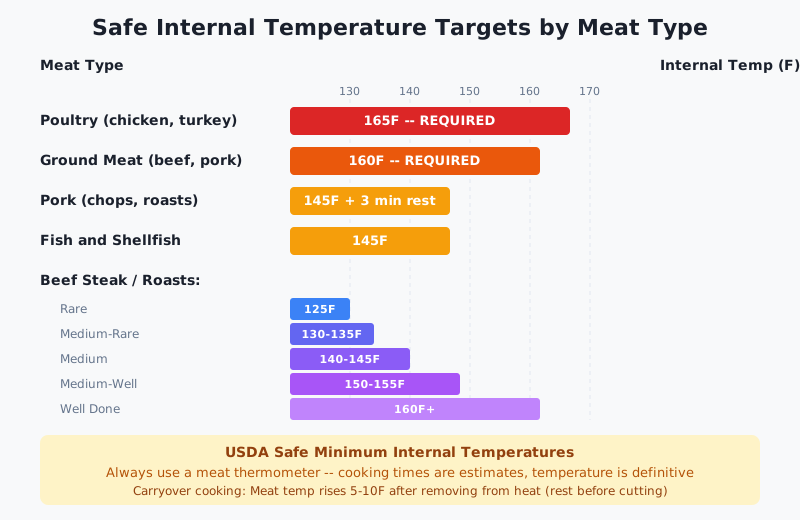
- Rare: 125°F
- Medium-rare: 135°F
- Medium: 145°F
- Medium-well: 150°F
- Well-done: 160°F
Important
Rest your steaks. Let steaks rest 5 minutes before cutting. For roasts, rest 15-20 minutes. Temperature continues rising 5-10°F during rest.
Poultry Cooking Times
Whole Turkey
Unstuffed turkey at 325°F:
| Weight | Cooking Time | Internal Temp |
|---|---|---|
| 8-12 lbs | 2.75-3 hours | 165°F |
| 12-14 lbs | 3-3.75 hours | 165°F |
| 14-18 lbs | 3.75-4.25 hours | 165°F |
| 18-20 lbs | 4.25-4.5 hours | 165°F |
| 20-24 lbs | 4.5-5 hours | 165°F |
Stuffed turkey takes 15-30 minutes longer.
Whole Chicken
At 350°F:
| Weight | Cooking Time | Internal Temp |
|---|---|---|
| 3-4 lbs | 75-90 min | 165°F |
| 4-5 lbs | 90-105 min | 165°F |
| 5-6 lbs | 105-120 min | 165°F |
| 6-7 lbs | 120-135 min | 165°F |
Chicken Parts
At 375-400°F:
| Part | Cooking Time | Internal Temp |
|---|---|---|
| Breast (bone-in) | 35-45 min | 165°F |
| Breast (boneless) | 20-30 min | 165°F |
| Thighs (bone-in) | 40-50 min | 175°F |
| Thighs (boneless) | 25-35 min | 165°F |
| Drumsticks | 35-45 min | 175°F |
| Wings | 25-30 min | 165°F |
Tip
Dark meat is better at higher temps. While breast is safe at 165°F, thighs and drumsticks are more tender and flavorful at 175-180°F.
Pork Cooking Times
Pork Roasts
| Cut | Oven Temp | Minutes/lb | Target Internal Temp |
|---|---|---|---|
| Tenderloin | 425°F | 15-20 | 145°F |
| Loin roast (bone-in) | 350°F | 20-25 | 145°F |
| Loin roast (boneless) | 350°F | 18-22 | 145°F |
| Crown roast | 350°F | 20-25 | 145°F |
| Shoulder (pulled pork) | 250°F | 60-90 | 195-205°F |
| Ham (fresh, bone-in) | 325°F | 18-20 | 145°F |
| Ham (pre-cooked) | 325°F | 10-15 | 140°F (to heat) |
Pork Chops
At 400°F (oven) or medium-high (stovetop):
| Thickness | Cooking Time | Internal Temp |
|---|---|---|
| ½ inch | 4-5 min/side | 145°F |
| ¾ inch | 6-7 min/side | 145°F |
| 1 inch | 8-10 min/side | 145°F |
| 1.5 inch | 12-15 min/side | 145°F |
Info
Pork is safe at 145°F. The old recommendation of 160°F is outdated. Modern pork at 145°F with a 3-minute rest is safe and much juicier.
Lamb Cooking Times
| Cut | Oven Temp | Minutes/lb | Target Internal Temp |
|---|---|---|---|
| Leg (bone-in) | 325°F | 20-25 (med-rare) | 130-135°F |
| Leg (boneless) | 325°F | 25-30 (med-rare) | 130-135°F |
| Rack | 450°F, then 325°F | 15-20 total | 130-135°F |
| Shoulder | 325°F | 30-35 | 145-150°F |
| Chops (1 inch) | Med-high | 3-4 min/side | 145°F |
Fish and Seafood Cooking Times
Baked Fish Fillets
At 400°F:
| Thickness | Cooking Time | Internal Temp |
|---|---|---|
| ½ inch | 8-10 min | 145°F |
| 1 inch | 15-18 min | 145°F |
| 1.5 inch | 20-25 min | 145°F |
Specific Seafood
| Seafood | Method | Time | Doneness |
|---|---|---|---|
| Salmon fillet (1 inch) | Bake 400°F | 12-15 min | 125-130°F (medium) |
| Shrimp (large) | Sauté | 2-3 min/side | Pink, opaque |
| Lobster tail (6 oz) | Bake 400°F | 12-15 min | Opaque, 140°F |
| Scallops | Sear | 2 min/side | Opaque, 130°F |
Tip
Fish continues cooking after removal. Take fish off heat a few degrees before target temp — carryover cooking will finish it perfectly.
Oven Temperature Guide
Different temperatures suit different cooking goals. For a deeper dive into converting between Fahrenheit, Celsius, and Gas Mark, see our oven temperature conversion guide.
| Temperature | Use For |
|---|---|
| 225-275°F | Low and slow (brisket, pulled pork) |
| 300-325°F | Standard roasts, turkey, pot roasts |
| 350°F | All-purpose roasting |
| 375-400°F | Faster roasting, crispy skin |
| 425-450°F | Quick roasting, searing |
| 475-500°F | High-heat searing, pizza |
High-Heat vs. Low-Heat Roasting
| Method | Pros | Cons |
|---|---|---|
| Low-heat (325°F) | Even cooking, tender | Takes longer, less browning |
| High-heat (425°F+) | Fast, crispy exterior | Can overcook exterior |
| Combination | Best of both worlds | Requires attention |
Combination method: Start at 425°F for 15-20 minutes (browning), then reduce to 325°F to finish.
Factors That Affect Cooking Time
Starting Temperature
| Start Temp | Time Adjustment |
|---|---|
| Room temp (ideal) | Standard time |
| Cold from fridge | Add 10-20% |
| Frozen | Add 50% (not ideal) |
Best practice: Remove meat from fridge 30-60 minutes before cooking.
Shape and Thickness
| Shape | Effect on Time |
|---|---|
| Thin and flat | Cooks fastest |
| Thick center | Longest part determines time |
| Stuffed | Add 15-30 minutes |
| Rolled/tied | Cooks more evenly |
Bone-In vs. Boneless
| Type | Effect |
|---|---|
| Bone-in | Slower (bone insulates) but more flavor |
| Boneless | Faster, more even cooking |
Oven Calibration
Many ovens run 25-50°F off. Use an oven thermometer to verify actual temperature.
Essential Internal Temperatures
USDA Safe Minimums
| Food | Minimum Temp |
|---|---|
| Beef, pork, lamb, veal (steaks/roasts) | 145°F + 3 min rest |
| Ground meats (beef, pork, lamb) | 160°F |
| Poultry (whole, parts, ground) | 165°F |
| Fish | 145°F |
| Eggs | 160°F |
| Leftovers | 165°F |
Preferred Doneness (Beyond Minimum)
For the best eating experience:
| Meat | Temp | Result |
|---|---|---|
| Prime rib | 125-130°F | Medium-rare, juicy |
| Pork shoulder | 195-205°F | Falls apart |
| Brisket | 200-210°F | Tender, shreddable |
| Chicken thigh | 175-180°F | More tender than 165°F |
How to Use Our Cooking Time Calculator
Our Cooking Time Calculator gives you precise timing:
- Select the meat type — beef, poultry, pork, etc.
- Choose the cut — whole turkey, prime rib, etc.
- Enter weight — in pounds or kilograms
- Select doneness — rare to well-done
- Get results — estimated time and target temperature
The calculator also provides:
- Resting time recommendations
- Temperature verification tips
- High-altitude adjustments
Frequently Asked Questions
How many minutes per pound for a roast?
It varies by meat type: beef roasts at 325°F take 15-25 minutes per pound, whole chicken at 350°F takes 18-22 minutes per pound, and turkey at 325°F takes 15-17 minutes per pound (unstuffed).
How do I know when meat is done without a thermometer?
The finger test works for steaks (comparing firmness to parts of your palm), but it's unreliable. For roasts and poultry, a thermometer is really the only accurate method. They're inexpensive and essential.
Should I cook meat at high or low temperature?
Both work. Low temperature (300-325°F) gives even cooking and tender results but less browning. High temperature (400-450°F) creates a better crust but can overcook the outside. Many chefs use both: high heat first for browning, then lower to finish.
Why is resting meat important?
Resting allows juices to redistribute. Cutting immediately causes juices to run out, leaving meat dry. Rest steaks 5 minutes, roasts 15-20 minutes, and large turkeys 30-45 minutes.
How do I adjust cooking time for altitude?
At high altitudes (5,000+ feet), foods take longer to cook due to lower atmospheric pressure. Add approximately 5-10% to cooking times and expect longer boiling times.
Is it safe to cook meat from frozen?
It's safe but not ideal — cooking time increases by about 50%, and results are often uneven. Thaw in the refrigerator when possible for best results.
Related Calculators
- Recipe Scaler — Adjust recipes for different serving sizes
- Cooking Measurement Converter — Convert between any kitchen measurements
- Oven Temperature Converter — Convert between Fahrenheit, Celsius, and Gas Mark
Conclusion
Cooking time calculations give you a starting point, but internal temperature is the true indicator of doneness. Use time estimates for planning, but always verify with a thermometer before serving. If you are adjusting a recipe for a larger or smaller crowd, our recipe scaling guide covers how to adjust quantities, and our measurement conversion guide helps you convert between units accurately.
Use our Cooking Time Calculator to get accurate time estimates for any meat and weight. Combined with a good thermometer, you'll achieve perfect results every time.
Cooking times are estimates based on standard conditions. Actual cooking times may vary based on oven accuracy, starting temperature, and individual variations. Always verify doneness with an internal meat thermometer.
This article is provided for informational and educational purposes only. Content should not be considered professional financial, medical, legal, or other advice. Always consult a qualified professional before making important decisions. UseCalcPro is not responsible for any actions taken based on the information in this article.
Try These Calculators
Calculate exactly what size turkey you need based on guest count and leftover preference. Get fridge thaw time, roasting time at 325°F, and temp targets.
Calculate BBQ smoking time by meat type, weight, and smoker temperature. Get target internal temps, rest times, and start time planning for perfect results.
Calculate meat smoking time for brisket, pork butt, ribs, chicken, and turkey. Get your ideal start time, full timeline, and target internal temperature.
Calculate how long to marinate chicken, beef, pork, fish, and shrimp. Get marinade amounts, acid level adjustments, and safe maximum marinating times.
Convert between units of length, weight, volume, temperature, area, and speed. Supports metric, imperial, and international measurement systems instantly.