Mortgage Refinance Guide: When and How to Refinance Your Home Loan
Consider two representative refinance outcomes. A first refinance, timed well, can save $42,000 over the life of the loan. A second refinance driven by rate-frenzy timing -- dropping from 3.75% to 3.25%, paying $8,500 in closing costs, then selling the house 18 months later -- can produce a net loss, because the break-even point was never reached.
Refinancing your mortgage can save you tens of thousands of dollars, but it's not always the right move. This guide explains when refinancing makes financial sense — and when it's just shuffling money around.
Calculate Your Refinance Savings
Before diving into the details, use our calculator to see your potential savings:
Try Our Mortgage Refinance Calculator
What is Mortgage Refinancing?
Mortgage refinancing means replacing your current home loan with a new one, typically to get a lower interest rate, change your loan term, or access home equity. According to the Consumer Financial Protection Bureau (CFPB), refinancing involves paying off your existing mortgage and taking out a new loan with different terms.
Tip
Refinancing isn't free. Closing costs typically range from 2% to 5% of your loan amount. On a $300,000 loan, that's $6,000 to $15,000 upfront. Make sure your savings justify these costs.
When Should You Refinance?
1. Interest Rates Have Dropped
The Golden Rule: Refinance if you can get a rate that's at least 0.5% to 1% lower than your current rate.
Example:
- Current loan: $325,000 at 7.0% for 30 years = $2,162/month
- New loan: $325,000 at 6.0% for 30 years = $1,949/month
- Monthly savings: $213
- Annual savings: $2,556
- 30-year savings: $76,680
However, you need to factor in closing costs. If closing costs are $9,000, it takes about 3.8 years to break even. You should plan to stay in the home at least that long.
2. You Want to Shorten Your Loan Term
Switching from a 30-year to a 15-year mortgage can save significant interest, even if your rate doesn't change much.
Example:
- Current: $275,000 at 6.5% for 30 years = $1,738/month, $351,000 total interest
- Refinance: $275,000 at 6.0% for 15 years = $2,321/month, $142,000 total interest
- Interest savings: $209,000
- Loan paid off 15 years earlier
The trade-off: Your monthly payment increases by $636. Make sure you can afford it.
3. You Want to Access Home Equity
Cash-out refinancing lets you borrow more than you owe and take the difference in cash. This can be useful for home improvements, debt consolidation, or major expenses.
Warning
Cash-out refinancing increases your loan balance and monthly payment. You're essentially taking out a new, larger loan. Only do this if you have a clear plan for the money and can afford the higher payment.
4. You Want to Remove PMI
If your home has appreciated in value and you now have 20% equity, refinancing can eliminate Private Mortgage Insurance (PMI). Learn more about PMI and how it works in our detailed guide.
How to Calculate Refinance Savings
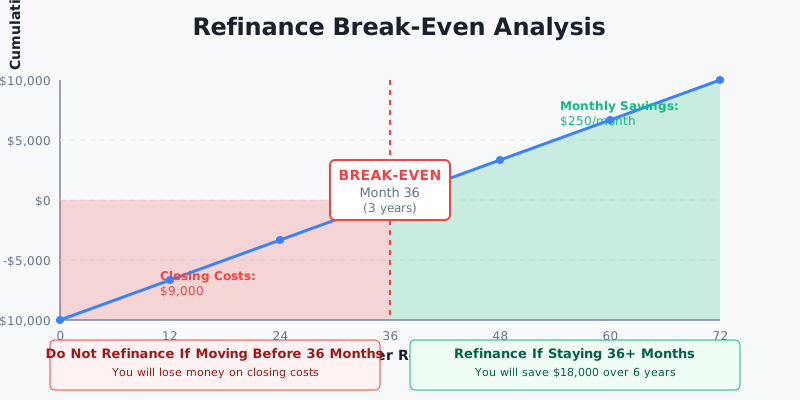
The Break-Even Point
Calculate how long it takes to recover your closing costs:
Break-even period = Closing costs ÷ Monthly savings
Example:
- Closing costs: $9,000
- Monthly savings: $200
- Break-even: $9,000 ÷ $200 = 45 months (3.75 years)
If you plan to move before the break-even point, refinancing doesn't make financial sense.
Total Savings Calculation
Use our Mortgage Refinance Calculator to calculate:
- Monthly payment difference
- Total interest savings
- Break-even point
- Net savings over the life of the loan
Types of Refinancing
Rate-and-Term Refinance
The most common type: You get a new loan with better terms (lower rate or shorter term) but don't take cash out. Your loan balance stays the same or decreases.
Best for: Lowering your monthly payment or shortening your loan term.
Cash-Out Refinance
You refinance for more than you owe and receive the difference in cash. Your new loan balance is higher.
Best for: Home improvements, debt consolidation, or major expenses.
According to Freddie Mac, cash-out refinancing peaked in 2021 when rates were low, but has decreased significantly as rates have risen.
Streamline Refinance
Available for FHA and VA loans. Simplified process with reduced documentation and lower costs.
- FHA Streamline: No appraisal required, reduced paperwork
- VA IRRRL (Interest Rate Reduction Refinance Loan): No income verification, no appraisal
Refinancing Costs to Consider
Closing Costs Breakdown
| Cost Type | Typical Amount | Description |
|---|---|---|
| Origination fee | 0.5% - 1% of loan | Lender's fee for processing |
| Appraisal | $300 - $500 | Property value assessment |
| Title insurance | $500 - $2,000 | Protects against ownership disputes |
| Recording fees | $100 - $300 | Government filing fees |
| Credit report | $25 - $50 | Credit check fee |
| Total | 2% - 5% of loan | $6,000 - $15,000 on $300k loan |
No-Cost Refinancing
Some lenders offer "no-cost" refinancing, but the costs are typically rolled into your loan balance or a higher interest rate. You're still paying—just in a different way.
Important
Always compare the true cost. A "no-cost" refinance with a 0.25% higher rate might cost more over time than paying closing costs upfront for a lower rate.
Common Refinancing Mistakes
Mistake 1: Refinancing Too Often
Each refinance costs thousands in closing costs. Don't refinance for small rate drops (fewer than 0.5 percentage points) unless you're also changing your loan term or removing PMI.
Mistake 2: Extending Your Loan Term
Refinancing from a 15-year to a 30-year loan lowers your payment but dramatically increases total interest. Only do this if you're facing financial hardship.
Example:
- 15-year loan: $300,000 at 6% = $2,532/month, $155,000 interest
- Refinance to 30-year: $300,000 at 6% = $1,799/month, $347,000 interest
- You save $733/month but pay $192,000 more in interest
Mistake 3: Not Shopping Around
Mortgage rates and closing costs vary significantly between lenders. According to the CFPB, getting quotes from multiple lenders can save you thousands.
Mistake 4: Ignoring Your Credit Score
Your credit score directly impacts your refinance rate. A 50-point difference can mean 0.25% to 0.5% higher interest. Check your credit before applying and fix any errors.
Mistake 5: Not Calculating Break-Even
This is one of the most common refinancing mistakes: getting so focused on the lower rate that the real question gets skipped -- "How long will I actually stay in this house?" A break-even of 40 months does no good if the home sells at 18 months.
Always calculate how long it takes to recover closing costs. If you're planning to move in 2 years but break-even is 4 years, refinancing loses money. Be honest with yourself about your timeline.
Refinancing vs. Other Options
Refinancing vs. Making Extra Payments
Instead of refinancing, you could make extra principal payments on your current loan. This saves interest without closing costs.
Example: On a $300,000 loan at 6.5%:
- Refinance to 6.0%: Save $197/month, but pay $9,000 in closing costs
- Make extra $200/month payments: Save interest without upfront costs
Refinancing vs. Home Equity Loan
A home equity loan or HELOC lets you access equity without refinancing your primary mortgage. This might be better if you have a great rate on your first mortgage.
Step-by-Step Refinancing Process
Step 1: Check Your Credit Score
Your credit score determines your rate. According to FICO, scores above 760 get the best rates. Check your score for free at AnnualCreditReport.com.
Step 2: Calculate Your Home Equity
You typically need at least 20% equity to refinance without PMI. Calculate your equity: (Home value - Loan balance) ÷ Home value.
Use our Home Equity Calculator to see your current equity.
Step 3: Get Multiple Quotes
Shop at least 3-5 lenders. Compare:
- Interest rates
- Closing costs
- Loan terms
- Lender fees
Step 4: Lock Your Rate
Once you find a good rate, lock it in. Rate locks typically last 30-60 days and protect you from rate increases during the process.
Step 5: Complete the Application
Provide documentation:
- Income verification (W-2s, pay stubs)
- Asset statements
- Property information
- Current mortgage statement
Step 6: Appraisal and Underwriting
The lender will appraise your home and review your application. This typically takes 2-4 weeks.
Step 7: Closing
Sign the new loan documents and pay closing costs. Your old loan is paid off, and your new loan begins.
Frequently Asked Questions
When is the best time to refinance?
The best time to refinance your mortgage is when you can lower your interest rate by at least 0.5% to 1% AND you plan to stay in the home long enough to recover closing costs (typically 2-4 years). Other good times include: when your credit score has improved significantly (50+ points), when you want to switch from an adjustable-rate to fixed-rate mortgage, or when you've built 20% equity and want to eliminate PMI. Calculate your break-even point by dividing closing costs by monthly savings.
How much does refinancing cost?
Refinancing closing costs typically range from 2% to 5% of your loan amount, or $6,000 to $15,000 on a $300,000 loan. Major costs include: loan origination fee (0.5-1% of loan), appraisal ($300-$500), title insurance ($500-$2,000), and various lender fees. Some lenders offer "no-cost" refinancing, but these costs are rolled into a higher interest rate or added to your loan balance. Always compare the total cost of both options over your expected time in the home.
Can I refinance with bad credit?
It's possible but more difficult. You'll pay higher interest rates and may need to accept less favorable terms. Consider improving your credit score first.
How long does refinancing take?
Typically 30-45 days from application to closing. The process can be faster with streamline refinancing (FHA/VA) or slower if there are complications.
Should I refinance to a shorter or longer term?
Shorter terms (15 years) save interest but increase monthly payments. Longer terms (30 years) lower payments but cost more over time. Choose based on your financial goals and ability to make higher payments.
Can I refinance if I'm underwater on my mortgage?
If you owe more than your home is worth, traditional refinancing is difficult. However, HARP (Home Affordable Refinance Program) was available until 2018. Check with lenders about current options for underwater mortgages.
Related Articles
- What's Really In Your Mortgage Payment? — Understand all components of your mortgage payment, including PMI, taxes, and insurance
- Mortgage Calculator: Complete Guide — Learn how mortgage calculations work and understand different loan types
- First-Time Homebuyer Guide — Everything you need to know about buying your first home
- Down Payment Guide — Learn about down payment requirements and assistance programs
- Mortgage Types Comparison — Compare FHA, VA, conventional, and USDA loans to find the best refinance option
Related Calculators
- Mortgage Refinance Calculator — Calculate your potential savings from refinancing
- Mortgage Calculator — Calculate your complete mortgage payment with all components
- Home Equity Calculator — See how much equity you have in your home
- Closing Cost Calculator — Estimate refinancing closing costs
- Mortgage Calculator Guide — Learn how to use mortgage calculators effectively
This guide provides general information for educational purposes. Consult with a mortgage professional for advice specific to your situation. Rates and terms vary by lender and are subject to change.
This article is provided for informational and educational purposes only. Content should not be considered professional financial, medical, legal, or other advice. Always consult a qualified professional before making important decisions. UseCalcPro is not responsible for any actions taken based on the information in this article.
Try These Calculators
Compare your current mortgage to a refinanced loan side by side. See monthly savings, break-even point, and total interest saved after all closing costs.
Enter your home price, down payment, and loan type to estimate closing costs. See lender fees, title fees, government fees, and prepaid items broken out.
See how much interest you save by switching to bi-weekly mortgage payments. Compare payoff timelines and total interest between monthly and bi-weekly plans.
Analyze BRRRR real estate deals from purchase through refinance. Calculate cash left in deal, monthly cashflow, and whether you achieve infinite return.
Enter your home value and mortgage balance to see how much HELOC you qualify for. Shows draw period and repayment payments plus total interest over the life.