First-Time Homebuyer Guide: Complete Step-by-Step Process
Buying a first home often starts the same way: a first-time buyer with a decent salary, zero real estate knowledge, and the belief that "renting is throwing money away" ends up buying a house that is barely affordable, picking the first lender who approves them, and spending years eating rice and beans to make it work.
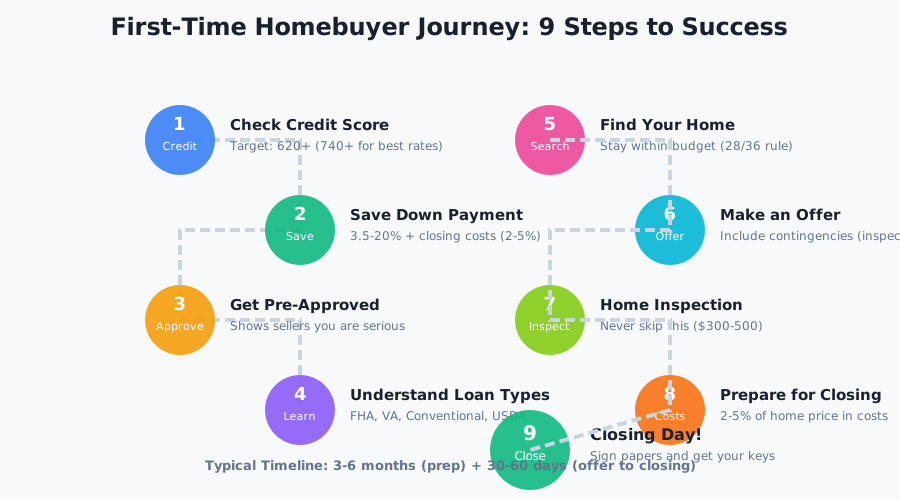
Buying your first home is exciting but overwhelming. This guide walks through every step, from saving for a down payment to closing day.
Calculate What You Can Afford
Before you start house hunting, know your budget:
What is a First-Time Homebuyer?
According to the Department of Housing and Urban Development (HUD), you're considered a first-time homebuyer if:
- You haven't owned a home in the past 3 years
- You're a single parent who only owned a home with a former spouse
- You're a displaced homemaker who only owned a home with a spouse
First-time buyer status qualifies you for special programs and assistance.
Step 1: Check Your Credit Score
Your credit score determines your mortgage rate and whether you qualify. According to FICO, here's what you need:
| Credit Score | Rate Impact | Qualification |
|---|---|---|
| 760+ | Best rates | Conventional loans |
| 700-759 | Good rates | Conventional loans |
| 620-699 | Higher rates | FHA loans available |
| Below 620 | Difficult | May need special programs |
Action Items:
- Check your credit report at AnnualCreditReport.com
- Fix any errors immediately
- Pay down credit card debt
- Avoid new credit applications
Tip
Improve your credit score before applying. Even a 20-point increase can save you thousands in interest over the life of your loan. Pay all bills on time and keep credit card balances below 30% of limits.
Step 2: Save for a Down Payment
How Much Do You Need?
Traditional wisdom says 20%, but many first-time buyers put down less:
| Down Payment | Loan Type | PMI Required? |
|---|---|---|
| 20%+ | Conventional | No |
| 10-19% | Conventional | Yes |
| 3.5% | FHA | Yes (MIP) |
| 0% | VA/USDA | No |
Example: $400,000 home
- 20% down: $80,000
- 10% down: $40,000
- 3.5% down: $14,000
For a detailed breakdown of down payment options, see our Complete Down Payment Guide.
Down Payment Assistance Programs
Many states and cities offer first-time buyer assistance:
- State programs: Low-interest loans, grants, or forgivable loans
- Local programs: City or county assistance
- Employer programs: Some employers offer homebuyer benefits
- Non-profit programs: Organizations like Habitat for Humanity
Check HUD's list of state and local programs for your area.
Step 3: Get Pre-Approved
Pre-approval shows sellers you're serious and tells you exactly how much you can borrow.
Pre-Qualification vs. Pre-Approval
| Type | What It Means | Strength |
|---|---|---|
| Pre-qualification | Quick estimate based on self-reported info | Weak |
| Pre-approval | Lender verified your finances and credit | Strong |
Always get pre-approved, not just pre-qualified.
What Lenders Look At
- Debt-to-Income Ratio (DTI): Total monthly debt ÷ Monthly income
- Ideal: Under 36%
- Maximum: 43% (some programs allow up to 50%)
- Credit Score: Higher is better
- Employment History: Stable income (2+ years preferred)
- Savings: Down payment + closing costs + reserves
Step 4: Understand Mortgage Types
FHA Loans (First-Time Buyer Favorite)
Requirements:
- Credit score: 580+ (3.5% down) or 500-579 (10% down)
- Down payment: As low as 3.5%
- Mortgage insurance: Required for life of loan if down payment < 10%
Best for: Buyers with lower credit scores or limited down payment funds.
Learn more about FHA loans and how they compare.
Conventional Loans
Requirements:
- Credit score: 620+
- Down payment: 3% minimum (PMI required if < 20%)
- Mortgage insurance: Can be removed at 20% equity
Best for: Buyers with good credit and 20% down payment.
VA Loans (Veterans Only)
Requirements:
- Must be eligible veteran or active-duty service member
- Down payment: 0% required
- No PMI
- Competitive rates
Best for: Eligible veterans and service members.
USDA Loans (Rural Areas)
Requirements:
- Property must be in eligible rural area
- Income limits apply
- Down payment: 0% required
Best for: Buyers purchasing in rural or suburban areas.
For a complete comparison of all mortgage types, see our Mortgage Types Comparison Guide.
Step 5: Find the Right Home
What Can You Afford?
The 28/36 Rule:
- Housing costs: No more than 28% of gross monthly income
- Total debt: No more than 36% of gross monthly income
Example: $85,000 annual income ($7,083/month)
- Maximum housing payment: $1,983/month (28%)
- Maximum total debt: $2,550/month (36%)
Use our Mortgage Calculator to see what home price this translates to.
Additional Costs to Budget
Beyond your mortgage payment, budget for:
| Cost | Monthly Amount | Annual Amount |
|---|---|---|
| Property taxes | $300 - $800 | $3,600 - $9,600 |
| Homeowners insurance | $100 - $300 | $1,200 - $3,600 |
| PMI (if applicable) | $100 - $300 | $1,200 - $3,600 |
| HOA fees (if applicable) | $100 - $500 | $1,200 - $6,000 |
| Maintenance | $200 - $500 | $2,400 - $6,000 |
Learn more about all the hidden costs in your mortgage payment.
Step 6: Make an Offer
Components of an Offer
- Purchase price: What you're willing to pay
- Earnest money: Good-faith deposit (typically 1-3% of purchase price)
- Contingencies: Conditions that must be met (inspection, appraisal, financing)
- Closing date: When you'll take ownership
- Personal letter: Optional but can help in competitive markets
Negotiation Tips
- Research comparable sales in the area
- Don't lowball—make a competitive offer
- Consider waiving some contingencies in hot markets (carefully)
- Be prepared to walk away if terms aren't right
Step 7: Home Inspection
Always get a professional inspection. This is your chance to find problems before you're committed.
What Inspectors Check
- Structural integrity
- Electrical systems
- Plumbing
- HVAC
- Roof condition
- Foundation
- Appliances
Cost: $300 - $500 typically
After Inspection
You can:
- Request repairs from the seller
- Negotiate a lower price
- Walk away (if inspection contingency)
Step 8: Closing Costs
Closing costs typically range from 2% to 5% of the home price.
On a $400,000 home, expect $8,000 to $20,000 in closing costs.
Common Closing Costs
| Cost | Typical Amount |
|---|---|
| Loan origination | 0.5% - 1% of loan |
| Appraisal | $300 - $500 |
| Home inspection | $300 - $500 |
| Title insurance | $500 - $2,000 |
| Recording fees | $100 - $300 |
| Prepaid expenses | Varies |
Use our Closing Cost Calculator to estimate your costs.
Step 9: Closing Day
What to Bring
- Government-issued ID
- Cashier's check for closing costs (or wire transfer)
- Proof of homeowners insurance
- Any requested documents
What Happens
- Review all documents carefully
- Sign loan documents
- Pay closing costs
- Receive keys to your new home!
First-Time Buyer Mistakes to Avoid
Mistake 1: Not Getting Pre-Approved
Without pre-approval, you don't know your budget and sellers won't take you seriously.
Mistake 2: Shopping for Homes Before You're Ready
Don't start looking until you have:
- Down payment saved
- Credit score in good shape
- Pre-approval letter
- Budget for closing costs and moving
Mistake 3: Maxing Out Your Budget
This is one of the most common mistakes first-time buyers make. Getting approved for $385,000 and buying a $379,000 house sounds safe, until the water heater dies ($1,800), the AC needs repairs ($900), and property taxes increase ($1,200/year) within the first six months -- leaving no cushion.
Leave room for unexpected expenses. Just because you're approved for $400,000 doesn't mean you should spend it all. A common guideline is to stay 10-15% below your maximum approval.
Mistake 4: Skipping the Inspection
Never skip a home inspection, even in competitive markets. Hidden problems can cost tens of thousands.
Mistake 5: Not Understanding All Costs
Your mortgage payment is just the beginning. Factor in property taxes, insurance, maintenance, and HOA fees.
For more on understanding your complete mortgage payment, see What's Really In Your Mortgage Payment?.
First-Time Buyer Programs
FHA Loans
- Low down payment (3.5%)
- Lower credit score requirements
- Popular with first-time buyers
State and Local Programs
Many states offer:
- Down payment assistance
- Lower interest rates
- Tax credits
- Closing cost assistance
Check your state's housing finance agency for programs.
Good Neighbor Next Door
For teachers, firefighters, police officers, and EMTs. 50% discount on HUD homes in revitalization areas.
Frequently Asked Questions
How much should I save before buying my first home?
For a $350,000 home, first-time buyers should save approximately $35,000-$60,000 total, broken down as follows: down payment of $12,250-$70,000 (3.5%-20%), closing costs of $7,000-$17,500 (2%-5% of purchase price), moving expenses of $1,000-$5,000, and an emergency fund covering 3-6 months of expenses. Additionally, set aside $5,000-$10,000 for immediate home repairs and maintenance. If you're using FHA with 3.5% down, you might need as little as $25,000-$30,000 total to purchase your first home.
What credit score do I need to buy a house?
The minimum credit score to buy a house depends on loan type: Conventional loans require 620+ (with best rates at 740+), FHA loans require 580+ for 3.5% down payment or 500-579 for 10% down, and VA/USDA loans have no government minimum but most lenders require 620+. Each 20-point credit score improvement can save you 0.125%-0.25% on your interest rate, which translates to $20,000-$40,000 over a 30-year loan. If your score is below 620, spend 6-12 months improving it before applying.
Can I buy a home with no down payment?
Yes, through VA loans (veterans) or USDA loans (rural areas). FHA requires minimum 3.5% down.
How long does the homebuying process take?
Typically 30-60 days from offer acceptance to closing. Pre-approval and house hunting can add several months.
Should I use a real estate agent?
Yes, especially as a first-time buyer. Buyer's agents are typically free (seller pays commission) and provide valuable guidance.
What is PMI and can I avoid it?
PMI (Private Mortgage Insurance) is required if you put down less than 20%. You can avoid it by:
- Saving 20% down payment
- Using a VA loan (no PMI)
- Using lender-paid PMI (higher rate)
Learn more about PMI and how it works.
Related Articles
- What's Really In Your Mortgage Payment? — Understand all components of your monthly payment, including PMI, taxes, and insurance
- Mortgage Calculator: Complete Guide — Learn how mortgage calculations work and understand different loan types
- Down Payment Guide — Everything about down payments, minimum requirements, and assistance programs
- Mortgage Types Comparison — Compare FHA, VA, conventional, and USDA loans to find the best option for you
- Mortgage Refinance Guide — Learn when and how to refinance your mortgage after purchase
Related Calculators
- Mortgage Calculator — Calculate your complete mortgage payment
- Closing Cost Calculator — Estimate your closing costs
- Home Equity Calculator — Track your equity growth
- Rent vs Buy Calculator — Should you rent or buy?
This guide provides general information for educational purposes. Consult with qualified real estate and mortgage professionals for advice specific to your situation.
This article is provided for informational and educational purposes only. Content should not be considered professional financial, medical, legal, or other advice. Always consult a qualified professional before making important decisions. UseCalcPro is not responsible for any actions taken based on the information in this article.
Try These Calculators
Figure out your monthly mortgage payment with principal, interest, taxes, and insurance included. See total cost and amortization schedule side by side.
Calculate FHA loan payments including MIP (mortgage insurance premium). Estimate monthly payments, down payment, and total costs for FHA mortgages. Compare.
Enter your home price, down payment, and loan type to estimate closing costs. See lender fees, title fees, government fees, and prepaid items broken out.
Estimate 2026 mortgage monthly P&I payment by loan type (Conv/FHA/VA/Jumbo), term, and credit tier. Conv 30-yr averages 6.34%, FHA 6.07%, jumbo 6.62–6.87%.
Calculate VA loan payments with no down payment and no PMI. Estimate monthly payments, funding fee, and total costs for veterans and military. Compare options.