Mortgage Calculator: Complete Guide to Calculating Your Home Loan
It is easy to trust the "monthly payment" number a lender shows you. That number often does not include property taxes, insurance, or PMI -- which can add $287/month or more to the bill -- leaving buyers house-poor for the first year or two.
This guide exists so you don't repeat that $47,000 worth of mistakes. It covers exactly how mortgage payments are calculated, what lenders don't tell you upfront, and how to actually afford the home you're buying.
Calculate Your Mortgage Payment
Try Our Free Mortgage Calculator →
Use our mortgage calculator to instantly calculate your monthly payment, total interest, and see how your loan balance decreases over time.
Your monthly mortgage payment depends on three key factors: the loan amount, interest rate, and loan term. A $380,000 home with a 20% down payment ($76,000) at 6.5% interest for 30 years results in a monthly payment of approximately $1,922 (principal and interest only), with a total interest cost of $388,000 over the life of the loan.
Tip
A 20% down payment eliminates PMI (Private Mortgage Insurance) and can save you hundreds of dollars per month. If you can't afford 20% upfront, consider saving longer or exploring down payment assistance programs.
What is a Mortgage?
A mortgage is a loan used to purchase real estate, where the property itself serves as collateral. According to the Consumer Financial Protection Bureau, when you take out a mortgage, you agree to make regular payments over a set period (typically 15 or 30 years) until the loan is fully repaid. The lender holds a lien on your property until the mortgage is paid off, meaning they can foreclose if you fail to make payments.
The Federal Reserve research shows that mortgage terms and interest rates significantly impact household debt burdens and default risks, making it crucial to understand all aspects of your mortgage before committing.
For a detailed breakdown of what's actually included in your monthly payment (beyond just principal and interest), see our guide: What's Really In Your Mortgage Payment?
Mortgages are the most common way people finance home purchases because they allow you to buy a home without paying the full price upfront. Instead of saving $350,000 in cash, you might only need $70,000 (20% down payment) to become a homeowner.
How Mortgage Payments Are Calculated
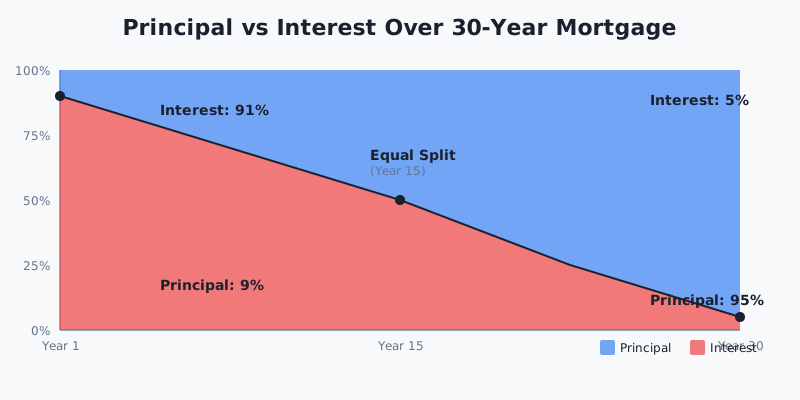
Mortgage payments are calculated using the standard amortization formula:
M = P × [r(1+r)^n] / [(1+r)^n – 1]
Where:
- M = Monthly payment
- P = Principal loan amount
- r = Monthly interest rate (annual rate ÷ 12)
- n = Total number of payments (years × 12)
Example Calculation
Let's break down a real example:
- Home price: $365,000
- Down payment: 20% ($73,000)
- Loan amount: $292,000
- Interest rate: 6.5% annually (0.5417% monthly)
- Loan term: 30 years (360 payments)
Plugging into the formula:
- M = $292,000 × [0.005417(1.005417)^360] / [(1.005417)^360 – 1]
- M = $292,000 × [0.005417 × 6.991] / [6.991 – 1]
- M = $292,000 × [0.03787] / [5.991]
- M = $292,000 × 0.00632
- M = $1,846 per month (principal and interest)
This monthly payment includes both principal (the loan amount) and interest (the cost of borrowing). In the early years, most of your payment goes toward interest. As time passes, more goes toward reducing the principal balance.
What Affects Your Mortgage Payment
Understanding what influences your monthly payment helps you make better financial decisions. Here are the key factors:
1. Interest Rate → Increases → Total Cost
The interest rate is perhaps the most critical factor affecting your mortgage payment. A higher interest rate significantly increases both your monthly payment and total interest paid over the life of the loan.
Example Comparison:
- $280,000 loan at 5.5% for 30 years: $1,590/month, $292,000 total interest
- $280,000 loan at 6.5% for 30 years: $1,770/month, $357,000 total interest
- $280,000 loan at 7.5% for 30 years: $1,958/month, $425,000 total interest
A 1% difference in interest rate can cost you over $150,000 in additional interest over 30 years. This is why shopping around for the best rate is crucial. According to Freddie Mac's mortgage rate survey, rates fluctuate based on economic conditions, Federal Reserve policy, and individual borrower creditworthiness.
Important
Always get quotes from at least 3-5 lenders before choosing a mortgage. Quotes for the exact same loan can range from 3.75% to 4.25% -- that 0.5% difference adds up to $38,000 over 30 years. Accepting the first offer out of convenience is a common and costly mistake.
2. Down Payment → Reduces → Monthly Payment
A larger down payment reduces your loan amount, which directly lowers your monthly payment and total interest. Additionally, a down payment of 20% or more eliminates the need for Private Mortgage Insurance (PMI), saving you hundreds of dollars per month.
Down Payment Impact (on $360,000 home):
- 3% down ($10,800): $349,200 loan, $2,207/month, requires PMI
- 10% down ($36,000): $324,000 loan, $2,048/month, requires PMI
- 20% down ($72,000): $288,000 loan, $1,821/month, no PMI
- 30% down ($108,000): $252,000 loan, $1,593/month, no PMI
A low down payment → requires → PMI, which typically costs 0.5% to 1% of the loan amount annually. On a $280,000 loan, PMI could add $117 to $233 per month until you reach 20% equity.
Warning
PMI can add hundreds of dollars to your monthly payment. Understand when it can be removed and how to reach 20% equity faster through extra payments or home value appreciation.
3. Loan Term → Affects → Total Cost
The length of your mortgage term dramatically impacts both your monthly payment and total interest paid. Shorter terms (15 years) have higher monthly payments but save significantly on interest. Longer terms (30 years) offer lower monthly payments but cost more over time.
15-Year vs 30-Year Comparison:
- 15-year mortgage: $2,439/month, $159,000 total interest
- 30-year mortgage: $1,770/month, $357,000 total interest
While the 15-year mortgage saves $198,000 in interest, it requires a monthly payment that's $669 higher. Many homeowners choose 30-year mortgages for the flexibility, then make extra payments when possible.
4. Loan Amount → Determines → Base Payment
The principal loan amount is the foundation of your mortgage calculation. It's simply the home price minus your down payment. A higher loan amount → increases → both monthly payment and total interest proportionally.
Understanding Mortgage Components
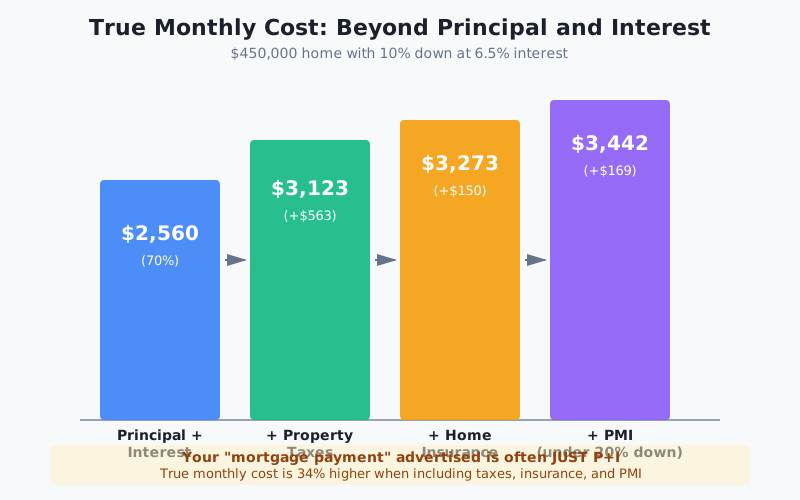
Your monthly mortgage payment consists of four main components:
Principal
The principal is the actual loan amount you borrowed. Each payment reduces your principal balance, building equity in your home. In the first year of a 30-year mortgage, only about 15% of your payment goes toward principal. By year 15, that increases to about 50%.
Interest
Interest is the cost of borrowing money, expressed as a percentage of the loan amount. In the early years, most of your payment goes toward interest because you're paying interest on the full loan balance. As the principal decreases, less of each payment goes toward interest.
Property Taxes
Property taxes are assessed by local governments and typically range from 0.5% to 2% of your home's value annually. These are usually paid monthly as part of your mortgage payment and held in an escrow account.
Homeowner's Insurance
Lenders require homeowner's insurance to protect their investment. Premiums typically cost $1,000 to $3,000 annually, depending on your location, home value, and coverage level. Like property taxes, insurance is usually paid monthly through escrow.
PMI (Private Mortgage Insurance)
If your down payment is less than 20%, you'll typically need PMI. This insurance protects the lender if you default. PMI costs 0.5% to 1% of the loan amount annually and can be removed once you reach 20% equity.
Types of Mortgages
Understanding different mortgage types helps you choose the best option for your situation.
Fixed-Rate Mortgage
A fixed-rate mortgage has an interest rate that remains constant throughout the loan term. This provides predictable monthly payments and protection against rising interest rates. Fixed-rate mortgages are ideal for buyers who plan to stay in their home long-term and want payment stability.
Advantages:
- Predictable payments
- Protection against rate increases
- Easier budgeting
Disadvantages:
- Higher initial rates than adjustable mortgages
- No benefit if rates decrease
Adjustable-Rate Mortgage (ARM)
An adjustable-rate mortgage has an interest rate that changes periodically based on market conditions. ARMs typically start with a lower rate than fixed mortgages but can increase over time. Common ARM structures include 5/1, 7/1, and 10/1, where the first number is the fixed period and the second is how often the rate adjusts.
Advantages:
- Lower initial payments
- Potential savings if rates stay low
- Good for short-term ownership
Disadvantages:
- Payment uncertainty
- Risk of significant rate increases
- Complex terms
FHA Loans
FHA loans are government-backed mortgages that allow down payments as low as 3.5% for borrowers with credit scores of 580 or higher. According to HUD guidelines, they're popular among first-time homebuyers but require mortgage insurance (MIP) for the life of the loan if your down payment is under 10%. Learn more about FHA MIP costs and how they compare to PMI in our detailed breakdown.
VA Loans
VA loans are available to eligible veterans and active-duty service members through the Department of Veterans Affairs. They offer 100% financing (no down payment required), no PMI, and competitive interest rates. VA loans are one of the most favorable mortgage options available for those who qualify.
USDA Loans
USDA loans are designed for rural and suburban homebuyers with low to moderate incomes. They offer 100% financing and low interest rates but have income and location restrictions.
How to Choose the Best Mortgage Rate
Getting the best mortgage rate can save you tens of thousands of dollars. Here's how to find and secure the best rate:
1. Improve Your Credit Score
Your credit score is one of the most important factors lenders consider. A higher credit score → qualifies you for → lower interest rates. Generally:
- 760+ credit score: Best rates
- 700-759: Good rates
- 620-699: Higher rates
- Below 620: May need FHA or special programs
2. Shop Multiple Lenders
Mortgage rates vary significantly between lenders. The CFPB recommends getting quotes from at least three to five lenders, including:
- Traditional banks
- Credit unions
- Online lenders
- Mortgage brokers
Even a 0.25% difference can save you thousands over the life of your loan. For more on why shopping around matters, see our mortgage payment breakdown guide.
3. Compare Loan Estimates
When shopping, request Loan Estimates from each lender. This standardized form makes it easy to compare:
- Interest rates
- Closing costs
- Total loan costs
- Monthly payments
4. Consider Points
Mortgage points allow you to pay upfront to lower your interest rate. One point typically costs 1% of the loan amount and reduces your rate by 0.25%. Points make sense if you plan to stay in the home long enough to recoup the upfront cost.
5. Lock Your Rate
Once you find a good rate, lock it in. Rate locks typically last 30-60 days and protect you from rate increases during the closing process. Some lenders charge for rate locks, while others offer them free.
Common Mortgage Mistakes to Avoid
Avoiding these common mistakes can save you money and stress:
Mistake 1: Not Shopping Around
Many borrowers accept the first rate they're offered. Shopping around can save 0.5% to 1% on your interest rate, which translates to thousands of dollars over the life of the loan.
Mistake 2: Focusing Only on Monthly Payment
While a lower monthly payment seems attractive, it often means a longer loan term and more total interest. Always consider the total cost, not just the monthly payment.
Mistake 3: Ignoring Closing Costs
Closing costs typically range from 2% to 5% of the loan amount. On a $280,000 loan, that's $5,600 to $14,000. Factor these into your budget and consider negotiating with the seller to cover some costs.
Mistake 4: Not Getting Pre-Approved
Pre-approval shows sellers you're a serious buyer and helps you understand your budget. Without pre-approval, you might miss out on your dream home or make offers that aren't competitive.
Mistake 5: Changing Jobs During the Process
Lenders verify employment before closing. Changing jobs can delay or derail your mortgage approval. If possible, wait until after closing to make career changes.
Mistake 6: Making Large Purchases
Large purchases, especially on credit, can affect your debt-to-income ratio and credit score. Avoid major purchases until after closing.
Mistake 7: Not Understanding PMI
PMI can add hundreds of dollars to your monthly payment. Understand when it can be removed and how to reach 20% equity faster through extra payments or home value appreciation. For a complete breakdown of PMI costs and how to avoid it, see our detailed PMI guide.
Strategies to Save Money on Your Mortgage
Several strategies can help you save money on your mortgage:
1. Make Extra Payments
Making extra principal payments reduces your loan balance faster, saving interest and shortening your loan term. Even one extra payment per year can save thousands of dollars.
Example: On a $295,000 loan at 6.5% for 30 years, making one extra $1,865 payment per year saves approximately $68,000 in interest and pays off the loan about 5 years early.
2. Refinance When Rates Drop
If interest rates drop significantly, refinancing can lower your monthly payment and total interest. However, refinancing has costs (typically 2-5% of the loan amount), so ensure the savings justify the expense.
Use our Mortgage Refinance Calculator to determine if refinancing makes sense for you.
3. Biweekly Payments
Instead of monthly payments, make half-payments every two weeks. This results in 26 half-payments per year (equivalent to 13 full payments), which can significantly reduce your loan term and interest.
4. Round Up Your Payment
Rounding up your payment is an easy way to make extra principal payments. If your payment is $1,770, paying $1,850 adds $80 per month toward principal, saving interest over time.
5. Recast Your Mortgage
If you receive a large sum of money (inheritance, bonus, etc.), you can recast your mortgage. This applies the lump sum to principal and recalculates your monthly payment based on the new balance, lowering your payment without refinancing.
Additional Costs to Consider
Beyond your monthly mortgage payment, homeownership includes several additional costs:
Closing Costs
Closing costs typically include:
- Loan origination fees: 0.5% to 1% of loan amount
- Appraisal: $300 to $500
- Home inspection: $300 to $500
- Title insurance: $500 to $2,000
- Recording fees: $100 to $300
- Prepaid expenses: Property taxes, insurance, interest
Total closing costs usually range from 2% to 5% of the home price.
Ongoing Homeownership Costs
- Property taxes: 0.5% to 2% of home value annually
- Homeowner's insurance: $1,000 to $3,000 annually
- Maintenance and repairs: 1% to 3% of home value annually
- HOA fees: $100 to $500+ monthly (if applicable)
- Utilities: Varies by location and home size
Budget for these costs when determining how much house you can afford.
Using Our Mortgage Calculator
Our mortgage calculator provides accurate estimates based on current market conditions. Here's how to use it effectively:
Step 1: Enter Home Price
Enter the purchase price of the home you're considering. This is the total amount the seller is asking.
Step 2: Enter Down Payment
Enter your down payment as either a dollar amount or percentage. Remember, a 20% down payment eliminates PMI.
Step 3: Enter Interest Rate
Use current market rates from your lender. Rates change daily, so get a current quote for accuracy.
Step 4: Select Loan Term
Choose between 15-year and 30-year terms (or other available terms). Consider your budget and long-term goals.
Step 5: Review Results
The calculator shows:
- Monthly payment (principal and interest)
- Total payment over loan life
- Total interest paid
- Amortization schedule
Frequently Asked Questions
How is monthly mortgage payment calculated?
Monthly payment is calculated using the standard amortization formula: M = P × [r(1+r)^n] / [(1+r)^n – 1], where P is the loan amount, r is the monthly interest rate, and n is the number of payments.
What down payment should I make?
A 20% down payment is ideal as it avoids PMI (Private Mortgage Insurance). However, many loans allow as little as 3-5% down. A larger down payment means lower monthly payments and less interest over time.
Should I choose a 15-year or 30-year mortgage?
A 15-year mortgage has higher monthly payments but saves significantly on interest. A 30-year mortgage offers lower monthly payments but costs more over time. Choose based on your budget and financial goals.
What other costs should I consider?
Beyond your mortgage payment, budget for property taxes, homeowner's insurance, PMI (if applicable), HOA fees, maintenance, and closing costs (typically 2-5% of the loan amount).
Can I pay off my mortgage early?
Yes, you can make extra payments or pay off your mortgage early. Most mortgages don't have prepayment penalties, but check your loan terms. Early payoff saves interest and builds equity faster.
What is PMI and when can I remove it?
PMI (Private Mortgage Insurance) is required when your down payment is less than 20%. It typically costs 0.5% to 1% of the loan amount annually. You can request PMI removal once you reach 20% equity through payments or home value appreciation.
How does my credit score affect my mortgage rate?
Your credit score significantly impacts your interest rate. Borrowers with scores above 760 typically get the best rates, while scores below 620 may require FHA loans or special programs with higher rates.
What's the difference between pre-qualification and pre-approval?
Pre-qualification is a preliminary estimate based on self-reported information. Pre-approval involves a credit check and verification of your financial information, making you a stronger buyer in competitive markets.
Related Articles
- What's Really In Your Mortgage Payment? — Discover the hidden components of your monthly payment beyond principal and interest, including escrow, PMI, taxes, and how to avoid costly calculator mistakes
- Mortgage Refinance Guide — Learn when refinancing makes sense, how to calculate savings, and avoid common mistakes
- First-Time Homebuyer Guide — Complete guide for first-time buyers, from credit score to closing day
- Down Payment Guide — Understand down payment requirements, assistance programs, and saving strategies
- Mortgage Types Comparison — Compare FHA, VA, conventional, and USDA loans side-by-side
Related Calculators
Explore these related calculators to make informed financial decisions:
- Mortgage Calculator — Calculate your complete PITI payment with all components
- Mortgage Refinance Calculator — Calculate savings from refinancing your mortgage
- Loan Calculator — Calculate any type of loan payment
- Investment Calculator — Calculate investment returns over time
- Savings Calculator — Plan your savings goals
- Home Equity Calculator — Calculate your home equity
- Closing Cost Calculator — Estimate closing costs
- FHA Loan Calculator — Compare FHA vs conventional loans
Conclusion
The difference between smart homebuyers and struggling ones isn't income — it's preparation.
Buyers who do well run the numbers obsessively before house hunting. They know their true budget (not just what they're approved for). They shop rates like their financial future depends on it — because it does.
Use our calculator, understand every component of your payment, and don't let anyone rush you into the biggest purchase of your life. The right home at the right price with the right mortgage will feel boring and responsible. That's exactly what you want.
This article provides general information and should not be considered financial advice. Consult with qualified professionals for advice specific to your situation.
This article is provided for informational and educational purposes only. Content should not be considered professional financial, medical, legal, or other advice. Always consult a qualified professional before making important decisions. UseCalcPro is not responsible for any actions taken based on the information in this article.