Car Payment Calculator: How to Calculate Monthly Auto Loan Payments
Your monthly car payment depends on the loan amount, interest rate, and term length. A $30,000 car with $5,000 down, 6% APR, and a 60-month term has a payment of about $483/month. Changing any variable significantly affects your payment.
Financing a $28,500 Mazda CX-5 with $6,000 down shows how much rate shopping matters: accepting the dealer's 7.2% APR offer puts the payment at $446/month, while getting pre-approved at a credit union for 5.4% and renegotiating drops it to $428/month, saving $1,080 over the 60-month term. A few hours of rate shopping can be some of the easiest money a buyer ever saves.
Use our Car Payment Calculator to see exactly what you'll pay for any vehicle.
How to Calculate Your Car Payment
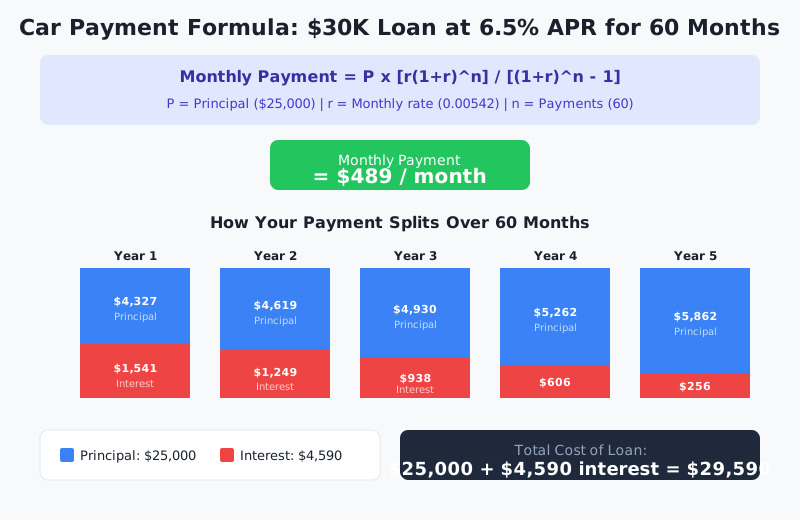
The Standard Formula
M = P × [r(1+r)^n] / [(1+r)^n — 1]

Where:
M = Monthly payment
P = Principal (loan amount)
r = Monthly interest rate (annual rate ÷ 12)
n = Number of payments (months)
Simplified Calculation Steps
Step 1: Determine loan amount
Loan Amount = Car Price - Down Payment - Trade-in Value
Step 2: Convert annual rate to monthly
Monthly Rate = Annual Rate ÷ 12
Step 3: Use a calculator (the formula is complex)
Quick Estimate Rule
For a rough estimate:
Monthly Payment ≈ Loan Amount ÷ 50 (for 60 months at 6-7%)
A $25,000 loan ÷ 50 ≈ $500/month
Tip
Use our calculator for accuracy. The formula involves exponents that are impractical for mental math. Our Car Payment Calculator gives exact figures instantly.
Car Payment Examples
$25,000 Car at Various Terms and Rates
| Term | 4% APR | 6% APR | 8% APR | 10% APR |
|---|---|---|---|---|
| 36 months | $738 | $760 | $783 | $807 |
| 48 months | $564 | $587 | $610 | $634 |
| 60 months | $460 | $483 | $507 | $531 |
| 72 months | $391 | $414 | $438 | $463 |
| 84 months | $342 | $365 | $390 | $415 |
$35,000 Car at Various Terms and Rates
| Term | 4% APR | 6% APR | 8% APR | 10% APR |
|---|---|---|---|---|
| 36 months | $1,033 | $1,064 | $1,096 | $1,129 |
| 48 months | $790 | $822 | $854 | $888 |
| 60 months | $644 | $676 | $710 | $744 |
| 72 months | $547 | $580 | $614 | $648 |
| 84 months | $478 | $512 | $546 | $581 |
Effect of Down Payment
$30,000 car, 6% APR, 60 months:
| Down Payment | Loan Amount | Monthly Payment | Total Interest |
|---|---|---|---|
| $0 | $30,000 | $580 | $4,800 |
| $3,000 (10%) | $27,000 | $522 | $4,320 |
| $6,000 (20%) | $24,000 | $464 | $3,840 |
| $9,000 (30%) | $21,000 | $406 | $3,360 |
Important
20% down is the gold standard. This prevents negative equity (owing more than the car is worth) and often qualifies you for better rates.
How Much Car Can You Afford?
The Budget Rules
| Rule | Calculation | Example ($60k income) |
|---|---|---|
| 20/4/10 Rule | 20% down, 4-year loan, <10% of income | ~$500/month max |
| 15% Rule | No more than 15% of take-home pay | ~$600/month max |
| 36% Rule | All debt payments under 36% of income | ~$900 total debt |
Affordability Calculator
To find your maximum car budget:
Step 1: Monthly income after taxes
Step 2: Multiply by 10-15% (your comfort level)
Step 3: That's your maximum monthly payment
Step 4: Use payment table to find price
Example ($5,000/month take-home):
10% max payment: $500/month
At 6% for 60 months: ~$26,000 loan
With 20% down: ~$32,500 max car price
Total Cost of Ownership
Monthly payment isn't the only car cost:
| Expense | Monthly Estimate |
|---|---|
| Car payment | $400-$700 |
| Insurance | $100-$300 |
| Gas (see our gas mileage guide) | $150-$300 |
| Maintenance | $50-$100 |
| Registration/taxes | $20-$50 |
| Total | $720-$1,450 |
Understanding Interest Rates
Current Average Auto Loan Rates (2026)
| Credit Score | New Car Rate | Used Car Rate |
|---|---|---|
| 781-850 (Excellent) | 5.5-6.5% | 6.5-8.0% |
| 661-780 (Good) | 6.5-8.5% | 8.0-10.5% |
| 601-660 (Fair) | 10-13% | 12-16% |
| 501-600 (Poor) | 13-18% | 16-21% |
| Below 500 | 18%+ | 20%+ |
Where to Get the Best Rates
| Source | Typical Rates | Pros/Cons |
|---|---|---|
| Credit unions | Often lowest | Membership required |
| Banks | Competitive | May require relationship |
| Online lenders | Competitive | Quick approval |
| Dealer financing | Variable | Convenient, but shop around |
| Manufacturer financing | 0-3% promos | For qualified buyers only |
Tip
Get pre-approved before shopping. Walking into a dealership with financing in hand gives you negotiating power and a rate to beat.
Loan Term Length: Short vs. Long
Short-Term Loans (36-48 Months)
Pros:
- Lower total interest paid
- Build equity faster
- Usually lower interest rates
- Car paid off sooner
Cons:
- Higher monthly payments
- May limit car options
Long-Term Loans (72-84 Months)
Pros:
- Lower monthly payments
- Can afford "more car"
Cons:
- Significant more interest paid
- Higher risk of negative equity
- Car may outlast warranty while still paying
- Usually higher interest rates
Cost Comparison: 48 vs. 72 Months
$28,000 loan at 7% APR:
| Factor | 48 Months | 72 Months |
|---|---|---|
| Monthly payment | $670 | $476 |
| Total interest | $4,160 | $6,272 |
| Interest difference | — | +$2,112 |
Warning
Avoid 84-month loans if possible. By month 48, you may still owe more than the car is worth, and you're paying for a car that's already depreciating toward worthlessness.
Down Payments and Trade-Ins
How Much to Put Down
| Down Payment | Effect |
|---|---|
| 0% | Immediate negative equity, higher rates |
| 10% | Covers taxes/fees, slight buffer |
| 20% | Recommended, prevents being "underwater" |
| 30%+ | Great position, lowest payments |
Trade-In Value Tips
- Know your car's value — Check Kelley Blue Book and Edmunds
- Get multiple offers — Carmax, Carvana, local dealers
- Negotiate separately — Don't let trade-in offset mask car price
When to Avoid Trade-In at Dealer
- Your trade-in is worth more than their offer
- You have time to sell privately
- You want maximum transparency in the deal
New vs. Used Car Financing
Price Comparison
| Category | New Car | 2-Year-Old Used | 4-Year-Old Used |
|---|---|---|---|
| MSRP/Price | $35,000 | $28,000 | $22,000 |
| Depreciation Year 1 | -20% | Already absorbed | Already absorbed |
| Interest rate | 6% | 7.5% | 8.5% |
| 60-month payment | $676 | $561 | $452 |
| Total cost | $40,560 | $33,660 | $27,120 |
Used Car Advantages
- Lower purchase price
- Lower insurance costs
- Depreciation already happened
- More car for the money
New Car Advantages
- Full warranty
- Latest features/safety
- 0% financing sometimes available (and if you are considering an EV, read our EV vs gas cost comparison)
- No unknown history
Dealer Add-Ons to Avoid
Common add-ons that inflate your payment:
| Add-On | Typical Cost | Worth It? |
|---|---|---|
| Extended warranty | $1,500-$3,000 | Rarely (buy from third party if needed) |
| GAP insurance | $400-$800 | Maybe (cheaper from your insurer) |
| Paint protection | $500-$1,500 | No (wax is fine) |
| Fabric protection | $200-$500 | No (DIY options work) |
| Window etching | $300-$500 | No (minimal theft deterrent) |
| Nitrogen in tires | $100-$300 | No (air is 78% nitrogen anyway) |
| Dealer documentation fee | $200-$500 | Negotiate down |
Important
"Would you like to add that to your monthly payment?" This phrase is designed to make expensive add-ons seem cheap. $30/month over 72 months is $2,160 — evaluate total cost.
How to Use Our Car Payment Calculator
Our Car Payment Calculator helps you plan:
- Enter car price — MSRP or negotiated price
- Input down payment — cash and/or trade-in value
- Select loan term — 36 to 84 months
- Enter interest rate — your expected APR
- Add tax rate — optional for total accuracy
The calculator shows:
- Monthly payment
- Total interest paid
- Total cost of the loan
- Amortization schedule
Negotiating Your Car Deal
Before You Go
- Know the invoice price — What the dealer paid
- Research incentives — Manufacturer rebates, dealer cash
- Get pre-approved — Have financing ready
- Know your trade-in value — Multiple sources
At the Dealership
- Negotiate price first — Not monthly payment
- Keep trade-in separate — Different negotiation
- Don't discuss financing — Until price is set
- Walk away ready — Your best leverage
Red Flags
- Focus on monthly payment instead of total price
- Pressure to decide today
- Unclear fees or charges
- Rate higher than your pre-approval
Frequently Asked Questions
How much should my car payment be?
Most experts recommend your car payment should be no more than 10-15% of your monthly take-home pay. If you earn $4,500/month after taxes, aim for a payment under $450-$675.
What credit score do I need to buy a car?
You can get a car loan with almost any credit score, but rates vary dramatically. For the best rates (under 6%), aim for 720+. Scores under 600 may face rates of 15-20% or higher.
Is it better to have a shorter loan term?
Yes, shorter terms mean less interest paid and faster equity building. A 48-month loan costs significantly less in total than a 72-month loan for the same car, though monthly payments are higher.
How much down payment should I make on a car?
Aim for at least 20% down. This prevents negative equity (owing more than the car is worth), qualifies you for better rates, and significantly reduces your monthly payment and total interest.
Should I pay cash or finance?
If you have cash and the loan rate is high (7%+), paying cash often makes sense. If you can get 0-3% financing and your cash could earn more invested, financing may be smarter. Run the numbers both ways.
What fees are included in a car purchase?
Beyond the car price: sales tax (varies by state, 0-10%), registration fees ($50-$500), documentation fees ($200-$500), and any dealer add-ons. Get an itemized out-the-door price before signing.
Related Calculators
- Gas Mileage Calculator — Factor fuel costs into your decision
- Budget Calculator — Fit car payments into your overall budget
- Loan Calculator — Compare different loan scenarios
Conclusion
Your car payment is determined by loan amount, interest rate, and term length. A larger down payment, better credit score, and shorter term all reduce what you pay. Before shopping, get pre-approved financing and know your budget — don't let a dealer tell you what you can afford.
Use our Car Payment Calculator to explore different scenarios and find the right car for your financial situation. Don't forget to factor in ongoing fuel costs — our road trip cost guide can help you estimate what you'll spend on gas each year. The best car deal is one that fits comfortably in your budget, not one that stretches you thin.
Auto loan calculations are estimates. Actual payments may vary based on lender terms, credit qualification, and additional fees. Shop multiple lenders for the best rates.
This article is provided for informational and educational purposes only. Content should not be considered professional financial, medical, legal, or other advice. Always consult a qualified professional before making important decisions. UseCalcPro is not responsible for any actions taken based on the information in this article.
Try These Calculators
Calculate car loan payments, total interest, and total cost. Factor in down payment, trade-in value, and loan terms to find your ideal car financing. Compare.
Break down your lease payment into depreciation and finance charges. Enter MSRP, negotiated price, residual value, and money factor to see monthly costs.
Calculate car shipping costs by distance, vehicle type, and transport method. Compare open vs enclosed rates and get transit time estimates instantly.
Car carpet replacement cost calculator for DIY and professional installs. Estimate materials, padding, and labor by vehicle type — sedan, truck, or SUV.
Enter your home value and mortgage balance to see how much HELOC you qualify for. Shows draw period and repayment payments plus total interest over the life.