1. Calculate
Choose your project scope and see the estimated price range.
Price the full 2026 piano relocation package — specialty moving crew plus mandatory post-move tuning — in one estimate, not two separate quotes.
Instant project estimate
The estimate is free. Additional details are optional.
Grands require a 3–4-person specialty crew, leg disassembly, and a piano skid board. Uprights move with 2–3 movers.
Every piano requires tuning 2–4 weeks after a move once it re-acclimates. Pianos untuned for 1+ years typically need a pitch raise before standard tuning.
Complete the project details and calculate to see a price range and next steps.
Clear next step
Choose your project scope and see the estimated price range.
Understand the cost drivers and what impacts your final quote.
Carry your scope into a local quote request if you choose.


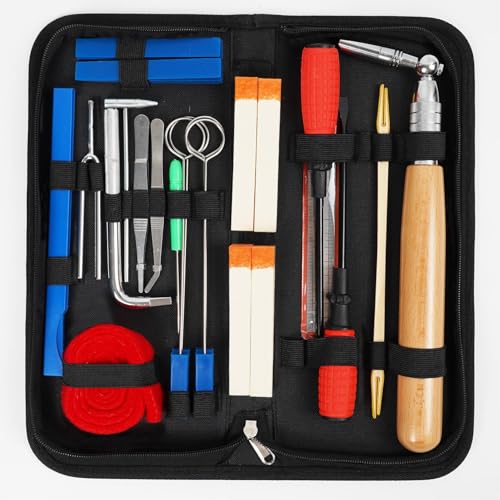
As an Amazon Associate, we earn from qualifying purchases.
Price as of Sep 15, 2026. Product prices and availability are accurate as of the date indicated and are subject to change. Any price and availability information displayed on Amazon at the time of purchase will apply.
Moving and tuning an upright piano locally costs $350–$800 combined; a baby grand $700–$1,600. Every piano needs professional tuning 2–4 weeks after any move once it re-acclimates to its new room.
The combined bundle of specialty moving plus post-move tuning runs $350–$800 for an upright locally, $700–$1,600 for a baby grand locally, $1,000–$3,000 for a full grand, and $1,700–$5,500 for a concert grand. Long-distance adds 3–5x to the moving component. Tuning is always required 2–4 weeks after the move.
| Piano Type | Local Bundle | Long-Distance Bundle |
|---|---|---|
| Upright spinet / studio | $350–$800 | $950–$2,300 |
| Baby grand | $700–$1,600 | $1,700–$3,800 |
| Full grand | $1,000–$3,000 | $2,700–$6,500 |
| Concert grand | $1,700–$5,500 | $4,800–$15,500 |
Moving subjects a piano to vibration, temperature transitions, and a new humidity equilibrium in the destination room. These forces shift string tension 10–30 cents flat across the keyboard. Standard tuning ($100–$250) restores pitch. The piano must sit in the new room 2–4 weeks before tuning will hold; tuning on move day is wasted money because the soundboard has not re-acclimated.
| Tuning Timing | Outcome |
|---|---|
| Day of move | Will not hold; soundboard still adjusting — wasted expense |
| 1 week after move | Often slips within days; too early in most climates |
| 2–4 weeks after move | Optimal — soundboard stable, tuning holds 6–12 months |
| 6+ weeks after move | Acceptable, but pitch drift compounds; pitch raise more likely |
A pitch raise is an extra tuning pass performed when a piano has drifted so far flat that standard tuning cannot correct the distance in one session. It adds $100–$200 to the standard tuning cost. Pianos untuned for 1–2 years before the move typically need one pitch raise. Pianos untuned for 2+ years often need a double pitch raise (+$200–$300), which is two rough passes before fine tuning will hold.
| Tuning Condition Before Move | Service Needed | Estimated Cost (Upright) |
|---|---|---|
| Tuned within 12 months | Standard post-move tuning | $100–$250 |
| Not tuned 1–2 years | Pitch raise + standard tuning | $200–$400 |
| Not tuned 2+ years | Double pitch raise + standard tuning | $300–$550 |
| Not tuned 3+ years or severely flat | Multiple sessions + pitch raise | $400–$700+ |
No. Piano movers and piano technicians are two separate specialties. The moving crew handles the physical relocation; the piano technician handles the tuning. Most specialty piano movers do not employ tuners, and most piano tuners do not haul pianos. Book the mover for move day, then book a registered Piano Technicians Guild (PTG) technician for 2–4 weeks later.
| Role | What They Do | Cost Range |
|---|---|---|
| Specialty piano mover | Physical relocation, disassembly/reassembly | $250–$5,000 (local) |
| Piano technician (tuner) | Pitch restoration, action regulation check | $100–$400 |
| General household mover | Household goods — avoid for grand pianos | Often add $200–$800 piano surcharge |
Stairs add $5–$10 per step or $40–$100 per flight; a single flight can push an upright from $400 to $700–$1,000. Crane or window hoist adds $500–$1,700. Long-distance (300+ miles) runs 3–5 times local rates and always includes climate-controlled trailer and crating ($700–$1,200 for grands), making it a materially different service than a local move.
| Access / Distance Factor | Upright Add-On | Grand Add-On |
|---|---|---|
| Same floor, simple access | Base rate | Base rate |
| Single flight of stairs | +$80–$200 | +$150–$400 |
| Multi-story or narrow doorway | +25–40% | +35–60% |
| Crane or window hoist | +$500–$1,200 | +$800–$1,700 |
| Mid-distance (50–300 mi) | 1.8–2.8x local | 1.8–2.8x local |
| Long-distance (300+ mi) | 3–5x local | 3–5x local + crating |
Inputs
Result
The most common piano move scenario. A 2–3 person crew, 60–90 minutes on site, standard pitch tuning 2–4 weeks later.
Inputs
Result
Baby grand with stairs needs a 4th mover, leg disassembly, and an extra stair-labor premium. The 18-month tuning gap means a pitch raise before standard tuning.
Inputs
Result
Full grand cross-country requires climate-controlled air-ride trailer, custom crating, and 4-person crew. Add multi-story access premium on top. Tuning is the smaller line item at this scale.
Bundle = (Piano Base Rate × Complexity Multiplier × Distance Multiplier + Crane Fee) + Tuning CostMoving cost uses piano type to set the base rate (upright $250–$600, baby grand $500–$1,200, full grand $800–$2,500, concert grand $1,500–$5,000 locally), then applies complexity multiplier (1.0 same-floor to 2.0 with crane) and distance multiplier (1.0x local, 1.8–2.8x mid, 3–5x long-distance). Tuning cost is always added: $100–$250 standard, $200–$400 with pitch raise, $300–$550 with double pitch raise.
Where:
Piano Base Rate= Upright $250–$600, baby grand $500–$1,200, full grand $800–$2,500, concert grand $1,500–$5,000 (local, same-floor baseline)Complexity Multiplier= 1.0 same-floor simple; 1.2–1.5 single flight stairs; 1.35–1.8 multi-story or narrow; 1.5–2.0 with crane or hoistDistance Multiplier= 1.0 local (under 50 mi); 1.8–2.8 mid-distance (50–300 mi); 3.0–5.0 long-distance cross-countryCrane Fee= +$500–$1,700 flat addition when window hoist or crane requiredTuning Cost= $100–$250 standard; $200–$400 pitch raise + standard; $300–$550 double pitch raise + standardPitch raise needed if: last tuning > 12 months ago OR piano moved cross-country without climate controlA piano that has not been professionally tuned in more than 12 months before a move will almost always need a pitch raise after the move, because the existing string drift plus the move-induced drift puts total deviation beyond what standard tuning can correct in one pass. Budget $100–$200 for the pitch raise plus $100–$250 for standard tuning = $200–$450 total.
Where:
Months since last tuning= Under 12 months: standard tuning sufficient; 12–24 months: pitch raise likely; 24+ months: double pitch raise requiredPitch raise service= A rapid rough tuning that pulls all strings to near-concert pitch before fine tuning — adds $100–$200 and usually a 2nd appointmentDouble pitch raise= Two rough tuning passes before fine tuning, used when string tension has drifted 50+ cents flat; adds $200–$300 to total tuning costBudgeting a piano relocation requires pricing two separate services: the specialty moving crew and the piano technician who must retune the instrument 2–4 weeks after the move. Most buyers discover the tuning requirement only after the piano arrives, which means the total cost lands 15–30% higher than the moving quote alone. An upright piano moving locally costs $300–$600 and needs $100–$200 in standard post-move tuning, for a bundle of $400–$800. A baby grand local move runs $500–$1,200 plus $150–$350 tuning, for $650–$1,550. A full grand local bundle runs $1,000–$3,000 and a concert grand $1,700–$5,500 locally — or three to five times that cross-country.
The tuning requirement is not optional or cosmetic. When a piano moves, three physical forces act on the strings simultaneously: vibration from transport, temperature transitions as the piano passes through outdoor conditions, and acclimation to the humidity equilibrium of the destination room. Together these pull string tension 10–30 cents flat across the keyboard. A piano played at 15 cents flat puts uneven stress on the action mechanism and string terminations, causing wear that costs more to correct later than the tuning itself. Every piano — upright, baby grand, or concert grand — needs professional tuning 2–4 weeks after any move, with no exceptions.
For the moving component in isolation, the piano moving service cost calculator covers specialty crew pricing in full detail: piano type, stairs, crane, climate control, and distance multipliers all modeled separately. Use that tool if you need to break out the moving quote for insurance or reimbursement purposes. This calculator provides the combined view: moving cost plus tuning cost in one estimate. Both tools use 2026 US specialty piano mover and Piano Technicians Guild rate data from Angi, HomeGuide, HomeAdvisor, Fixr, and published mover rate cards.
A key planning note: the piano move and the piano tuning are separated by 2–4 weeks by necessity, not by scheduling preference. Book the mover for your move date and simultaneously contact a registered piano technician to reserve an appointment 3–4 weeks later. In peak season (June through August), the best PTG technicians in your new market book 3–6 weeks out, and waiting until after the move to find a tuner risks missing the optimal acclimation window. The total calendar for a piano relocation is 4–6 weeks from truck to finished tuning, not a single day.
Piano type determines moving cost more than any other factor because it sets the crew size, equipment, and liability insurance tier required for the job. An upright spinet or studio piano weighing 300–500 lbs moves with a 2–3 person crew, a padded piano board (skid), and a standard ramp truck: $250–$600 locally. A baby grand weighing 500–700 lbs requires 3–4 movers, case leg and lyre removal and reassembly, a larger piano skid, and 2–3 hours on site: $500–$1,200 locally. A full grand at 700–1,000 lbs runs $800–$2,500 with a 4-person crew, and a concert grand at 900–1,400 lbs is institutional freight at $1,500–$5,000 locally and well into five figures cross-country.
The crew size, equipment, and liability insurance economics explain the price premium between piano types. An upright needs 2–3 movers and about 60–90 minutes on site. A concert grand needs a 4-person crew, foreman coordination through narrow turns, custom piano skid board, leg and pedal disassembly tools, and 2–3 hours on site for pickup and again for delivery. Specialty piano liability insurance is the hidden cost driver: a dropped baby grand is a $5,000–$25,000 insurance claim, so piano-only crews pay 2–4 times the general-mover liability premium and price accordingly. General household movers who attempt piano moves typically sub-contract them or attach a $200–$800 surcharge without the specialized equipment.
The 2026 market reflects 8–12% cost growth over 2023 driven by commercial liability insurance premiums, diesel fuel, and constrained specialty labor supply. Most metro markets have only 2–5 piano-only moving crews in total, and the best crews book 3–6 weeks ahead in summer. Getting 3 written quotes is more important for piano moves than almost any other service because the spread between quotes for identical scenarios routinely exceeds 40%. For similar specialty-item moving economics — heavy item with disassembly and re-leveling requirements — see the pool table moving cost calculator for comparison.
| Piano Type | Approximate Weight | Local Move | Long-Distance |
|---|---|---|---|
| Upright spinet (36–40") | 300–400 lbs | $250–$500 | $800–$1,800 |
| Upright studio / console (42–48") | 400–500 lbs | $300–$600 | $900–$2,000 |
| Baby grand (5'–5'6") | 500–700 lbs | $500–$1,200 | $1,500–$3,500 |
| Full grand (6'–7'6") | 700–1,000 lbs | $800–$2,500 | $2,500–$6,000 |
| Concert grand (9'+) | 900–1,400 lbs | $1,500–$5,000 | $4,500–$15,000 |
A piano has 220–240 strings, each under 160–200 lbs of tension, anchored to a cast-iron plate and a spruce soundboard that expands and contracts with ambient humidity. Moving subjects the instrument to road vibration, loading shocks, temperature transitions as the piano passes through outdoor conditions, and finally a new equilibrium humidity and temperature at the destination. These forces collectively pull the average string 10–30 cents flat in pitch — enough to be audible to any listener and enough to cause uneven tension distribution across the scale that stresses string terminations. Standard piano tuning, which takes a technician 60–90 minutes, restores equal-temperament pitch and costs $100–$200 for uprights and $150–$300 for grands.
When a piano has not been tuned in more than a year before the move, the situation requires a pitch raise before standard tuning will hold. A pitch raise is a rapid first pass at rough concert pitch — the technician brings every string to approximately the right tension without fine-tuning each note. The pitch raise is necessary because tuning an instrument that is 50+ cents flat by fine-tuning each string individually causes the first strings tuned to go flat again before the last string is finished, due to the release of string and pin-block tension across the frame. The pitch raise ($100–$200) is followed 3–7 days later by standard fine tuning ($100–$250). Pianos untuned for 2 or more years may need two rough pitch-raise passes ($200–$300) before fine tuning.
Timing is the most important variable in the post-move tuning decision. Tuning the piano on move day or within the first week is wasted money because the soundboard and case have not reached the humidity equilibrium of the new room. A tuning done too early will drift noticeably within days as the soundboard continues to swell or contract. The correct window is 2–4 weeks after the move. Book the technician about 10 days after move-in to target that window. The piano tuning calculator covers post-move standard tuning, pitch-raise pricing, and concert-level tuning for performance instruments in full detail.
| Tuning Service | When Needed | Upright Cost | Grand Cost |
|---|---|---|---|
| Standard tuning | Tuned within 12 months | $100–$200 | $150–$300 |
| Pitch raise + standard | Not tuned 12–24 months | $200–$375 | $280–$500 |
| Double pitch raise + standard | Not tuned 24+ months | $300–$550 | $420–$700 |
| Concert-level fine tuning | Performance instruments | $250–$400 | $350–$600 |
After piano type, access complexity is the second-largest driver of moving cost. Stairs are the most common surcharge: specialty piano crews charge $5–$10 per step or $40–$100 per full flight. A single staircase flight at pickup or delivery can push an upright from a $400 base to $700–$1,000, because the crew either adds a fourth mover to handle the angle load safely, or spends an extra 30–45 minutes managing the skid board around the landing. Narrow doorways (under 32 inches clear), tight 90-degree turns at landings, and spiral staircases that cannot accept a piano skid board all add 25–60% above the base stairs rate, because they slow the crew and concentrate the risk of a drop or wall impact.
Crane or window hoist is the largest discrete upcharge at $500–$1,700. This becomes necessary when a piano physically cannot fit through the door-and-stairway path at pickup or delivery — third-floor walk-ups with 19th-century stairwells, historic buildings with 28-inch doorways, or residential elevator cabs shorter than 6 feet for baby grands. A rigger brings in a pulley system or crane, the piano lifts through a window or balcony with blanket protection, and the rigging time of 45–90 minutes costs more per hour than the move itself. Urban markets like New York, Chicago, and San Francisco generate a significant share of crane piano moves; co-op and condo buildings in these cities often require 30 days written board approval and a certificate-of-insurance from the mover before any hoist work can begin.
Long-distance moves (300+ miles) price at 3–5 times the local rate because the economics shift from labor-and-truck to climate-controlled freight. A standard dry van exposes a piano to 40–50 degree temperature swings and 40-point humidity changes over a 3-day cross-country haul, which cracks soundboards and warps action parts. Piano-safe long-distance transport requires an air-ride climate-controlled trailer ($200–$500 premium), custom plywood crating for grands ($700–$1,200), and inter-state motor-carrier licensing. For pricing the rest of a household on the same route, the moving cost estimator handles general freight; the piano quote stays as a separate specialty line item.
| Complexity Factor | Upright Premium | Grand Premium |
|---|---|---|
| Same floor, simple access | Base rate | Base rate |
| Single flight of stairs | +$80–$200 | +$150–$400 |
| Two or more flights | +$200–$500 | +$400–$900 |
| Narrow doorway or tight turn | +25–40% | +35–60% |
| Crane or window hoist | +$500–$1,200 | +$800–$1,700 |
| Mid-distance (50–300 mi) | 1.8–2.8x local | 1.8–2.8x local |
| Long-distance (300+ mi) | 3–5x local | 3–5x local + crating |
Walk the pickup and delivery path with the mover before booking. A 90-degree turn on a second-floor landing or a 30-inch doorway is a $200–$500 change order if it surfaces on move day instead of in the quote — photograph and measure every doorway, turn, and staircase at both addresses.
Coordinate the mover and the piano technician in parallel, not sequentially. When you book the mover for your move date, immediately contact a Piano Technicians Guild (PTG) registered technician in your destination market to hold a slot 3–4 weeks after move-in. Piano technicians in most markets book 2–4 weeks ahead, and peak-season demand (June through August) pushes top technicians to 4–6 weeks. If you wait until after the piano arrives in the new home to schedule the tuning, the optimal 2–4 week acclimation window may already be past, and you risk either tuning too early (soundboard still adjusting, tuning will not hold) or waiting so long that pitch drift compounds further and increases the probability of a pitch raise.
Before signing the mover contract, verify five items in writing. First, the insurance coverage: default limit per pound (often $0.60/lb, meaning a $15,000 baby grand gets $420 on default coverage) and the cost of full-replacement-value insurance ($50–$500 depending on piano value and distance). Second, crew size confirmed: 2–3 movers for uprights, 3–4 for grands, 4-plus for concert grands. Third, access pre-walkthrough: send photos and measurements of all doorways, staircase widths and landings, elevator interior dimensions, and tight turns at both addresses. Fourth, equipment included in the quote (piano board, straps, blankets, leg disassembly, leg reassembly). Fifth, payment structure: reputable specialty piano movers quote flat-rate for local moves; open-ended hourly-only quotes on grand pianos are a warning sign.
Three common mistakes cause buyers to pay more than necessary or get worse results. First, treating post-move tuning as optional: a piano played for weeks at 15–30 cents flat develops uneven action wear and string termination stress that costs far more to repair later than the $100–$250 tuning. Second, choosing the lowest-priced mover without verifying piano-specific experience and insurance: general household movers who attempt piano moves often lack the skid boards and specialty insurance that the job requires, and many will not touch grand pianos. Third, not accounting for the pitch-raise scenario: a piano untuned before the move plus the post-move drift often requires 2 tuning sessions instead of 1, so budget $200–$400 for tuning if the instrument has not been professionally tuned in the last 12 months.
Read our guide
Read our guide
Read our guide
Estimate moving costs, storage, boxes, and specialty item transport for your next relocation.
Last Updated: Sep 15, 2026
This calculator is provided for informational and educational purposes only. Results are estimates and should not be considered professional financial, medical, legal, or other advice. Always consult a qualified professional before making important decisions. UseCalcPro is not responsible for any actions taken based on calculator results.