1Low-pass: 10kΩ + 100nF
Inputs
R10,000 Ω
C100 nF (0.0000001 F)
TypeLow-Pass
Result
Cutoff Frequency159.15 Hz
Time Constant1.000 ms
fc = 1/(2π×10000×0.0000001) = 1/(0.00628) = 159.15Hz. τ = 10000×0.0000001 = 1ms.
Cutoff Frequency
159.15 Hz
Type
Low-Pass
e.g. 0.0000001 = 100nF
Cutoff Frequency
159.15 Hz
Filter
Low-Pass
Time Const
1.000 ms
Formula: fc = 1 / (2πRC)
-3dB at cutoff, -20dB/decade rolloff

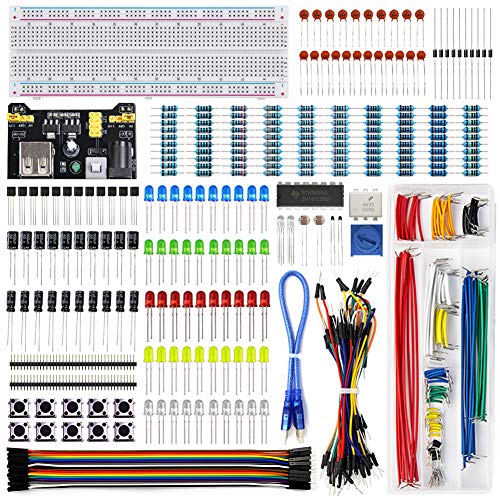
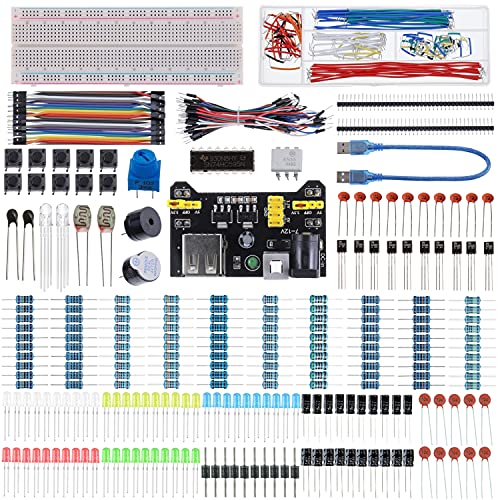
As an Amazon Associate, we earn from qualifying purchases.
Price as of Jul 24, 2026. Product prices and availability are accurate as of the date indicated and are subject to change. Any price and availability information displayed on Amazon at the time of purchase will apply.
Inputs
Result
fc = 1/(2π×10000×0.0000001) = 1/(0.00628) = 159.15Hz. τ = 10000×0.0000001 = 1ms.
Inputs
Result
R = 1/(2π×1000×0.0000001) = 1/(0.000628) = 1,592Ω. Use 1.5kΩ or 1.6kΩ standard value.
fc = 1/(2πRC). For R=10kΩ and C=100nF: fc = 1/(2π×10000×0.0000001) = 159.15Hz. This is the -3dB point where output is 70.7% of input.
| R | C | Cutoff Frequency | Use Case |
|---|---|---|---|
| 10kΩ | 100nF | 159 Hz | Audio sub-bass |
| 10kΩ | 10nF | 1.59 kHz | Audio treble |
| 1kΩ | 100nF | 1.59 kHz | Signal filtering |
| 100kΩ | 1nF | 1.59 kHz | High-impedance |
Low-pass passes frequencies below fc and attenuates above. High-pass passes above fc and blocks below. Same formula, different capacitor placement in the circuit.
A single RC filter has -20dB/decade (6dB/octave) rolloff. This means for every 10x frequency increase past fc, the signal drops by 20dB (factor of 10 in voltage).
Set cutoff at half the sampling rate (Nyquist). For 44.1kHz sampling: fc = 22.05kHz. A 2nd-order filter (-40dB/decade) is minimum; 4th order preferred for audio.
Electronics, outdoor, and everyday tools
Last Updated: Jul 24, 2026
This calculator is provided for informational and educational purposes only. Results are estimates and should not be considered professional financial, medical, legal, or other advice. Always consult a qualified professional before making important decisions. UseCalcPro is not responsible for any actions taken based on calculator results.