1. Calculate
Choose your project scope and see the estimated price range.
Estimate 2026 safe moving cost by weight class, floor access, and move scope – from small fire safes under 200 lbs to bank-grade vaults over 800 lbs.
Instant project estimate
The estimate is free. Additional details are optional.
Complete the project details and calculate to see a price range and next steps.
Clear next step
Choose your project scope and see the estimated price range.
Understand the cost drivers and what impacts your final quote.
Carry your scope into a local quote request if you choose.


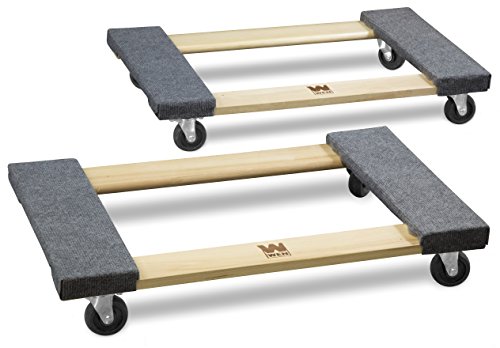
As an Amazon Associate, we earn from qualifying purchases.
Price as of Sep 15, 2026. Product prices and availability are accurate as of the date indicated and are subject to change. Any price and availability information displayed on Amazon at the time of purchase will apply.
Safe moving costs in 2026 range from $150 for a small in-home fire-safe repositioning to $5,000+ for a long-distance vault-class move. The biggest driver is weight class: a mid-size 200–400 lb home safe runs $350–$650 locally, while a vault safe over 800 lbs runs $1,200–$2,500 for the same local move. Floor access adds $75–$400 per flight of stairs on top of the base rate.
| Weight Class | In-Home | Local (<50 mi) | Long-Distance |
|---|---|---|---|
| Under 200 lbs | $150–$350 | $250–$450 | $500–$900 |
| 200–400 lbs | $200–$500 | $350–$650 | $700–$1,300 |
| 400–600 lbs | $350–$700 | $550–$1,000 | $900–$2,000 |
| 600–800 lbs | $500–$1,100 | $800–$1,500 | $1,400–$3,000 |
| 800+ lbs (vault) | $700–$1,800 | $1,200–$2,500 | $2,000–$5,000 |
For any safe over 200 lbs, a specialty safe mover is required. General movers typically decline safes over 200 lbs because standard residential moving equipment cannot handle the weight-to-footprint ratio, and their insurance policies exclude high-value locked containers. Specialty safe movers carry stair-climbing powered dollies rated to 1,200 lbs, replacement-cost cargo insurance, and certified technicians who understand re-locking mechanisms that engage if a safe is tilted past the manufacturer angle.
| Mover Type | Weight Limit | Cargo Insurance | Stair Equipment |
|---|---|---|---|
| General Mover | <200 lbs typically | $0.60/lb declared | None |
| Appliance Mover | 200–400 lbs (limited) | Basic liability only | Standard dolly |
| Safe Specialist | 200–1,000+ lbs | Replacement-cost | Powered stair-climber |
Stair surcharges run $75–$150 per flight for safes under 400 lbs, and $150–$350 per flight for safes over 400 lbs. Basement placements with concrete stairs cost $100–$350 extra above a one-flight rate because concrete has no friction surface to arrest a shifted safe and crew must manage tight bottom-landing clearance. Two or more flights add $150–$700 total depending on weight class — the powered stair-climbing dolly rental alone runs $150–$300/day.
| Floor Scenario | Under 400 lbs | 400–800 lbs | 800+ lbs |
|---|---|---|---|
| Ground floor (baseline) | +$0 | +$0 | +$0 |
| Up/down 1 flight | +$75–$150 | +$150–$250 | +$250–$400 |
| Up/down 2+ flights | +$150–$300 | +$250–$450 | +$400–$700 |
| Basement (concrete) | +$100–$200 | +$200–$350 | +$300–$600 |
The differences between safe types come down to weight, shape, and special handling requirements — not the type itself. A 350-lb home fire safe and a 350-lb gun safe cost the same to move. The key distinctions are that gun safes over 500 lbs have a tall, narrow center of gravity that creates tipping risk during transport; floor/vault safes are bolted to concrete and require anchor-bolt removal tools; and TL-rated burglary safes can trigger internal re-locking mechanisms if tilted past 45 degrees. Weight class drives the base quote; safe type influences the risk premium and specialized tools the crew must bring.
| Safe Type | Typical Weight | Key Moving Challenge | Specialist Needed? |
|---|---|---|---|
| Home Fire Safe | 100–400 lbs | Anchor bolts, low center of gravity | Yes, above 200 lbs |
| Gun Safe (long-gun) | 300–800 lbs | Tall, narrow — tipping risk | Yes, always |
| Office Safe | 200–600 lbs | Doorway clearance, office floors | Yes, above 300 lbs |
| Floor/Vault Safe | 500–1,500+ lbs | Bolted to concrete, re-locking risk | Yes, always |
Safes under 100 lbs can be DIY-moved with 2 adults and a standard appliance dolly. Above 200 lbs, the weight-to-footprint ratio makes DIY extremely risky: a dropped 300-lb safe crushes a foot, damages hardwood floors ($1,000–$4,000 repair), and can crack a stair riser ($500–$2,000). At 400+ lbs, the physics make DIY not feasible without powered equipment costing $150–$300/day to rent. Most homeowner insurance policies exclude owner-caused floor damage during appliance or safe moves.
| Safe Weight | DIY Feasibility | Main Risk | Hire Cost |
|---|---|---|---|
| Under 100 lbs | Feasible with 2 adults | Low | $150–$250 |
| 100–200 lbs | Risky without safe dolly | Moderate | $200–$350 |
| 200–400 lbs | Not recommended | High (floor, injury) | $350–$650 |
| 400+ lbs | Do not attempt | Very high | $550–$2,500+ |
The three non-negotiable checks are: (1) a certificate of insurance (COI) with replacement-cost coverage for your safe value, not the standard $0.60/lb; (2) confirmation that a powered stair-climbing dolly is included in the quote, not charged as an upcharge; and (3) a quote derived from your exact safe dimensions and floor plan — not a phone estimate without measurements. Red flags include any quote 40%+ below competitors (missing insurance or equipment), and any mover who says they will move a heavy safe “as one piece on standard dollies.” Get 3 quotes; drop the 40%-below outlier.
| Criterion | Green Flag | Red Flag |
|---|---|---|
| Quote process | Asks dimensions + floor plan | Phone quote without details |
| Insurance | COI with replacement-cost coverage | No COI or $0.60/lb only |
| Stair equipment | Powered stair-climber included | Standard dollies only listed |
| Price vs. market | Within 25% of other bids | 40%+ below competing bids |
| Payment terms | 10–30% deposit | 50–100% upfront required |
Inputs
Result
A standard 300-lb fire safe on a ground-floor local move is the most common safe-moving scenario. Denver metro rates trend near the top of the $350–$650 band; smaller markets run $375–$500.
Inputs
Result
A 600-lb long-gun safe requires a powered stair-climbing dolly and 3-person crew. The stair surcharge of $150–$250 stacks on the base $800–$1,500 local-move rate for this weight class.
Inputs
Result
A vault-class safe over 800 lbs requires anchor-bolt removal, engine hoist loading, and a dedicated transport truck. A 350-mile haul sits near the midpoint of the $2,000–$5,000 long-distance band for this weight class.
Cost = Base Move Fee + Weight Surcharge + Stair/Floor Premium + Distance FeeSafe moving quotes stack a scenario-based fee (in-home, local, long-distance) with weight-class surcharges, per-flight stair premiums, and per-mile rates on long-distance hauls. Weight class is the primary driver: every 200 lbs of additional safe weight adds roughly 40–60% to the base quote. Use these bands to sanity-check any specialist bid against the 2026 US market.
Where:
Base Move Fee= In-home repositioning $150–$1,800 by weight class; local under 50 mi $250–$2,500; long-distance over 50 mi $500–$5,000Weight Surcharge= Under 200 lbs: baseline tier; 200–400 lbs: mid tier; 400–600 lbs: +30–50% over baseline; 600–800 lbs: +60–90%; 800+ lbs: +100–200%Stair/Floor Premium= Ground floor: $0; 1 flight: +$75–$400 depending on weight; 2+ flights: +$150–$700; basement concrete stairs: +$100–$600Distance Fee= Local (under 50 mi): flat rate included in base; long-distance: base + $2–$5 per mile over 100 miles, scaled by weight classMoving a safe is one of the most weight-specific jobs in the specialty-moving market, and prices in 2026 break into clear bands by weight class rather than by brand or configuration. A small home fire safe under 200 lbs moved on a ground floor to a local destination typically quotes $150–$350 for in-home repositioning or $250–$450 for a local move under 50 miles. A mid-size home safe in the 200–400 lb range is the most common household weight class and runs $200–$500 in-home or $350–$650 locally. Once a safe crosses 600 lbs, it enters commercial safe territory where quotes run $500–$1,100 for in-home repositioning, rising to $1,400–$3,000 for long-distance relocation and reflecting the specialized equipment and crew size that weight class demands.
Unlike furniture of the same external dimensions, safes are exceptionally dense — a 400 lb safe takes up about the same floor space as a nightstand. That density creates two problems general movers rarely solve: protecting the floor from thousands of pounds of point load as the safe travels across hardwood, tile, or concrete; and generating the leverage required to tilt, slide, and load a unit that offers no natural handholds. Specialty safe movers bring hydraulic lift dollies, powered stair-climbing lifts for units over 300 lbs, heavy-gauge furniture sliders rated for point loads, and polymer floor-protection sheets. A two-person crew can safely handle up to about 600 lbs on a ground floor; above 600 lbs, a three-person crew with additional lift equipment is the 2026 industry standard.
Gun safes specifically — which hold long rifles and typically weigh 300–800 lbs depending on capacity — are addressed in detail by the companion gun safe moving cost calculator, which covers biometric lock considerations, barrel-clearance risks during transport, and the tipping dynamics unique to tall, narrow rifle cabinets. The calculator on this page covers all safe types by weight class: home fire safes, office safes, floor safes, and TL-rated burglary safes, all of which share the same weight-based pricing framework even if their internal features differ. For homeowners moving an entire household alongside the safe, the local moving service cost calculator estimates the full household component while the safe specialist quotes separately — two independent bookings that are nearly always cheaper than asking a van line to subcontract the safe move.
| Weight Class | In-Home Repositioning | Local (<50 mi) | Long-Distance (50+ mi) |
|---|---|---|---|
| Under 200 lbs | $150–$350 | $250–$450 | $500–$900 |
| 200–400 lbs | $200–$500 | $350–$650 | $700–$1,300 |
| 400–600 lbs | $350–$700 | $550–$1,000 | $900–$2,000 |
| 600–800 lbs | $500–$1,100 | $800–$1,500 | $1,400–$3,000 |
| 800+ lbs (vault) | $700–$1,800 | $1,200–$2,500 | $2,000–$5,000 |
Safe moving prices are driven far more by weight class than by brand or security rating. A $10,000 TL-30 burglary safe weighing 500 lbs costs the same to move as a $600 home fire safe of identical weight — specialist crews price by crew-hours and equipment required, not by what is inside.
The core problem is weight-to-footprint ratio. A residential sofa weighing 300 lbs distributes that load across four legs and is manageable with two movers and standard furniture pads. A 300-lb safe sits on a flat steel base, concentrating the entire load into a few square inches of contact with the floor and presenting no undercarriage gap for standard dollies without custom adapters. At 400 lbs and above, general movers face three choices: refuse the job, subcontract to a specialist at a markup that the homeowner pays, or attempt the move with inadequate equipment and accept liability risk. That third option is why safe-tip injuries and floor-damage insurance claims appear in this category far more than in standard residential moving. Specialist safe-moving crews build their entire workflow around these density and leverage constraints.
Insurance is the other hard stop for general movers. Standard residential moving coverage is typically $0.60 per pound of declared value, which means a 400-lb safe is covered for $240 — nowhere near the $1,500–$10,000 replacement cost of the unit, let alone the $3,000–$50,000+ value of its contents. Specialty safe movers carry replacement-cost cargo insurance specifically endorsed for high-value locked containers and professional liability coverage for floor damage, which general mover policies almost universally exclude for items over 500 lbs. Before booking any mover, request the certificate of insurance (COI) and verify that the policy schedule lists a per-item coverage limit matching or exceeding your safe's replacement value plus contents. This single document check is the fastest way to separate true safe specialists from general haulers who claim they can handle it.
Specialty safe movers also bring equipment with no parallel in general moving: powered stair-climbing dollies (Stair Shark or equivalent) that grip a safe mechanically rather than relying solely on crew strength; engine hoists for vault-weight units above 700 lbs that cannot be safely hand-tilted; and anchor-removal tool kits for floor safes bolted through concrete. Relocating a piano requires comparable specialty logic, and the piano moving cost calculator covers the equivalent specialist market for concert grands and heavy uprights that general movers also routinely decline. The common thread across both trades is that any item combining exceptional weight density with irreplaceable value benefits from a dedicated specialist rather than a general hauler who treats it as a heavy box.
Every flight of stairs a safe must travel adds $75–$150 to the base quote on units under 400 lbs, and $150–$350 per flight on units over 400 lbs. The premium reflects two compounding factors: additional crew time (stair moves take 45–90 minutes longer per flight than ground-floor moves on any weight class above 300 lbs) and the specialized equipment required. A powered stair-climbing dolly rental alone costs $150–$300 per day, and specialist crews include that overhead in their stair-move pricing. For homeowners placing a 400-lb safe in a second-floor home office, the stair surcharge typically adds $200–$350 to a local-move quote — pushing the total from a $600 ground-floor estimate to $800–$950. Quoting systems that do not itemize stair charges are almost certainly burying them in a flat surcharge without disclosure.
Basement placements are the single most expensive floor-access scenario in safe moving because the stairs are almost always concrete, have limited overhead clearance for powered lift equipment, and require controlled back-turning at the bottom landing. Concrete stairs create a specific fall-arrest problem: if a safe shifts on a standard dolly, there is no friction surface to stop it before the bottom wall — unlike carpet-covered interior stairs where even basic rubber pads provide friction. Professionals moving a 500-lb safe into a basement typically charge $100–$350 above the standard one-flight rate and may require a powered stair-climber as a non-negotiable condition rather than a crew judgment call. If you are selecting a new safe installation location, pricing the moving cost now versus the lifetime carrying cost of accessing it weekly from the basement is worth the calculation — first-floor placement saves $150–$400 on every future move.
Doorway width and hallway clearance add a third dimension to access complexity that often surprises homeowners on move day. Most residential interior doors are 30–32 inches wide; a 400-lb home safe can be 24 inches wide at the door opening, leaving only 3–4 inches of clearance per side — adequate for slim plastic furniture sliders but not for safe dollies with extended side handles. When clearance drops below 2 inches, the crew must remove the door and frame, adding $75–$200 in carpentry time. Commercial office safes with external widths of 30 inches often cannot navigate a standard residential hallway at all without door removal at each turn. Providing the crew with the exact safe dimensions (width, depth, height) and measurements of every doorway and stairwell width before booking allows the specialist to quote accurately and eliminates most surprise upcharges on move day.
Local safe moves under 50 miles are priced as flat scenario fees, not mileage-based rates. A specialist crew charges the same for a 5-mile neighborhood move as a 40-mile suburban haul because the bulk of the job cost is the anchor-bolt removal at origin, careful loading with proper equipment, and precise unloading and re-anchoring at the destination — the drive time is a minor fraction of total crew-hours. In 2026, local flat rates by weight class run $250–$450 for safes under 200 lbs, $350–$650 for 200–400 lbs, $550–$1,000 for 400–600 lbs, $800–$1,500 for 600–800 lbs, and $1,200–$2,500 for vault-class safes over 800 lbs. Stair premiums and bolted-anchor removal fees ($75–$200 per anchor) are always itemized on top of these base numbers.
Long-distance moves above 50 miles shift to a base fee plus per-mile rate, typically $2–$5 per mile over 100 miles depending on weight class. A 200-mile relocation of a 400-lb safe quotes approximately $750–$1,000: a $600 base plus $2–$3/mile for 100 overage miles. Moves crossing 400 miles that span multiple states sometimes involve the specialist crew subcontracting the long-haul transport leg to a freight carrier while the specialist handles both loading and unloading, keeping the weight-sensitive work with trained hands throughout. When you are also moving an entire household, the long-distance moving cost calculator estimates the truck-and-crew cost for all non-safe items; booking the safe specialist independently of the main van line is nearly always cheaper than asking the van line to add a safe subcontract.
Timing misalignment between your household move date and safe-specialist availability is a genuine constraint in this market — specialty safe-moving crews are sparse in many metro areas and book out 2–3 weeks during peak seasons (May–August and December). If your closing date or office lease end does not align with specialist availability, short-term secure storage is an option: most safe-moving specialists offer on-site or off-site vault storage at $50–$200/month depending on weight class and security tier. Climate-controlled storage is worth the premium for fire safes containing electronics, legal documents, or firearms in humid southeastern or coastal markets — a single moisture infiltration event can void insurance policies for the contents. Use the moving cost estimator to build the full household budget while treating the safe as a separate line item with its own specialist.
| Distance Tier | Under 400 lbs | 400–800 lbs | 800+ lbs | Per-Mile Rate |
|---|---|---|---|---|
| Under 50 mi (flat) | $250–$650 | $550–$1,500 | $1,200–$2,500 | N/A (flat) |
| 50–200 mi | $500–$950 | $850–$2,000 | $1,800–$3,500 | $3–$5/mi over 100 |
| 200–500 mi | $750–$1,350 | $1,200–$2,500 | $2,500–$4,000 | $2–$3/mi |
| 500+ mi | $900–$1,600 | $1,500–$3,200 | $3,000–$5,000 | $1.50–$2.50/mi |
The safe-moving specialty has a credentialing pathway through the National Safeman's Organization (NSO) and safe technician programs that certify individuals in relocation techniques, combination-lock handling, and re-locking mechanism management. While certification is not legally required to move a safe, certified technicians understand the thermal relockers and glass relockers built into TL-rated and UL-listed safes — passive security mechanisms that engage permanently if the safe is tilted past the manufacturer’s specified angle during transport, rendering the combination lock inoperable and requiring a licensed safecracker to open at costs of $200–$800. Ask any prospective mover whether they carry a digital inclinometer or tilt sensor on the truck; that $30 device is the fastest signal that a crew understands what they are moving. Also ask whether a certified safe technician — not just a general mover — is on the crew for TL-rated or vault-class units.
Three red flags that should end a conversation immediately: a mover who quotes by phone without asking the safe's exact dimensions and current floor location; a price that is 40% or more below the two other bids you receive (that gap almost always indicates missing insurance, rented-rather-than-owned equipment, or no certified technician); and any claim that they will move a safe over 400 lbs on standard furniture dollies without a stair-climbing unit. Additional caution is warranted for movers who cannot produce a certificate of insurance within 24 hours of request — legitimate specialists carry current COIs and send them as a routine part of the booking workflow. Payment structure also reveals quality: a legitimate safe mover takes 10–30% deposit with the balance due on delivery, never 50–100% upfront before the crew arrives.
Getting 3 independent quotes from specialty safe movers is the highest-leverage cost-control action available. The spread between the lowest and highest quote in this niche is typically 30–60%, far wider than standard residential moving, because safe specialist pricing genuinely reflects individual company overhead: equipment owned versus rented, number of certified crew, and insurance tier. Dropping the low outlier if it is 40%+ below the other two is sound practice — that gap almost always reflects a missing line item such as no stair equipment, no anchor-bolt removal, or no re-installation and leveling at destination. Pay the balance on completion or on a 70/30 split (deposit before, remainder on delivery), photograph every visible surface of the safe before and after the move, and document any pre-existing cosmetic damage during the crew’s pre-move walkthrough so there is no dispute about responsibility on delivery.
Three red flags that end the conversation: a mover who quotes without asking your safe’s dimensions, a price 40%+ below competitors, and no COI available within 24 hours. Any one of these signals missing insurance, equipment, or both.
Measure safe dimensions and all access points before calling
Width, depth, height of the safe plus width of every doorway and stairwell it must pass through. Mismatches discovered on move day generate expensive surprises.
Get 3 quotes from safe specialists only, not general movers
Search for movers who specifically list safes in their service menu. General movers who say they can “handle it” almost always subcontract to a specialist at markup.
Request COI with replacement-cost endorsement
Ask for the certificate of insurance before booking. It must list a per-item coverage limit that covers your safe plus an endorsement for locked containers and high-value contents.
Confirm powered stair-climbing dolly is included, not an upcharge
Any safe over 300 lbs on stairs requires a powered stair-climber. If this is listed as an optional add-on, the base quote is misleading.
Ask about re-locking risk for TL-rated or vault-class safes
Confirm the crew carries a digital inclinometer and understands the tilt limits specified by your safe’s manufacturer before it engages a thermal or glass relocker.
Pay 10–30% deposit; balance on delivery
Any request for 50%+ upfront is a red flag. Legitimate specialists hold liability through to delivery and collect the majority of their fee on successful completion.
Photograph before and after
Document every panel, corner, and the dial or keypad before the crew touches it. This record is required for any cargo insurance claim if damage occurs during transport.
Read our guide
Read our guide
Read our guide
Price moving services, estimate household budgets, and plan every aspect of your relocation with our full set of tools calculators.
Last Updated: Sep 15, 2026
This calculator is provided for informational and educational purposes only. Results are estimates and should not be considered professional financial, medical, legal, or other advice. Always consult a qualified professional before making important decisions. UseCalcPro is not responsible for any actions taken based on calculator results.