1. Calculate
Choose your project scope and see the estimated price range.
Get a realistic 2026 estimate to clear a clogged drain or sewer line by drain type, clog severity, and cleaning method — then compare quotes from local plumbers.
Instant project estimate
The estimate is free. Additional details are optional.
Complete the project details and calculate to see a price range and next steps.
Clear next step
Choose your project scope and see the estimated price range.
Understand the cost drivers and what impacts your final quote.
Carry your scope into a local quote request if you choose.


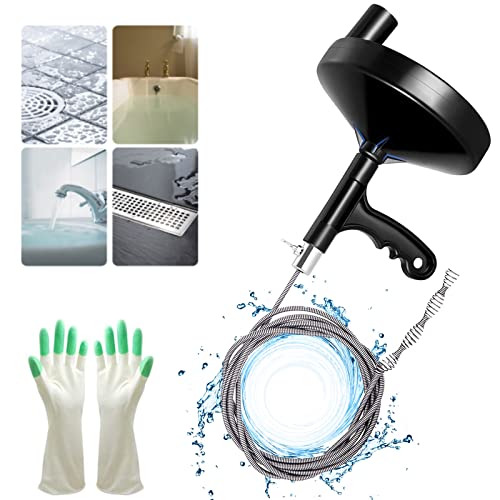
As an Amazon Associate, we earn from qualifying purchases.
Price as of Sep 17, 2026. Product prices and availability are accurate as of the date indicated and are subject to change. Any price and availability information displayed on Amazon at the time of purchase will apply.
Drain cleaning costs $150 to $500 in 2026, with a national average near $220. Snaking a sink runs $110 to $275 and a main sewer line $200 to $500, while hydro jetting runs $350 to $1,500. No cleanout access adds $175 to $300 and tree-root removal adds $200 to $600.
Most homeowners pay $150 to $500 to have a drain professionally cleaned in 2026, with a national average around $220. Snaking a sink or fixture drain runs $110 to $275, while snaking a main sewer line runs $200 to $500. Hydro jetting is the premium option at $350 to $800 for a fixture and $600 to $1,500 for a main line. Plumbers charge $45 to $200 per hour, averaging about $90, and many bill standard drain cleaning as a flat $100 to $400 fee.
| Service | Typical Cost | Best For |
|---|---|---|
| Snake a fixture drain | $110 to $275 | Single slow sink or tub |
| Snake a main sewer line | $200 to $500 | Whole-home backup |
| Hydro jetting (fixture) | $350 to $800 | Grease and scale buildup |
| Hydro jetting (main line) | $600 to $1,500 | Roots and severe clogs |
Snaking is the cheaper option at $110 to $500 depending on whether it is a fixture or a main line, and it is the right call for a one-time hair or food clog. Hydro jetting costs more — $350 to $1,500 — but it scours the pipe wall clean of grease, scale, and tree roots, so the clog stays gone for two to three years on average. For recurring clogs, grease-heavy kitchen lines, or root intrusion, jetting often costs less over time than snaking the same line three times.
Four things move the price the most: the drain type, the cause of the clog, cleanout access, and timing. A main sewer line costs two to four times more than a kitchen sink. Tree-root removal adds $200 to $600 because roots take far more labor than grease or hair. No cleanout means the plumber must pull a toilet to reach the line, adding $175 to $300. And an emergency or after-hours call can add $150 to $300 or carry a $250 to $600 flat call-out fee.
| Add-On | Added Cost | When You Need It |
|---|---|---|
| Tree-root removal | $200 to $600 | Roots in the sewer line |
| No cleanout access | $175 to $300 | Pulling a toilet to reach the line |
| Sewer camera inspection | $125 to $500 | Diagnosing a recurring clog |
| Emergency / after-hours | $150 to $600 | Nights, weekends, holidays |
Roto-Rooter charges $180 to $600 for standard drain cleaning in 2026, with most homeowners paying $350 to $450 and snaking jobs running $225 to $500. Local independent plumbers often charge $150 to $400 for the same work, sometimes undercutting national brands by $50 to $100 on a straightforward clog. National-brand pricing also varies by franchise location, so two quotes in the same county can differ widely. Getting two or three written quotes is the simplest way to avoid overpaying.
For a single slow bathroom sink or tub, DIY is realistic and cheap: a plunger costs $10 to $30 and a hand auger that reaches 15 to 25 feet costs $15 to $80. Enzyme cleaners ($15 to $25) digest organic buildup but the clog often returns in three to eight weeks. DIY breaks down with recurring clogs, several slow fixtures at once, or a suspected main-line or root problem — pushing those can crack a pipe and turn a $250 cleaning into a much larger repair.
Inputs
Result
A single grease-clogged kitchen sink with easy access is a quick flat-rate snaking job that lands near the national average for fixture drain cleaning.
Inputs
Result
Roots in a main line need high-pressure jetting, and pulling a toilet to reach a line with no cleanout in a high-cost metro pushes the job toward the top of the range.
Inputs
Result
A weekend sewage backup needs same-day service, so the standard main-line snaking price carries an after-hours surcharge on top of the base job.
Total = Base service (by drain type & method) + Access adjustment + Cause adjustment + Timing surchargeDrain cleaning is priced from a base service charge that depends on whether it is a fixture or a main line and which method is used, then adjusted for cleanout access, the cause of the clog, and whether it is an emergency call.
Where:
Base service= $110 to $275 to snake a fixture, $200 to $500 for a main line, $350 to $1,500 for hydro jettingAccess adjustment= No cleanout (pulling a toilet to reach the line) adds $175 to $300Cause adjustment= Tree-root removal adds $200 to $600; grease and scale push toward jettingTiming surcharge= Emergency or after-hours adds $150 to $300, or a $250 to $600 flat call-outLabor = Plumber hourly rate x Hours (typically 1 to 4 depending on the line)When billed hourly rather than flat-rate, multiply the local plumber rate by the time the job takes — more for a deep main line, root cutting, or difficult access.
Where:
Plumber hourly rate= $45 to $200 per hour, averaging about $90 nationallyHours= 1 hour for a simple fixture; 2 to 4 hours for a main line, roots, or camera workClearing a clogged drain is one of the most common plumbing calls in any home, and the price swings far more than most people expect. In 2026, the typical US homeowner pays $150 to $500 for professional drain cleaning, with a national average around $220. The low end is a quick snaking of a single slow fixture during business hours; the high end is a main sewer line backup that needs hydro jetting, root removal, or a toilet pulled to reach the pipe. Many plumbers bill standard drain cleaning as a flat $100 to $400 fee rather than by the hour.
The single biggest driver is which drain is clogged. A kitchen or bathroom fixture is fast and cheap because access is straightforward, while a main sewer line costs two to four times more — jobs take one to four hours, need specialized equipment, and depend on a cleanout for access. Snaking a fixture runs $110 to $275, snaking a main line runs $200 to $500, and hydro jetting climbs to $350 to $1,500 depending on the line. Use the calculator above to land on a figure for your specific clog before you call.
It helps to separate the base service from the add-ons. The base snaking or jetting charge covers a standard job, but tree roots, a missing cleanout, an after-hours call, or a camera inspection each stack on top. A simple sink clog stays near the average, while a weekend main-line backup with roots and no cleanout can hit the top of the range. The table below shows typical totals by service so you can see where your project is likely to land before you compare quotes.
| Service | Typical Total | Labor Time | Best For |
|---|---|---|---|
| Snake a fixture drain | $110 to $275 | About 1 hour | Single slow sink or tub |
| Snake a main sewer line | $200 to $500 | 1 to 3 hours | Whole-home backup |
| Hydro jetting (fixture) | $350 to $800 | 1 to 2 hours | Grease and scale |
| Hydro jetting (main line) | $600 to $1,500 | 2 to 4 hours | Roots and severe clogs |
For a one-time hair or food clog in a single fixture, snaking at $110 to $275 is almost always the right call. Save hydro jetting for grease-heavy lines, tree roots, or clogs that keep coming back.
The cleaning method is the second-biggest cost lever after drain type. Snaking, or cabling, pushes a flexible steel auger through the pipe to punch through the blockage. It is the budget option at $110 to $500 and clears most hair, soap, and food clogs in under an hour. Its weakness is that it bores a hole through the clog rather than scouring the pipe wall, so a grease or root problem often returns within months.
Hydro jetting blasts the pipe with high-pressure water, stripping grease, scale, and roots back to bare pipe. It costs more — $350 to $800 for a fixture line and $600 to $1,500 for a main sewer line — but the line typically stays clear for two to three years afterward. For a kitchen line caked in grease, a recurring clog, or root intrusion, jetting frequently costs less over time than snaking the same pipe two or three times. If jetting reveals damage, the sewer line replacement cost calculator prices the repair.
Chemical and enzyme cleaners are the cheapest route but rarely a real fix. Store-bought enzyme products run $15 to $25 and use bacteria to slowly digest organic buildup, but the clog often returns in three to eight weeks because the chemical only softens it enough to flow temporarily. Harsh caustic cleaners can also corrode older pipes. The table below compares the three approaches so you can match the method to the severity of your clog.
| Method | Typical Cost | How Long It Lasts |
|---|---|---|
| Snaking / auger | $110 to $500 | Months for grease or roots |
| Hydro jetting | $350 to $1,500 | 2 to 3 years |
| Enzyme cleaner (DIY) | $15 to $25 | 3 to 8 weeks |
Enzyme cleaners are fine for slow maintenance but will not clear a full blockage. If a drain is completely stopped, skip the chemicals and call for snaking or jetting before standing water damages the fixture.
Where the clog sits changes both the labor and the equipment, which is why a main line costs two to four times more than a sink. A kitchen sink averages $110 to $215, with grease clogs running 5 to 10 percent more than a bathroom sink because they demand higher-torque tools and a disposal inspection. Bathroom sinks, tubs, and showers are usually the cheapest and quickest fixtures to clear.
A main sewer line is a different job entirely. It carries waste from every fixture in the house, so a blockage causes whole-home backups and needs a longer cable or a jetter run from a cleanout. Main-line snaking runs $200 to $500 and jetting runs $600 to $1,500, with the spread driven by line length, depth, and clog severity. If the backup keeps returning, a sewer camera inspection at $125 to $500 finds the exact cause before more money is spent guessing.
Floor drains, laundry standpipes, and toilets fall in between. A toilet auger job is quick when the clog is local, but a toilet that backs up alongside other fixtures usually signals a main-line problem rather than a bowl clog. When the clog turns out to be a broader plumbing issue, the plumbing repair service cost calculator prices the wider work so nothing on the invoice is a surprise.
| Drain | Typical Total | What Drives It |
|---|---|---|
| Bathroom sink / tub | $100 to $200 | Easy access, hair clogs |
| Kitchen sink | $110 to $215 | Grease, disposal inspection |
| Toilet | $110 to $275 | Local clog vs main-line sign |
| Main sewer line | $200 to $1,500 | Length, depth, jetting, roots |
When several fixtures drain slowly at once — or a toilet gurgles when the washer drains — the problem is almost always the main line, not the individual fixtures. Price the main line, not each sink.
The base snaking or jetting price is only part of the story, and the add-ons are where bills blow past the average. Tree-root intrusion is the most common culprit on older properties — roots seek water and grow into tiny cracks in the line — and removing them adds $200 to $600 because roots take far more labor than grease or hair. Roots almost always come back, so a camera inspection afterward is wise to gauge pipe condition.
Cleanout access is the other big swing. A cleanout is an aboveground capped pipe that gives the plumber a direct path into the sewer line. Without one, the plumber often pulls a toilet to use as an access point and reinstalls it afterward, which adds $175 to $300 to the job. Homes built before cleanouts were standard are the usual victims, and installing a permanent cleanout can pay for itself across repeated visits.
Diagnostics and timing round out the hidden costs. A sewer camera inspection runs $125 to $500 and is worth it for any recurring or main-line clog because it shows the exact problem instead of paying to guess. Emergency or after-hours service adds $150 to $300, or carries a flat call-out of $250 to $600. If a clog points to a failing septic system, the septic tank installation cost calculator helps budget the larger fix.
Ask whether a camera inspection is included or extra before the plumber starts. For a recurring main-line clog, paying $125 to $500 to see the actual problem usually saves far more than repeatedly clearing it blind.
For a single slow fixture, do-it-yourself is realistic and cheap. A plunger costs $10 to $30, and a hand auger that reaches 15 to 25 feet costs $15 to $80 and clears most bathroom sink, tub, and toilet clogs. Used early, these tools save the $110 to $275 a plumber charges for the same fixture. The key is acting before the drain fully stops, while there is still room to work the clog loose.
DIY breaks down fast with bigger problems. Recurring clogs, several fixtures draining slowly at once, or any sign of a main-line or root issue are beyond a hardware-store auger, and forcing a heavy clog can crack a pipe — turning a $250 cleaning into a four-figure repair. Renting a powered drain machine is possible but risky for the inexperienced, and most homeowners come out ahead hiring a pro for anything past a single fixture.
A practical rule of thumb: DIY a single slow sink, tub, or toilet if you are comfortable with basic tools and the clog is local. Call a plumber for a main-line backup, a recurring clog, grease-caked kitchen lines, or any job where you suspect roots. Paying for an hour of professional clearing is far cheaper than repairing water damage or a broken pipe from a clog that was forced rather than cleared.
| Approach | Typical Cost | Best Stage |
|---|---|---|
| DIY plunger / hand auger | $10 to $80 | Single slow fixture |
| Pro fixture snaking | $110 to $275 | Fully clogged fixture |
| Pro main-line snaking | $200 to $500 | Whole-home backup |
| Pro hydro jetting | $350 to $1,500 | Roots, grease, recurring clogs |
Never force a stubborn main-line clog with a powered machine you are not trained on. A cracked or punctured pipe can turn a $250 cleaning into thousands in excavation and repair.
The cheapest drain job is the one you do not have to redo, so vet plumbers on transparency rather than headline price alone. Get two or three written quotes that spell out the method, whether a camera inspection and root removal are included, the trip or minimum charge, and what triggers a higher price. National brands like Roto-Rooter charge $180 to $600 for standard cleaning, while local independents often charge $150 to $400 for the same work — sometimes $50 to $100 less on a simple clog.
Watch the timing and the flat-rate fine print. An emergency call adds $150 to $300 or a $250 to $600 flat fee, so if the clog is not an active sewage backup, waiting for business hours can save real money. A written flat-rate quote lets you compare bids on equal footing and avoids hourly creep, but confirm it covers your specific drain and clog — a low quote that excludes root removal or a missing cleanout reappears as a change order once the plumber is on site.
Finally, ask what is included beyond clearing the clog. The best plumbers run a quick camera check on a recurring main-line problem, explain whether roots or grease caused it, and recommend jetting only when it genuinely pays off. Ask about a maintenance plan if your line clogs often, and clarify any haul-away or cleanup charges. With two or three transparent quotes in hand, you can pick the plumber who fixes the cause, not just the symptom.
Never choose a plumber on headline price alone. Ask for the all-in cost for your specific drain and clog — method, access, root removal, and cleanup included — so two quotes are actually comparable.
Describe the clog accurately
Tell each plumber whether it is one fixture or a whole-home backup, and how often it recurs, so the quotes are comparable.
Collect two to three written quotes
Insist each states the method, trip fee, and whether root removal or a camera inspection is included.
Match the method to the problem
Snaking fits a one-time clog; jetting fits grease and roots; a camera fits any recurring main-line issue.
Avoid unnecessary emergency calls
If it is not an active sewage backup, waiting for business hours skips the $150 to $600 after-hours surcharge.
Confirm the cause, not just the fix
Ask what caused the clog and whether it will return, so you are not paying to clear the same line every few months.
Read our guide
Read our guide
Read our guide
Price drain cleaning, plumbing repairs, sewer lines, and home-repair labor, then plan budgets for your whole project.
Last Updated: Sep 17, 2026
This calculator is provided for informational and educational purposes only. Results are estimates and should not be considered professional financial, medical, legal, or other advice. Always consult a qualified professional before making important decisions. UseCalcPro is not responsible for any actions taken based on calculator results.