1. Calculate
Choose your project scope and see the estimated price range.
Get a realistic 2026 estimate for frozen pipe repair based on damage scope, pipe location, material, and number of burst sections — then connect with local plumbers.
Instant project estimate
The estimate is free. Additional details are optional.
Complete the project details and calculate to see a price range and next steps.
Clear next step
Choose your project scope and see the estimated price range.
Understand the cost drivers and what impacts your final quote.
Carry your scope into a local quote request if you choose.

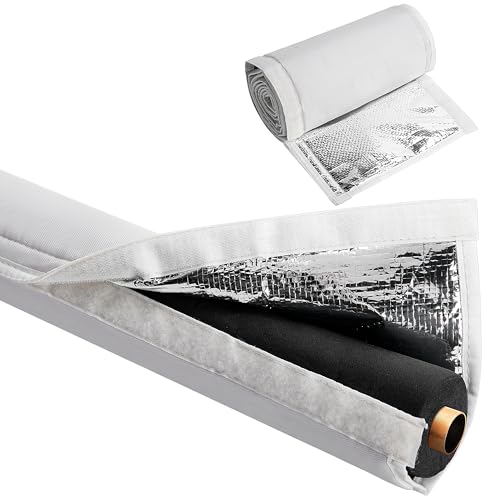

As an Amazon Associate, we earn from qualifying purchases.
Price as of Sep 19, 2026. Product prices and availability are accurate as of the date indicated and are subject to change. Any price and availability information displayed on Amazon at the time of purchase will apply.
Repairing a burst frozen pipe in 2026 costs $500–$2,000 for pipe repair alone on an exposed line. When the burst also causes water damage, total costs rise to $1,000–$4,000 for minor damage (limited drywall, drying) and $2,000–$10,000+ for major damage (flooring replacement, structural dryout). Under-slab pipe bursts requiring concrete cutting routinely run $3,000–$12,000 all-in. Plumber labor averages $85–$200/hr in 2026; most repairs take 2–5 hours at the pipe itself, plus additional hours for access and restoration.
| Scenario | Typical Low | Typical High |
|---|---|---|
| Exposed pipe repair only | $500 | $2,000 |
| Pipe + minor water damage | $1,000 | $2,500 |
| Pipe + major water damage | $2,000 | $10,000 |
| Under-slab burst (concrete access) | $3,000 | $12,000 |
Standard homeowners insurance (HO-3 policy) typically covers sudden and accidental water damage from a burst frozen pipe, including both the pipe repair and resulting water damage restoration. However, insurers can deny the claim if they find the home was left unheated or if you failed to take reasonable preventive steps. Your deductible — commonly $1,000–$2,500 — applies first. Flood damage from an external source is NOT covered by standard homeowners insurance and requires a separate NFIP or private flood policy.
The pipe repair itself is only part of the job — most of the cost is access and restoration. An exposed pipe in a basement or utility room takes 30–60 minutes to reach; the plumber clamps, cuts, and solders or crimps a new section in a few hours. An in-wall pipe requires opening drywall, patching, priming, and painting after the plumber is done — adding $400–$1,200 in drywall labor. An under-slab pipe requires a concrete saw, a jackhammer or core drill, excavation of the soil below, the actual pipe repair, backfill, and re-pouring the slab — easily adding $1,500–$4,000 in access costs alone before any water damage restoration.
| Location | Access Premium | Restoration Required |
|---|---|---|
| Exposed (basement) | None (baseline) | None |
| In-wall | +$400–$1,200 | Drywall patch + paint |
| Under slab | +$1,500–$4,000 | Concrete re-pour |
Acting fast in the first 30 minutes can save thousands in water damage costs. Immediately shut off the main water supply valve (usually near the meter or where the line enters the home) to stop water flow. Open faucets to drain remaining pressure. Document the damage with photos and video before moving anything. Start removing standing water with towels, a wet/dry vac, or a sump pump if you have one. Call a plumber and then your insurance company — in that order. Do NOT turn off heat, as the home must remain warm for drying and to prevent secondary freezing.
The most effective prevention is maintaining indoor temperatures above 55°F in all areas where pipes run, even when the home is vacant. In sustained cold snaps below 20°F, letting faucets drip — even at a trickle — keeps water moving and prevents freeze. Pipes in unheated spaces (crawl spaces, garages, exterior walls) should be insulated with foam pipe sleeves or fiberglass wrap; heated pipe tape (electric heat tape) is reliable for the most vulnerable runs. Draining and disconnecting outdoor hose bibs before winter eliminates one of the most common burst points.
PEX (cross-linked polyethylene) is by far the most freeze-resistant pipe material in common residential use. Its flexible walls can expand up to 10–20% as water freezes, which dramatically reduces burst probability compared to rigid materials. Copper is rigid and bursts more predictably when frozen, but it is easy to repair (solder or press-fit) and widely available. Galvanized steel is the worst for freezing — it is rigid, corrodes internally over decades, and is the hardest to repair because threaded fittings must often be replaced. If your home has galvanized steel pipes and you experience a freeze-related burst, many plumbers will recommend repiping the affected section in copper or PEX at the same time.
Inputs
Result
An accessible basement copper pipe burst is the simplest repair scenario. The plumber shuts the main valve, cuts out the split section (typically 6–24 inches), and solders or press-fits a new copper coupling. Most jobs are completed in under 3 hours at the pipe itself with no drywall or concrete work required.
Inputs
Result
In-wall PEX is straightforward to crimp once exposed, but the drywall trade adds a full separate visit. Minor water damage (soaked insulation, one wet wall cavity) typically requires 3–5 days of drying with a dehumidifier and air movers before drywall can be closed. Pricing model: base $1,000–2,500 × 1.3 (in-wall) × 0.9 (PEX) = $1,170–$2,925, rounded to typical trade quotes.
Inputs
Result
Under-slab galvanized bursts are the most expensive freeze scenario. Multiple burst sections on older galvanized pipe often prompt plumbers to reroute through walls (tunnel or overhead) rather than re-excavate multiple slab cuts. Pricing model: base $2,000–4,000 × 1.8 (under-slab) × 1.1 (galvanized) × 1.5 (multiple sections) = $5,940–$11,880. Many Texas homeowners in this scenario find costs within $7,000–$10,000 after insurance.
Total = Base(repair_scope) × Location_multiplier × Material_multiplier × Sections_multiplierThe calculator derives a cost range by multiplying the base range for the selected repair scope by three adjustment multipliers. All multipliers are applied to both the minimum and maximum of the base range.
Where:
Base(repair_scope)= Pipe-only: $500–$2,000 | Pipe + minor water: $1,000–$2,500 | Pipe + major water: $2,000–$4,000Location_multiplier= Exposed: 1.0 (baseline) | In-wall: 1.3 (drywall access + patch) | Under-slab: 1.8 (concrete cut + backfill)Material_multiplier= Copper: 1.0 (baseline) | PEX: 0.9 (easier crimp fittings) | Galvanized: 1.1 (corroded threads, harder removal)Sections_multiplier= One section: 1.0 | Multiple sections: 1.5 (trace, expose, and repair each additional burst independently)Restoration = Mitigation + Dryout + Structural repair + Contents replacementWhen a burst pipe causes water damage, restoration follows a four-phase cost structure independent of the pipe repair itself. A restoration contractor (IICRC-certified) typically handles phases 2–4 while the plumber handles the pipe.
Where:
Mitigation= Emergency water extraction, tarping, and containment — $300–$1,500 depending on standing water volumeDryout= Industrial dehumidifiers + air movers for 3–7 days — $400–$1,500 (equipment rental + daily monitoring visits)Structural repair= Drywall, insulation, subfloor, flooring, and paint — $500–$6,000+ depending on affected area and finish levelContents replacement= Furniture, electronics, documents — highly variable; documented with photos for insurance claimThe pipe repair itself — cutting out the split section, fitting a new length, and re-pressurizing the line — typically runs $300–$800 in labor plus $60–$250 in materials on a simple exposed run. What inflates the total to $2,000, $5,000, or $10,000 is everything around the pipe: access work, water damage, drying time, and structural restoration.
Pipe location is the biggest lever on access cost. An exposed basement pipe takes 30 minutes to reach. An in-wall pipe requires opening drywall, which must then be patched, primed, and painted by a separate trade. An under-slab pipe (common in slab-on-grade homes built in the South and Southwest) requires a concrete saw, a jackhammer or core drill, soil excavation, the repair, backfill, and a new concrete pour — easily adding $1,500–$4,000 before restoration begins. Texas in particular sees a disproportionate share of expensive under-slab freeze events because many homes were built on slab foundations with copper piping that runs through uninsulated slab sections.
| Pipe Location | Access Premium | Common Repair Total |
|---|---|---|
| Exposed (basement / crawl space) | $0 (baseline) | $500–$2,000 |
| In-wall (drywall + patch) | +$400–$1,200 | $900–$3,200 |
| Under slab (concrete cut) | +$1,500–$4,000 | $2,000–$12,000 |
Shut off the main water valve the moment you discover a burst — every additional minute of flow adds to the water damage restoration bill, which often exceeds the pipe repair cost.
PEX (cross-linked polyethylene) is the least expensive material to repair and the most freeze-resistant. Its flexible walls can expand as ice forms, which dramatically reduces burst probability compared to rigid pipe. When PEX does burst, crimp or clamp fittings are cheaper and faster than soldering copper. PEX also tolerates the "fish-through-the-wall" technique that avoids drywall work entirely on rerouting jobs.
Copper is the baseline most plumbers price against. It bursts more predictably when frozen (splitting along the barrel rather than at fittings), is widely available, and can be repaired with either solder or modern press-fit fittings that require no open flame. Press-fit repairs have become increasingly common in 2026 because they are faster and require no torch work near insulation.
Galvanized steel is the most expensive to repair. Internal corrosion accumulates over 40–60 years, leaving corroded threads that shear when a plumber tries to remove a section. Fittings that should unscrew require cutting, and replacement sections must be threaded on site or connected with special couplings. When galvanized pipe bursts due to freezing, many plumbers will recommend rerouting that section in copper or PEX at the same time, because re-freezing a patchwork galvanized run is a near-certainty.
For many homeowners, the pipe repair is only 20–40% of the final invoice. The restoration work — drying, drywall repair, insulation replacement, flooring, and mold prevention — is where costs scale sharply. The IICRC (Institute of Inspection Cleaning and Restoration Certification) classifies water damage on a four-category scale from clean water (Category 1, lowest risk) through sewage (Category 3, biohazard). A frozen pipe burst is almost always Category 1, which is the most favorable for both cost and insurance coverage.
Dryout is the most underestimated line item. Professional restoration contractors use moisture meters to document that structural materials have reached dry standard before closing walls. This process typically takes 3–7 days with industrial air movers and dehumidifiers. Rushing it by closing drywall over still-damp framing or insulation creates a mold problem 2–6 weeks later that costs more to fix than the original burst. Reputable contractors pull moisture readings at the start and end of each day and provide a drying log — ask to see this before approving wall closure.
Flooring replacement is where "minor" water damage becomes major quickly. Hardwood floors that absorb water for more than a few hours typically cannot be dried in place — they buckle and must be replaced. Engineered hardwood and laminate are similarly unrecoverable once saturated. Tile and concrete are the only common flooring types that survive submersion without replacement, though grout and subfloor must still be dried and inspected.
Category 1 water damage from a clean supply line is the best-case insurance scenario. Get moisture readings documented daily by your restoration contractor — insurers increasingly require drying logs before paying the final restoration invoice.
A standard HO-3 homeowners policy covers sudden and accidental water damage from a burst frozen pipe — including both the pipe repair and water damage restoration. The key word is "sudden." Insurers look for evidence that the pipe was properly maintained and the home was adequately heated. If the adjuster finds that the thermostat was set below 55°F in an unoccupied home, or that a known drip was ignored, the claim can be denied under the "neglect" exclusion.
The deductible (typically $1,000–$2,500 on most policies) comes off the top of the claim settlement. On a $3,000 repair, the deductible may mean the payout is not worth the premium increase from filing. On a $15,000 repair with major water damage, filing is almost always the right call. One nuance: the pipe repair itself is often NOT covered separately — the insurer pays for water damage restoration but treats the broken pipe as a maintenance item. Always confirm with your adjuster what is included in the scope before authorizing contractor work.
The best frozen pipe repair is the one you never need. Pipes freeze when the air temperature surrounding them drops below 32°F for a sustained period, and the most vulnerable locations are pipes in unheated or poorly insulated spaces: exterior walls, crawl spaces, garages, attics, and under kitchen or bathroom cabinet sinks on exterior walls. The Building Research Council found that pipes in exterior walls burst when outdoor temperatures reach 20°F or below — a threshold that much of the US reaches at least a few nights each winter.
Foam pipe insulation sleeves (backer-rod style) cost $0.50–$2.00 per linear foot and take 30 minutes to install. They add meaningful R-value around vulnerable pipe runs and are the single highest-return winterization investment for most homes. Electric heat tape (also called pipe heating cable) provides active freeze protection for pipes that cannot be feasibly insulated — under-slab entry points, hose bib connections, or crawl-space runs near foundation vents. Thermostat-controlled heat tape ($25–$80 for a 6–12 ft section) turns on automatically when the pipe temperature drops near freezing.
For homeowners who travel or leave properties vacant in winter, the minimum safe thermostat setting is 55°F throughout the home — including zones controlled by separate thermostats. Leaving cabinet doors open under kitchen and bathroom sinks allows warm room air to circulate around pipes in exterior walls. In extreme cold snaps (below 10–−15°F), letting vulnerable faucets drip at a trickle keeps water moving through the pipe and dramatically reduces freeze risk. A dripping faucet costs pennies in water; a burst pipe replacement can cost thousands.
The $2–$5 of water from leaving a faucet dripping overnight is the cheapest insurance against a $2,000+ pipe repair. During any forecast below 15°F, let your most vulnerable faucets run at a slow but steady trickle.
Read our guide
Read our guide
Read our guide
Estimate costs for plumbing, roofing, siding, concrete, decks, and dozens of other home construction and repair projects.
Last Updated: Sep 19, 2026
This calculator is provided for informational and educational purposes only. Results are estimates and should not be considered professional financial, medical, legal, or other advice. Always consult a qualified professional before making important decisions. UseCalcPro is not responsible for any actions taken based on calculator results.