1. Calculate
Choose your project scope and see the estimated price range.
Get a realistic 2026 estimate for garage door repairs by problem, door size, and opener type - then compare quotes from local garage door technicians.
Instant project estimate
The estimate is free. Additional details are optional.
Complete the project details and calculate to see a price range and next steps.
Clear next step
Choose your project scope and see the estimated price range.
Understand the cost drivers and what impacts your final quote.
Carry your scope into a local quote request if you choose.


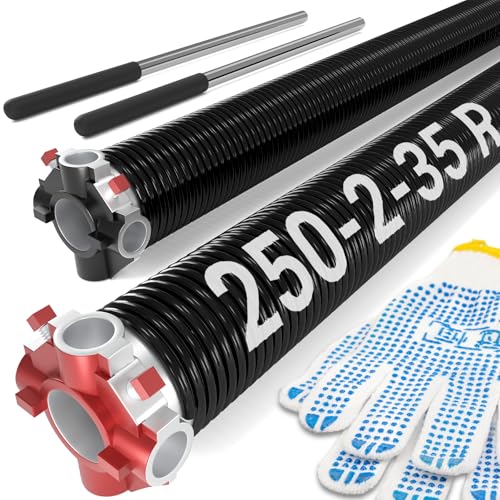
As an Amazon Associate, we earn from qualifying purchases.
Price as of Sep 17, 2026. Product prices and availability are accurate as of the date indicated and are subject to change. Any price and availability information displayed on Amazon at the time of purchase will apply.
Garage door repair costs $150 to $500 for most fixes in 2026, plus a $75 to $150 service call: torsion spring replacement runs $150 to $350, opener repair $100 to $300, cable replacement $100 to $250, and off-track realignment $125 to $300.
Most US homeowners pay $150 to $500 to repair a garage door in 2026, on top of a $75 to $150 service-call fee that many companies waive once the repair proceeds. The exact figure depends on the failed component: a torsion spring runs $150 to $350, opener repair $100 to $300, cable replacement $100 to $250, off-track realignment $125 to $300, and a dented panel $250 to $800. Double-width doors and two-spring systems push toward the top of each range, while a single door with a light fix sits near the floor.
| Repair | Typical Cost | Common Cause |
|---|---|---|
| Torsion spring | $150-$350 | Worn-out spring snaps |
| Opener repair | $100-$300 | Logic board / motor / gear |
| Cables | $100-$250 | Frayed or off the drum |
| Off-track door | $125-$300 | Roller jumped the track |
| Panel replacement | $250-$800 | Dent or impact damage |
Garage door spring replacement costs $150 to $350 for a single torsion spring, including parts and labor. Because a double-width door uses a two-spring system and springs are designed to fail in pairs, technicians almost always recommend replacing both at once, which lands the job at $250 to $500. Heavier high-cycle springs add $15 to $30 each. Spring replacement is the most dangerous garage door repair - the springs hold extreme tension - so it is one job you should never attempt yourself.
Repairing a single component is almost always cheaper than replacing the whole door. A spring, cable, or roller fix runs $100 to $350, while a new single door installed costs $600 to $1,500 and a double door $1,000 to $3,500. Replacement only wins when the door has multiple failing parts at once, the panels are rusted or rotted through, or the door is over 20 years old and parts keep breaking. A good rule of thumb: if the repair quote tops half the price of a new door, get a replacement quote too.
Opener problems range from a $20 part to a full unit swap. A dead remote or keypad is usually just a battery or sensor realignment - often free during a service call. A stripped drive gear or worn trolley runs $100 to $200, and a failed logic board or motor runs $150 to $350. If the opener is over 10 to 15 years old, replacing the whole unit for $300 to $600 usually beats repeated repairs and adds modern safety sensors and smartphone control. Chain drives are cheapest to fix; belt and screw drives cost a little more.
A double door costs more to repair than a single door because it is heavier and uses bigger, paired hardware. Its two-spring system, longer cables, and wider track all mean more parts and more labor than a single door's single-spring setup. As a rule, expect a double-door repair to run 30 to 60 percent more than the same fix on a single door. Panel replacement shows the biggest gap, since a double door's wider panels cost more to source and hang.
Inputs
Result
A 16-foot door uses a two-spring system, and because both springs have the same wear, technicians replace the pair. That puts a mid-life double door above the single-spring price but still well under a new-door cost.
Inputs
Result
A chain-drive opener under 10 years old is usually worth repairing - a gear or logic board fix lands in the $100 to $300 band. If the motor itself has failed, a new unit at $300 to $600 is the better long-term value.
Inputs
Result
Realigning a door that jumped its track is mostly labor, but a heavier double door plus a higher-cost West Coast labor market pushes the figure up. If the impact bent a panel, that becomes the dominant cost.
Repair total = Service call + Parts + Labor x door-size multiplierA garage door repair is priced from a service-call fee plus the cost of the specific failed part, with labor scaled up for heavier double doors. Start from the component's base range, then layer door size and region on top.
Where:
Service call= Flat $75 to $150 trip and diagnostic fee, frequently credited back if the repair proceedsParts= The failed component: spring $40 to $100, cable set $20 to $50, opener board $80 to $200, panel $100 to $500Labor= Most repairs take 1 to 2 hours at $75 to $150 per hour; spring and panel jobs sit at the topDoor-size multiplier= Double doors run 1.3x to 1.6x a single-door repair due to heavier, paired hardwareReplace if Repair quote > 0.5 x New door installed cost, or 2+ components failingTo decide between repairing and replacing, compare the repair quote against half the cost of a new door. If repairs approach that line - or several parts are failing at once on an old door - replacement is the better value.
Where:
Repair quote= The technician's total for fixing the current failure, parts plus laborNew door installed= Single door $600 to $1,500; double door $1,000 to $3,500 installed0.5 threshold= When a repair exceeds half a new door's price, replacement usually wins on lifespan2+ components= Springs, cables, rollers, and panels failing together signal an end-of-life doorA garage door is the largest moving part of most homes, cycling thousands of times a year under heavy spring tension, so it is no surprise that something eventually breaks. The good news for 2026 is that the vast majority of failures are single-component repairs that cost $150 to $500, not the four-figure replacement many homeowners brace for. On top of the repair itself, most companies charge a $75 to $150 service-call fee to diagnose the problem, and that fee is frequently credited back against the work if you authorize the repair on the spot.
The single biggest cost driver is which part has failed. A torsion spring - the most common failure - runs $150 to $350 installed. An opener repair runs $100 to $300, frayed cables $100 to $250, an off-track or jammed door $125 to $300, and a dented panel $250 to $800. Worn rollers or a general tune-up to quiet a noisy door land at $100 to $250. Use the calculator above to combine your specific problem, door size, and opener type into a tailored range before you call around for quotes.
It helps to know what a quote does and does not include. A repair price covers the part plus the labor to install it, usually one to two hours of work. It does not include unrelated maintenance the technician may flag - balancing, lubrication, or a sensor alignment - which is sometimes bundled into a tune-up add-on. When you compare two quotes, confirm whether the service-call fee is separate or absorbed into the repair, because that one line item can swing the real total by more than a hundred dollars.
| Repair Type | Typical Cost | Labor Time | Common On |
|---|---|---|---|
| Torsion spring | $150-$350 | 1-2 hrs | All doors, ~10k cycles |
| Opener repair | $100-$300 | 1-2 hrs | Units 5-15 yrs old |
| Cable replacement | $100-$250 | 1 hr | After spring failure |
| Off-track / jammed | $125-$300 | 1-2 hrs | Impact or worn rollers |
| Panel replacement | $250-$800 | 2-3 hrs | Dents and impacts |
Many companies waive the $75 to $150 service-call fee when you approve the repair during the same visit. Always ask up front whether the diagnostic fee is credited back - it is one of the easiest hundred dollars to save on the whole job.
Two homeowners with the same broken spring can get quotes that differ by a couple hundred dollars, and the variance is rarely random. Garage door technicians price from the failed component and then adjust for the workload your specific door creates. The heavier the door, the more paired hardware it carries, and the older it is, the more likely a quick fix turns into a multi-part job once the technician is on site.
Read every quote against the list below. If a company cannot explain how your door size or the age of your opener maps to its price, that is a sign the number is a placeholder that will be revised upward once the technician opens the door.
Ask whether the technician will inspect the whole door, not just the broken part. Springs, cables, and rollers wear at similar rates, so catching a second failing component on the same visit avoids a second service-call fee weeks later.
Because the failed part dominates the cost, it pays to understand what each of the common repairs actually involves. The torsion spring is the workhorse and the most frequent failure - it counterbalances the entire weight of the door and is rated for roughly 10,000 cycles, or about seven to twelve years of normal use. When it snaps, the door becomes too heavy to lift safely, and replacement runs $150 to $350 for one spring or $250 to $500 for the paired system a double door requires.
Opener problems are the second most common call. A dead remote or misaligned safety sensor is often a free fix during the service call, while a stripped drive gear runs $100 to $200 and a failed logic board or motor runs $150 to $350. Cables, which lift the door in tandem with the springs, cost $100 to $250 to replace and are frequently swapped alongside a failed spring at a discount. A door that has jumped its track needs realignment at $125 to $300, and a dented or cracked panel - the priciest common repair - runs $250 to $800 because matching panels must be sourced and hung.
There is also a practical sequence to how these failures cascade. A worn spring puts extra load on the cables and opener, so a neglected spring failure often drags a cable or gear down with it. That is why a $200 spring call can become a $400 visit once the technician finds a frayed cable on the same drum - and why catching the whole picture on one trip is cheaper than fixing parts one breakdown at a time.
| Component | Repair Cost | Lifespan | Replace Whole Door When |
|---|---|---|---|
| Torsion spring | $150-$350 | 7-12 yrs | 3rd spring failure on old door |
| Opener | $100-$350 | 10-15 yrs | Motor dead, unit 15+ yrs |
| Cables | $100-$250 | 8-15 yrs | Rust through multiple parts |
| Panel | $250-$800 | Life of door | 2+ panels damaged |
Never attempt a torsion-spring replacement yourself. The springs store enough tension to cause serious injury, and the few hundred dollars saved is not worth the risk - this is the one repair every professional agrees should stay professional.
Once you know your repair figure, the next question is whether fixing the door even makes sense. The rule of thumb technicians use is simple: if the repair quote exceeds about half the cost of a new door, get a replacement quote too. A new single door installed runs $600 to $1,500 and a double door $1,000 to $3,500, so a $300 spring job on a sound 8-year-old door is an easy repair, while a $700 panel-plus-spring repair on a 22-year-old door is a clear signal to price a replacement.
Age and the number of failing parts tip the balance. A door under 15 years old with a single broken component is almost always worth repairing. A door over 20 years old that has already needed springs, then cables, then a panel is telling you it is at the end of its life - each new fix only buys a year or two before the next one. If you are leaning toward a new door, the garage door replacement cost calculator prices a full replacement by size, material, and insulation so you can compare it directly against the repair quote in front of you.
There is also the option of repurposing the space entirely. Homeowners who rarely park in the garage sometimes find that a major door failure is the nudge to convert the space into a room, office, or rental unit instead of repairing the door at all. The garage conversion cost calculator estimates that project, and if you need to clear the space first, the junk removal service cost calculator prices the haul-away. Weigh all three paths before sinking money into a door that may be on borrowed time.
| Scenario | Best Move | Typical Cost |
|---|---|---|
| Door under 15 yrs, one part broken | Repair | $150-$500 |
| Door 15-20 yrs, two parts failing | Repair or replace | Compare quotes |
| Door over 20 yrs, repeated failures | Replace door | $600-$3,500 |
| Garage rarely used for parking | Consider conversion | $10k-$50k |
Get the repair quote and a replacement quote at the same visit when the door is old. Many companies install both repairs and new doors, so a single technician can give you the side-by-side numbers that make the decision obvious.
The cheapest garage door repair is the one done right the first time, so vet companies on transparency and credentials, not just the headline price. Get two or three written quotes that spell out the part being replaced, the labor, whether the service-call fee is credited back, and what the warranty covers. A quote that is dramatically below the others usually assumes a lower-grade spring or excludes the trip fee - the gap reappears when the cheap spring fails again in three years.
Confirm the company is licensed, bonded, and insured before anyone touches a spring under tension, and ask how long the warranty on parts and labor runs - one year is standard, and good companies offer lifetime warranties on springs. Beware the classic upsell scam: a technician arrives for a $200 spring and suddenly insists the entire door, opener, and track must be replaced for thousands. A reputable pro fixes what is broken and only recommends more when the door is genuinely failing.
Finally, a little maintenance keeps the next repair years away. Lubricating the springs, rollers, and hinges twice a year, keeping the tracks clear, and testing the auto-reverse safety feature each month all extend the life of every component. The steps below walk the hiring decision in order, so you can move from a broken door to a fair, warrantied repair without overpaying or falling for the all-or-nothing pitch.
Never authorize a full door replacement on the same visit a single part broke unless you have a written quote and time to think. High-pressure 'the whole door must go today' pitches are the most common garage door repair scam.
Diagnose the symptom
Note whether the door won't lift, the opener is dead, it is off track, or a panel is dented - it narrows the quote before anyone arrives.
Collect two to three quotes
Insist each one names the exact part, the labor, the warranty, and whether the service-call fee is credited back.
Verify license and insurance
Confirm the company is licensed, bonded, and insured - spring work under tension is dangerous and liability matters.
Check the warranty
One year on parts and labor is standard; lifetime spring warranties signal a company that stands behind its work.
Decline the all-or-nothing upsell
A pro fixes the broken part; insist on a written replacement quote before agreeing to swap the whole door and opener.
Read our guide
Read our guide
Read our guide
Price garage doors, conversions, repairs, and home-improvement projects, then compare quotes and plan your budget.
Last Updated: Sep 17, 2026
This calculator is provided for informational and educational purposes only. Results are estimates and should not be considered professional financial, medical, legal, or other advice. Always consult a qualified professional before making important decisions. UseCalcPro is not responsible for any actions taken based on calculator results.