11 gallon feta brine
Inputs
Brine Volume1 gallon
Salt12%
Result
Saltabout 454 g
Cupsabout 1.7 cups
A stronger feta brine uses significantly more salt than a light mozzarella storage brine.
Salt Needed
454 g
Pounds
1.00 lb
Cups
1.66
Salt Needed
454
grams
Salt
1.00 lb
Cups
1.66
Calcium Chloride
1.0 tsp
Vinegar
1.0 tbsp
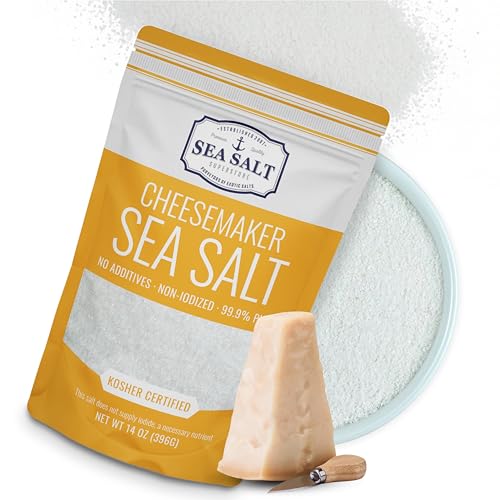

As an Amazon Associate, we earn from qualifying purchases.
Price as of Jul 24, 2026. Product prices and availability are accurate as of the date indicated and are subject to change. Any price and availability information displayed on Amazon at the time of purchase will apply.
Inputs
Result
A stronger feta brine uses significantly more salt than a light mozzarella storage brine.
Inputs
Result
A lighter 5 percent brine is typical for storing fresh mozzarella. It keeps the cheese firm without making it overly salty.
Different cheeses use different salt levels because texture, moisture, rind development, and storage goals vary. A feta brine is usually much stronger than a light mozzarella storage brine.
Calcium chloride helps reduce calcium loss from some cheeses, while a little acid can help keep brine chemistry closer to the cheese and reduce surface damage in storage.
Brine time depends on cheese size and density. Small fresh mozzarella balls may only need 30 minutes, while a large gouda wheel can sit in brine for 12 to 24 hours. Feta stored in brine can remain there for weeks or months.
Yes, cheese brine can be reused many times as long as you maintain the salt concentration and keep it refrigerated. Check salt levels with a hydrometer or refractometer and add more salt as the cheese absorbs it over repeated uses.
Read our guide
Read our guide
Read our guide
Explore cheese-making, aging, and fermentation planning tools.
Last Updated: Sep 11, 2026
This calculator is provided for informational and educational purposes only. Results are estimates and should not be considered professional financial, medical, legal, or other advice. Always consult a qualified professional before making important decisions. UseCalcPro is not responsible for any actions taken based on calculator results.