1. Calculate
Choose your project scope and see the estimated price range.
Price a 2026 arboricultural pruning job by tree size, pruning objective, and location — then compare ISA-certified arborist quotes.
Instant project estimate
The estimate is free. Additional details are optional.
Complete the project details and calculate to see a price range and next steps.
Clear next step
Choose your project scope and see the estimated price range.
Understand the cost drivers and what impacts your final quote.
Carry your scope into a local quote request if you choose.

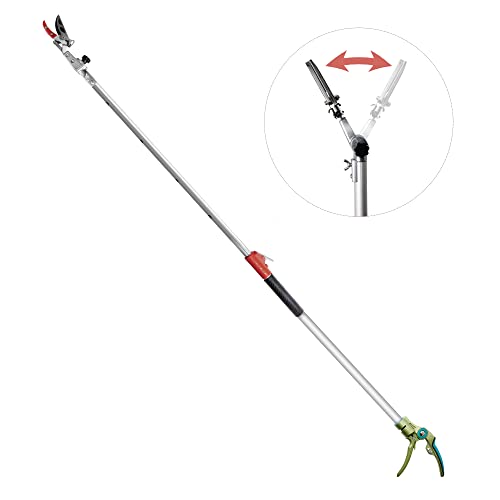

As an Amazon Associate, we earn from qualifying purchases.
Price as of Sep 15, 2026. Product prices and availability are accurate as of the date indicated and are subject to change. Any price and availability information displayed on Amazon at the time of purchase will apply.
ISA-certified arborist pruning averages $350–$1,200 per tree in 2026. Small trees under 30 ft run $150–$450, medium trees 30–60 ft run $300–$900, large trees 60–80 ft cost $700–$2,500, and very large mature trees exceed $1,500–$3,500. Multi-tree visits discount 10–20% per tree after the first.
| Tree Size | Height | Pruning Cost Range | Typical Midpoint |
|---|---|---|---|
| Small | Under 30 ft | $150–$450 | $280 |
| Medium | 30–60 ft | $300–$900 | $550 |
| Large | 60–80 ft | $700–$2,500 | $1,400 |
| Very large / mature | 80+ ft | $1,500–$3,500 | $2,200 |
Trimming is cosmetic and clearance-focused (shaping, removing limbs near structures); pruning is arboricultural and health-focused (deadwood removal, structural cuts, crown thinning to ISA standards). ISA-certified arborist pruning runs $350–$900 per tree, typically 30–60% above generic trimming rates, because it requires health diagnosis and certified labor.
| Service | Who Performs | Typical Cost (Medium Tree) | Primary Goal |
|---|---|---|---|
| Trimming | General crew | $200–$700 | Aesthetics / clearance |
| Deadwood pruning | ISA arborist | $300–$550 | Health / hazard removal |
| Crown thinning | ISA arborist | $400–$750 | Light / wind resistance |
| Structural pruning | ISA arborist only | $500–$900 | Long-term tree architecture |
ISA arborists perform four main pruning objectives: deadwood/sanitary removal ($150–$1,400 by size), crown thinning ($200–$1,800 by size), crown raising for clearance ($150–$1,200 by size), and structural/subordination pruning ($500–$2,500+ for large trees). Each requires different levels of arborist assessment and labor time.
| Pruning Type | Scope | Small Tree | Medium Tree | Large Tree |
|---|---|---|---|---|
| Deadwood removal | Dead/diseased only | $150–$350 | $300–$550 | $700–$1,400 |
| Crown thinning | Live branch reduction | $200–$450 | $400–$750 | $900–$1,800 |
| Crown raising | Lower limb clearance | $150–$400 | $250–$500 | $600–$1,200 |
| Structural cuts | Leader / scaffold | $250–$500 | $500–$900 | $1,200–$2,500 |
Late winter to early spring (just before bud break) is the best window for most deciduous species — the tree is dormant, wounds close fastest, and the leafless canopy lets arborists identify structure and deadwood clearly. Late fall after leaf drop is the secondary window. Avoid heavy pruning during active growth (May–July) and late-summer drought stress.
| Season | Suitability | Reason |
|---|---|---|
| Late winter / early spring | Optimal | Dormant, wounds close fast, structure visible |
| Late fall | Good | Dormant, reduced disease transmission |
| Summer (May–July) | Avoid heavy work | Active growth, stress on tree |
| Late summer | Emergency only | Drought stress amplifies pruning shock |
Pruning makes sense when the tree has structural issues but a sound trunk, when deadwood threatens safety, or when crown clearance is needed. Consider removal when 50%+ of the crown is dead, when the trunk has a severe cavity or split, when the tree is leaning dangerously over a structure, or when disease or pest damage is irreversible. An ISA arborist can diagnose which option applies.
Inputs
Result
Inputs
Result
Two large oaks in a Southern suburb is the most common heavy pruning scenario. The quote reflects ISA-certified labor for both trees on one visit, with multi-tree discount applied to the second tree.
Inputs
Result
Quote = Base rate (size) × Tree count + Complexity premium + Access surcharge + DebrisA typical ISA-arborist pruning quote = per-tree base rate (size-based $150–$3,500) times tree count, minus 10–20% multi-tree discount on a single visit. Add a complexity premium for structural work (1.5–2× base vs. deadwood), access surcharge (crane/bucket truck $500–$1,500 when needed), and debris handling ($95–$400 depending on chipping vs. haul-off).
Where:
Base rate= Small $150–$450, medium $300–$900, large $700–$2,500, very large $1,500–$3,500 per treeMulti-tree discount= 10–20% off per additional tree on a single arborist visitComplexity premium= Structural cuts run 1.5–2× the base rate for deadwood removal of equivalent tree sizeAccess surcharge= Crane or bucket truck adds $500–$1,500 when overhead obstructions block rope-climb approachTree pruning in the US averages $350–$1,200 per tree in 2026 when performed by an ISA-certified arborist — measurably above generic chainsaw trimming because it involves health diagnosis, selective cuts at the branch collar, and liability coverage that an uncertified operator cannot provide. Small trees under 30 feet run $150–$450 for deadwood removal and minor structural cuts, while large mature trees over 60 feet cost $800–$2,500 per tree for structural subordination work or full crown thinning. Very large trees over 80 feet — century-old oaks, mature American elms, oversize silver maples — can reach $3,500 for comprehensive arboricultural pruning requiring an experienced climber, a ground crew, and sometimes crane access. Multi-tree visits typically discount 10–20% per tree after the first because crew travel and equipment overhead are shared across the appointment.
Three variables control most of the quote spread: tree size and height (the primary driver), pruning objective, and access conditions. Crown thinning on an open-yard 45-foot maple runs $400–$750; the same objective on a 70-foot oak cantilevered over a swimming pool can reach $1,400–$2,200 because rope-rigging each removed limb down individually multiplies climbing time by 3–4x versus free-drop work in an open yard. Deadwood removal is the lightest scope — targeting only dead, dying, diseased, or broken branches — and prices at the lower end of each size bracket, ranging $150–$550 for small to medium trees. Structural subordination cuts, the most intensive objective, address co-dominant leaders and included bark unions and price at the high end of each bracket at $500–$2,500+ for large trees. Regional labor shifts quotes by ±20–30% — coastal metros like Boston, Seattle, and San Francisco run high; Midwest and Plains markets run 15–25% below national averages.
Pruning and trimming are near-synonyms in everyday language but differ sharply in scope and price. The tree trimming cost calculator covers cosmetic shaping, clearance, and aesthetic work by general tree crews; this calculator is scoped to arboricultural health pruning — crown thinning, deadwood removal, crown raising for clearance, and structural subordination — which requires an ISA Certified Arborist on the crew. For shrub and hedge species such as boxwood, laurel, and holly, the companion shrub pruning cost calculator prices that separate service category. All pricing in this guide is aggregated from LawnStarter, HomeGuide, Angi, and ISA-published research covering thousands of 2025–2026 arborist bids across US markets.
Arboricultural pruning is not the same as tree trimming. If a quote does not mention an ISA Certified Arborist performing the work, you are pricing a trim, not a diagnostic pruning service. Verify credentials at isa-arbor.com before accepting any pruning bid.
Small trees under 30 feet typically cost $150–$450 per tree for standard ISA pruning, with a $280 midpoint for a single visit involving deadwood removal and minor structural cleanup. This bracket covers ornamentals like crape myrtle, dogwood, Japanese maple, and young shade trees where the climber works at reachable height with ground-pole or small-ladder access. Multi-tree discounts apply quickly in this size category — three small ornamentals on one visit often land at $500–$900 total versus $780–$1,350 if quoted separately, because the minimum call-out fee is shared across the appointment rather than billed three times. Deadwood removal alone on small trees is the most affordable ISA pruning scope at $150–$300 per tree, while structural cuts that require more sustained assessment time push toward $400–$450 for the same small specimen.
Medium trees in the 30–60 foot range represent the most common residential pruning job. Crown thinning on a medium 45-foot maple runs $400–$750; deadwood removal (a lighter scope) runs $300–$550; crown raising to lift low limbs above a driveway or walkway runs $250–$500 depending on branch diameter. Large trees in the 60–80 foot range jump to $700–$1,600 per tree for most pruning objectives, with structural work — co-dominant leader reduction and major scaffold branch reassignment — pushing toward the high end of that bracket. An ISA-certified arborist spending 4–6 hours on a single large tree at the standard $75–$150 per certified arborist hour sets the labor floor at $600–$900 before markup for equipment, overhead, and debris handling. Crane or bucket-truck access adds $500–$1,500 when the canopy extends over structures that block ground-based approach.
Very large mature trees over 80 feet — full-canopy oaks, heritage elms, large tulip poplars — represent the highest bracket at $1,500–$3,500 per tree for comprehensive arboricultural pruning. Deadwood alone on a 90-foot oak can require 3–4 hours at height with rope-rig and a two-person ground crew, pricing at $900–$1,400 for just that single objective. Crown thinning on a full-canopy hardwood removes 15–25% of branch density per ISA standards — never exceeding 25% in one season without risking long-term tree health — and can take 5–8 arborist hours from ascent to cleanup. For trees that have declined past the point where pruning is beneficial, price the full-removal option with the tree removal cost calculator and follow-up stump work with the stump grinding cost calculator.
| Pruning Type | Small (<30 ft) | Medium (30–60 ft) | Large (60+ ft) |
|---|---|---|---|
| Deadwood removal | $150–$350 | $300–$550 | $700–$1,400 |
| Crown thinning | $200–$450 | $400–$750 | $900–$1,800 |
| Crown raising | $150–$400 | $250–$500 | $600–$1,200 |
| Structural / subordination | $250–$500 | $500–$900 | $1,200–$2,500 |
Deadwood removal — also called sanitary pruning — is the lightest and most frequently performed ISA pruning objective, targeting dead, dying, diseased, and structurally broken branches while leaving all healthy live tissue intact. It is the fastest to scope because the arborist identifies and removes only compromised material rather than making judgment calls about live-branch density or weight distribution across the crown. Pricing lands at the lower end of each size bracket: $150–$350 for small trees, $300–$550 for medium trees, $700–$1,400 for large trees. The service is commonly misidentified as trimming by homeowners, but it requires health assessment on every cut because distinguishing clinically dead wood from drought-stressed but recoverable live wood is not always possible from the ground or even at a distance. For disease-susceptible ornamentals like flowering cherries and crabapples affected by fire blight or black knot, sanitary pruning timing is critical and must align with dry weather windows and tool-sterilization protocols between every cut.
Crown thinning selectively removes live branches from inside the canopy to improve light penetration, air circulation, and wind-load resistance — and costs $200–$750 for small to medium trees, $900–$1,800 for large trees. ISA standards cap single-session canopy removal at 15–25% of live crown density; exceeding that threshold weakens the tree's stored energy reserves and voids the arborist's liability on subsequent storm damage. Crown raising removes lower limbs to create clearance above structures, pedestrians, and vehicles, typically running $150–$500 for small to medium trees and $600–$1,200 for large trees depending on branch diameter at the cut point. Structural pruning is the most intensive and expensive objective: addressing co-dominant leaders — two competing main trunks — and included bark unions (trapped bark at branch attachment angles that will eventually fail under wind or ice load) runs $500–$2,500+ for large trees and requires an ISA Certified Arborist, not just a competent climber, to read the tree's structural trajectory over the coming decades.
Vista pruning — selective thinning to open a view through the canopy without wholesale limb removal — is priced like standard crown thinning at $300–$700 for most residential applications on medium trees. Storm-prep pruning, often bundled ahead of hurricane season in Gulf Coast and Atlantic markets, prioritizes removing hangers, weakly attached limbs, and crossing branches that would fail under sustained wind load, blending deadwood removal with targeted crown-weight reduction and pricing $400–$900 for medium trees. For species with active disease protocols — oak-wilt-susceptible red and live oaks in Texas and the Upper Midwest, Dutch-elm-disease-susceptible elms, emerald-ash-borer-affected ash in the Eastern US — cut timing must avoid high fungal spore or beetle flight windows, and some arborists charge a 10–20% disease-protocol premium for the additional compliance steps. When pruning pairs with new plantings or specimen tree additions, the tree planting service cost calculator covers companion planting and establishment costs.
Never accept a pruning bid that includes topping or flat horizontal canopy cuts. Topping is universally condemned by the International Society of Arboriculture, permanently damages tree architecture, and creates weak epicormic regrowth that costs more to remediate than the original work saved.
Tree size and height is the primary cost driver — not simply because the climber ascends higher, but because canopy volume scales non-linearly with height. A 30-foot tree has roughly one-eighth the canopy volume of a 60-foot tree of the same species, meaning climbing time, rigging complexity, and descent time scale by volume rather than linear height. Above 50 feet, every additional 10 feet of canopy adds roughly 1.5–2 climbing hours because the arborist must set more anchor points, re-rig at greater distances from the trunk base, and work more cautiously in the upper canopy where branches are younger and attachment angles less predictable under load. The second major factor is pruning objective complexity: structural work runs 1.5–2x the cost of equivalent-size deadwood removal because the arborist must assess each scaffold branch against the tree's long-term architecture rather than simply identifying and removing clinically dead material.
Access and property conditions are the third major cost variable. An open-yard tree where limbs can fall freely is the cheapest scenario; a tree over a house, pool, greenhouse, or single-story addition requires rope-rigging every limb section down individually, adding 30–60% to labor time and cost. Crane or bucket-truck access adds $500–$1,500 when tree location or adjacent structures prevent the climbing approach. Species is the fourth factor: oaks carry a premium due to oak wilt disease-protocol requirements (cuts must be sealed with wound compound during active spore months in Texas and Midwest markets), elms and ash require similar disease-protocol precautions, and any specimen tree on a municipal heritage list may require a pre-work permit from the city arborist, adding $150–$400 in permit and processing time. ISA-certified arborist labor runs $75–$150 per hour — well above general tree crew rates of $40–$70 per hour — which amplifies the species-protocol premium directly through the labor line of the quote.
Frequency neglect is the fifth cost factor: trees that have not received professional pruning in 8–10+ years accumulate heavy deadwood, crossing branches, structural defects, and in some cases epicormic sprouting from previous topping damage, all of which the arborist must address in a single visit. A tree on a 3–5 year maintenance cycle might cost $450 for routine pruning; the same tree at year 10 of neglect could quote $1,200–$1,500 for catch-up work because the scope is 2–3x larger. Regional labor is the sixth factor: coastal US metros (Boston, New York, Seattle, San Francisco) run 20–35% above national average, while Midwest and Southeast markets run 10–20% below. Multi-tree bundling is the most reliable lever available to homeowners — scheduling 3+ trees on a single arborist visit shares the minimum call-out fee across the whole appointment and typically delivers 10–20% per-tree discount, saving $200–$600 on a full-yard pruning job versus booking trees on separate visits across seasons.
Bundling 3 or more trees into a single arborist visit shares the minimum call-out fee and typically saves $200–$600 versus scheduling separate visits for each tree. Get your full yard quoted in one appointment — the more trees, the more you save per tree.
Verifying ISA Certified Arborist credentials at isa-arbor.com is the single most important vetting step for any tree pruning job. An ISA certification requires passing a standardized knowledge examination, documented field experience, and ongoing continuing education units — it is a legitimate third-party qualification, not a self-awarded business title. Any contractor who bids pruning without an ISA-credentialed arborist actually performing the climbing work is offering chainsaw operator service rather than arboricultural service, and the quality and safety gap is substantial: an arborist understands branch collar anatomy, wound closure biology, and disease-protocol compliance; a general tree crew worker typically does not. ISA Certified Arborist density is highest in urban metros and lowest in rural markets, which can constrain competitive bidding in less-populated areas and push quotes toward the upper end of regional ranges when demand exceeds certified supply.
Insurance verification is the second mandatory check: require both general liability insurance at $1 million minimum per occurrence and workers compensation coverage for every climber on the job. The Bureau of Labor Statistics consistently ranks tree trimming and pruning among the 10 most dangerous occupational categories in the US — climbers fall, and your homeowner insurance policy will deny claims from uninsured workers injured on your property. Ask for a Certificate of Insurance naming you as an additional insured for the specific job date, then call the insurance carrier directly to confirm the policy is currently active. Scammers routinely present expired or fraudulent Certificates of Insurance, particularly from door-knockers appearing after ice storms or wind events; calling the carrier takes two minutes and eliminates the most common fraud pattern in the residential tree service industry. Never sign a contract or pay a deposit before you have a verified COI in hand.
Get a minimum of three written quotes from ISA-certified arborists. Each written quote should specify: which trees are in scope, the pruning objective for each tree, the estimated canopy removal percentage per ISA standards, how debris will be handled and at what cost, and which specific certified arborist will perform the climbing work rather than supervise a general crew. Treat any bid 30%+ below the other two quotes as a likely uninsured-labor or unlicensed-operator situation rather than a deal. Reasonable deposit ranges are 0–15% of the total; never pay more than 30% upfront, and walk away from any contractor who arrives door-to-door after storm events and pressures you for a same-day signature or payment. For broader landscape improvements planned alongside the pruning — hardscape, planting beds, or outdoor lighting — the landscape design service cost calculator scopes bundled project costs to help you budget companion work in the same arborist visit.
Read our guide
Read our guide
Read our guide
Price tree work, irrigation, landscape design, pool builds, and other outdoor service projects.
Last Updated: Sep 15, 2026
This calculator is provided for informational and educational purposes only. Results are estimates and should not be considered professional financial, medical, legal, or other advice. Always consult a qualified professional before making important decisions. UseCalcPro is not responsible for any actions taken based on calculator results.