1. Calculate
Choose your project scope and see the estimated price range.
Price a 2026 fire pit install by fuel type (wood-burning / natural gas / propane), material (prefab / stone / brick / concrete), diameter, and scope — then compare 3 local hardscape quotes.
Instant project estimate
The estimate is free. Additional details are optional.
Complete the project details and calculate to see a price range and next steps.
Clear next step
Choose your project scope and see the estimated price range.
Understand the cost drivers and what impacts your final quote.
Carry your scope into a local quote request if you choose.
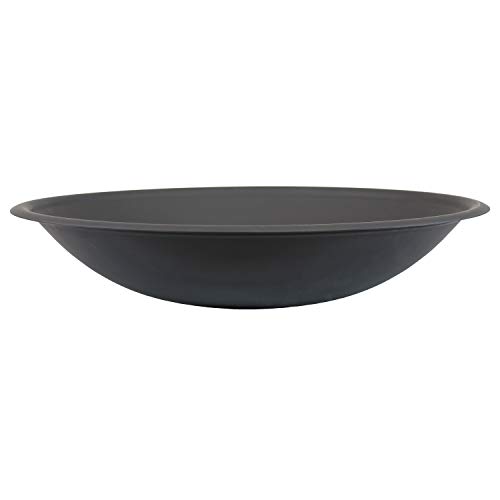




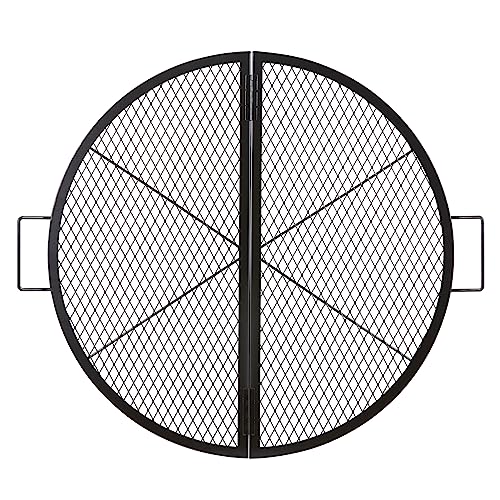
As an Amazon Associate, we earn from qualifying purchases.
Price as of Sep 15, 2026. Product prices and availability are accurate as of the date indicated and are subject to change. Any price and availability information displayed on Amazon at the time of purchase will apply.
Fire pit install cost ranges $200-$8,000 for most residential builds. Prefab wood-burning kits run $200-$1,500, stone or brick masonry wood-burning $1,500-$6,500, gas fire pits $2,500-$8,000, and full custom masonry with new gas line run $5,000-$20,000. National average sits around $850 for a 36-inch above-ground installation per HomeGuide 2026 data.
| Fire Pit Type | Material | Typical Installed Cost |
|---|---|---|
| Prefab kit, wood-burning | Steel or concrete blocks | $200-$1,500 |
| Masonry wood-burning | Brick or stone | $1,500-$6,500 |
| Propane fire pit | Tank-fed, stone or metal | $1,500-$4,500 |
| Natural gas fire pit | Gas line run required | $2,500-$8,000 |
| Full custom masonry + gas | Stone + new gas line | $5,000-$20,000 |
Wood-burning is cheaper by $1,500-$5,000 because there is no fuel line to run. Wood-burning total runs $200-$6,500 installed depending on material. Natural gas fire pits run $2,500-$8,000 because the gas line costs $14-$25 per linear foot ($500-$3,000 typical trench) plus a permit and licensed gas fitter. Propane ($1,500-$4,500) splits the difference — tank-fed, no trenching, but tank refills cost $25-$50 every 15-20 hours of use.
Permit rules vary by municipality. Portable wood-burning fire pits on existing patios usually do NOT require a permit. Natural gas fire pits ALWAYS require a gas permit ($150-$500) and a licensed gas fitter. Many jurisdictions also require permits for permanent masonry builds over a certain size. Setback rules typically require 10-15 feet from structures, fences, and overhanging trees. Always check local fire code and HOA rules before building.
Concrete block at $800-$3,000 installed is the budget masonry choice — durable, easy to cap with flagstone for a finished look. Brick at $1,200-$4,000 delivers classic aesthetics and 50+ year life. Natural stone at $2,000-$6,500 is the premium choice with 75+ year life, unique character, and best resale appeal. All three require heat-safe firebrick or steel liner ($150-$400) on the inside face to prevent cracking from thermal cycling.
Prefab kits at $200-$1,500 install in 2-4 hours (DIY) or half a day (pro) and deliver uniform results. Custom masonry at $1,500-$6,500 takes 2-4 days to build, allows any shape or size, and integrates with existing hardscape. The quality gap: prefab kits have visible seams and lower thermal mass so they heat up and cool down fast; masonry builds retain heat 30-60 minutes after the fire dies, extending usable time.
DIY a prefab kit and save $200-$500 in labor; DIY a simple concrete-block masonry pit and save $800-$2,000. Skip DIY on anything involving natural gas — gas line work requires a licensed fitter, a permit, and inspection; DIY gas work voids homeowner insurance and creates explosion risk. For propane, DIY the pit structure and let a pro install the tank connection.
Inputs
Result
Inputs
Result
West Coast labor premium (+20-30%) plus a new natural gas line from the house drives this build past the national typical band.
Inputs
Result
Quote = Pit structure + Base pad + Fuel system + Permits + LaborTotal install = pit structure (prefab $200-$1,500, masonry $800-$6,500) + base pad prep (gravel $300-$700, concrete pad $500-$2,000) + fuel system (wood-burning $0, propane tank $200-$500, natural gas line $500-$3,000) + permits ($0 for portable, $150-$500 for gas/masonry) + labor (DIY $0, pro $400-$2,500). Regional premium +20-30% in Northeast and West Coast metros.
Where:
Pit structure= Prefab $200-$1,500, concrete block $800-$3,000, brick $1,200-$4,000, stone $2,000-$6,500Base pad= Compacted gravel $300-$700, concrete pad $500-$2,000Fuel system= Wood $0, propane tank $200-$500, natural gas line $500-$3,000Permits= Portable $0, gas $150-$500, masonry $100-$400 where requiredLabor= DIY $0, pro install $400-$2,500 depending on scopeFire pit install cost in 2026 runs $200-$8,000 for most residential builds, with a national average of about $850 installed per HomeGuide’s 2026 data and Angi’s contractor survey. Prefab wood-burning kits at $200-$1,500 cover the DIY entry tier and deliver a usable backyard feature in a single afternoon. Stone or brick masonry wood-burning pits at $1,500-$6,500 are the most common permanent install: a crew builds a 3-5 ft diameter ring in 2-4 days with a firebrick liner, compacted gravel or concrete base, and a flagstone cap. Natural gas fire pits push to $2,500-$8,000 because of the gas line trench ($14-$25 per linear foot), licensed-fitter labor, and the permit almost every jurisdiction requires. Full custom masonry builds with a new gas line run, integrated seating wall, and premium stone finish stretch to $5,000-$20,000.
Four factors drive the quote: (1) fuel type — wood-burning is cheapest because there is no fuel line, propane is mid-tier because a tank install costs $200-$500 with no trenching, and natural gas is most expensive because the gas line trench plus permit plus licensed fitter adds $1,500-$4,000; (2) material — prefab kits are cheapest, concrete block masonry is the budget permanent option, brick and natural stone are premium; (3) diameter — 3 ft fits 4-5 people, 4 ft fits 6-8, 5 ft fits 8-10, 6 ft+ fits 10+ and scales material and labor linearly; (4) install scope — DIY kit assembly saves 40-60% versus pro install, full custom adds $1,500-$5,000 for site design and premium finish.
Use the calculator above to price your fuel type, material, size, and scope combination. Then read on for the gas-vs-wood decision framework, the base pad and heat clearance rules that keep the pit legal and safe, the permit checklist, and the hiring red flags for custom masonry work. For adjacent backyard scope planning, run the outdoor kitchen build cost calculator and the paver patio cost calculator in parallel — crews that bundle fire pit + patio scope typically discount 10-15% on mobilization.
Pricing in this guide is aggregated from HomeGuide 2026 data, Angi’s 2026 contractor survey, LawnLove’s regional pricing index, Inch Calculator, Fixr, and Homewyse January 2026 index. Numbers reflect US national averages with regional variance of roughly 40-60% between cheapest and priciest metros. Northeast and West Coast labor runs 20-30% above national median; Midwest and South labor runs 10-20% below median. Time-of-year matters less than for roofing or patio work because fire pit installs are typically half-day to four-day projects that crews can slot between larger jobs year-round.
Prefab kits at $200-$1,500 are the entry tier. These include steel-ring inserts with concrete-block or veneer-stone surrounds, DIY-friendly assembly with no mortar work, and install in 2-4 hours. Home-center prefab kits start at $200 for basic 30-inch diameter wood-burning builds, mid-range pre-veneered kits run $500-$900, and premium prefab with cast-concrete or natural-stone veneer reaches $1,000-$1,500. All prefab kits are wood-burning or propane tank-fed; gas kits that hook to a natural gas line are not a prefab category because the line itself is site-specific work.
Masonry wood-burning at $1,500-$6,500 is the most common permanent install. Concrete block masonry at $1,500-$3,000 uses standard 8-inch concrete blocks with a firebrick liner and optional flagstone cap. Brick masonry at $2,500-$4,500 delivers classic aesthetics with 50+ year lifespan and color that never fades. Natural stone masonry at $3,500-$6,500 uses fieldstone, flagstone, or cut bluestone for a premium organic look with 75+ year lifespan. Masonry builds take 2-4 days for a two-person crew and include compacted gravel or concrete pad base, firebrick liner, surround, and cap.
Natural gas fire pits at $2,500-$8,000 add the gas line run as the dominant cost driver. A 20-40 ft gas line trench from the house at $14-$25 per linear foot runs $500-$2,500, plus licensed-fitter labor ($400-$1,200), plus permit ($150-$500). The pit structure itself is the same $1,500-$4,500 as a masonry wood-burning build. Full custom masonry with new gas line at $5,000-$20,000 combines premium stone, integrated seating wall ($1,500-$6,000 additional), landscape lighting, and site design. For companion gas appliances like a grill island on the same line, the outdoor kitchen build cost calculator scopes bundled gas runs that save 20-30% versus separate trenches.
Diameter is the secondary size driver after material choice. A 3-ft diameter pit fits 4-5 seated people around it and runs the low end of every price band. A 4-ft pit fits 6-8 people and sits at the typical middle of published price ranges — this is the default size most contractors quote when a homeowner just says "build me a fire pit." A 5-ft pit fits 8-10 people and pushes to the upper end of material-specific bands because of the additional block, stone, or brick and the larger base pad required. 6-ft and larger pits are entertainment-scale installs for 10+ people and routinely land $3,500-$12,000 for masonry wood-burning builds, or $6,000-$18,000 with a gas line. Scale the cost calculator diameter selection to your actual seating count, not to the largest size the yard can physically hold — over-sized fire pits burn more fuel, throw more radiant heat than is comfortable for close-in seating, and cost substantially more to build without delivering proportional value.
| Build Type | Fuel | Material | Installed Cost |
|---|---|---|---|
| Prefab kit (DIY) | Wood or propane | Steel ring + block/veneer | $200-$1,500 |
| Concrete block masonry | Wood-burning | Block + firebrick + cap | $1,500-$3,000 |
| Brick masonry | Wood-burning | Brick + firebrick + cap | $2,500-$4,500 |
| Stone masonry | Wood-burning | Natural stone + firebrick | $3,500-$6,500 |
| Natural gas pit | Natural gas | Masonry + gas line | $2,500-$8,000 |
| Full custom + gas | Natural gas | Premium stone + seating wall | $5,000-$20,000 |
The HomeGuide 2026 national average of $850 reflects the mix of cheap portable and prefab builds, not permanent masonry. For any masonry or gas install, expect $2,000-$6,000 as your realistic planning budget, not the $850 headline.
Wood-burning fire pits are cheaper by $1,500-$5,000 because there is no fuel line to install. Wood-burning total lands at $200-$6,500 depending on whether you pick prefab or masonry. Fuel cost is a seasonal pile of firewood at $200-$500/year for regular users. The trade-off is smoke, ember management, and cleanup — wood fires produce 0.5-1 pound of ash per burn and require extinguishing before bed.
Natural gas fire pits at $2,500-$8,000 carry three gas-specific line items: (1) gas line run at $14-$25 per linear foot, typically 20-40 ft from the house for $500-$2,500 total; (2) licensed gas fitter labor at $400-$1,200 including connection and leak test; (3) permit at $150-$500 required in most US jurisdictions. The upside is instant on-off, zero smoke, zero ash, and zero ember-watch responsibility — gas pits are what homeowners actually use 40-60 times per year versus 8-15 for wood-burning.
Propane fire pits at $1,500-$4,500 split the difference. The tank install is $200-$500 for a 20 lb or 40 lb tank and regulator, no trenching, no permit in most jurisdictions. Tank refills cost $25-$50 every 15-20 hours of burn time. Propane is the practical compromise for homeowners who want the convenience of gas without the gas-line construction project. For regional labor premium estimation, the paver patio cost calculator at a 20-30% Northeast/West Coast markup is a reliable proxy for the same labor pool that prices fire pit masonry.
Five-year total cost of ownership flips the ranking for heavy users. Wood-burning at $200-$6,500 install plus $200-$500/year firewood lands at $1,200-$9,000 over five years plus roughly 50-100 hours of wood stacking, starting, and ash management. Natural gas at $2,500-$8,000 install plus $50-$150/year in gas usage lands at $2,750-$8,750 over five years with near-zero maintenance time. Propane at $1,500-$4,500 install plus $300-$800/year in tank refills (40-60 burns per year) lands at $3,000-$8,500 over five years. For homeowners who use the pit 40+ times per year, natural gas wins on five-year TCO and convenience; for 10-20 uses per year, wood-burning wins on total spend; propane rarely wins on pure economics but wins on installation speed and zero permit hassle.
If you already have a natural gas meter within 30 ft of the pit location, gas fire pit economics improve dramatically — the trench cost is the dominant overhead. If the meter is 60+ ft away, propane often wins on total five-year cost.
Base pad is the single most-often-skipped line item on DIY fire pit builds. A compacted gravel pad at $300-$700 (4-inch depth of crushed stone over a 6-ft diameter) is the code minimum for any permanent fire pit — it drains water away, provides a stable foundation that will not shift with freeze-thaw, and keeps the pit level over time. For heavy masonry builds, a poured concrete pad at $500-$2,000 (4-6 inch slab with rebar) is the better long-term base. Skipping the pad is the #1 cause of fire pits tilting, cracking mortar joints, and failing within 2-3 years.
Heat-safe clearance is non-negotiable. US fire code and most HOAs require 10-15 feet of clearance from structures (house, detached garage, shed), overhanging trees, wood fences, and flammable landscaping. Gas fire pits generally require the full 15-foot clearance; wood-burning pits can sometimes run 10 feet in code-permissive jurisdictions but 15 feet is the safe default. Check your municipality’s fire code before building — a permit inspector can require teardown if clearance is violated.
The ground material inside the clearance zone must be non-combustible: flagstone, concrete, paver, or bare dirt. Wood decks with a fire pit on top require a heat-shield mat ($100-$300) underneath and often a fire marshal variance because the deck itself is combustible at temperatures above 200°F. The paver or flagstone surround around a fire pit should extend at least 3 feet from the pit edge and run an additional $10-$30 per square foot of area. For pricing the surrounding paver surface, the paver patio cost calculator handles the 300-500 sqft hardscape zone most fire pits sit within.
Firebrick liner is the internal face of the pit that contacts direct flame contact and 1,000°F+ temperatures. Standard concrete block, clay brick, and natural stone crack within 2-3 burn seasons without a firebrick liner because the repeated thermal shock fractures the binding material. A firebrick liner costs $150-$400 and uses refractory mortar rated for 2,000°F+. Any masonry fire pit built without a firebrick liner is a year-3 teardown waiting to happen — watch for this cost-cutting shortcut in low bids. Drainage is another often-missed detail: water that pools inside the pit during rain seasons freezes and expands, cracking the base and popping mortar joints. A 2-inch weep hole drilled through the base course, or a gravel-drain layer under the firebrick, is the standard solution and adds no meaningful cost when specified upfront but $500-$1,500 to retrofit if skipped.
| Safety Element | Specification | Cost |
|---|---|---|
| Gravel base pad | 4 in depth, 6 ft diameter | $300-$700 |
| Concrete base pad | 4-6 in slab + rebar | $500-$2,000 |
| Clearance from structures | 10-15 ft (code + HOA) | Setback only |
| Non-combustible surround | 3 ft minimum paver apron | $10-$30/sqft |
| Deck heat shield | Required if on wood deck | $100-$300 |
| Firebrick liner | Required for masonry pits | $150-$400 |
Check your HOA covenants and local fire code BEFORE building. Some jurisdictions ban natural gas fire pits in wildfire-risk zones (parts of CA, CO, AZ). Others require 25-foot clearance and smoke-management rules. A teardown order after build is a $3,000-$8,000 mistake.
Permit rules are the quiet trap most fire pit buyers miss. Portable wood-burning fire pits placed on an existing patio generally do NOT require a permit — they are treated as personal property rather than a permanent structure. Permanent masonry fire pits typically require a building permit ($100-$400) in most municipalities if the build is larger than 25 sqft footprint or attached to other hardscape. Natural gas fire pits ALWAYS require a gas permit ($150-$500) plus inspection by a city gas inspector; propane fire pits typically require a permit only if a permanent line runs from an underground tank.
The licensed-pro rule is strict on gas work: every US jurisdiction requires a licensed gas fitter or licensed plumber to run the gas line, make the connection, and perform the leak test. DIY gas work voids homeowner insurance (every major insurer excludes unlicensed gas work) and creates explosion risk that can kill. The $400-$1,200 licensed-fitter labor is non-optional. For the masonry pit itself, DIY is legal and insurance-approved — a homeowner can build the stone or brick surround, pour the base pad, and install the firebrick liner without a professional.
HOA rules often overlay the municipal permit process. Many HOAs require architectural committee approval ($50-$200 review fee), fuel-type restrictions (wood-burning bans in some suburban HOAs), and setback rules stricter than municipal code (20-25 ft clearance). Wildfire-risk zones in California, Colorado, Arizona, and parts of the Mountain West often ban natural gas or wood-burning pits entirely during fire season. Always confirm HOA + municipal + fire code before signing a build contract. For bundled hardscape permit planning, the stamped concrete patio cost calculator scopes the companion patio permit layer.
Insurance implications go beyond just unlicensed gas work. Most homeowner policies include a "fire feature" disclosure requirement — if you add a permanent fire pit without notifying your insurer, a subsequent house fire caused by an ember or gas leak can be denied coverage on the grounds of unreported material change. A quick call to your insurer before building typically adds $20-$80/year to the premium but preserves your coverage. For wood-burning pits, ask specifically about ember-related claim exclusions; some policies now carve out wind-driven ember fires within 30 feet of a permanent wood-burning fire pit. The paperwork is trivial; the risk of an uninsured $100,000+ house fire claim is not.
Fire pit work is a specialty subset of hardscape masonry, and general landscapers often bid the work without the specific skills to execute it. The vetting checklist is tight: reasonable deposit 10-30% of total ($300-$1,500 on a $3,500 build), active contractor license verified with the state board, general liability $1M minimum, and workers compensation for all crew. Full upfront or cash-only demand is a BBB-flagged scam pattern — walk away. Request a Certificate of Insurance naming you as additional insured for the specific job.
Require three written references with photos of fire pit work at least 2 years old. Masonry settling, mortar cracking, and firebrick liner failure typically appear between year 2 and year 4, so fresh portfolios hide the most important quality signal. The written contract must specify base pad construction (gravel depth or concrete thickness), firebrick liner brand and type, stone or brick material and source, grout or mortar rating (heat-rated mortar for the firebrick section), setback distance from structures, and warranty terms on settling and mortar cracking.
For natural gas builds, the written contract must name the licensed gas fitter with license number, include the permit acquisition in the scope, and specify gas line material (black iron, flexible CSST) and burial depth (18 in minimum in most jurisdictions). Get three written quotes minimum; treat any bid 20%+ below the pack as a red flag for skipped base pad, missing firebrick liner, or non-permitted gas work. Pay by credit card for chargeback protection and stagger final payment until after city gas inspection passes. For companion hardscape contractor vetting, the pergola build cost calculator notes the same vetting rules for structural garden work. For landscape lighting around the seating area, the landscape lighting install cost calculator prices the low-voltage circuit that most fire pit zones integrate.
Read our guide
Read our guide
Read our guide
Price outdoor kitchens, patios, pergolas, landscape lighting, and other backyard service projects.
Last Updated: Sep 15, 2026
This calculator is provided for informational and educational purposes only. Results are estimates and should not be considered professional financial, medical, legal, or other advice. Always consult a qualified professional before making important decisions. UseCalcPro is not responsible for any actions taken based on calculator results.