How Much Does a Gravel Driveway Cost in 2026? (National Averages & Real Pricing)
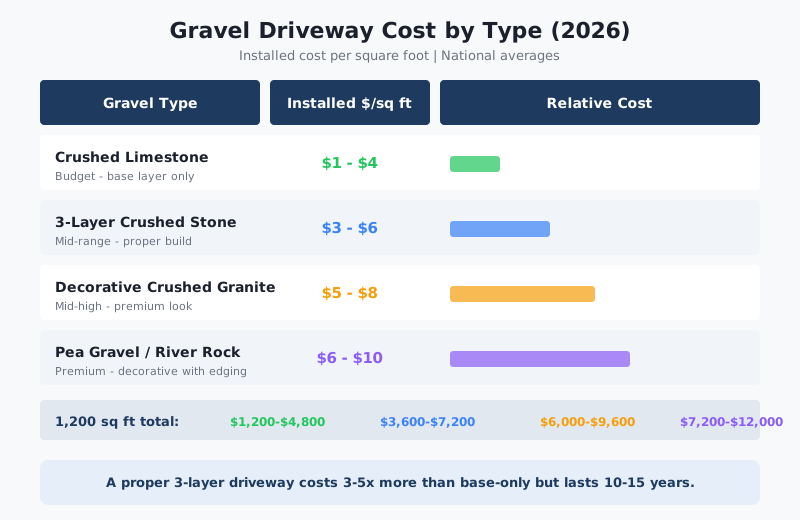
A gravel driveway costs $1 to $10 per square foot installed in 2026, with most homeowners paying $1,500 to $5,000 for a standard 12x100 ft driveway. Materials run $0.50-$3/sq ft, and professional installation adds $4-$8/sq ft for grading, compaction, and drainage. A typical 1,200 sq ft driveway uses 15-25 tons of gravel.
Tracking 6 gravel driveway projects in rural Pennsylvania shows the number that consistently blindsides people is the base layer. A 100-foot driveway in Bucks County came to $3,400 total -- but the homeowner expected $1,200 because they only priced the top layer of decorative stone. The reality: a proper gravel driveway has 3 layers (base, middle, surface), and the invisible base aggregate is 60% of the material volume.
Use our Gravel Calculator to estimate how many tons of gravel you need for your specific driveway dimensions.
Gravel Driveway Cost at a Glance
| Cost Tier | Gravel Type | Material Cost/sq ft | Installed Cost/sq ft | 1,200 sq ft Total |
|---|---|---|---|---|
| Budget | Crushed limestone (base only) | $0.50 - $1.50 | $1 - $4 | $1,200 - $4,800 |
| Mid-range | 3-layer crushed stone | $1 - $2.50 | $3 - $6 | $3,600 - $7,200 |
| Mid-high | Decorative crushed granite | $2 - $4 | $5 - $8 | $6,000 - $9,600 |
| Premium | Pea gravel or river rock with edging | $2.50 - $5 | $6 - $10 | $7,200 - $12,000 |
Tip
A standard residential driveway is 10-12 feet wide and 4-6 inches deep. Two-car driveways should be 20-24 feet wide at the garage. Proper gravel depth is critical -- anything under 4 inches total will develop ruts and potholes quickly.
Material Cost Breakdown
Crushed Limestone ($25-$45/ton)
The most common and affordable driveway gravel. #57 crushed limestone (3/4" minus) is the standard base and surface material, costing $25-$45 per ton delivered. One ton covers approximately 80-100 sq ft at 2 inches deep. Crushed limestone compacts well and provides excellent drainage.
Crushed Granite ($35-$60/ton)
Decomposed granite (DG) is popular in warm, dry climates for its natural appearance and firm surface when compacted. It costs 20-40% more than limestone but offers superior aesthetics. DG tends to wash in heavy rain if not properly contained with edging.
Pea Gravel ($30-$55/ton)
Pea gravel (3/8" rounded stones) has a smooth, decorative appearance but does not compact or interlock like crushed stone. It migrates easily and requires edging containment. Pea gravel works well for short driveways and pathways but is not ideal for steep grades or high-traffic driveways.
River Rock ($40-$80/ton)
River rock (1-3" rounded stones) is the most decorative but most expensive gravel option. It does not compact at all, making it suitable only for low-traffic driveways or decorative borders. River rock is often used as a top dressing over a compacted crushed stone base.
Three-Layer Driveway Structure
A properly built gravel driveway uses three layers for stability and drainage:
| Layer | Material | Depth | Purpose | Cost/sq ft |
|---|---|---|---|---|
| Base | #3 or #4 crushed stone (2-4") | 4" | Load-bearing foundation, drainage | $0.40 - $0.80 |
| Middle | #57 crushed stone (3/4") | 2" | Transition layer, fills gaps in base | $0.25 - $0.50 |
| Surface | #8 or #411 stone (3/8-1/2") | 2" | Smooth driving surface, dust control | $0.30 - $0.60 |
| Total | -- | 6-8" | Complete driveway system | $0.95 - $1.90 |
Skipping the base layer saves $400-$800 upfront but leads to rutting, potholes, and premature failure within 2-3 years.
Labor Cost Breakdown
| Labor Component | Cost Range | Notes |
|---|---|---|
| Site clearing and grading | $1 - $3/sq ft | Remove vegetation, establish grade and crown |
| Excavation | $1.50 - $4/sq ft | Remove topsoil, create driveway bed |
| Geotextile fabric | $0.30 - $0.60/sq ft | Prevents gravel from sinking into soft soil |
| Gravel spreading and compaction | $1 - $2/sq ft | Plate compactor or roller for each layer |
| Drainage (culvert/swale) | $200 - $800/project | Needed if driveway crosses a ditch or low area |
| Edging | $2 - $5/linear ft | Steel, aluminum, or timber borders to contain gravel |
Regional Cost Variation
| Region | Installed Cost/sq ft | vs. National Average | Key Factors |
|---|---|---|---|
| Northeast | $4 - $10 | +10% to +20% | Higher labor, frost heave requires deeper base |
| South | $2 - $6 | -15% to -25% | Abundant limestone, lower labor, no frost depth |
| Midwest | $2 - $7 | -5% to +5% | Quarries nearby reduce delivery cost |
| West Coast | $5 - $10 | +15% to +25% | Decomposed granite preferred, higher labor |
| Mountain West | $3 - $8 | +0% to +10% | Gravel is locally abundant in many areas |
DIY vs. Professional Installation
| Factor | DIY | Professional |
|---|---|---|
| Gravel materials (1,200 sq ft, 3-layer) | $1,200 - $2,400 | $1,200 - $2,400 |
| Delivery | $200 - $600 | Included |
| Labor (grading, spreading, compaction) | $0 (your time) | $1,500 - $4,000 |
| Equipment rental (plate compactor, skid steer) | $300 - $800 | Included |
| Time | 3-5 days | 1-2 days |
| Total | $1,700 - $3,800 | $3,000 - $6,400 |
| Savings | 35-50% | -- |
What DIY can handle: Short, flat driveways on well-drained soil. Spreading and raking gravel is straightforward labor, but compaction is essential -- rent a plate compactor.
What needs a pro: Long driveways (100+ ft), sloped terrain requiring cut-and-fill, driveways with drainage issues, or projects requiring heavy equipment (excavator, dump truck).
Gravel vs. Asphalt vs. Concrete
| Factor | Gravel | Asphalt | Concrete |
|---|---|---|---|
| Installed cost/sq ft | $1 - $10 | $7 - $13 | $8 - $18 |
| 1,200 sq ft total | $1,500 - $5,000 | $8,400 - $15,600 | $9,600 - $21,600 |
| Lifespan | 10-15 years (with maintenance) | 15-20 years | 25-30+ years |
| Annual maintenance | Raking, adding gravel ($200-$400/yr) | Seal coating every 3-5 yrs ($300-$600) | Minimal ($0-$100/yr) |
| Drainage | Excellent (permeable) | Fair | Poor (requires grading) |
| DIY-friendly | Yes | No | No |
Frequently Asked Questions
How much gravel do I need for a 100-foot driveway?
A 12x100 ft driveway (1,200 sq ft) needs 15-25 tons of gravel for a proper 3-layer installation. At 6 inches total depth, you need approximately 22 cubic yards or 20-25 tons.
- Base layer (4"): 10-15 tons of #3 stone
- Middle layer (2"): 5-7 tons of #57 stone
- Surface layer (2"): 5-7 tons of #8 or #411 stone
- Total material cost: $800-$1,800
Use our Gravel Calculator for exact tonnage based on your dimensions and desired depth.
How long does a gravel driveway last?
A properly built gravel driveway lasts 10-15 years before needing a full re-gravel. Annual maintenance (raking ruts, filling potholes, adding 1-2 tons of surface stone) keeps it functional. The base and middle layers last indefinitely -- only the surface layer needs periodic replenishment.
Is a gravel driveway cheaper than asphalt?
Yes -- a gravel driveway costs 50-75% less than asphalt upfront. A 1,200 sq ft gravel driveway costs $1,500-$5,000 installed versus $8,400-$15,600 for asphalt. However, gravel requires annual maintenance ($200-$400/year), while asphalt needs seal coating only every 3-5 years.
Can you plow snow on a gravel driveway?
Yes, but raise the plow blade 1-2 inches above the surface. Standard plowing pushes gravel off the driveway and into the yard. Adjustable plow shoes or a rubber edge plow blade prevent gravel displacement. Budget $100-$200 per spring for redistributing displaced gravel.
How do I keep gravel from washing away?
Proper crown (2-3% grade from center to edges), edge containment, and drainage are the three keys. Install steel or aluminum edging ($2-$5/linear ft) to prevent lateral migration. Grade the driveway with a gentle crown so water sheets off the sides rather than channeling down the center. French drains ($8-$15/linear ft) handle drainage in problem areas.
Do I need a permit for a gravel driveway?
Generally no for residential driveways, but check local regulations. Some municipalities require driveway permits regardless of surface material, especially for new driveway installations or widening projects. Stormwater management regulations may also apply in some areas.
Cost data sourced from Angi, HomeGuide, HomeAdvisor, and LawnStarter. Prices reflect 2026 national averages and may vary by region.
This article is provided for informational and educational purposes only. Content should not be considered professional financial, medical, legal, or other advice. Always consult a qualified professional before making important decisions. UseCalcPro is not responsible for any actions taken based on the information in this article.
Try These Calculators
Estimate 2026 gravel driveway install cost by size, stone type, and region. Pea gravel and crusher run cost $1-$3/sqft; large driveways $4,000-$10,000.
Estimate 2026 pressure washing service costs by surface, square footage, and method. Driveways run $100 to $350, siding $250 to $600, roof soft-wash $500+.
Estimate 2026 deep house cleaning cost by home size, condition, and bathrooms. A first-time deep clean runs $200-$600, about $0.20-$0.40 per square foot.
Estimate 2026 party and wedding tent rental costs by guest count, tent type, and add-ons. Most run $1,500 to $8,000 with sidewalls, flooring, and lighting.