How Much Does a French Drain Cost in 2026? (Interior & Exterior Pricing)
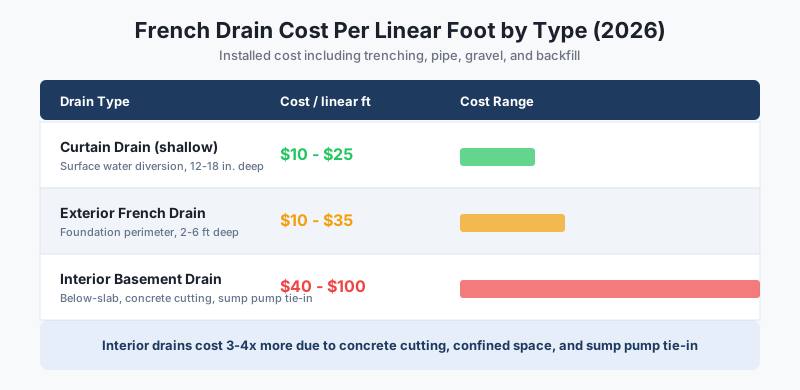
French drains cost $10 to $100 per linear foot installed in 2026, with exterior yard drains running $10-$35/ft and interior basement systems running $40-$100/ft. The average residential project falls between $2,000 and $10,000, while full interior basement perimeter systems can reach $4,000-$17,000. The wide price range comes down to one question: are you digging through your yard or cutting through your basement floor?
Seven French drain systems installed across eastern Pennsylvania show a pricing gap between exterior and interior work that surprises most homeowners. A 120-foot exterior French drain completed in Lehigh County came to $3,360 -- about $28 per linear foot. A 90-foot interior basement French drain in Allentown came to $7,200 -- $80 per linear foot. Same type of pipe, same gravel, same basic concept. The difference was cutting and removing a concrete floor, working in a confined space, tying into a sump pump, and repouring the concrete when finished. Understanding why interior systems cost three to four times more than exterior ones leads to much better decisions about which approach a property actually needs.
Use our French Drain Calculator to estimate material quantities and total cost for your specific project based on drain length, depth, and type.
French Drain Cost at a Glance
The table below shows the three main types of French drains, their installed cost per linear foot, and typical total project costs in 2026.
| Drain Type | Cost per Linear Foot | Typical Project Length | Total Cost Range |
|---|---|---|---|
| Exterior French drain | $10 - $35 | 50-200 ft | $500 - $7,000 |
| Interior basement French drain | $40 - $100 | 60-150 ft | $4,000 - $17,000 |
| Curtain drain (shallow exterior) | $10 - $25 | 30-100 ft | $300 - $2,500 |
Tip
Exterior drains intercept water before it reaches your foundation. Interior drains manage water that has already entered. If you have standing water in your yard or surface runoff pooling near the house, an exterior drain is usually the right call. If water is seeping through basement walls or the floor-wall joint, an interior system with a sump pump is the fix. Some properties need both.
Exterior French Drain Costs
Exterior French drains are the most common residential drainage project. They involve digging a trench in your yard, laying perforated pipe on a gravel bed, wrapping it in filter fabric, and backfilling with gravel and topsoil. The trench is typically 12-24 inches wide and 18-36 inches deep.
By Project Scope
| Project | Length | Cost Range | Notes |
|---|---|---|---|
| Simple yard drain | 50 ft | $500 - $1,750 | Redirects surface water from a low spot |
| Foundation perimeter (partial) | 75-100 ft | $750 - $3,500 | Protects one or two sides of the house |
| Full perimeter drain | 150-200 ft | $1,500 - $7,000 | Wraps around the entire foundation |
| Downspout-to-drain tie-in | 20-40 ft | $200 - $1,400 | Routes roof water to the main French drain |
The biggest cost variable on exterior drains is depth. A shallow curtain drain at 12 inches deep is a straightforward dig. A foundation-depth drain at 36 inches or deeper requires more excavation, more gravel per linear foot, and often a small excavator instead of hand-digging. The moment heavy equipment shows up, the price jumps.
Soil conditions matter too. Sandy or loamy soil digs fast and drains well. Heavy clay requires more gravel backfill because clay does not let water pass through -- the gravel bed becomes the entire drainage channel. Rocky soil or soil with tree roots slows everything down and adds labor hours.
Interior Basement French Drain Costs
Interior French drains are the expensive option, and there is no way around it. The process involves cutting a channel along the inside perimeter of your basement floor with a concrete saw, jackhammering out the concrete, excavating a trench below the slab, installing perforated pipe and gravel, connecting the system to a sump pump pit, and repouring the concrete. Every step happens in a confined space with limited equipment access.
| Component | Cost Range | Notes |
|---|---|---|
| Concrete cutting and removal | $5 - $15/linear ft | Saw-cut, jackhammer, haul out debris |
| Excavation below slab | $5 - $15/linear ft | Tight space, manual or small equipment |
| Pipe, gravel, and fabric | $5 - $10/linear ft | Same materials as exterior |
| Sump pump pit and pump | $500 - $1,500 (flat) | Required for most interior systems |
| Concrete repouring | $5 - $15/linear ft | Patching the channel back up |
| Vapor barrier / wall membrane | $3 - $10/linear ft | Optional but recommended |
| Total installed | $40 - $100/linear ft | Full system with pump |
Why Interior Systems Cost So Much More
The materials are nearly identical to an exterior drain -- the same 4-inch perforated pipe, the same washed gravel, the same filter fabric. What drives the price up is the demolition and reconstruction of the concrete floor, the confined workspace that limits crew size and equipment, the sump pump installation, and the cleanup. Interior work also generates concrete dust and debris that must be managed carefully, especially in a finished basement.
A 90-foot interior perimeter system with a sump pump typically runs $4,500-$9,000 at the mid-range. Full perimeter systems (120-150 feet) in high-cost markets can reach $12,000-$17,000. The sump pump alone adds $500-$1,500 depending on whether you need a standard pump, a battery backup system, or a commercial-grade pump for high water volume.
Material Cost Breakdown
Materials are the smaller portion of a French drain budget, typically 30-40% of the total for exterior and 20-30% for interior systems. Here is what the materials actually cost.
| Material | Cost | Coverage/Notes |
|---|---|---|
| Perforated pipe (4") | $0.50 - $1.50/linear ft | Standard corrugated; rigid PVC runs $1.50-$3.00/ft |
| Washed gravel (#57 stone) | $25 - $53/ton | Need ~1 ton per 15-20 linear ft of trench |
| Filter fabric (landscape) | $0.15 - $0.50/linear ft | Wraps pipe and gravel to prevent silt clogging |
| Fittings and connectors | $2 - $10 each | Couplings, tees, end caps, pop-up emitters |
| Catch basins | $25 - $75 each | Surface water collection points |
| Sump pump (standard) | $150 - $400 | 1/3 to 1/2 HP submersible |
| Sump pump (battery backup) | $300 - $800 | Essential for power outages during storms |
| Sump pit (basin) | $50 - $100 | 18-24 inch diameter with lid |
| Discharge pipe (solid) | $1 - $3/linear ft | Routes water from sump to daylight |
Pipe Choice: Corrugated vs. Rigid PVC
Corrugated perforated pipe is the budget option at $0.50-$1.50 per foot. It is flexible, lightweight, and easy to work with. Rigid PVC (Schedule 40 with drilled holes) costs $1.50-$3.00 per foot but lasts longer, resists crushing, and is less prone to clogging. For a 100-foot drain, the difference is $100-$150 in pipe cost. Rigid PVC is the standard choice on every interior system and on any exterior drain deeper than 24 inches. The extra cost is trivial compared to digging the whole thing up in ten years because corrugated pipe collapsed.
Gravel: The Hidden Volume
Gravel is usually the single most expensive material on a French drain project. A standard trench that is 12 inches wide and 24 inches deep needs roughly 1 ton of washed gravel per 15-20 linear feet. At $25-$53 per ton depending on your region and stone type, a 100-foot exterior drain needs 5-7 tons of gravel, costing $125-$370 in stone alone -- before delivery charges. Delivery adds $50-$150 per load, and most suppliers have a minimum order of 3-5 tons.
Labor Cost Breakdown
Labor represents 60-70% of total French drain cost. Here is how that labor breaks down for a typical exterior installation.
| Labor Component | Cost Range | Percentage of Total Labor |
|---|---|---|
| Excavation (hand dig) | $3 - $10/linear ft | 30-40% |
| Excavation (machine) | $2 - $6/linear ft | 20-30% |
| Pipe and gravel installation | $2 - $5/linear ft | 20-25% |
| Backfill and grading | $1 - $3/linear ft | 10-15% |
| Landscaping restoration | $500 - $2,000 (flat) | Varies |
| Permit fees | $50 - $500 | Where required |
Hand digging vs. machine excavation is the biggest labor decision. A two-person crew hand-digging a 100-foot trench at 24 inches deep takes 2-3 days. A mini-excavator does the same job in 4-6 hours. But machinery requires yard access -- if the drain runs through a fenced backyard with a 30-inch gate, that excavator is not getting in. Many jobs involve a mix: machine work on accessible sections and hand-digging near the house, trees, or utility lines.
Landscaping restoration is the expense homeowners forget to budget for. A French drain trench destroys everything in its path -- sod, flower beds, shrubs, irrigation lines, pathway pavers. Restoring the surface afterward costs $500-$2,000 depending on what was there before. Some contractors include basic regrading and seed in their quote; others do not. Ask explicitly.
Regional Cost Variation
French drain pricing varies by region, driven primarily by labor rates, soil conditions, and local code requirements.
| Region | Exterior (per linear ft) | Interior (per linear ft) | Key Factors |
|---|---|---|---|
| Northeast | $15 - $35 | $60 - $100 | High labor, clay-heavy soil, frost depth 36-48" |
| Southeast | $10 - $25 | $40 - $70 | Sandy soil (easier digging), year-round work |
| Midwest | $12 - $30 | $45 - $80 | Mixed soil, high water tables in many areas |
| West Coast | $15 - $35 | $55 - $100 | High labor in metros, rocky soil in foothills |
| South Central | $10 - $25 | $40 - $65 | Lower labor rates, expansive clay in TX/OK |
The Southeast tends to have the lowest pricing because the soil is sandy and easy to dig, labor rates are lower than the coasts, and contractors can work year-round. The Northeast and West Coast metros (Boston, NYC, San Francisco, Seattle) have the highest pricing due to union labor, expensive disposal fees, and permitting requirements.
Factors That Affect Your Total Cost
Beyond type and region, several project-specific factors can push your French drain cost up or down significantly.
Soil Type
Sandy or loamy soil digs fast and self-drains well, keeping costs at the lower end of the range. Heavy clay soil requires more gravel backfill because water cannot permeate the surrounding earth -- the drain trench itself becomes the only drainage path. Rocky soil or hardpan increases excavation time by 50-100%, often requiring a jackhammer or rock bar. If you are not sure what you have, dig a test hole 18 inches deep. That will tell you more than any soil map.
Drain Depth and Width
A shallow 12-inch curtain drain requires a fraction of the excavation and gravel that a 36-inch foundation drain needs. Every additional 6 inches of depth adds roughly $2-$5 per linear foot in excavation and gravel costs. Width matters too -- a 12-inch-wide trench uses about half the gravel of a 24-inch trench at the same depth.
Drain Length
Longer drains have lower per-foot costs because the fixed expenses (mobilization, equipment delivery, permits) are spread across more footage. A 30-foot drain at $35/ft might cost $1,050 total, while a 150-foot drain at $22/ft costs $3,300. The per-foot rate drops because setup and teardown happen once regardless of length.
Access and Obstacles
Tight access means hand-digging instead of machine work. Trees near the trench path require root pruning or rerouting. Existing utilities (gas, electric, water, sewer) require hand-digging within 24 inches of marked lines -- and utility locates add a day or two of scheduling delay. Fences, decks, and retaining walls in the path must be removed and rebuilt.
Landscaping Restoration
A French drain trench through a pristine lawn requires resodding ($500-$1,500). Through a garden bed, you are looking at replanting ($300-$800). Through a paver patio or walkway, the pavers need to be pulled, saved, and relaid ($500-$2,000). Budget 5-15% of total project cost for restoration if your yard has established landscaping.
DIY vs. Professional Installation
French drains are one of the few drainage projects where DIY is genuinely viable -- but only for exterior systems.
When DIY Works: Exterior Drains
A simple exterior French drain is within reach for a reasonably fit homeowner with basic tools. The work is physically demanding but not technically complex: dig a trench, lay fabric, add gravel, place pipe, add more gravel, fold fabric, backfill. Material costs for a 50-foot exterior drain run $200-$500, and you can rent a trencher for $200-$400 per day.
DIY cost for 50-foot exterior drain:
| Item | Cost |
|---|---|
| Perforated pipe (50 ft) | $25 - $75 |
| Gravel (3 tons) | $75 - $160 |
| Gravel delivery | $50 - $100 |
| Filter fabric (60 ft) | $10 - $30 |
| Fittings and pop-up emitter | $15 - $40 |
| Trencher rental (1 day) | $200 - $400 |
| Total | $375 - $805 |
Compare that to $500-$1,750 for professional installation of the same drain. The savings are real, but so is the labor. Hand-digging 50 feet of trench at 24 inches deep moves roughly 3 cubic yards of soil -- about 4 tons. That is a full weekend of hard work for one person.
When to Hire a Pro: Interior Systems
Interior French drains are not a DIY project. Cutting concrete floors with a walk-behind saw, managing concrete dust, excavating below a slab without undermining the footing, installing a sump pump with proper discharge, and repouring a concrete channel are all tasks that require specific tools, experience, and in many jurisdictions, a permit and licensed contractor. A mistake in the concrete cutting can crack your foundation wall. Improper sump pump discharge can violate local codes and flood your neighbor's property. The $4,000-$10,000 professional cost is money well spent on interior basement systems.
Permits
Some jurisdictions require permits for drainage work, particularly for interior systems that connect to a sump pump with exterior discharge. Permit fees range from $50 to $500 depending on your municipality. Interior waterproofing contractors typically handle permits as part of their scope. For exterior DIY drains, check with your local building department before digging -- many areas require utility locates at minimum, and some require a grading permit if you are changing the drainage pattern on your lot.
Frequently Asked Questions
How long does a French drain last?
A properly installed French drain with rigid PVC pipe and washed gravel lasts 30-40 years before needing major maintenance or replacement. Corrugated pipe systems have a shorter lifespan of 10-20 years because the flexible walls can collapse under soil pressure and the corrugation ridges trap sediment. The most common failure point is clogging from fine soil particles that work through the filter fabric over time. Using high-quality non-woven geotextile fabric and washed, angular gravel (not round river rock) significantly extends drain life. Annual maintenance -- flushing the pipe with a garden hose through a cleanout port -- keeps the system flowing and can add 5-10 years to its functional lifespan.
Is a French drain worth the cost for basement waterproofing?
For basements with active water intrusion, a French drain with sump pump is almost always worth the investment. Basement water damage costs $2,000-$10,000 per incident to remediate, and chronic moisture creates mold problems that can cost $3,000-$30,000 to address. An interior French drain system at $5,000-$12,000 pays for itself after preventing one or two flooding events. The system also protects your foundation from hydrostatic pressure damage, preserves the value of finished basement space (which adds $20-$50 per square foot to your home value), and most waterproofing contractors offer transferable warranties that increase resale appeal. If you are finishing or have finished your basement, waterproofing is not optional.
Can I install a French drain myself?
Exterior French drains are a viable DIY project for physically capable homeowners. The skills required are basic: digging, laying pipe, shoveling gravel. The tools are simple: shovel, level, wheelbarrow, and optionally a rented trencher. A 50-foot DIY exterior drain costs $375-$805 in materials versus $500-$1,750 for professional installation. However, interior basement French drains should not be attempted as DIY. They require concrete cutting, excavation below a structural slab, sump pump installation, and concrete repouring -- all tasks where mistakes can cause foundation damage or code violations. The concrete dust alone requires professional-grade dust suppression equipment. Save the DIY ambition for the yard drain and hire a waterproofing contractor for basement work.
How deep should a French drain be?
Depth depends on the drain's purpose. Curtain drains that intercept surface water runoff need only 12-18 inches of depth. Standard yard French drains that redirect subsurface water typically run 18-24 inches deep. Foundation perimeter drains should reach the bottom of your foundation footing, which is usually 24-48 inches below grade depending on your region's frost depth. Interior basement French drains sit below the slab level, typically 10-14 inches below the finished floor surface. Deeper drains cost more per linear foot because they require more excavation and more gravel. Every additional 6 inches of depth adds roughly $2-$5 per linear foot in combined excavation and material costs. A drain that is too shallow will not intercept the water table; one that is too deep wastes money on unnecessary excavation.
How long does French drain installation take?
A simple 50-foot exterior French drain takes 1-2 days for a professional crew of 2-3 workers, or a full weekend for a DIY homeowner. A 150-foot full perimeter exterior system takes 3-5 days depending on soil conditions and access. Interior basement French drains take 2-5 days depending on the length and complexity. Day one is concrete cutting and demolition. Day two is excavation and pipe installation. Day three is sump pump installation, concrete repouring, and cleanup. More complex systems with multiple sump locations, wall membrane installation, or finished basement restoration extend to 4-5 days. Weather is rarely a factor for interior work but can delay exterior projects -- you cannot properly install a French drain in saturated soil or during active rainfall.
Do French drains need maintenance?
French drains require minimal but consistent maintenance to perform well long-term. The primary maintenance task is flushing the system annually with a garden hose through a cleanout port, which removes accumulated sediment before it can form a blockage. If your system has catch basins or grate covers, clean leaves and debris from these quarterly -- a clogged inlet renders the entire downstream pipe useless. Sump pumps should be tested monthly by pouring a bucket of water into the pit and verifying the pump activates and discharges properly. Replace sump pump batteries every 2-3 years if you have a battery backup system. Watch for surface depressions along the drain line, which indicate gravel settling or pipe collapse below. Most homeowners spend less than 2 hours per year on French drain maintenance, and skipping it is the number one reason systems fail prematurely.
Pricing data sourced from HomeGuide, Angi, LawnStarter, LawnLove, HomeAdvisor, Fusion Drainage, and The Basement Guide. Costs reflect 2026 national averages and may vary by region, soil conditions, and project complexity. Use our French Drain Calculator for a customized estimate.
This article is provided for informational and educational purposes only. Content should not be considered professional financial, medical, legal, or other advice. Always consult a qualified professional before making important decisions. UseCalcPro is not responsible for any actions taken based on the information in this article.
Try These Calculators
Estimate 2026 French drain installation cost by type, length, depth, and site access. Exterior foundation drains $30–$80/LF; interior basement $45–$100/LF.
Estimate 2026 yard drainage cost by method: French drain, channel drain, dry well, regrading, or downspout extension. Compare costs for any drainage problem.
Estimate 2026 basement waterproofing cost by method, perimeter, and water severity. Interior drainage $3,000-$12,000; exterior excavation $15,000-$40,000.
Estimate 2026 gutter cleaning service cost by linear feet, home height, roof pitch, and debris level. Most single-story jobs run $100 to $250 per visit.