How Much Does a New Roof Cost in 2026? (By Material & Roof Size)

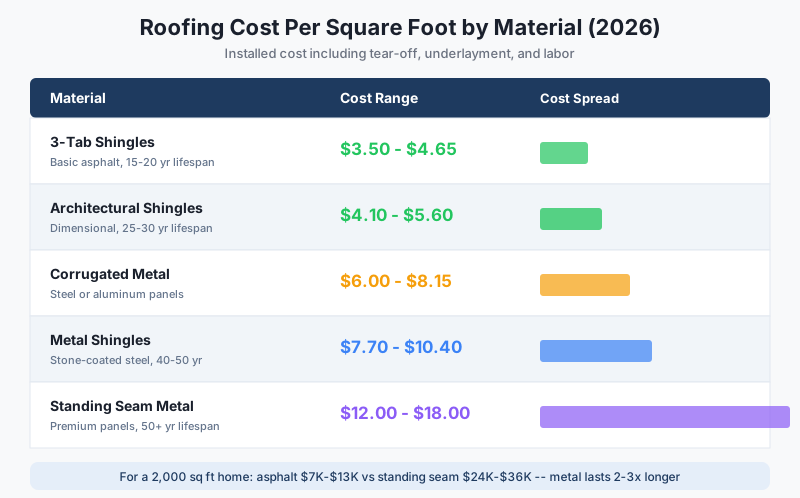
A new roof costs $7,000 to $14,500 for most homes in 2026, with the national average landing around $10,000-$11,000. Asphalt shingles run $3.50-$5.60 per square foot installed, metal roofing costs $6-$18/sq ft, and premium materials like slate reach $15-$30/sq ft. Labor accounts for 40-60% of the total project cost, and a full tear-off adds $1-$3/sq ft on top.
I replaced the roof on a 2,200 sq ft ranch in central Pennsylvania last October -- 24 squares of architectural shingles, full tear-off down to the deck, new ice-and-water shield on the eaves, and ridge vent. Total invoice: $11,400. The shingles themselves were $3,800. The rest -- $7,600 -- was labor, tear-off, underlayment, flashing, and dumpster fees. That ratio is typical. The material everybody sees is only about a third of the bill. The work nobody sees is the other two-thirds.
Use our Roofing Calculator to get a personalized estimate based on your roof size, pitch, and material choice.
Roof Replacement Cost at a Glance
The table below shows total replacement cost by house size, assuming a standard gable roof with a roof-to-floor ratio of about 1.15 (the actual roof area is roughly 15% larger than your home's footprint due to pitch and overhangs). Prices include full tear-off, underlayment, and installation.
| House Size (sq ft) | Approx. Roof Area (sq ft) | Asphalt (3-Tab) | Architectural Shingles | Metal (Standing Seam) | Tile (Clay/Concrete) |
|---|---|---|---|---|---|
| 1,500 | 1,725 | $6,000 - $8,000 | $7,100 - $9,700 | $20,700 - $31,100 | $17,300 - $31,100 |
| 2,000 | 2,300 | $8,100 - $10,700 | $9,400 - $12,900 | $27,600 - $41,400 | $23,000 - $41,400 |
| 2,500 | 2,875 | $10,100 - $13,400 | $11,800 - $16,100 | $34,500 - $51,800 | $28,800 - $51,800 |
| 3,000 | 3,450 | $12,100 - $16,000 | $14,100 - $19,300 | $41,400 - $62,100 | $34,500 - $62,100 |
Tip
These ranges include tear-off, underlayment, and standard flashing. Complex roof shapes (dormers, valleys, hips) add 10-25% to the base cost. Multi-story homes add 10-15% for equipment and safety staging.
Cost by Roofing Material
Asphalt 3-Tab Shingles ($3.50-$4.65/sq ft installed)
Three-tab asphalt shingles are the entry-level option. They are flat, uniform, and the cheapest material you can put on a roof. A typical 2,000 sq ft home costs $8,100-$10,700 for a full 3-tab replacement. Lifespan is 15-20 years in moderate climates, sometimes less in areas with extreme heat or frequent hail. Most manufacturers offer 20-25 year warranties, but real-world performance often falls short of warranty claims.
Architectural Shingles ($4.10-$5.60/sq ft installed)
Architectural shingles (also called dimensional or laminated shingles) are thicker, heavier, and more wind-resistant than 3-tab. They account for roughly 80% of all residential shingle installations in 2026. The dimensional profile creates shadow lines that mimic wood shake or slate at a fraction of the cost. Lifespan is 25-30 years, and most carry 30-year to lifetime limited warranties. The price premium over 3-tab is 15-25%, but the longer lifespan makes architectural shingles the better value for almost every homeowner.
Premium Architectural Shingles ($4.40-$6.00/sq ft installed)
Premium lines like GAF Grand Sequoia, CertainTeed Grand Manor, and Owens Corning Berkshire offer the thickest profiles and longest warranties in the asphalt category. They weigh 50-100% more per square than standard architectural shingles, which means better wind resistance (rated 110-130 mph) and a more substantial appearance. The installed cost is only $0.30-$0.40/sq ft more than standard architectural, making this a smart upgrade when re-roofing.
Metal Standing Seam ($12-$18/sq ft installed)
Standing seam is the gold standard of metal roofing. Concealed fasteners mean no exposed screws to back out over time, and the interlocking panels handle thermal expansion cleanly. A standing seam roof on a 2,000 sq ft home runs $27,600-$41,400 -- roughly 3x the cost of architectural shingles. The payoff is longevity: 40-70 years with virtually zero maintenance. Standing seam also qualifies for insurance discounts in hail-prone regions and can reduce cooling costs 10-25% due to reflective coatings.
Metal Shingles ($7.70-$10.40/sq ft installed)
Metal shingles look like traditional shingles or shake but are stamped from aluminum or steel. They are lighter than standing seam panels and easier for roofers experienced with shingle installation to handle. The installed cost splits the difference between architectural shingles and standing seam. Lifespan is 40-60 years, and they carry Class 4 impact ratings that earn insurance discounts in many states.
Corrugated Metal ($6-$8.15/sq ft installed)
Corrugated metal panels are the most affordable metal option. They use exposed fasteners and are common on agricultural buildings, garages, and modern farmhouse-style homes. The exposed fasteners are the weak point -- gaskets deteriorate after 15-20 years and need replacement. Still, at $6-$8.15/sq ft installed, corrugated metal offers 30-50 year protection at close to asphalt pricing.
Clay and Concrete Tile ($10-$18/sq ft installed)
Tile roofs are standard in the Southwest, Florida, and Mediterranean-style homes throughout the country. Clay tile costs $10-$18/sq ft installed; concrete tile runs slightly less. Both materials are extremely heavy -- 600-1,100 lbs per square -- so the roof structure must be engineered to carry the load. If your home was not originally built for tile, adding structural reinforcement can add $5,000-$15,000. Lifespan is 50-100 years, and the material is nearly immune to rot, insects, and fire.
Slate ($15-$30/sq ft installed)
Natural slate is the premium residential roofing material. A slate roof on a 2,000 sq ft home costs $34,500-$69,000, and it will outlast every other component of the house. Hard slate varieties (Vermont black, gray, green) can last 100-200 years. The catch: slate requires specialized installers, weighs 700-1,000+ lbs per square, and broken tiles must be replaced by hand. Not every roofing contractor can work with slate, which limits your options and drives up labor costs.
Flat/TPO ($5-$10/sq ft installed)
TPO (thermoplastic polyolefin) and EPDM rubber are the standard materials for flat and low-slope roofs. TPO has largely replaced EPDM in new installations due to better heat reflectivity and easier seaming. Installed cost is $5-$10/sq ft, with lifespan of 20-30 years. Flat roofs require meticulous drainage design -- even a small ponding area accelerates membrane failure.
What Does "Roofing Square" Mean?
A roofing square equals 100 square feet of roof area. When a contractor quotes "$350 per square for architectural shingles," that means $3.50 per square foot. The roofing industry uses squares because material bundles are sold in square-based quantities:
- Asphalt shingles: 3 bundles = 1 square
- Metal panels: Sold by the linear foot but priced per square
- Tile: 80-100 pieces per square depending on tile profile
A 2,300 sq ft roof is 23 squares. At $450 per square for architectural shingles (installed), that is 23 x $450 = $10,350. The square system makes it easy to compare bids -- just make sure every contractor is measuring the same roof area.
Labor Cost Breakdown
Labor accounts for 40-60% of total roof replacement cost. Here is where the labor dollars go:
| Labor Component | Cost Range | Notes |
|---|---|---|
| Tear-off (old roof removal) | $1 - $3/sq ft | More layers = higher cost. Some codes allow max 2 layers |
| Underlayment (felt or synthetic) | $0.50 - $1.00/sq ft | Synthetic is more expensive but lasts longer during installation delays |
| Ice and water shield | $1.50 - $3.00/sq ft | Required on eaves in cold climates, valleys, and around penetrations |
| Shingle/panel installation | $2 - $5/sq ft | Varies by material. Metal and slate take more labor per square |
| Flashing (valleys, walls, penetrations) | $5 - $20/linear ft | Step flashing, counter-flashing, pipe boots, chimney crickets |
| Ridge vent and ventilation | $3 - $8/linear ft | Ridge vent, soffit vents, or attic fans |
| Cleanup and haul-away | $200 - $600 flat | Dumpster, magnetic nail sweep, ground protection |
Warning
Never skip the tear-off to save money unless you have verified that local code allows a second layer AND your roof deck is in solid condition. Layering shingles traps moisture, hides rotting decking, adds weight, and voids most material warranties.
Regional Cost Variation
Where you live changes your roof price significantly. Labor rates, code requirements, and seasonal constraints all vary by region.
| Region | Cost Adjustment | Typical Installed Range (Architectural, 2,000 sq ft) | Key Factors |
|---|---|---|---|
| Northeast | +10% to +20% | $10,300 - $15,500 | Ice/snow requirements, shorter build season, higher labor |
| Southeast | -5% to -10% | $8,500 - $11,600 | Year-round work, no ice shield inland. Hurricane codes add cost on the coast |
| Midwest | -5% to +5% | $8,900 - $13,500 | Hail-prone areas may require impact-resistant shingles (Class 4) |
| Southwest | +0% to +10% | $9,400 - $14,200 | Tile popularity increases material cost, but labor is moderate |
| West Coast | +10% to +25% | $10,300 - $16,100 | Fire codes (Class A required), highest labor rates in the country |
These ranges are based on 2026 pricing data from This Old House, Angi, and HomeGuide. Your actual cost depends on local market conditions and the time of year.
Factors That Affect Your Roof Cost
Roof Pitch (Slope)
Low-slope roofs (4/12 and under) are walkable and cost less to install. Steep roofs (8/12 and above) require safety harnesses, toe boards, and take longer to work on. A 12/12 pitch can add 20-30% to labor costs compared to a 4/12 pitch. Steep pitches also use more material because the roof area is larger for the same footprint.
Number of Stories
Single-story homes are the cheapest to roof. Each additional story increases equipment staging, safety requirements, and time to carry materials up. A 2-story home typically adds 10-15% to the labor bill, and 3+ stories can add 20-25%.
Roof Complexity
Simple gable roofs with long, unbroken planes are the fastest and cheapest to install. Every valley, hip, dormer, skylight, chimney, and vent pipe adds flashing work and increases waste. A complex roof with 8-10 penetrations, multiple dormers, and several valleys can cost 25-40% more than a simple gable of the same square footage.
Decking Repairs
Once the old shingles come off, the crew may find rotten or damaged decking (plywood or OSB sheathing). Replacing decking costs $2-$5 per square foot for the new plywood plus labor. On older homes, it is common to replace 5-15% of the deck. Budget an additional $500-$1,500 as a contingency.
Ice and Water Shield
Building codes in cold climates require ice-and-water shield membrane on the eaves (typically 3 feet past the exterior wall line), in valleys, and around penetrations. This self-adhering membrane costs $1.50-$3.00/sq ft but prevents ice dam damage. Even in milder climates, ice-and-water shield in valleys and around chimneys is a smart investment.
Ventilation
Proper attic ventilation extends shingle life and prevents ice dams. If your existing ventilation is inadequate, adding ridge vent ($3-$8/linear ft), soffit vents ($5-$15 each), or powered attic fans ($300-$600 each) adds to the total. A roofer who does not address ventilation is leaving money on the table -- and shortening your roof's lifespan.
Roof Overlay vs. Full Tear-Off
An overlay (also called a re-roof or nail-over) installs new shingles directly on top of the existing layer. It saves the tear-off cost of $1-$3/sq ft, which on a 2,300 sq ft roof is $2,300-$6,900 in savings. Sounds appealing. Here is why it is usually a bad idea:
| Factor | Full Tear-Off | Overlay |
|---|---|---|
| Cost | Higher (add $1-$3/sq ft for removal) | Lower (skip tear-off) |
| Deck inspection | Full visibility -- find and fix rot | Hidden -- problems stay hidden |
| Warranty | Full manufacturer warranty | Reduced or voided warranty |
| Lifespan | Full material lifespan (25-30 years) | Reduced 15-20% (heat buildup between layers) |
| Weight | Single layer on structure | Double layer -- may exceed structural capacity |
| Resale | Clean history | Buyers and inspectors flag double layers |
| Code | Allowed | Most codes prohibit more than 2 layers total |
My recommendation: tear-off. The money you save on an overlay, you lose in shortened lifespan, hidden problems, and reduced resale value. The only scenario where overlay makes sense is if the existing roof has one clean layer, the deck is known to be solid, and you plan to sell within 5-10 years.
How to Get the Best Price
- Get 3-5 quotes from licensed, insured roofers. Pricing varies 20-40% between contractors in the same market. Ask for itemized bids that break out materials, labor, tear-off, and disposal separately.
- Schedule in the off-season. Late fall and winter (in regions where weather allows) offer 10-20% discounts. Spring and early summer are peak season, and contractors charge accordingly.
- Buy your own materials -- carefully. Some homeowners save 10-15% by purchasing shingles directly from a distributor. However, many contractors will not warranty labor on homeowner-supplied materials, so weigh the savings against the risk.
- Ask about manufacturer certifications. GAF Master Elite, CertainTeed SELECT ShingleMaster, and Owens Corning Platinum contractors can offer extended warranties (50 years including labor) that non-certified contractors cannot. The installation price is often the same.
- Bundle with other exterior work. If you also need gutters, siding, or fascia, a single contractor doing all the work can offer package pricing 5-10% below separate projects.
- Check your insurance. If your roof was damaged by hail, wind, or a fallen tree, homeowners insurance may cover part or all of the replacement minus your deductible. File the claim before signing a contract.
Frequently Asked Questions
How much does a roof cost for a 2,000 sq ft house?
A new roof on a 2,000 sq ft house costs $8,100-$12,900 for asphalt shingles or $27,600-$41,400 for metal standing seam in 2026. The actual roof area is approximately 2,300 sq ft (accounting for pitch and overhangs), which is 23 roofing squares. With architectural shingles at $4.10-$5.60/sq ft installed, the midpoint is about $11,000. This includes tear-off, synthetic underlayment, ice shield where required, standard flashing, ridge vent, and cleanup. Factors that push costs higher include steep pitch (8/12+), multiple stories, numerous penetrations, and regional labor premiums. Always get at least three itemized quotes to compare apples to apples.
How long does a new roof last?
Asphalt shingle roofs last 15-30 years, metal roofs last 40-70 years, and tile or slate roofs last 50-100+ years. The actual lifespan depends on material quality, installation workmanship, attic ventilation, and local climate. Three-tab asphalt shingles in a hot Southern climate may fail in 12-15 years, while the same shingles in a mild Pacific Northwest climate last 20-25 years. Architectural shingles consistently outperform 3-tab by 5-10 years. Metal standing seam in rural areas (no salt air) routinely reaches 60+ years. Proper attic ventilation is the single biggest factor that extends any roof's lifespan -- an overheated attic cooks shingles from underneath and can cut 5-8 years off their life.
Is a metal roof worth the extra cost over asphalt?
Metal roofing costs 2-3x more than asphalt upfront but lasts 2-3x longer, making the lifetime cost roughly equal. A 2,000 sq ft home costs about $11,000 for architectural shingles (lasting 25-30 years) or $34,000 for standing seam metal (lasting 50-70 years). Over 60 years, you would replace asphalt shingles twice ($22,000-$33,000 total) versus one metal roof ($34,000). Metal also reduces cooling costs 10-25%, earns insurance discounts in hail zones, and has near-zero maintenance. The break-even point is typically around year 20-25. If you plan to stay in your home long-term, metal is the better financial decision. If you are selling within 10 years, asphalt is more cost-effective.
Can I put new shingles over old ones?
You can, but you usually should not. Building codes in most jurisdictions allow a maximum of two shingle layers. An overlay saves $2,300-$6,900 in tear-off costs on a typical home but comes with serious trade-offs: you cannot inspect the roof deck for rot or damage, manufacturer warranties are reduced or voided, the added weight stresses the structure, and the double layer traps heat that shortens shingle life by 15-20%. Overlays also create a bumpy surface that looks worse and is harder to seal around flashing. The only defensible case for overlay is a single existing layer in good condition on a home you plan to sell soon. For your forever home, always tear off.
What time of year is cheapest to replace a roof?
Late fall and winter offer the lowest roofing prices, typically 10-20% below peak-season rates. Spring and summer are the busiest months for roofers -- demand is high, crews are booked 4-8 weeks out, and there is little incentive to discount. In September through November (and even January-February in mild climates), contractors are hungry for work and willing to negotiate. Asphalt shingles can be installed in temperatures as low as 40-45 degrees Fahrenheit with proper technique (hand-sealing strips and storing bundles in a warm space). Metal and tile are not temperature-sensitive. The one exception: do not schedule roof work during active rain or snow seasons where precipitation is frequent -- moisture during installation causes more problems than the savings are worth.
How do I know if I need a new roof or just repairs?
If your roof is under 15 years old and the damage is localized (a few missing shingles, one small leak), repair is usually the right call at $300-$1,000. If your roof is 20+ years old, has widespread granule loss, curling or buckling shingles, multiple active leaks, or daylight visible through the decking from the attic, replacement is the only real fix. Key indicators that point toward replacement: more than 25% of shingles showing wear, sagging roof planes (possible structural issue), recurring leaks after previous repairs, and neighbors with the same-era homes already replacing their roofs. A reputable roofer will give you an honest assessment -- be skeptical of anyone who pushes full replacement on a 10-year-old roof with one leak.
Cost data sourced from This Old House, Angi, HomeGuide, HomeWyse, Bill Ragan Roofing, and Modernize. Prices reflect 2026 national averages and may vary by region.
This article is provided for informational and educational purposes only. Content should not be considered professional financial, medical, legal, or other advice. Always consult a qualified professional before making important decisions. UseCalcPro is not responsible for any actions taken based on the information in this article.
Try These Calculators
Estimate 2026 roof replacement cost by home size, material, roof pitch, and region. Asphalt, metal, and tile quotes typically range from $5,800 to $47,000.
Estimate new home construction costs by square footage, quality level, and region. Get detailed material and labor cost breakdowns for building your house.
Estimate 2026 pressure washing service costs by surface, square footage, and method. Driveways run $100 to $350, siding $250 to $600, roof soft-wash $500+.
Estimate shingles, bundles, and roofing squares based on your roof dimensions and pitch. Includes waste factor and coverage tables for common materials.
Estimate 2026 asphalt driveway install cost by size, thickness, and region. New paving runs $7-$13/sqft; replacement $8-$15/sqft; overlay $3-$7/sqft all-in.