1. Calculate
Choose your project scope and see the estimated price range.
Get a realistic 2026 cost estimate for gum grafting by procedure type, number of teeth, and provider — then compare quotes from periodontists near you.
Instant project estimate
The estimate is free. Additional details are optional.
Complete the project details and calculate to see a price range and next steps.
Clear next step
Choose your project scope and see the estimated price range.
Understand the cost drivers and what impacts your final quote.
Carry your scope into a local quote request if you choose.

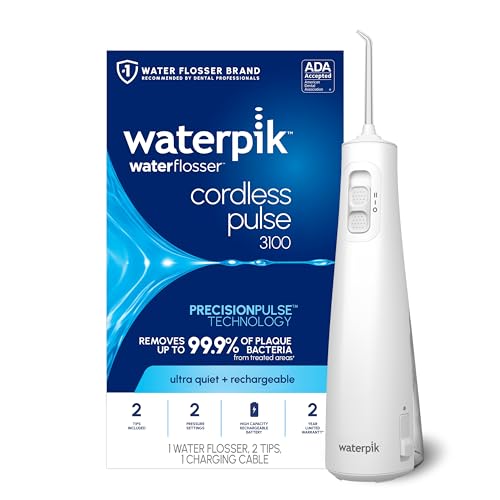

As an Amazon Associate, we earn from qualifying purchases.
Price as of Sep 20, 2026. Product prices and availability are accurate as of the date indicated and are subject to change. Any price and availability information displayed on Amazon at the time of purchase will apply.
Gum grafting costs $600–$1,200 per tooth for connective tissue grafts and $500–$1,000 for free gingival grafts in 2026. Allografts (donor tissue) run $700–$1,400 per site. The pinhole technique costs $1,000–$3,000 per procedure and covers multiple teeth in one session with no palate harvest. Periodontists charge roughly 20% more than general dentists.
A gum graft costs $500 to $1,400 per tooth in 2026 depending on the technique. Connective tissue grafts — the most commonly performed type — run $600 to $1,200 per tooth at a general dentist. Free gingival grafts are slightly less expensive at $500 to $1,000 per site. Allografts using donor tissue cost $700 to $1,400 per tooth and eliminate the need to harvest tissue from the patient’s palate. The pinhole technique is priced differently: it is a single-session procedure that can treat multiple teeth at once, typically costing $1,000 to $3,000 for the full treatment regardless of how many adjacent teeth are addressed. A periodontist charges 15 to 25 percent more than a general dentist for the same procedure.
| Graft Type | General Dentist | Periodontist |
|---|---|---|
| Connective tissue (per tooth) | $600–$1,200 | $720–$1,440 |
| Free gingival (per tooth) | $500–$1,000 | $600–$1,200 |
| Allograft (per tooth) | $700–$1,400 | $840–$1,680 |
| Pinhole (per procedure) | $1,000–$3,000 | $1,200–$3,600 |
A connective tissue graft (CTG) removes a small flap of tissue from the roof of the mouth, takes the underlying connective tissue layer only, then repositions the outer flap back down. This approach heals faster, leaves a smaller wound on the palate, and produces a result that blends naturally with the surrounding gum color and texture. CTGs are the gold-standard technique for covering exposed tooth roots and are the most commonly performed gum graft in the US. A free gingival graft (FGG) harvests a full-thickness strip directly from the palate surface, leaving an open wound that heals by secondary intention over two to three weeks. FGGs are thicker and tougher than CTGs and are preferred when the clinical goal is to create a wide band of keratinized — tough, load-bearing — gum tissue around a tooth rather than covering a root. The choice between them depends on clinical findings your periodontist evaluates in person: CTG for esthetics and root coverage, FGG for building durable gingival width.
For connective tissue or free gingival grafts, the per-tooth fee applies to each site, though many periodontists offer a reduced per-tooth rate when three or more sites are treated in one session to reflect shared surgical setup cost. Treating four teeth at $600 to $1,200 per tooth lists at $2,400 to $4,800 at standard rates, but a bundled session fee often runs $1,800 to $3,500 for the same four teeth. The pinhole technique is inherently multi-tooth: the procedure is priced as a flat session fee of $1,000 to $3,000 regardless of whether two or eight teeth are treated, making it the most cost-efficient choice when many adjacent teeth need treatment simultaneously. Allografts for multiple teeth cost $700 to $1,400 per site; at four sites with a periodontist, expect $3,360 to $6,720 before any volume discount. Always ask the provider how they price multi-site sessions before assuming per-tooth rates apply.
| Teeth Treated | CTG (per-tooth rate) | Pinhole (flat session) |
|---|---|---|
| 1 tooth | $600–$1,200 | $1,000–$3,000 |
| 3 teeth | $1,800–$3,600 | $1,000–$3,000 |
| 6 teeth | $3,600–$7,200 | $1,000–$3,000 |
Many dental insurance plans cover gum grafts under periodontal benefits when the procedure is medically necessary — meaning gum recession is documented as causing clinical attachment loss, root hypersensitivity, or increased risk of tooth loss. Coverage typically runs 50 to 80 percent of the insurer’s contracted fee after the annual deductible is met, subject to the plan’s annual maximum (most commonly $1,000 to $2,000). Plans often categorize gum grafts as a major restorative or periodontal service with a 12-month waiting period for new enrollees. Purely cosmetic recession — where the tooth and bone are clinically stable and the patient’s concern is esthetic — may be excluded from coverage or require a clinical necessity letter. Request a predetermination from your insurer using your periodontist’s proposed treatment plan before scheduling; it reveals the contracted fee, expected benefit, and your estimated patient share.
The pinhole technique (Chao Pinhole Surgical Technique) is a minimally invasive approach that repositions existing gum tissue through small puncture holes rather than harvesting donor tissue from the palate. The advantages are real: no palate harvest wound, reduced post-operative pain and swelling, faster recovery (most patients resume normal activities in 24 to 48 hours versus one to two weeks for conventional grafts), and the ability to treat multiple teeth in a single session for a flat fee. The technique is not universally applicable — it works best when there is adequate existing gum tissue to reposition and does not create new tissue width the way a free gingival graft can. For patients with moderate recession affecting four or more adjacent teeth and sufficient existing tissue volume, pinhole often represents better value and a dramatically easier recovery. For isolated single-tooth recession with thin existing tissue, a conventional connective tissue graft may produce more predictable root coverage at a comparable or lower price.
Recovery from a conventional gum graft takes seven to fourteen days for the graft site and two to three weeks for the palate harvest wound to fully close. During that time, soft-diet restrictions, prescription antiseptic rinses, and follow-up appointments add modest costs not included in the base procedure fee. A chlorhexidine rinse typically runs $15 to $30. A post-operative pain prescription adds $10 to $40. A surgical stent or palate guard to protect the harvest site can add $50 to $150 at some practices. Follow-up appointments are usually included in the procedure fee but confirm before signing consent. Pinhole patients frequently return to work the same or next day, with minimal ancillary costs. Budget $75 to $200 for recovery supplies on a conventional graft.
Inputs
Result
A single-tooth connective tissue graft is the most common gum graft scenario. Calculation: 1 tooth × [$600–$1,200] × 1.0 (general dentist) = $600–$1,200. Most patients also spend $75 to $200 on recovery supplies not included in the procedure fee.
Inputs
Result
Three allograft sites at a periodontist: 3 teeth × [$700–$1,400] per tooth × 1.2 periodontist premium = $2,520–$5,040. Allografts use donor tissue, so no palate harvest wound. Ask about bundled pricing for multi-site sessions.
Inputs
Result
Estimate: 4 teeth × [$350–$600] per-tooth rate × 1.0 = $1,400–$2,400. In practice, pinhole is often quoted as a flat session fee of $1,000–$3,000 for all treated teeth. Confirm whether your provider prices pinhole per tooth or per session before booking.
Total cost = Base rate[graftType] × Teeth × Provider multiplierFor connective tissue, free gingival, and allograft procedures, the base per-tooth rate is multiplied by the number of sites treated and a provider factor. Pinhole is better modeled as a flat session fee rather than a strict per-tooth calculation.
Where:
Base rate[graftType]= CTG $600–$1,200 per tooth; FGG $500–$1,000 per tooth; Allograft $700–$1,400 per tooth; Pinhole ~$350–$600 per-tooth modelTeeth= Number of individual sites being grafted, 1 to 10Provider multiplier= General dentist 1.0×; periodontist 1.2×Total cost = Session fee (covers all adjacent teeth in one visit)The Chao Pinhole technique is typically billed as a single flat session fee regardless of how many adjacent teeth are treated, making it cost-efficient for three or more teeth addressed at once.
Where:
Session fee= $1,000–$3,000 at a general dentist; $1,200–$3,600 at a periodontistThese figures are typical-cost estimates for planning purposes only; review the disclaimer above before making any dental or financial decision based on this information. Actual fees are set by your periodontist or general dentist and vary by location, insurance coverage, recession severity, tissue anatomy, and clinical factors that only an in-person examination can determine.
Gum grafting — also called gingival grafting or periodontal grafting — is a surgical procedure that covers exposed tooth roots or reinforces thin gum tissue to halt the progression of recession. In 2026, the most common procedure, the connective tissue graft (CTG), runs $600 to $1,200 per tooth at a general dentist in the United States. A free gingival graft (FGG) is slightly less expensive at $500 to $1,000 per site. Allografts, which use processed donor tissue to eliminate the palate harvest step entirely, cost $700 to $1,400 per tooth. The pinhole surgical technique — a minimally invasive method that repositions existing gum tissue through small puncture holes without harvesting donor material — is typically priced as a flat session fee of $1,000 to $3,000 covering all treated teeth in a single visit, making it the most cost-efficient option when many adjacent teeth need attention simultaneously.
The calculator above takes your graft type, number of teeth, provider choice, and ZIP code to produce a realistic planning estimate before you call for a quote. A periodontist — the dental specialist who focuses exclusively on gum and bone disease — typically charges 15 to 25 percent more than a general dentist for the same grafting procedure, reflecting advanced training, specialized surgical instruments, and case volume. Regional variation is also material: grafting fees in metropolitan New York, Los Angeles, San Francisco, or Boston run 30 to 40 percent above the national average, while practices in smaller markets or rural areas often price 15 to 25 percent below it. Use the estimate to set realistic expectations before your consultation and to evaluate whether a quote you receive is within the normal range, unusually high, or suspiciously low — unusually low deserves scrutiny before booking.
Gum recession that goes untreated does not resolve on its own. Exposed root surfaces are more susceptible to decay than enamel, and progressive recession can eventually lead to bone loss, tooth sensitivity, loosening, and in advanced cases tooth loss. Grafting is therefore frequently a medically necessary procedure rather than an elective one, a distinction that bears directly on insurance coverage and the urgency of timing treatment.
| Graft Type | General Dentist | Periodontist |
|---|---|---|
| Connective tissue graft (per tooth) | $600–$1,200 | $720–$1,440 |
| Free gingival graft (per tooth) | $500–$1,000 | $600–$1,200 |
| Allograft / donor tissue (per tooth) | $700–$1,400 | $840–$1,680 |
| Pinhole technique (per session) | $1,000–$3,000 | $1,200–$3,600 |
Always ask whether the quoted fee is per tooth or per session, and whether follow-up appointments are included. Clarifying those two questions can reveal a $2,000 difference between two quotes that appear to cover the same scope of treatment.
The four main gum graft techniques differ not just in price but in how tissue is sourced, how the surgical wound heals, and which clinical situations each one is designed to address. Understanding those differences helps you evaluate a provider’s recommendation, anticipate the recovery experience, and budget realistically for the full course of treatment.
The connective tissue graft (CTG) is the most frequently performed technique in the United States and the reference standard against which other methods are compared in the clinical literature. The surgeon makes a small incision on the roof of the mouth (palate), lifts a thin flap of the outer tissue layer, and removes only the underlying connective tissue below. The outer flap is then sutured back into position, substantially reducing the size of the open wound compared to a free gingival graft. The harvested connective tissue is positioned under a small flap created adjacent to the recession site, where it integrates with the existing tissue over six to eight weeks and covers the exposed root surface. CTGs produce excellent esthetic results because the graft tissue tends to match the color and texture of the surrounding gum. At $600 to $1,200 per tooth with a general dentist, CTGs represent the mainstream price point for single-tooth gum grafting.
The free gingival graft (FGG) is an older technique that harvests a full-thickness strip directly from the surface of the palate, leaving an open wound roughly the size of a large postage stamp that heals by secondary intention over two to three weeks. The raw palate wound is the main reason FGGs fell out of favor for anterior esthetic cases — patients consistently report more post-operative discomfort from the harvest site than from the graft site itself. Where FGGs remain the preferred clinical choice is in creating a wide band of thick, keratinized (load-bearing) gum tissue around the base of teeth, particularly in posterior regions where existing tissue is thin and mobile. Because keratinized tissue is more resistant to mechanical irritation and bacterial invasion than mucosal tissue, FGGs are especially valuable for patients with implants or fixed bridgework where tissue durability is critical. The procedure is slightly less expensive than a CTG at $500 to $1,000 per site, but the more difficult recovery should factor explicitly into the decision.
Allografts use processed cadaveric (donor) tissue that has been sterilized, freeze-dried, and FDA-cleared for safety and biocompatibility. Because there is no palate harvest, patients who choose allografts avoid the most uncomfortable part of conventional grafting entirely and typically recover in seven to ten days with minimal palate discomfort. The donor tissue integrates with the patient’s own gum over six to twelve weeks. Allografts cost $700 to $1,400 per tooth — slightly more than autologous CTGs in most markets — because the tissue processing, certification, and supply chain cost is embedded in the material price. Long-term outcomes comparable to autologous tissue have been documented in randomized clinical trials, and many periodontists now default to allografts for multi-site cases precisely because the absence of a palate harvest allows more sites to be treated in one session with less patient morbidity.
The Chao Pinhole Surgical Technique is the most recent addition to the mainstream grafting toolkit and operates on an entirely different principle: rather than introducing new tissue, it uses specially designed instruments to loosen and reposition the patient’s existing gum tissue through one or two small puncture holes per sextant, then stabilizes it with collagen strips. There are no palate incisions, no sutures in most cases, and no open wound — recovery is typically 24 to 48 hours instead of the one to two weeks that conventional grafts require. Pricing reflects the sessional nature of the technique: most practitioners charge a flat procedure fee of $1,000 to $3,000 for the full treatment regardless of how many teeth are addressed in that session, which makes pinhole cost-efficient when multiple adjacent teeth have recession. A periodontist trained in pinhole typically charges $1,200 to $3,600. The technique is not universally applicable — it requires adequate existing tissue volume to reposition and does not generate new keratinized tissue width in the way an FGG does. Your periodontist can assess whether your recession depth and tissue volume make you a good candidate.
| Factor | CTG | FGG | Allograft | Pinhole |
|---|---|---|---|---|
| Palate harvest | Yes (minor) | Yes (larger) | No | No |
| Cost (general dentist) | $600–$1,200/tooth | $500–$1,000/tooth | $700–$1,400/tooth | $1,000–$3,000 flat |
| Typical recovery | 7–14 days | 10–21 days | 7–10 days | 24–48 hours |
| Best for | Root coverage, esthetics | Keratinized tissue width | Multi-tooth, no donor site | Multi-tooth, fast recovery |
If your periodontist recommends a specific technique, ask why that method over the alternatives. A clear answer — tied to your recession depth, tissue volume, or number of sites — indicates the recommendation is clinically driven. A vague answer warrants a second opinion.
The number of teeth treated in a single session has an outsized effect on your total bill and is the variable where the choice of technique matters most. For connective tissue and free gingival grafts, most practices charge a per-tooth fee that applies to each individual site. Treating four teeth at $600 to $1,200 per tooth produces a list price of $2,400 to $4,800. However, many periodontists discount multi-site sessions because the surgical preparation — anesthesia, sterile setup, facility overhead — is shared across all teeth treated in one visit. Asking directly for a bundled session price when three or more teeth are involved commonly yields a 15 to 25 percent reduction from full per-tooth rates. If you need grafting on many teeth, scheduling them in a coordinated multi-site plan rather than one tooth at a time across multiple appointments produces meaningful savings and reduces total anesthesia and recovery episodes.
Allograft pricing follows the same per-tooth logic, but the absence of a palate harvest makes it more comfortable to treat many sites in one visit, since patients do not have to recover from both a harvest wound and multiple graft wounds simultaneously. A periodontist treating six allograft sites might charge $840 to $1,680 per tooth, totaling $5,040 to $10,080 at standard rates before any bundling discount. The pinhole technique is fundamentally different: the flat session fee of $1,000 to $3,000 covers all treated teeth in one visit regardless of count. Treating two teeth and treating eight teeth in one pinhole session cost the same or nearly the same, making pinhole by far the most economical option on a per-tooth basis when widespread recession is the clinical picture.
Dental insurance covers gum grafts under periodontal benefits when the procedure is documented as medically necessary. The documentation threshold varies by plan, but clinical attachment loss, root hypersensitivity, and radiographic bone changes are commonly cited criteria. Coverage runs 50 to 80 percent of the contracted fee after the deductible is met, subject to the annual maximum (typically $1,000 to $2,000). For multi-tooth treatment, the annual maximum is frequently exhausted in the first session; staging treatment across two plan years — scheduling some teeth in November and the remainder in January — is a cost-management strategy worth discussing with the front desk before treatment begins. Purely cosmetic recession where the tooth and bone are clinically stable is often excluded from coverage; verify before assuming it qualifies.
Without insurance or for patients whose coverage has been exhausted, cost-reduction tools include dental savings plans (15 to 25 percent off retail rates at participating providers with no annual maximum), dental school periodontal clinics (30 to 50 percent below private-practice pricing for supervised advanced training cases), FSA and HSA pre-tax accounts (effective 22 to 32 percent discount at standard marginal income tax rates), and in-house payment plans (zero percent interest for three to twelve months at many practices). For large multi-site treatment totals, third-party financing through dental patient lending programs extends payment over 18 to 60 months, though interest charges apply after promotional periods expire. Calculate the full financing cost before committing to a long payment plan: 12 months at zero percent interest is a fundamentally different proposition than 48 months at a high variable rate.
| Scenario | Estimated Cost | Notes |
|---|---|---|
| 1 tooth CTG, general dentist | $600–$1,200 | Most common single-tooth scenario |
| 1 tooth CTG, periodontist | $720–$1,440 | Specialist premium approximately 20% |
| 3 teeth CTG, periodontist (bundled) | $1,800–$3,500 | Multi-site bundled session pricing |
| 4 teeth allograft, periodontist | $3,360–$6,720 | No palate harvest; standard per-tooth rates |
| Pinhole, 6–10 teeth (one session) | $1,000–$3,000 | Flat session fee regardless of tooth count |
If gum grafting is recommended across many teeth, ask your periodontist for a written multi-year treatment plan before any treatment begins. Knowing the full scope lets you phase treatment across benefit years, avoid exhausting your insurance maximum in one visit, and compare whether a pinhole consultation makes financial sense.
The cost estimates in this calculator are informational planning tools, not a diagnosis, a treatment recommendation, or a substitute for an in-person periodontal examination. Whether gum recession requires a graft, how many sites need treatment, and which technique is appropriate for your tissue anatomy depends on clinical findings that only a licensed dentist or periodontist can evaluate: recession depth in millimeters, the width of remaining attached gingiva, root surface exposure, bone level on X-ray, and tissue thickness. Do not delay or defer a recommended evaluation based on cost estimates alone; progressive recession does not reverse without intervention, and untreated advanced recession can lead to root surface decay, persistent cold and sweet sensitivity, loosening teeth, and ultimately tooth loss that is far more expensive to address than a timely graft.
Consult a licensed dental provider promptly if you experience any of the following: visible gray or yellow root surface below the gum margin; cold, sweet, or air sensitivity that lingers after the stimulus is removed; gum tissue that appears to have moved upward or is visibly thinner than it once was; a notch at the gum line that you can feel with your tongue; or a periodontal diagnosis of stage II or higher on your most recent dental charting. These are clinical indicators that warrant professional assessment, not ongoing observation or over-the-counter management.
For multi-tooth recession or when your general dentist refers you for grafting, seeing a board-certified periodontist gives you access to the full range of techniques — including the pinhole technique, if appropriate for your anatomy — and a specialist’s judgment about how much root coverage is clinically predictable for your specific recession depth and tissue type. A periodontist can also order a cone-beam CT (CBCT) scan when bone anatomy is uncertain. Find a licensed periodontist or a general dentist with documented periodontal surgery experience in your area, request an in-person consultation, and use the estimates from this calculator to enter that appointment with realistic cost expectations — then let the licensed clinician make the clinical determination about whether and how to treat.
Use this calculator to arrive at a provider consultation informed about realistic cost ranges — not to decide whether treatment is needed. The determination of clinical necessity belongs to a licensed periodontist or dentist who has examined your gum tissue, probed your recession depth, and reviewed your X-rays in person.
Read our guide
Read our guide
Read our guide
Price dental procedures, healthcare visits, and wellness services to plan your total health budget.
Last Updated: Sep 20, 2026
This calculator is provided for informational and educational purposes only. Results are estimates and should not be considered professional financial, medical, legal, or other advice. Always consult a qualified professional before making important decisions. UseCalcPro is not responsible for any actions taken based on calculator results.