1. Calculate
Choose your project scope and see the estimated price range.
Price a 2026 professional dog teeth cleaning by size, age, and procedure (routine scaling vs extractions vs anesthesia-free) — then compare 3 vet and dental specialist quotes with confidence.
Instant project estimate
The estimate is free. Additional details are optional.
Complete the project details and calculate to see a price range and next steps.
Clear next step
Choose your project scope and see the estimated price range.
Understand the cost drivers and what impacts your final quote.
Carry your scope into a local quote request if you choose.


As an Amazon Associate, we earn from qualifying purchases.
A routine anesthesia-based scaling and polish runs $300–$700 for small dogs, $400–$900 for medium, and $500–$1,200 for large dogs at a general-practice vet. Add $150–$500 per tooth for extractions. Dental X-rays (often required) add $150–$400. Anesthesia-free cleaning is cheaper at $150–$350 but only cleans the visible crown, not below the gumline where real periodontal disease lives. Board-certified veterinary dentists charge 2–3x general-practice rates.
| Procedure | Small Dog | Medium Dog | Large Dog |
|---|---|---|---|
| Anesthesia-free (cosmetic) | $150–$250 | $200–$300 | $250–$350 |
| Routine anesthesia cleaning | $300–$700 | $400–$900 | $500–$1,200 |
| Cleaning + 2–3 extractions | $600–$1,400 | $800–$1,800 | $1,000–$2,300 |
| Cleaning + surgical extractions | $900–$2,000 | $1,200–$2,600 | $1,500–$3,200 |
Anesthesia-free cleaning at $150–$350 only removes visible tartar from the crown surface. It cannot clean below the gumline where 60% of a dog’s tooth (and most periodontal disease) actually lives, cannot take dental X-rays, and cannot polish the enamel. The AVMA, AAHA, and the American Veterinary Dental College all oppose it as a substitute for anesthesia-based cleaning. It is a cosmetic service, not a medical one. For cheaper pet-cost line items, see the cat food calculator and cat litter calculator to rebalance the monthly budget.
Simple extractions (single-root incisors, loose teeth) run $50–$150 per tooth. Standard multi-root extractions (premolars, molars) cost $150–$350 each. Surgical extractions (requiring bone removal, flap creation, or tooth sectioning) run $300–$500 per tooth. Dogs with advanced periodontal disease often need 5–15 teeth pulled in one session, adding $1,000–$3,000+ to the cleaning invoice. Pre-op bloodwork and dental X-rays catch hidden root damage before the surgeon commits to a simple approach.
Yes. Senior dogs 10+ typically need: CBC + chemistry panel ($100–$200), EKG/chest X-ray ($100–$200), IV catheter and fluids ($50–$100), and active warming during anesthesia (usually bundled). Expect $200–$500 added to a routine cleaning just for senior workup. Skip it and you risk masking kidney, liver, or cardiac issues that make the standard anesthesia protocol dangerous. Board-certified anesthesiologists ($200–$500 consult) are worth it for dogs with pre-existing heart disease.
Most dogs benefit from annual professional cleaning starting at age 3. Small and toy breeds (Yorkies, Dachshunds, Chihuahuas) often need it every 6–9 months because their crowded jaws trap more plaque. Large breeds can sometimes stretch to 18–24 months with excellent home brushing. Waiting until visible tartar appears is usually waiting too long — periodontal damage at that stage means extractions, not just a cleaning.
Standard pet insurance wellness plans cover routine cleanings at $20–$50/month add-on premium; illness-only plans cover extractions and periodontal disease treatment but NOT routine cleaning. Always check for pre-existing dental condition exclusions — insurers commonly refuse coverage if your dog had tartar noted at any prior vet visit. Compare 3 quotes before assuming coverage; wellness add-ons rarely pay back their premium unless you use them fully.
Inputs
Result
Healthy middle-aged dog with no visible periodontal disease. Standard anesthesia + scaling + polish with dental X-rays is the AAHA gold standard. Ask for the X-rays itemized.
Inputs
Result
Small breed senior with advanced tartar. Small dogs have crowded arcades that trap plaque. Expect X-rays to reveal 1–2 extra extractions not visible on exam.
Inputs
Result
Cosmetic-only scaling between real anesthesia cleanings. Safe as a stop-gap but not a substitute — AVMA, AAHA and the American Veterinary Dental College all oppose it as primary care.
Quote = Size-based anesthesia base + Pre-op workup + Extractions (per-tooth) + X-rays + Regional adjustmentDental cleaning cost scales with body weight (anesthesia dose), age (workup intensity), and extraction count. Urban-coastal metros add 20–40%; rural practices often 10–20% below national averages.
Where:
Anesthesia base= Small $300–$700; medium $400–$900; large $500–$1,200Pre-op workup= CBC+chem $100–$200; senior EKG/IV +$100–$300Extractions= $50–$150 simple; $150–$350 multi-root; $300–$500 surgicalDental X-rays= $150–$400 full mouth, often required, sometimes separate line itemRegional adjustment= Urban-coastal +20–40%; rural -10–20%Professional dog teeth cleaning in 2026 ranges from $150 for a cosmetic anesthesia-free scaling to $3,500 for a senior dog with 10+ surgical extractions and anesthesiologist oversight. The middle 70% of routine cleanings land between $400 and $1,200 — driven mainly by body weight (anesthesia dose), age (pre-op workup intensity), and whether dental X-rays reveal hidden extractions. The most important number to understand is the per-tooth extraction line: $150–$500 per tooth is where single cleanings turn into $2,000+ invoices. Regional variance matters too: urban coastal metros (San Francisco, Boston, NYC, Seattle) run 20–40% above national averages, while rural Midwest and Southern markets often sit 10–20% below.
This guide walks every line item on a typical dental estimate, the anesthesia-free vs anesthesia debate, what a CBC panel actually tells your vet, the senior-dog upcharge, and how to read a 3-page dental quote without getting surprised on extraction day. Use the calculator above for a personalized estimate. For broader pet-care budgeting context, see the pet insurance quote calculator to compare wellness vs illness-only coverage on recurring dental work. For cheaper recurring line items that can absorb an unexpected $800 dental bill, the cat litter calculator shows how multi-cat households typically save $15–$30/month by sizing litter correctly.
Dog dental pricing opacity is a real problem — most vets quote a "cleaning" number that excludes X-rays, excludes extractions, and excludes senior workup. The real total often lands 40–100% above the initial phone quote. The table below translates the common line items into 2026 dollar ranges so you can reverse-engineer a written estimate. Use it as a cross-reference when the practice hands you a 3-page dental estimate and you need to confirm every charge is in market range.
One more budgeting fact worth knowing upfront: AAHA-accredited practices (about 12–15% of US vet clinics) typically charge 15–25% more than non-accredited ones for dental work, but they are the ones following evidence-based anesthesia and X-ray protocols. Non-accredited clinics are not unsafe by default — many are excellent — but price comparisons between AAHA and non-AAHA practices are not apples-to-apples. A $650 AAHA cleaning with full-mouth X-rays and IV fluids is genuinely different from a $450 non-AAHA cleaning without those inclusions.
| Line Item | Typical Cost Range | When Required |
|---|---|---|
| Anesthesia base (small dog) | $300–$700 | All anesthesia cleanings |
| Anesthesia base (medium dog) | $400–$900 | All anesthesia cleanings |
| Anesthesia base (large dog) | $500–$1,200 | All anesthesia cleanings |
| Pre-op CBC + chem panel | $100–$200 | Recommended; mandatory senior |
| Full-mouth dental X-rays | $150–$400 | AAHA gold standard; often mandatory |
| Simple extraction | $50–$150 | Loose or single-root teeth |
| Multi-root extraction | $150–$350 | Premolars, molars |
| Surgical extraction | $300–$500 | Bone removal / tooth sectioning |
| Senior workup (EKG + IV + warming) | $200–$500 | Dogs 10+ |
| Anesthesia-free cosmetic scaling | $150–$350 | Cosmetic only, not a substitute |
Before signing any dental estimate, require the vet to quote X-rays and anticipated extractions as SEPARATE line items. A $500 quote that balloons to $1,400 on the day of surgery is the single most common dental-bill surprise — and it is almost always because X-rays revealed hidden extractions the oral exam missed.
Anesthesia-free dog teeth cleaning is the most aggressively marketed cosmetic service in the pet-care industry right now. The pitch is compelling: $200 at a grooming salon vs $800 at the vet, no anesthesia risk, done in 45 minutes. The reality is that a dog’s tooth is 60% below the gumline — where most periodontal disease lives — and you physically cannot clean that portion without anesthesia because the dog will not hold still for sub-gingival scaling. The American Veterinary Medical Association (AVMA), the American Animal Hospital Association (AAHA), and the American Veterinary Dental College (AVDC) have all issued formal position statements opposing anesthesia-free cleaning as a substitute for real dental care. Those three organizations represent essentially every evidence-based veterinary opinion in North America.
The exam also matters. Real dental cleaning includes full-mouth X-rays that reveal root abscesses, tooth resorption, and bone loss invisible on an oral exam. Anesthesia-free cleaning cannot take X-rays — you cannot keep a conscious dog still for 20 separate images. For small breeds where 80% of tooth loss is below the gumline, skipping X-rays often means missing the problem that is causing your dog pain right now. That said, anesthesia-free cleaning has a narrow legitimate use: cosmetic tartar removal between annual anesthesia cleanings for a dog with already-healthy gums. As a substitute for real care, it is a waste of $250 and a real danger if it masks developing disease.
Anesthesia risk is the other half of the debate. Modern veterinary anesthesia mortality rates in healthy dogs sit around 0.05% (1 in 2,000) for routine procedures at AAHA-accredited practices — lower than the annual mortality risk from untreated periodontal disease in dogs 8+. For seniors and high-risk breeds, the number is higher (0.1–0.3%) but still an order of magnitude below the bacterial endocarditis risk from stage-3 periodontal disease. The genuinely risk-averse choice is not to skip anesthesia — it is to pick an AAHA-accredited practice with a board-certified anesthesiologist on staff or on call.
If a groomer tells you anesthesia-free cleaning "replaces" a vet cleaning, they are either misinformed or selling you something that violates their own professional guidelines. Use it as a cosmetic polish between real cleanings — never as the only dental care your dog gets.
The single biggest driver of dental-bill surprise is extractions. A routine anesthesia cleaning with no extractions might be $600. The same dog with 5 extractions revealed on dental X-rays becomes a $1,600–$2,400 procedure. Extraction pricing has three tiers: simple extractions on loose single-root incisors run $50–$150 per tooth; standard multi-root extractions on premolars and molars run $150–$350 each; surgical extractions requiring bone removal, flap creation, or tooth sectioning run $300–$500 per tooth. Advanced periodontal cases frequently need 5–15 teeth pulled in one session.
Per-tooth pricing compounds fast. A 12-year-old Yorkie with stage-3 periodontal disease might need every premolar and molar on one side of the mouth extracted — that is 6–8 multi-root extractions at $200–$300 each, adding $1,200–$2,400 to the cleaning base. This is why the X-ray line matters: $300 of X-rays at the start of the procedure tells the surgeon which teeth can be saved with a root canal referral ($1,500–$3,000 at a board-certified dentist) vs which must come out. Without X-rays, surgeons often extract conservatively — pulling teeth that might have been saved — because the alternative is leaving a hidden abscess behind.
Breed predisposition is underappreciated. Small-breed dogs (Yorkies, Dachshunds, Chihuahuas, Shih Tzus, Maltese, Toy Poodles) have dramatically higher periodontal disease rates than large breeds because their teeth are nearly the same size as a lab’s but crammed into a jaw one-quarter the volume. Toy-breed owners should budget for extractions at every cleaning after age 7 — 2 to 4 extractions per session is the norm, not the exception. Brachycephalic breeds (Bulldogs, Pugs, Boxers, French Bulldogs) also have crowded arcades and often need rotated, retained, or supernumerary teeth extracted even as young adults.
Post-op costs are the other hidden line. A multi-extraction case typically adds $50–$150 in pain medication (usually a 5–10 day course of an NSAID like carprofen or meloxicam), $30–$80 in antibiotics (amoxicillin/clavulanic acid or clindamycin for 7–10 days), and a $40–$80 post-op re-check visit at 10–14 days. Soft-food diet for 1–2 weeks adds $20–$60 in prescription dental diet costs (optional — plain canned food works too). Factor $150–$300 total in post-op care on top of the surgical invoice.
Senior dogs 10+ require substantially more pre-op and intra-op monitoring than young adults. The additional workup typically adds $200–$500 to a cleaning invoice and is not optional at most modern vet practices. Standard senior additions include: full CBC + chemistry panel ($100–$200) to check kidney/liver/thyroid function, EKG or chest X-ray ($100–$200) to rule out underlying cardiac disease, IV catheter and pre-op IV fluids ($50–$100) for blood-pressure support during anesthesia, and active warming (heated table, forced-air warmer) to prevent hypothermia in smaller or thinner-coated seniors.
For seniors with known heart disease, diabetes, or chronic kidney disease, a board-certified veterinary anesthesiologist consultation ($200–$500) is worth the money. They adjust the protocol (drug choice, infusion rate, monitoring frequency) based on the specific disease profile. Most general-practice vets will refer high-risk cases rather than run them in-house — that referral adds distance and $300–$800 to the bill but dramatically reduces anesthesia mortality risk. The alternative is skipping the cleaning, which creates its own risk: untreated periodontal disease seeds bacterial endocarditis (heart valve infection), a common cause of death in small-breed seniors.
The most cost-effective senior-dental strategy is to start annual cleanings at age 3 and maintain them consistently, so the dog arrives at 10+ with minimal tartar and no existing extractions required. A 10-year-old with a lifetime of annual cleanings might need a $700 cleaning with zero extractions. The same dog with no prior dental care often presents with stage-3 periodontal disease needing 6–8 extractions, jumping the invoice to $2,000+. The $700 annual cost over 7 years ($4,900) is almost the same as a single major intervention but far lower anesthesia risk per event, and usually saves a substantial number of teeth.
Pet insurance claim behavior around senior dental is worth understanding. Illness-only policies generally cover extractions and periodontal disease treatment — but only if dental was not previously flagged as a pre-existing condition. Insurers routinely deny dental claims when tartar was noted on a previous exam, even if no treatment was recommended at that time. Wellness add-ons ($20–$50/month) cover routine cleanings but typically exclude extractions beyond 1–2 teeth per year. Read the exclusion language specifically for dental in any policy before assuming coverage.
Dental is one of the most opaque line items in veterinary medicine because the full cost cannot be known until the dog is under anesthesia and X-rays are on the screen. That opacity creates room for both honest surprise (real hidden extractions) and scam patterns (inflated quotes, unnecessary extractions). Three red flags separate good vets from bad ones. First: any quote that does not list X-rays as a separate line item. AAHA gold-standard dental care includes full-mouth X-rays — if they are not quoted, either they are not being done (bad) or they are bundled invisibly (billing opacity). Second: flat-rate extraction pricing across all teeth. Real extraction pricing varies by tooth type (simple vs surgical). A vet who charges "$250 per extraction" regardless of tooth is overcharging on incisors and undercharging on molars.
Third: a senior dog quote without pre-op bloodwork. Any vet willing to anesthetize a 12-year-old without a CBC and chemistry panel is cutting corners that could kill your dog. Always verify the practice is AAHA-accredited (check at aaha.org — voluntary accreditation means higher anesthesia and dental standards than state-minimum practice). Get 2–3 written quotes for any procedure over $800, and for complex extraction cases consider a board-certified veterinary dentist referral — they charge 2–3x but save teeth a general-practice vet would extract. For recurring pet budgets around dental, the cat food calculator and dog grooming cost calculator help balance monthly vs annual pet spending.
Board-certified veterinary dentists (AVDC diplomates) are a specific credential worth understanding. There are fewer than 250 of them in North America, concentrated in teaching hospitals and referral specialty practices. For a case involving complex extractions, jaw fractures, oronasal fistulas, or advanced periodontal disease in a valuable working or show dog, the 2–3x fee premium is often worth it — they will attempt tooth salvage (root canals, vital pulp therapy, crown placement) that general-practice vets would not consider. AVDC diplomate directory is at avdc.org. For routine cleanings with minor extractions, a general-practice AAHA vet is the right price/quality balance.
Finally, beware package deals and "dental month" promotions at corporate chains. A $299 "dental special" almost always excludes X-rays, excludes extractions beyond a token allowance, and excludes senior workup. These promotions function as loss leaders to get dogs on the table — the real invoice on the day of surgery averages $650–$1,100 once the add-ons are quoted. The promotion itself is not a scam, but the marketing invites confusion about what is actually included. Always get a written line-item estimate before the dog is admitted for the procedure.
For any dental quote over $1,500, get a second opinion from a board-certified veterinary dentist (AVDC diplomate). Their rate is higher per procedure but they specialize in saving teeth that general practitioners extract — often turning a $2,500 multi-extraction invoice into a $1,800 root-canal-plus-cleaning that leaves functional dentition intact.
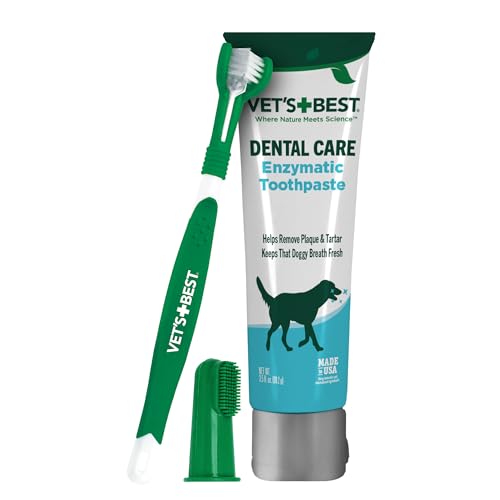
The cheapest dental cleaning is the one you delay by brushing. Daily (or every-other-day) brushing with pet-specific enzymatic toothpaste (NEVER human toothpaste — xylitol is toxic) slows tartar formation by 60–80% compared to no brushing. A 12-pack of enzymatic toothpaste and a finger brush costs $15–$30. VOHC-accepted dental chews (Veterinary Oral Health Council seal — check vohc.org for the current list) add another 10–20% plaque reduction at $25–$50/month. Water additives with chlorhexidine provide marginal benefit at $15–$25/month; skip them if you are already brushing.
The economic math: a $30/year brushing kit + $400/year VOHC chews = $430/year prevention. If that stretches cleanings from annual to every 20 months, you save $400–$900 per skipped cleaning — net $100–$500/year after prevention costs. For small breeds that can never realistically stretch beyond 9–12 months, prevention still pays off by reducing extraction counts at each cleaning (smaller tartar load = fewer hidden abscesses = fewer extractions). Large breeds with excellent brushing routinely reach 18–24 months between cleanings; a lab owner who brushes 4x/week typically pays $600/cleaning every 2 years vs $800/cleaning every year — $200/year savings from a $15 toothbrush kit.
Not all dental chews are equal. The VOHC seal is the only evidence-based dental chew accreditation — manufacturers submit clinical data showing actual plaque/tartar reduction before the seal is granted. Most grocery-aisle dental treats (including many well-advertised national brands) do NOT have the VOHC seal and provide negligible dental benefit beyond entertainment. The VOHC-approved list is short (about 35 products as of 2026) and includes specific SKUs from Greenies, OraVet, Purina Pro Plan Dental Chewz, Virbac CET, and a few others. Buying a non-VOHC "dental" treat is paying for marketing, not dental science.
Breed and diet also matter. Raw-fed dogs typically have dramatically cleaner teeth than kibble-fed dogs — the mechanical scraping action of raw meaty bones removes plaque during eating. That said, raw diets carry their own health risks (bacterial contamination, nutritional imbalance if not professionally formulated) and are not a trivial swap. A middle-ground option is adding one or two raw meaty bones per week to a conventional kibble diet under vet supervision — controversial but effective when bones are appropriate size for the dog and fed under observation. Kibble shape matters less than advertising implies: a "dental kibble" with the VOHC seal works, generic dental kibbles without the seal generally do not.
Pet-specific toothpaste is the single highest-ROI $15 in dental prevention. Dogs brushed 4+ times per week have 60–80% less tartar at cleaning time — which means fewer extractions, fewer X-ray discoveries, and cleanings that stretch from annual to every 18–24 months on average-risk dogs.
Start brushing at 3–4 months old
Puppy acclimation is everything. Daily finger-brush + treat makes lifelong brushing a non-event.
Use pet enzymatic toothpaste only
Human toothpaste contains xylitol — toxic to dogs. Enzymatic formulas work without rinsing.
Add VOHC-approved chews
Check vohc.org for the current Veterinary Oral Health Council seal. Most common brands are not on the list.
Annual vet oral exam
Even with great home care, a yearly look catches developing gingivitis before it becomes extraction territory.
Schedule anesthesia cleaning at first sign of disease
Waiting for visible tartar is waiting too long. Act on gingivitis + bad breath, not on visible yellow buildup.
Read our guide
Read our guide
Read our guide
Price vet visits, food, insurance, grooming, boarding, and more recurring pet-ownership costs.
Last Updated: Oct 15, 2026
This calculator is provided for informational and educational purposes only. Results are estimates and should not be considered professional financial, medical, legal, or other advice. Always consult a qualified professional before making important decisions. UseCalcPro is not responsible for any actions taken based on calculator results.