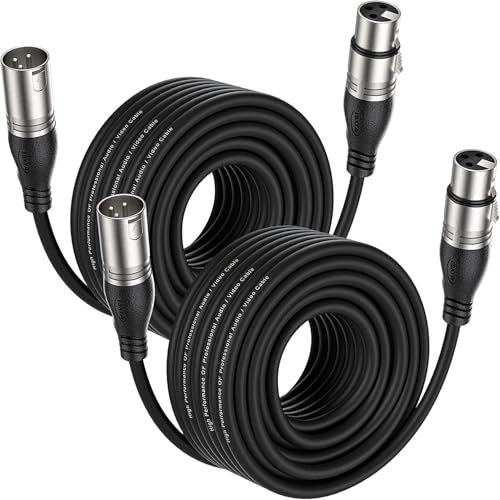
150 ft XLR cable at 10 kHz
Inputs
Result
Loss = (50/100) × 0.8 × 1.0 = 0.4 dB. Voltage ratio = 10^(–0.4/20) = 0.955 = 95.5% signal retained. Well within the 300 ft maximum for XLR.
Signal Loss
0.4 dB
Voltage
95.5%
Max Length
300 ft
Total Signal Loss
0.4 dB
4.5% voltage loss
Voltage Kept
95.5%
Max Length
300 ft
Impedance
110Ω


As an Amazon Associate, we earn from qualifying purchases.
Inputs
Result
Loss = (50/100) × 0.8 × 1.0 = 0.4 dB. Voltage ratio = 10^(–0.4/20) = 0.955 = 95.5% signal retained. Well within the 300 ft maximum for XLR.
Inputs
Result
Loss = (30/100) × 3.0 × 1.3 = 1.17 dB. Voltage ratio = 10^(–1.17/20) = 0.874 = 87.4%. Cable exceeds the 20 ft recommended maximum for RCA; consider switching to XLR with a DI box.
Inputs
Result
Loss = (200/100) × 0.3 × 0.3 = 0.18 dB. Although signal loss is low at 1 kHz, the 200 ft run exceeds the recommended 100 ft maximum, risking damping factor loss and reduced bass control.
XLR balanced cables can run up to 300 feet (90 m) with minimal loss. At 100 feet the attenuation is only about 0.8 dB at 10 kHz. Balanced signals reject common-mode noise, making XLR the best choice for long cable runs in live sound.
| Cable Type | Max Length | Loss at 100 ft (10 kHz) | Balanced |
|---|---|---|---|
| XLR | 300 ft | 0.8 dB | Yes |
| TRS | 200 ft | 1.0 dB | Yes |
| TS | 25 ft | 2.5 dB | No |
| RCA | 20 ft | 3.0 dB | No |
| Speaker (14 AWG) | 100 ft | 0.3 dB | N/A |
Balanced cables (XLR, TRS) carry the signal on two conductors with opposite polarity. Noise picked up along the run is cancelled at the receiving end. Unbalanced cables (TS, RCA) use one conductor and a shield, making them prone to noise on runs over 20–25 feet.
| Feature | Balanced (XLR/TRS) | Unbalanced (TS/RCA) |
|---|---|---|
| Noise rejection | Excellent (CMRR 60+ dB) | None |
| Max practical length | 200–300 ft | 15–25 ft |
| Signal loss | Low (0.8–1.0 dB/100ft) | High (2.5–3.0 dB/100ft) |
| Cost | Higher | Lower |
Signal loss = (cable length / 100) × attenuation rate × frequency factor. For example, 50 feet of XLR at 10 kHz: (50/100) × 0.8 × 1.0 = 0.4 dB loss. Higher frequencies suffer more attenuation, so check loss at 10–20 kHz for full-range audio.
Use a DI box when connecting an unbalanced source (guitar, keyboard) to a balanced input for runs over 20 feet. Use a signal booster or active snake for balanced runs over 300 feet. Active DI boxes can also boost weak signals from passive pickups.
Yes. High-quality cables use better shielding, lower-resistance conductors, and tighter tolerances. Cheap cables can add 20–50% more loss due to higher conductor resistance and poor shielding. Oxygen-free copper (OFC) and double-shielded cables perform best.
Explore audio, electronics, and signal calculators
Last Updated: Mar 25, 2026
This calculator is provided for informational and educational purposes only. Results are estimates and should not be considered professional financial, medical, legal, or other advice. Always consult a qualified professional before making important decisions. UseCalcPro is not responsible for any actions taken based on calculator results.