1. Calculate
Choose your project scope and see the estimated price range.
Get a realistic 2026 estimate for professional dryer vent cleaning by duct length, where the vent exits, laundry-floor access, and how clogged it is — then compare local quotes.
Instant project estimate
The estimate is free. Additional details are optional.
Complete the project details and calculate to see a price range and next steps.
Clear next step
Choose your project scope and see the estimated price range.
Understand the cost drivers and what impacts your final quote.
Carry your scope into a local quote request if you choose.

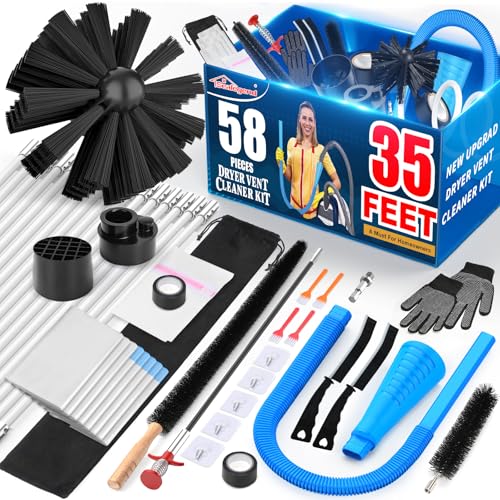

As an Amazon Associate, we earn from qualifying purchases.
Price as of Sep 16, 2026. Product prices and availability are accurate as of the date indicated and are subject to change. Any price and availability information displayed on Amazon at the time of purchase will apply.
Professional dryer vent cleaning costs $100-$200 for most US homes in 2026, averaging about $130-$150 for a standard ground-level wall vent. Roof or upper-floor vents add $25-$75, and removing a bird nest or pest clog adds $120-$250.
Most US homeowners pay $100 to $200 to have a single dryer vent professionally cleaned in 2026, with a national average around $130 to $150 for a straightforward, ground-level wall vent with routine lint. The price climbs for long duct runs with multiple 90-degree elbows, roof or upper-floor terminations that need ladders and specialty tools, and any blockage beyond ordinary lint. A short straight run sits near the floor of the range, while a long roof vent with a bird nest can reach $300 or more.
| Job Type | Typical Cost | Best For |
|---|---|---|
| Standard wall vent | $100-$180 | Ground-level laundry |
| Roof-exit vent | $150-$300 | Second-floor / rooftop run |
| Bird-nest / pest clog | $220-$400 | Blocked vent, no airflow |
| Vent + air-duct bundle | $300-$550 | Whole-home air quality |
A wall or side-exit vent at ground level is the easiest and cheapest to clean because the technician can reach both ends with a brush kit in minutes. A roof termination forces the crew onto a ladder or the roof itself, brings fall-safety and specialty rods into play, and takes longer to clear safely. That access premium typically adds $25 to $75 over the base price, and a steep or multi-story roof can push it higher. Upper-floor and stacked closet laundry setups add a smaller premium for the same reason: tight, awkward access slows the job down.
Birds, rodents, and other pests love the warm airflow of a dryer vent, and a nest or animal blockage is one of the most expensive add-ons. Removing the nest, fur, and droppings typically adds $120 to $250 on top of a standard cleaning because it requires manual extraction and sometimes partial disassembly of the duct. Installing a pest guard or animal-proof vent cover afterward runs $30 to $100 and prevents the problem from recurring. A fully clogged vent that has stopped the dryer from drying may also need multiple brush passes, raising labor.
Most manufacturers and fire-safety agencies recommend cleaning a dryer vent at least once a year, and more often for large households or long duct runs. Clogged vents cause roughly 15,000 dryer fires a year in the US and waste energy by forcing the dryer to run extra cycles. A DIY brush kit costs $15 to $40, but it only reaches the first few feet and cannot safely service roof or long runs. Paying $100 to $200 for a professional who cleans the full run, checks airflow, and inspects the termination is cheap insurance against a fire and a burned-out dryer.
Many companies offer a discount when you book dryer vent and full HVAC air-duct cleaning on the same visit, since the crew and equipment are already on site. Full air-duct cleaning runs $300 to $550 for an average home on its own, so bundling can shave $50 to $150 off the combined price versus booking separately. It only makes sense if your supply and return ducts actually need attention — visible dust at registers, recent renovation, or allergy concerns. If the ducts are clean, pay for the vent alone and skip the upsell.
Inputs
Result
A ground-level wall vent with an average duct run and ordinary lint is the textbook job most pros quote at their base rate, landing right around the national average.
Inputs
Result
Length, multiple elbows, roof access, and a higher labor market each push the price up. A long second-story roof run with heavy buildup sits near the top of the residential range.
Inputs
Result
Removing a nest, fur, and droppings is manual, time-consuming work, and a roof exit adds access cost. Installing a guard afterward prevents a repeat and is cheap relative to the removal.
Total = Base cleaning + Length & bends + Access premium + Blockage add-on + BundlesPros start from a flat base rate for a standard vent, then add for a longer or more bent duct run, harder access (roof or upper floor), any blockage beyond routine lint, and optional bundles like air-duct cleaning or a pest guard.
Where:
Base cleaning= Standard ground-level wall vent, routine lint: $100-$150Length & bends= Each extra 90-degree elbow and 10 ft of run adds passes and timeAccess premium= Roof exit adds $25-$75; upper-floor or stacked laundry adds $20-$50Blockage add-on= Bird nest or pest clog adds $120-$250; full clog needs extra passesBundles= Full air-duct cleaning $300-$550; pest guard / vent cover $30-$100Pro cost ($100-$200) vs DIY kit ($15-$40) + your time + access & fire riskA DIY brush kit is cheap but reaches only the first few feet and cannot safely service roof or long runs. Weigh the kit price against the value of a full-run cleaning, airflow check, and the fire risk a partial clean leaves behind.
Where:
Pro cost= $100-$200 for a full-run professional cleaning and inspectionDIY kit= $15-$40 brush-and-rod kit; reaches roughly the first 6-12 ft onlyYour time= 1-2 hours plus moving the dryer and cleaning up lintAccess & fire risk= Roof and long runs are unsafe to DIY; a partial clean still leaves a fire hazardDryer vent cleaning is one of the cheapest and most overlooked pieces of home maintenance, and getting the price right is easy once you know what drives it. In 2026, most US homeowners pay $100 to $200 to have a single dryer vent professionally cleaned, with a national average that sits around $130 to $150 for a straightforward job: a ground-level wall vent, an average-length duct run, and ordinary lint buildup. The full market spread runs from roughly $75 for a short, easy run to $300 or more for a long roof vent with a serious blockage.
The single biggest cost driver is the duct run itself — how long it is and how many 90-degree elbows it has. A short, straight 8-to-10-foot run cleans in minutes, while a 30-foot run with three or four bends takes multiple passes with the brush and significantly more time. Where the vent exits is the second driver: a wall or side exit at ground level is the easiest and cheapest, while a roof termination adds $25 to $75 because the crew needs ladders, fall-safety gear, and specialty rods to reach it safely. Use the calculator above to land on a number for your specific setup, then read on to understand what each input is really pricing.
It helps to know what a standard cleaning does and does not include. A base visit covers brushing and vacuuming the full duct run, clearing the lint trap housing, checking that the exterior flap opens freely, and confirming airflow at the end. It usually excludes anything beyond routine lint — a bird nest, an animal blockage, or a fully compacted clog are billed as add-ons because they require manual extraction and sometimes partial disassembly of the duct. When you compare two quotes, confirm whether the price assumes a clean, routine job or includes contingency for a blockage, because that single assumption can swing the final bill by well over a hundred dollars.
| Job Type | Typical Cost | Average | Best For |
|---|---|---|---|
| Short wall vent | $75-$130 | $100 | Straight ground-level run |
| Standard wall vent | $100-$180 | $140 | Average ground-floor laundry |
| Roof-exit vent | $150-$300 | $220 | Second-floor / rooftop run |
| Bird-nest / pest clog | $220-$400 | $300 | Blocked vent, no airflow |
Be wary of bait-and-switch coupons advertising $49 or $59 dryer vent cleaning. That headline price almost always covers only the easiest ground-level vent with no blockage, and the technician routinely adds length, access, and 'severe clog' charges on site that bring the real total to $150 or more.
Two homes on the same street can get quotes that differ by a hundred dollars, and the variance is rarely random. Vent cleaners price from a base rate and then adjust for the workload your specific duct creates — a longer, more bent, harder-to-reach, or more clogged run takes more time and tools, and labor is the overwhelming majority of what you are paying for. Reading every quote against the list below tells you whether a number is realistic or a lowball that will be revised upward once the technician is at your door.
Length and bends come first because reconciling a long, twisting run with multiple brush passes is the heart of the job. Termination point and laundry-floor access come next, since a roof or upper-floor vent brings ladders and safety gear into play. Blockage severity is the wild card: routine lint is built into the base price, but a bird nest, an animal, or a compacted clog is the most common surprise line item and the one most likely to blow past the quote.
Ask whether blockage removal is included before the technician starts. Clearing a bird nest or compacted clog is the most common surprise charge, and it is almost always billed on top of the advertised cleaning rate — confirm the add-on price up front, not after the duct is open.
Because the headline price is low, plenty of homeowners wonder whether to skip the pro and clean the vent themselves. A DIY brush-and-rod kit costs $15 to $40 at any hardware store and works fine for the first few feet behind the dryer — the section that traps the most lint. The catch is reach and safety: a consumer kit cannot navigate a long run with multiple elbows, and it cannot get you safely onto a roof. A partial clean that leaves the back half of the duct packed with lint still leaves the fire hazard fully in place.
Paying $100 to $200 for a professional buys a full-run cleaning, an airflow check, and an inspection of the exterior termination — the work that actually reduces fire and energy risk. The pro reaches the whole duct with powered rotary brushes, vacuums the debris instead of pushing it deeper, and spots problems like a crushed duct or a missing flap. If your vent is short, straight, and ground-level, an annual DIY pass between professional visits is reasonable. If it is long, bent, or roof-terminated, the professional route is the only safe one. The table below lays out where each path fits.
There is also a practical sequence most homeowners settle into. They DIY the lint trap and the first few feet every few months, then book a professional full-run cleaning once a year — more often for a large household or a long run. When the vent cleaning turns up a failing dryer, the junk removal service cost calculator prices hauling the old unit away, and if poor venting has caused moisture or mold in the laundry area, the mold remediation service cost calculator covers that cleanup.
| Approach | Typical Cost | Reaches | Best Stage |
|---|---|---|---|
| DIY brush kit | $15-$40 | First 6-12 ft only | Short straight runs |
| Pro standard cleaning | $100-$200 | Full duct run | Most homes, yearly |
| Pro + blockage removal | $220-$400 | Full run + nest/clog | No airflow, pests |
| Vent + air-duct bundle | $300-$550 | Vent + HVAC ducts | Air-quality concerns |
Never DIY a roof or long bent vent run. The combination of ladder work, limited reach, and a false sense that the duct is now clean is exactly how partial DIY jobs leave a fire hazard behind — this is the case where the $100-$200 professional fee is genuinely cheap insurance.
The cheapest vent cleaning is the one that prevents a fire or a burned-out dryer, so learn the warning signs and act before the duct fully clogs. The clearest signal is drying time: when clothes take two cycles to dry, or come out hot and still damp, the airflow is restricted. A laundry room that runs hot and humid during a cycle, a burning or musty smell, or a flap on the exterior wall that no longer opens are all signs the run is packed with lint. Fire-safety agencies tie clogged dryer vents to roughly 15,000 US house fires a year, which is why an annual cleaning is the standard recommendation.
When you hire, vet on transparency rather than the lowest coupon. Get two or three quotes that state whether the price assumes a routine job or includes blockage contingency, what the roof or upper-floor access charge is, and whether the company carries liability insurance for ladder work. A quote that is dramatically below the others usually assumes the easiest possible vent and excludes the access and blockage charges your real setup will trigger — the gap reappears as add-ons on the invoice. Confirm the technician vacuums debris out rather than blowing it deeper, and ask whether they check airflow at the end.
Finally, think of vent cleaning as recurring maintenance, not a one-time fix. Pair it with the rest of your home-service calendar: many homeowners book it the same season as exterior cleaning, so the pressure washing service cost calculator and carpet cleaning service cost calculator help budget the whole maintenance bundle at once. Agree up front on how often you want the vent serviced, whether a pest guard makes sense for your exterior, and what the company charges to come back if airflow problems return within the warranty window.
Never choose a vent cleaner on price alone. A company that pushes lint deeper instead of extracting it, or skips the airflow check, leaves the fire hazard in place — the few dollars saved are nothing against a dryer fire or a replacement appliance.
Watch for warning signs
Long dry times, a hot laundry room, a burning smell, or an exterior flap that will not open all mean the vent is clogging.
Set an annual schedule
Clean at least once a year, more often for large households or long runs, to cut fire and energy risk.
Collect two to three quotes
Insist each one states roof/upper-floor access charges and whether blockage removal is included or billed on top.
Confirm method and insurance
The crew should vacuum debris out, not blow it deeper, and carry liability coverage for any ladder or roof work.
Consider a pest guard
If birds or rodents have nested before, add a $30-$100 animal-proof vent cover to stop the problem recurring.
Read our guide
Read our guide
Read our guide
Price cleaning, repairs, HVAC, and home-maintenance services, then compare local quotes before you book the work.
Last Updated: Sep 16, 2026
This calculator is provided for informational and educational purposes only. Results are estimates and should not be considered professional financial, medical, legal, or other advice. Always consult a qualified professional before making important decisions. UseCalcPro is not responsible for any actions taken based on calculator results.