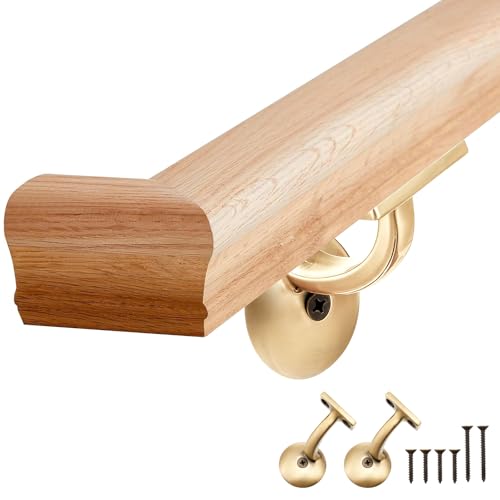
1Single stair handrail with both returns
Inputs
Result
The finished handrail ends up noticeably longer than the sloped stair measurement alone.
Cut Length Per Side
18.2 ft
Total Rail
18.2 ft
Brackets
6
Wall-mounted handrails commonly use brackets every 3-4 feet with one near each end.
Handrail Cut Length
18.2
ft per side
Stair Angle
39.3 deg
Slope Only
14.2 ft
Brackets
6
Total Rail
18.2 ft
8 ft Sections
3
12 ft Sections
2
Inputs
Result
The finished handrail ends up noticeably longer than the sloped stair measurement alone.
Inputs
Result
A short 3-step handrail with extensions but no returns, common for half-wall or open-side installations.
Start with the sloped stair run, then add any landing extensions and returns. A handrail is usually longer than the pure stair slope because the rail often continues beyond the first and last riser.
A practical layout uses one bracket near each end and additional brackets every few feet in between. Exact spacing varies by rail material, wall anchors, and local code requirements.
Most building codes require stair handrails between 34 and 38 inches measured vertically from the stair nosing to the top of the rail. Landing handrails are often between 36 and 42 inches.
Returns prevent clothing from catching on exposed rail ends and are required by most building codes. Some installations use wall returns that curve back into the wall, while others use decorative end caps.
Explore stair, railing, framing, and trim calculators for build planning.
Last Updated: Mar 11, 2026
This calculator is provided for informational and educational purposes only. Results are estimates and should not be considered professional financial, medical, legal, or other advice. Always consult a qualified professional before making important decisions. UseCalcPro is not responsible for any actions taken based on calculator results.