1. Calculate
Choose your project scope and see the estimated price range.
Get a realistic 2026 estimate for a home inspection by square footage, home age, foundation, and add-on tests — then compare quotes from local inspectors.
Instant project estimate
The estimate is free. Additional details are optional.
Complete the project details and calculate to see a price range and next steps.
Clear next step
Choose your project scope and see the estimated price range.
Understand the cost drivers and what impacts your final quote.
Carry your scope into a local quote request if you choose.

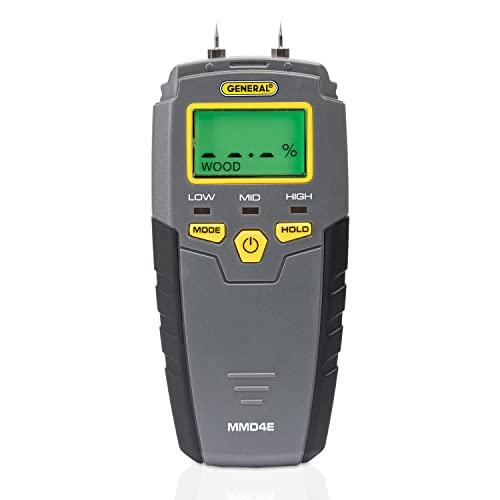

As an Amazon Associate, we earn from qualifying purchases.
Price as of Sep 16, 2026. Product prices and availability are accurate as of the date indicated and are subject to change. Any price and availability information displayed on Amazon at the time of purchase will apply.
A home inspection costs $300 to $500 for most US buyers in 2026, with an average near $343. Add-on tests stack on top: radon $125-$200, sewer scope $150-$350, termite $75-$125, and mold $150-$300, so a full package often runs $600 to $1,200.
A standard home inspection costs $300 to $500 for most US buyers in 2026, with a national average around $343 and a typical range of $296 to $424. Price scales with square footage at roughly $0.10 to $0.20 per square foot, so a home under 1,000 sqft can run about $200 while a 3,000+ sqft house lands at $400 to $600. High-cost metros like Hartford average near $489, while lower-cost markets like Detroit sit closer to $294.
| Home Size | Typical Cost | Notes |
|---|---|---|
| Under 1,000 sqft | $200 - $300 | Condo / small home |
| 1,000 - 2,000 sqft | $300 - $400 | Most common range |
| 2,000 - 3,000 sqft | $375 - $500 | Larger single-family |
| Over 3,000 sqft | $400 - $600 | More systems to inspect |
Add-on tests are billed on top of the standard inspection because hazards like radon, termites, and sewer damage are not part of a basic visual inspection. Radon testing runs $125 to $200, a termite or wood-destroying-insect inspection $75 to $125, a sewer scope $150 to $350, and a mold test $150 to $300. Bundling several add-ons with the base inspection usually pushes the total to $600 to $1,200, and each test can flag a five-figure repair before you close.
| Add-On | Typical Cost | What It Catches |
|---|---|---|
| Radon test | $125 - $200 | Mitigation system ~$1,000-$2,500 |
| Sewer scope | $150 - $350 | Line replacement up to $15,000 |
| Termite (WDI) | $75 - $125 | Structural damage repairs |
| Mold test | $150 - $300 | Remediation $1,500-$6,000 |
Square footage is the biggest driver, but age, foundation type, and location all move the price. Older homes take longer to inspect and often need more add-on testing. A full basement or crawlspace adds access work that a slab does not, and high-cost labor markets run 20 to 40 percent above the national average. Detached structures, pools, and outbuildings are usually inspected for an extra fee.
Yes for almost every buyer. A $400 inspection routinely uncovers issues worth thousands to tens of thousands of dollars in negotiating leverage or avoided repairs. A $150 radon test can save a $1,000 to $2,500 mitigation surprise, and a $200 sewer scope can flag a $15,000 line replacement before you own it. Inspection results are commonly used to renegotiate price or request repairs, so the fee usually pays for itself many times over.
The buyer almost always pays for the home inspection, typically $300 to $600 with add-ons, because it protects the buyer's purchase decision. The fee is usually paid directly to the inspector at the time of service, separate from closing costs. Some sellers order a pre-listing inspection to head off surprises, but in a standard transaction the buyer commissions and pays for their own independent inspection.
Inputs
Result
A modern slab home of average size with no specialty testing sits right at the national average. A slab foundation and recent construction keep inspection time and price near the floor.
Inputs
Result
A larger mid-age home with a basement needs more inspection time, and the radon plus sewer-scope add-ons stack on top of the base fee. Older homes commonly justify both tests.
Inputs
Result
A large older home with a crawlspace and a full battery of add-on tests in a high-cost market lands near the top of the range. Age and foundation drive both base price and the case for every add-on.
Total fee = Base inspection (size x per-sqft rate) + Age/foundation adjustment + Regional multiplier + Add-on testsA home inspection is priced from square footage, then adjusted for age, foundation access, and local labor rates, with specialty tests added on top. Start from the per-square-foot base and layer the other drivers.
Where:
Base inspection= Roughly $0.10-$0.20 per sqft; $300-$500 for a typical home, near $200 under 1,000 sqft and $400-$600 over 3,000 sqftAge/foundation adjustment= Older homes, basements, and crawlspaces add inspection time over a newer slab homeRegional multiplier= High-cost metros run 20-40% above the national average; lower-cost markets run belowAdd-on tests= Radon $125-$200, sewer scope $150-$350, termite $75-$125, mold $150-$300, thermal imaging $100-$150Net value = Avoided repair or mitigation cost - Test costEach add-on test is worth ordering when the repair or mitigation it can uncover dwarfs the test fee, which is almost always the case for radon, sewer, and mold on older homes.
Where:
Test cost= The add-on fee: radon $125-$200, sewer scope $150-$350, mold $150-$300Avoided cost= Radon mitigation $1,000-$2,500, sewer line replacement up to $15,000, mold remediation $1,500-$6,000Net value= Negotiating leverage or avoided spending — usually many multiples of the test fee on older homesA standard inspection is a generalist's visual walk-through: the inspector looks at what is plainly visible and reachable and notes anything that appears defective. It does not include putting a camera down a sewer line, leaving radon canisters in a basement for 48 hours, or pulling a mold sample for lab analysis. Those tasks need dedicated equipment, certifications, and time, so inspectors price them separately. On an older home or one with a basement, ordering two or three of them is not gold-plating -- it is how buyers avoid the most expensive post-closing surprises.
The four add-ons buyers reach for most are radon testing at $125 to $200, a sewer scope at $150 to $350, a termite or wood-destroying-insect (WDI) inspection at $75 to $125, and a mold test at $150 to $300. Thermal imaging, which finds hidden moisture and missing insulation, runs $100 to $150 and is sometimes bundled in for free by inspectors who own a camera. Pool, chimney, septic, and well tests are each their own $75 to $300 line item depending on the system. Stack the common four onto a base inspection and the total package usually lands at $600 to $1,200, which matches the upper range a fully optioned purchase produces.
The reason these add-ons are worth ordering is the asymmetry between the test fee and the repair it can flag. A $150 radon test that comes back high points to a mitigation system that costs $1,000 to $2,500 to install -- money you want the seller to credit, not money you discover after you own the house. A $200 sewer scope that finds root intrusion or a collapsed clay line can mean a $15,000 replacement, and catching it before closing turns it into a price concession. Mold remediation runs $1,500 to $6,000, and termite damage can be structural. In every case the test costs a fraction of what it can save.
Match the add-ons to the home rather than buying every test reflexively. Radon makes sense almost everywhere but especially in basement-heavy regions of the Midwest and Northeast. A sewer scope is most valuable on homes more than 25 years old or on lots with mature trees whose roots invade pipes. Termite inspections are effectively mandatory in the Southeast and are sometimes lender-required. Mold and thermal imaging earn their fee on any home with a history of moisture, a crawlspace, or visible staining.
| Add-On Test | Typical Cost | When to Order It | Repair It Can Flag |
|---|---|---|---|
| Radon test | $125 - $200 | Basements, Midwest/Northeast | Mitigation $1,000 - $2,500 |
| Sewer scope | $150 - $350 | Homes 25+ yrs, mature trees | Line replacement up to $15,000 |
| Termite / WDI | $75 - $125 | Southeast, lender-required | Structural wood damage |
| Mold test | $150 - $300 | Moisture history, crawlspace | Remediation $1,500 - $6,000 |
| Thermal imaging | $100 - $150 | Hidden moisture, insulation | Leaks, energy loss |
| Pool / chimney | $75 - $300 | Property-specific systems | Equipment or liner repairs |
Order add-ons during the inspection contingency window, not after. A test that comes back bad is only leverage while you still have a contractual right to renegotiate or cancel -- once that window closes, the same finding is your problem to pay for.
A modern inspection report runs 20 to 60 pages and is organized by system -- roof, exterior, foundation, plumbing, electrical, HVAC, interior -- with photos and a severity label on each finding. The volume of items can be alarming on a first read, but most reports flag dozens of minor maintenance notes that no buyer should chase. The skill is separating the cosmetic and the routine from the few findings that carry real cost or safety weight, because that is the short list you actually negotiate against.
Triage every finding into three buckets. Safety and major-system defects come first: an active roof leak, a cracked heat exchanger, knob-and-tube or aluminum wiring, foundation movement, a failed water heater, or anything the report marks as a safety hazard. These are the items that justify a price concession or a repair demand. Deferred-maintenance items -- worn caulk, a dripping faucet, a dirty furnace filter -- are normal for a lived-in home and are usually yours to fix over time. Cosmetic notes are not negotiating material at all. Anchor your repair requests to the first bucket and you keep the seller's goodwill while still protecting yourself.
Translate the findings into dollars before you make an ask, which is exactly where add-on results and repair-cost calculators pay off. A report that says the sewer line shows root intrusion means little until you price a $15,000 replacement; a high radon reading means little until you attach the $1,000 to $2,500 mitigation cost. Sellers respond to specific, documented numbers far better than to vague requests, so pair each major finding with a written estimate. Buyers typically choose one of three remedies: ask the seller to complete repairs before closing, request a price reduction equal to the repair estimate, or take a closing-cost credit -- and a credit is often cleanest because you control the contractor and the quality.
Know when the report tells you to walk. The inspection contingency exists so you can cancel without penalty if the findings are worse than the deal can absorb, and stacked major defects -- a failing foundation plus an old roof plus outdated electrical -- can add up to more than the home is worth fixing. Spending $300 to $1,200 to discover that early is the cheapest possible outcome. The fee is not the cost of the inspection; the cost of skipping it is every repair you would have negotiated and every hazard you would have caught.
| Finding Type | Example | Negotiating Weight | Typical Buyer Move |
|---|---|---|---|
| Safety / major system | Roof leak, bad wiring, foundation | High | Price cut or repair demand |
| Add-on hazard result | High radon, failed sewer scope | High | Credit for mitigation/repair |
| Deferred maintenance | Worn caulk, dripping faucet | Low | Fix yourself over time |
| Cosmetic | Paint scuffs, dated fixtures | None | Ignore in negotiation |
Lead your repair request with the two or three highest-cost, safety-related findings backed by written estimates. A focused, documented ask lands far better than a line-by-line list of every cosmetic blemish in the report.
Read our guide
Read our guide
Read our guide
Price inspections, repairs, and renovations — from radon mitigation and sewer lines to foundations and remodels — before you buy or close.
Last Updated: Sep 16, 2026
This calculator is provided for informational and educational purposes only. Results are estimates and should not be considered professional financial, medical, legal, or other advice. Always consult a qualified professional before making important decisions. UseCalcPro is not responsible for any actions taken based on calculator results.