1. Calculate
Choose your project scope and see the estimated price range.
Get a 2026 estimate for asbestos testing and inspection — single sample, multi-sample, or whole-home survey — then connect with a certified inspector in your area.
Instant project estimate
The estimate is free. Additional details are optional.
Complete the project details and calculate to see a price range and next steps.
Clear next step
Choose your project scope and see the estimated price range.
Understand the cost drivers and what impacts your final quote.
Carry your scope into a local quote request if you choose.


As an Amazon Associate, we earn from qualifying purchases.
Price as of Sep 18, 2026. Product prices and availability are accurate as of the date indicated and are subject to change. Any price and availability information displayed on Amazon at the time of purchase will apply.
A single-sample asbestos test — one suspect material collected and sent to a certified lab — runs $200–$450 in most US markets. Multi-sample inspections (2–5 materials in one visit) typically land at $350–$700, while a full whole-home survey covering 5–10+ sample points ranges from $500 to $900. Rush 24-hour lab turnaround adds 30–50% to the lab portion. These figures cover testing and reporting only — not removal.
| Test Type | Typical Low | Typical High |
|---|---|---|
| Single sample (PLM, standard) | $200 | $450 |
| Multi-sample 3–5 (PLM, standard) | $350 | $700 |
| Full home inspection (PLM) | $500 | $900 |
| TEM upgrade (per sample) | +$50 | +$90 |
| Rush 24-hr turnaround | +30% | +50% on lab |
PLM (polarized light microscopy) is the standard AHERA-compliant method used for bulk solid samples — floor tiles, pipe insulation, drywall compound, ceiling texture. It costs $30–$60 per sample and identifies asbestos fiber type and percentage. TEM (transmission electron microscopy) is more powerful: it can detect chrysotile at lower concentrations, confirm results when PLM is inconclusive, and is required for air-clearance testing after removal. TEM costs $80–$150 per sample, or 2–3x more. For most pre-purchase or pre-renovation inspections, PLM is sufficient.
| Feature | PLM | TEM |
|---|---|---|
| Cost per sample | $30–$60 | $80–$150 |
| AHERA bulk compliance | Yes | Yes (higher sensitivity) |
| Air clearance after removal | No | Yes (required) |
| Turnaround (standard) | 5–10 days | 7–14 days |
| Best use case | Pre-reno survey | Post-abatement clearance |
Homes built or renovated before 1980 are the highest risk. The most common asbestos-containing materials (ACMs) are vinyl floor tiles and the mastic adhesive beneath them, textured ceiling paint ("popcorn ceilings"), pipe insulation on HVAC and plumbing, vermiculite attic insulation, drywall joint compound, roof shingles and siding, and furnace/boiler insulation blankets. Not all of these materials were universally manufactured with asbestos, which is why sampling and lab confirmation is required — visual inspection alone cannot confirm or rule out asbestos content.
Most states require a licensed asbestos survey before any demolition or renovation of a structure built before 1980 if the disturbance will exceed a specified threshold (commonly 160 sqft of material or 260 linear feet of pipe wrap). For home sales, testing is not universally required by law, but lenders, buyers, and local ordinances increasingly demand it for pre-1980 construction. Sellers who test proactively can disclose results upfront and avoid last-minute renegotiations. A certified inspector’s report typically satisfies bank and buyer due-diligence requirements.
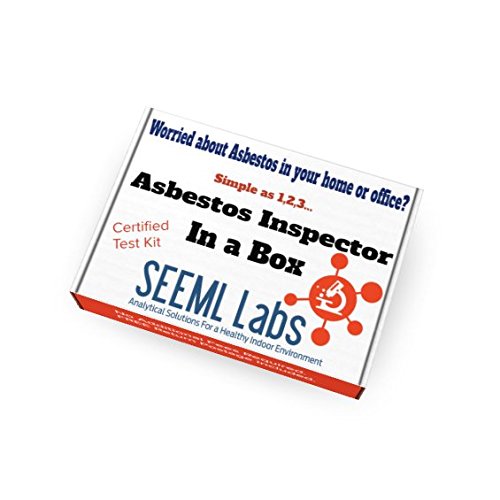
DIY mail-in asbestos testing kits are sold for $30–$75 (kit + lab fee). You collect a small sample, mail it to an accredited lab, and receive a PLM report in 5–10 days. However, DIY kits have key limitations: improper sampling technique can release fibers, the chain-of-custody documentation is insufficient for most contractors, permits, and legal disclosures, and sampling by an uncertified person may violate state regulations. For any professional, contractual, or regulatory purpose, hire a certified industrial hygienist or asbestos inspector.
| Option | Cost | Legal / Contractor Use |
|---|---|---|
| DIY mail-in kit | $30–$75 | No |
| Certified inspector (PLM) | $200–$450 | Yes |
| Certified inspector (TEM) | $350–$700 | Yes (clearance) |
| Full home survey | $500–$900 | Yes (demolition/sale) |
Asbestos testing (also called inspection or survey) is the process of collecting physical samples from suspect materials, submitting them to an accredited lab, and producing a written report identifying which materials contain asbestos and at what percentage. The inspector does not remove material; they disturb only a small sample fragment. Asbestos abatement or removal is a separate, much more expensive scope: licensed contractors encapsulate or physically remove ACMs under containment protocols, dispose of waste in sealed containers at regulated landfills, and may be required to perform air clearance testing afterward. Testing costs $200–$900; removal costs $1,500–$30,000+ depending on the scope.
Inputs
Result
A single PLM sample of a 1960s bathroom floor tile is the most common asbestos test. The inspector spends 30–45 minutes on site, collects a thumbnail-size fragment, and the lab returns results in 5–10 days. Total cost sits well within the single-sample range.
Inputs
Result
A pre-renovation survey for a kitchen and basement remodel in Boston or New York covering ceiling texture, pipe insulation, and floor tile. Northeast labor rates add 20–30% over the Midwest baseline. Bundling all samples into a single inspector visit keeps the per-sample cost lower than separate visits.
Inputs
Result
A 1960s home with suspected vermiculite attic insulation (Zonolite) combined with TEM analysis and rush turnaround for a closing deadline. TEM at $100–$150/sample plus rush surcharge drives the cost toward the top of the range. California labor adds another 25–35% over the national average.
Total = Inspector visit fee + (Samples × Per-sample collection) + (Samples × Lab fee) + Rush surchargeA certified asbestos inspector charges a base visit/mobilization fee ($100–$200) plus a per-sample collection charge ($30–$75/sample). The lab then charges separately for analysis: $30–$60 for PLM, $80–$150 for TEM. Rush turnaround applies a 30–50% multiplier to the lab portion only, not the inspector visit.
Where:
Inspector visit fee= Base mobilization charge: $100–$200 per visit regardless of sample countPer-sample collection= Labor to safely extract a bulk sample: $30–$75 eachLab fee (PLM)= Polarized light microscopy per sample: $30–$60 (AHERA standard)Lab fee (TEM)= Transmission electron microscopy per sample: $80–$150 (clearance or inconclusive PLM)Rush surcharge= 30–50% added to lab fee for 24–48 hour turnaroundMulti-sample cost = Single-visit base + (n − 1) × Incremental per sampleBecause the inspector visit is a fixed cost, adding samples to a single visit is cheaper than scheduling separate visits. The first sample in a visit might cost $250–$350 all-in; each additional sample adds $80–$150 (collection + lab). Bundling a full home survey into one visit delivers the best per-sample value.
Where:
Single-visit base= First sample all-in: $200–$350 (visit + collection + lab + report)n= Total number of samples collected in the visitIncremental per sample= $80–$150 per additional sample (collection + lab; no extra visit fee)The most common asbestos test is a single-material PLM (polarized light microscopy) inspection: one suspect material sampled, analyzed, and reported. In most US markets this lands at $200–$450, with the inspector visit and mobilization fee making up roughly half the cost and the lab analysis adding $30–$60 per sample. Multi-sample inspections covering two to five materials in a single visit typically run $350–$700, while a systematic whole-home survey with five to ten or more sample points runs $500–$900.
Rush laboratory turnaround — 24 to 48 hours versus the standard 5 to 10 business days — adds 30 to 50 percent to the lab portion only. Because rush adds to the lab fee rather than the inspector visit, its dollar impact scales with the number of samples. On a single PLM sample the rush premium is $10–$30; on a ten-sample full home survey analyzed by TEM it can add $350 or more.
| Test Type | Lab Method | Typical Range |
|---|---|---|
| Single sample | PLM standard | $200–$450 |
| Multi-sample (3–5) | PLM standard | $350–$700 |
| Full home inspection | PLM standard | $500–$900 |
| Single sample | TEM precise | $350–$600 |
| Rush surcharge | Any | +30–50% on lab fee |
These figures cover TESTING only. Asbestos abatement or removal is a separate scope that starts at $1,500 and averages $5,000–$15,000 for a typical residential job.
PLM (polarized light microscopy) is the standard AHERA-compliant method for analyzing bulk solid samples. A technician examines a prepared fragment under polarized light, identifies fiber morphology, and reports asbestos type and percentage. PLM costs $30–$60 per sample and handles the vast majority of common residential ACMs: vinyl floor tiles, drywall compound, ceiling texture, pipe insulation, roofing felt, and siding. For pre-renovation surveys and real estate disclosure purposes, PLM is the accepted standard.
TEM (transmission electron microscopy) uses an electron beam to image fibers at much higher resolution, detecting chrysotile asbestos at lower concentrations and distinguishing it from non-asbestiform amphiboles that can confuse PLM results. TEM is required for two specific situations: air clearance testing after abatement (confirming the area is safe after removal), and cases where PLM is inconclusive or the material is suspected to be high-risk (vermiculite insulation from Libby-sourced mines, for example). TEM costs $80–$150 per sample — two to three times the PLM rate.
For a standard pre-renovation survey or pre-sale disclosure, PLM is sufficient and costs 60–70% less than TEM. Reserve TEM for post-abatement air clearance or when PLM results are inconclusive.
Federal NESHAP (National Emission Standards for Hazardous Air Pollutants) regulations require an asbestos inspection before any demolition or renovation that will disturb suspect materials in a facility built before 1980. For residential single-family homes, the threshold that triggers mandatory pre-renovation testing varies by state — commonly 160 square feet of material or 260 linear feet of pipe wrap. Most states also require that the inspection be performed by a state-certified inspector and that any identified ACMs be disclosed to contractors before work begins.
For home sales, asbestos testing is not federally required, but lenders (especially FHA/VA), buyers, and local ordinances increasingly demand it for pre-1980 construction. Sellers who commission a test and disclose results proactively tend to avoid renegotiations and closing delays. A certified inspector’s report — not a DIY kit result — is what satisfies most lender and buyer due-diligence requirements.
The single most effective way to reduce cost is to bundle all suspect materials into one inspector visit. Inspectors charge a base mobilization fee of $100–$200 regardless of how many samples they collect; adding a second or third sample to the same visit typically costs only $80–$150 per sample (collection plus lab), compared to paying a full new visit fee for a second appointment. If you have three suspect materials, scheduling them together instead of separately can save $150–$300.
Choosing PLM instead of TEM also delivers significant savings. For the 95% of residential testing situations where PLM is legally sufficient, switching from TEM to PLM cuts the lab cost by 50–60% per sample. If you are running a full home survey with eight samples, the difference between PLM and TEM adds up to $400–$700. Ask the inspector to use TEM only on materials where PLM is inconclusive, rather than ordering TEM across the board.
Read our guide
Read our guide
Read our guide
Estimate costs for home inspections, mold remediation, asbestos removal, roofing, and dozens more remodeling projects.
Last Updated: Sep 18, 2026
This calculator is provided for informational and educational purposes only. Results are estimates and should not be considered professional financial, medical, legal, or other advice. Always consult a qualified professional before making important decisions. UseCalcPro is not responsible for any actions taken based on calculator results.