1. Calculate
Choose your project scope and see the estimated price range.
Price a 2026 interior door project by door type (hinged, French, barn, pocket), core material, install method, and count — then collect 3 quotes for true scope.
Instant project estimate
The estimate is free. Additional details are optional.
Complete the project details and calculate to see a price range and next steps.
Clear next step
Choose your project scope and see the estimated price range.
Understand the cost drivers and what impacts your final quote.
Carry your scope into a local quote request if you choose.
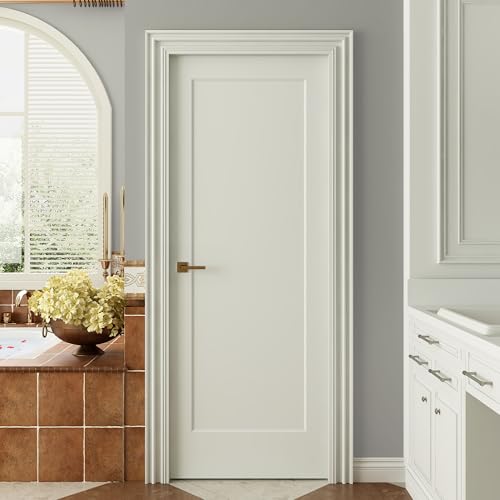


As an Amazon Associate, we earn from qualifying purchases.
Price as of Sep 17, 2026. Product prices and availability are accurate as of the date indicated and are subject to change. Any price and availability information displayed on Amazon at the time of purchase will apply.
A single interior door averages $362–$1,235 installed, with a national average near $798. Hollow-core prehung runs $150–$500, solid-core $400–$1,200, French doubles $700–$2,500, barn doors $575–$1,100, and pocket doors $800–$2,500 because of the wall work. Labor alone is $100–$300 per door.
| Door Type | Typical Installed Range | Notes |
|---|---|---|
| Hollow-core hinged | $150–$500 | Builder-grade default |
| Solid-core hinged | $400–$1,200 | Best sound isolation |
| Closet / bifold | $150–$600 | Lightweight, fast install |
| French (double) | $700–$2,500 | 4–6 hrs alignment |
| Sliding barn | $575–$1,100 | Surface-mount hardware |
| Pocket door | $800–$2,500 | Needs wall framing work |
Slab-only installation is cheaper when your existing frame is square and undamaged — you reuse the jamb and just hang a new slab for $100–$300 labor. Pre-hung doors include a new frame and hinges, simplifying the carpentry but adding $150–$500 to material cost. Pre-hung is worth it on out-of-square or damaged openings.
Pocket doors ($800–$2,500) require opening the wall to build a hidden cavity — a full-day job versus 1–3 hours for a hinged door. French doubles ($700–$2,500) need 4–6 hours to align two leaves so they meet flush. Both add labor that simple hinged swaps never incur, which is why per-door totals jump.
Yes. New door casing or trim adds $90–$155 per door (or $2–$4 per linear foot). Replacing hardware — knobs, levers, hinges — runs $60–$200 per door depending on quality. These line items are often quoted separately, so confirm whether they are bundled before you compare bids across contractors.
Bundle 3+ doors in one visit to cut per-door labor 15–20% — the crew makes one trip instead of several. Reuse square existing frames with slab-only swaps, choose hollow-core for closets and solid-core only where sound matters, and supply your own doors so you pay just $100–$300 labor per opening.
A slab swap on a square existing jamb is a doable DIY for handy owners with $30–$240 in materials. Pre-hung, French, and pocket doors are harder — plumb, level, and reveal tolerances are unforgiving, and a crooked door binds or swings open on its own. Pocket and French doors are best left to a pro.
Inputs
Result
Bundling six doors in one visit is the cheapest way to refresh a whole floor. Hollow-core is fine for closets and low-traffic rooms.
Inputs
Result
Solid-core doors block far more sound than hollow-core — the single best upgrade for bedroom and bathroom privacy.
Inputs
Result
Pocket doors save floor space but the hidden wall cavity makes them the priciest interior door to retrofit into an existing wall.
Quote = (Door × Count) + Install labor + Trim/Casing + Hardware + Wall/Frame work − Bundle discountInterior door quotes are labor-light and material-driven for hinged doors, but pocket and French doors add hours of carpentry. Trim adds $90–$155 per door, hardware $60–$200, and bundling 3+ doors trims 15–20% off labor.
Where:
Door= Hollow-core $30–$240; solid-core $60–$330; French/barn/pocket slab higherInstall labor= $100–$300 per door at $30–$80/hour; 1–3 hrs hinged, full day pocketTrim/Casing= $90–$155 per door or $2–$4 per linear footHardware= Knobs, levers, hinges: $60–$200 per doorWall/Frame work= Pocket cavity, jamb rot, or reframing: +$50–$1,500Interior door installation in 2026 spans a wide range, from $155 for a simple hollow-core slab swap to $2,800 for a pocket or French door, with the national average for a single door landing near $798 and a typical band of $362–$1,235. The biggest swing factor is door type: a standard hinged door is the cheap end, while pocket doors carry hidden wall work that triples the labor. Most homeowners replacing whole-floor doors at once see per-door costs settle toward the lower half of these ranges thanks to bundle pricing.
Labor is a smaller share of the bill than on exterior doors. A finish carpenter charges $30–$80 per hour and needs 1–3 hours for a typical hinged door, so labor alone runs $100–$300 per opening. Material is where the numbers move: a hollow-core slab is $30–$240, a solid-core slab $60–$330, and a pre-hung unit adds $150–$500 for the frame and hinges. If you are bundling doors into a larger project, the home renovation estimator helps you size the full budget across trades.
Whole-house projects scale predictably. A typical 1,800 sq ft home has 8–12 interior doors; replacing all of them runs $2,000–$6,000 depending on core material and whether you DIY or hire out. The table below anchors the per-door ranges so you can sanity-check any contractor quote before you sign — anything 20% above these bands deserves a line-item explanation.
| Door Type | Installed Cost | Labor Time |
|---|---|---|
| Hollow-core hinged | $150–$500 | 1–2 hrs |
| Solid-core hinged | $400–$1,200 | 1–3 hrs |
| Closet / bifold | $150–$600 | 1–2 hrs |
| French (double) | $700–$2,500 | 4–6 hrs |
| Sliding barn | $575–$1,100 | 3–4 hrs |
| Pocket door | $800–$2,500 | Full day |
Bundling 3 or more doors into a single visit cuts per-door labor 15–20% because the crew makes one trip instead of several. On six doors that can save $300–$600 versus replacing them one at a time.
Core material drives both cost and how a door feels and sounds. Hollow-core doors are the builder-grade default at $30–$240 for the slab and $150–$500 installed — light, cheap, and fine for closets and low-traffic rooms, but they sound tinny and block almost no sound. Solid-core doors at $60–$330 for the slab and $400–$1,200 installed have a particleboard or composite center that dramatically improves sound isolation, making them the smart pick for bedrooms, bathrooms, and home offices.
Solid wood doors run $500–$2,000 installed and are the premium aesthetic choice for character homes and upper-market interiors. They can be stained or painted, refinished repeatedly, and last for decades, but they cost the most and can swell or stick in high-humidity rooms. Glass-panel doors ($400–$1,800) bring light into interior rooms and are common for offices and French-style openings, though they trade away privacy and sound control.
For most homeowners the practical answer is a mix: hollow-core where nobody cares about sound, solid-core wherever privacy matters, and solid wood or glass only at feature openings. Spending $250–$700 extra per door to go solid-core on bedrooms is one of the most rarely-regretted interior upgrades. If you are also upgrading exterior openings, the door replacement cost calculator covers entry and patio doors separately.
| Core Type | Slab Price | Installed Price | Best For |
|---|---|---|---|
| Hollow-core | $30–$240 | $150–$500 | Closets, low-traffic |
| Solid-core | $60–$330 | $400–$1,200 | Bedrooms, baths, offices |
| Solid wood | $200–$1,000 | $500–$2,000 | Premium, character homes |
| Glass-panel | $150–$900 | $400–$1,800 | Offices, light-sharing |
Solid-core doors cost $250–$700 more per opening than hollow-core but block far more sound. On bedrooms and bathrooms the privacy upgrade is almost always worth it; closets rarely justify the spend.
The install method matters as much as the door itself. A slab-only swap reuses your existing frame and hinges — you simply hang a new door leaf, mortise the hinges, and bore the handle. When the existing jamb is square and undamaged, this is the cheapest route at $100–$300 in labor plus the slab price. The catch is that slab swaps demand a sound, plumb opening; if the frame is out of square, the new door will bind or show uneven gaps.
Pre-hung doors arrive as a complete unit — slab, frame, and hinges pre-assembled — and cost $150–$500 more in material than a bare slab. That premium buys a fresh, square frame, which is exactly what you want on openings that are damaged, painted shut, or never sat plumb. Pre-hung is also faster for crews on rough or remodeled openings because they are not fighting an old jamb. Expect $170–$804 per pre-hung door installed depending on size and material.
The decision rule is simple: slab if the frame is good and you are matching an existing opening; pre-hung if the frame is compromised or you are changing door size or swing. On a multi-door project, mixing both — slab where frames are fine, pre-hung where they are not — keeps the total down. Always confirm which method each bid assumes, because a slab quote and a pre-hung quote are not comparable on price alone.
Specialty doors carry premium labor because they are not simple swaps. French (double) doors run $700–$2,500 installed and need 4–6 hours to align two leaves so they meet flush in the center and swing evenly — a job that punishes any error in the rough opening. They are popular for offices, dining rooms, and primary suites where a wide, light-sharing opening is the goal.
Sliding barn doors at $575–$1,100 installed mount on surface hardware and skip the in-wall work, but the track must hit solid blocking, and heavier slabs need stronger rails. A typical barn door takes 3–4 hours at $40–$90 per hour. Pocket doors are the priciest at $800–$2,500 because retrofitting one means opening the wall, building a hidden cavity for the slab, and patching the drywall — often a full day of work. New construction pocket doors cost far less than retrofits since the framing is already open.
Because pocket and reframed openings disturb the wall, budget for drywall repair on top of the door price; the drywall installation cost calculator helps size that patch work. Expect to add $150–$400 for drywall patching and paint after a pocket-door retrofit, plus $50–$400 if the framing needs adjusting. These add-ons are why specialty doors deserve their own line in any quote.
| Specialty Door | Installed Cost | Why It Costs More |
|---|---|---|
| French (double) | $700–$2,500 | 4–6 hrs dual-leaf alignment |
| Sliding barn | $575–$1,100 | Track blocking + heavy hardware |
| Pocket (retrofit) | $800–$2,500 | Open wall, build cavity, patch |
| Pocket (new build) | $500–$1,200 | Framing already open |
A pocket door costs $300–$1,000 more to retrofit into an existing wall than to install during new construction. If you are already opening a wall for a remodel, that is the cheapest moment to add one.
Several line items can turn a tidy door quote into a surprise invoice. Unlevel floors or walls require extra shimming, cutting, or frame adjustment, adding $50–$200 per opening. Rot or mold in the framing means new lumber and moisture barrier at $150–$400. Mismatched jambs or non-standard rough openings need reframing, sanding, or custom cuts at $100–$250. None of these show up until the old door comes off, so ask each bidder how they handle surprises.
Trim and hardware are the most commonly under-quoted extras. New door casing runs $90–$155 per door or $2–$4 per linear foot, and a hardware swap — levers, knobs, hinges — adds $60–$200 per door. Painting or staining unfinished slabs is another $100–$400 per door. Custom sizes and irregular openings add both time and material. The list below is what to audit before signing so you are comparing complete scopes, not stripped-down teaser prices.
The fix is to insist every quote itemizes the door slab, the install labor, the trim, and the hardware as separate lines. A bid that bundles all four into one number cannot be compared against a competitor who breaks them out, and the bundle almost always hides where corners were cut. Reading the window replacement cost calculator guide shows the same itemization discipline applied to a sister trade.
The single biggest lever is bundling. Replacing 3 or more doors in one visit cuts per-door labor 15–20% because the crew mobilizes once and works in a rhythm. On a 6-door job that is $300–$600 saved versus piecemeal scheduling. Pair bundling with smart material choices — hollow-core for closets, solid-core only where sound matters — and a whole-floor refresh stays affordable.
Supplying your own doors is the second lever. When you buy the slabs and the contractor only hangs them, you pay just $100–$300 in labor per opening and avoid the markup installers add on materials. This works best when you know your exact rough-opening sizes; a wrong-size door wastes a trip. For openings with square, sound frames, a slab swap beats a pre-hung unit on price every time.
Finally, protect yourself on the contract. Get three written quotes, verify the installer carries liability insurance, and make sure each bid separates door, labor, trim, and hardware. Deposits should stay at 10–30%, never more, and avoid cash-only or prepaid-card payment requests. A clear, itemized scope is what lets you compare bids honestly and catch the corner-cutting that hides in a single bundled number.
Insist every quote itemizes four lines: door slab and model, install labor, trim/casing, and hardware. Bids that lump them into one number cannot be compared honestly across contractors.
Count and measure every opening
Note door size, swing direction, and whether each frame is square — this decides slab vs pre-hung per door.
Decide core material room by room
Hollow-core for closets, solid-core for bedrooms and baths, glass or wood at feature openings only.
Get three itemized quotes
Insist each separates door slab, labor, trim, and hardware so bids are comparable.
Bundle and book once
Schedule all doors in one visit to capture the 15–20% multi-door labor discount.
Read our guide
Read our guide
Read our guide
Price materials and labor for doors, windows, drywall, flooring, and more remodeling projects.
Last Updated: Sep 17, 2026
This calculator is provided for informational and educational purposes only. Results are estimates and should not be considered professional financial, medical, legal, or other advice. Always consult a qualified professional before making important decisions. UseCalcPro is not responsible for any actions taken based on calculator results.