1. Calculate
Choose your project scope and see the estimated price range.
Get a realistic 2026 estimate for oven, stove, and range repair by failure symptom, appliance type, and brand — then compare quotes from local appliance techs.
Instant project estimate
The estimate is free. Additional details are optional.
Complete the project details and calculate to see a price range and next steps.
Clear next step
Choose your project scope and see the estimated price range.
Understand the cost drivers and what impacts your final quote.
Carry your scope into a local quote request if you choose.


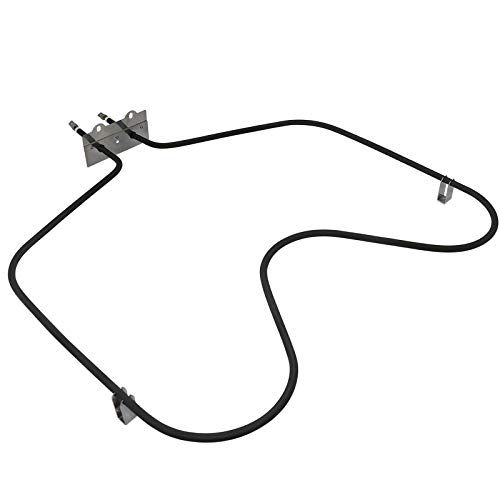
As an Amazon Associate, we earn from qualifying purchases.
Price as of Sep 17, 2026. Product prices and availability are accurate as of the date indicated and are subject to change. Any price and availability information displayed on Amazon at the time of purchase will apply.
Oven and stove repairs cost $150 to $400 all-in for most US homeowners in 2026, including the $75-$150 service call. A heating element runs $150-$450, a gas igniter $150-$325, and a control board $150-$600 installed.
Most oven and stove repairs cost $150 to $400 all-in in 2026, including a $75-$150 diagnostic service call and $50-$125 per hour in labor. The exact figure depends on the failed part: a heating element runs $150-$450 installed, a gas igniter $150-$325, and a control board $150-$600. Electric ovens average around $200 because they have fewer complex parts, while gas ovens average closer to $250 due to the extra safety work on igniters and valves.
| Repair | Typical All-In Cost | Part Cost |
|---|---|---|
| Heating element (electric) | $150-$450 | $15-$100 |
| Gas igniter | $150-$325 | $20-$50 |
| Gas safety valve | $150-$400 | $30-$150 |
| Control board | $150-$600 | $60-$250 |
| Glass cooktop surface | $200-$1,000 | $150-$600 |
Repair almost always wins unless the appliance is old and the fix is expensive. A good rule of thumb is the 50% rule: if the repair costs more than half the price of a new comparable oven, replace it. A new freestanding range runs $600-$2,000 and a built-in wall oven $1,200-$4,000, so a $300 heating-element swap on a 7-year-old range is clearly worth fixing. A $600 control board on a 16-year-old budget range is not. Age matters too — repairing an appliance past 15 years rarely pays off because the next failure is usually close behind.
Gas ovens carry extra cost because working with gas lines, igniters, and safety valves takes more skill and caution than swapping an electric element. A gas igniter replacement runs $150-$325 and a gas safety valve $150-$400, and techs charge more for the diagnostic care these jobs require. Electric ovens are simpler: a coil heating element is a quick swap at $150-$450, and there is no combustion system to test. That is why gas oven repairs average around $250 versus roughly $200 for electric, with gas jobs ranging as high as $600.
Usually, yes. Most appliance repair companies charge a $75-$150 service call (also called a diagnostic or trip fee) to come out and find the problem, and the majority credit that amount toward the final bill if you approve the repair. If you decline the work, you typically still owe the diagnostic fee. Always ask up front whether the trip charge is waived or applied when you hire them, and get the repair quote in writing before approving — that one question can save you $100 on a job you were going to do anyway.
The most frequent failures are a bad heating element ($150-$450), a failed gas igniter ($150-$325), a dead control board or display ($150-$600), a faulty temperature sensor ($100-$250), and a broken door hinge or gasket ($100-$250). On cooktops, a cracked glass surface ($200-$1,000) and a failed burner element ($100-$200) top the list. A heating element or igniter that stops the oven from getting hot is the single most common service call, and it is also one of the cheaper fixes once a tech confirms the diagnosis.
| Symptom | Likely Cause | Typical Cost |
|---|---|---|
| Oven won't get hot | Heating element / igniter | $150-$450 |
| Uneven temperature | Temperature sensor | $100-$250 |
| Won't turn on | Control board / wiring | $150-$600 |
| Cracked cooktop | Glass surface | $200-$1,000 |
Inputs
Result
A failed bake element is the most common electric-oven repair and a quick swap. The part is cheap; most of the bill is the service call plus an hour of labor.
Inputs
Result
A weak igniter that glows but never reaches lighting temperature is the classic gas-oven failure. The part is inexpensive, but gas work carries a labor premium for safety testing.
Inputs
Result
A premium built-in board is the priciest common repair. At 11+ years, weigh it against a new wall oven, but a $600 fix on a $2,500 unit still clears the 50% rule.
Total repair = Service call + Part cost + Labor hours x Labor rateAn oven repair bill is the diagnostic trip fee plus the failed part plus the time to install it. Start from the part cost, add roughly one hour of labor for most jobs, and remember the service call is often credited back when you approve the work.
Where:
Service call= Diagnostic / trip fee of $75-$150, usually credited toward an approved repairPart cost= Element $15-$100, igniter $20-$50, control board $60-$250, glass cooktop $150-$600Labor hours= Most repairs take 1-2 hours; gas and built-in jobs run longerLabor rate= $50-$125 per hour, higher in metros and for premium or built-in appliancesReplace if Repair cost > 0.50 x Price of comparable new ovenUse the 50% rule with appliance age as a tiebreaker. If the repair exceeds half the cost of a comparable new unit, or the appliance is past 15 years, replacement usually wins on total cost of ownership.
Where:
Repair cost= All-in quote including part, labor, and service callNew oven price= Freestanding range $600-$2,000; built-in wall oven $1,200-$4,000Age factor= Under 10 years favors repair; over 15 years favors replacement0.50 threshold= Repair-to-replace ratio above which buying new is the better valueWhen an oven quits in the middle of dinner, the first question is always the same: how much is this going to cost? The reassuring answer is that most oven, stove, and range repairs are affordable. In 2026, the typical US homeowner pays $150 to $400 all-in to fix an oven, including the diagnostic service call and labor. That figure covers the overwhelming majority of failures — a dead heating element, a worn-out igniter, a faulty sensor — that a technician can diagnose and replace in a single visit.
The bill breaks down into three parts: the service call, the replacement part, and the labor to install it. A diagnostic or trip fee runs $75 to $150, and most companies credit it toward the repair if you approve the work. Labor runs $50 to $125 per hour, and most jobs take one to two hours. The part itself is often the cheapest line item — a bake element costs $15 to $100, and an igniter just $20 to $50 — which is why the total can feel high relative to the small component that actually failed.
Costs also split along appliance lines. Electric ovens average around $200 to repair because they have fewer complex parts and no combustion system to test. Gas ovens average closer to $250 and can range up to $600, because igniters, safety valves, and gas lines demand more careful diagnostic work. Built-in wall ovens and premium brands sit higher still. Use the calculator above to land on a figure for your specific symptom and appliance, then read on to understand what is driving the number.
| Repair | Typical All-In Cost | Part Cost | Notes |
|---|---|---|---|
| Heating element (electric) | $150-$450 | $15-$100 | Most common repair |
| Gas igniter | $150-$325 | $20-$50 | Classic gas-oven failure |
| Gas safety valve | $150-$400 | $30-$150 | Safety-critical labor |
| Control board / display | $150-$600 | $60-$250 | Priciest common fix |
| Glass cooktop surface | $200-$1,000 | $150-$600 | Brand-dependent |
Ask whether the service call is credited toward the repair before you book. Most companies apply the $75-$150 trip fee to an approved job — but you have to confirm it up front, because a few do not.
Two homeowners with the same broken oven can get quotes that differ by a hundred dollars or more, and the variance is rarely random. Appliance technicians price from the part and the diagnostic, then adjust for everything that makes your specific job harder: a gas connection, a built-in cabinet, a premium brand with proprietary parts, or a metro labor rate. Knowing the drivers helps you read a quote and spot when one is padded.
The single biggest swing is which part failed. A $40 igniter and a $250 control board are both common repairs, but the all-in cost differs by hundreds of dollars. After the part, appliance type and brand do the most work: gas and built-in units carry a labor premium, and premium brands like Wolf, Viking, and Bosch use pricier, sometimes back-ordered components. Read every quote against the list below.
On premium and discontinued models, ask whether the part is in stock before approving. A back-ordered control board can leave your oven down for weeks and add a second trip charge to the final bill.
Not every broken oven is worth fixing, and the most expensive mistake is sinking $500 into an appliance that fails again a year later. The cleanest decision tool is the 50% rule: if the repair costs more than half the price of a comparable new unit, replace it. A new freestanding range runs $600 to $2,000 and a built-in wall oven $1,200 to $4,000, so a $300 element swap on a $1,200 range is an easy yes, while a $600 board on a $900 budget range is a clear no.
Age is the tiebreaker. An oven under 10 years old with a repair under $300 is almost always worth fixing. Past 15 years, the math flips: parts get scarce, efficiency lags newer models, and the next failure is usually close behind, so replacement wins even on a moderate repair. If a repair pushes you toward a new unit, a gas swap may also mean moving or adding a connection — the gas line installation cost calculator prices that companion job, and the junk removal service cost calculator covers hauling the old appliance away.
There is a practical sequence most homeowners follow. They pay the diagnostic, get the repair quote in writing, run it against the 50% rule, and factor in age before deciding. Paying for a diagnostic is never wasted money even if you replace, because you learn exactly what failed and can avoid buying the same weak model again. The table below shows where the repair-versus-replace line typically falls.
| Scenario | Repair Cost | Verdict |
|---|---|---|
| 7-yr range, element | $200 | Repair |
| 12-yr gas range, valve | $350 | Repair, borderline |
| 16-yr budget range, board | $550 | Replace |
| 11-yr premium wall oven, board | $650 | Repair (high unit value) |
A diagnostic fee is never wasted, even when you replace. Knowing exactly what failed helps you avoid rebuying the same problem-prone model and gives you leverage on the replacement decision.
The kind of appliance you own sets the baseline before any part is named. Electric ranges are the simplest and cheapest to repair: a coil or radiant heating element is a fast swap, there is no combustion system to test, and the average repair lands near $200. Most electric-oven service calls are a single element or a temperature sensor, both of which are inexpensive parts with quick installs.
Gas ranges cost more to service because the failures involve igniters, safety valves, and gas connections that require careful testing. A gas igniter that glows but never reaches lighting temperature is the most common gas-oven repair at $150 to $325, and a faulty safety valve runs $150 to $400. The work carries a labor premium because a technician has to verify there are no leaks and that the safety interlocks function. That is why gas oven repairs average around $250 and can reach $600.
Built-in wall ovens and cooktops add their own wrinkles. Wall ovens are harder to access and often require pulling the unit from a cabinet, which adds labor. Cooktops bring the glass surface into play: a cracked ceramic-glass top costs $200 to $1,000 to replace depending on brand, and a failed burner element runs $100 to $200. Induction cooktops add electronics that push diagnostics higher. The list below summarizes how appliance type shapes the bill.
The cheapest oven repair is the one done right the first time, so vet the technician on transparency rather than the lowest trip fee. Get the diagnosis and a written repair quote before approving any work, and ask three questions: is the service call credited toward the repair, is the part in stock, and is the labor warrantied. A shop that answers all three clearly is far less likely to surprise you with a second trip charge or a back-ordered part.
A few DIY checks can save the whole service call. Confirm the oven has power and the breaker has not tripped, make sure a gas range's pilot or supply is on, and check that the appliance is not stuck in a control-lock or self-clean mode — a locked door after self-cleaning is a common false alarm. If the oven simply will not turn on, reset the breaker before calling. These take five minutes and resolve a meaningful share of would-be service calls at no cost.
Finally, weigh the repair against your broader home budget. If the diagnosis points toward replacement, factor in delivery, any gas-line or electrical work, and disposal of the old unit before comparing to the repair. The HVAC installation cost calculator and the rest of the construction category use the same quote-comparison discipline, so you can line up an appliance decision against the other home-systems projects competing for the same dollars.
Never approve a repair without the price in writing. A verbal estimate that grows once the panel is open is the most common appliance-repair complaint, and a written quote is your protection against it.
Run the free checks
Confirm power, breaker, gas supply, and that the oven is not in control-lock or self-clean mode before calling.
Get a written diagnosis
Pay the diagnostic, then insist on a written repair quote listing the part, labor, and total before approving.
Ask the three questions
Is the service call credited, is the part in stock, and is the labor warrantied? Clear answers signal a fair shop.
Apply the 50% rule
Compare the all-in quote to half the price of a comparable new oven, then factor in the appliance's age.
Plan the replacement, if needed
Budget delivery, any gas or electrical work, and old-unit disposal before choosing replace over repair.
Read our guide
Read our guide
Read our guide
Price appliance repairs, gas lines, HVAC, and home-improvement jobs, then compare quotes and plan your project budget.
Last Updated: Sep 17, 2026
This calculator is provided for informational and educational purposes only. Results are estimates and should not be considered professional financial, medical, legal, or other advice. Always consult a qualified professional before making important decisions. UseCalcPro is not responsible for any actions taken based on calculator results.