1. Calculate
Choose your project scope and see the estimated price range.
Get a realistic 2026 estimate for termite treatment by method, termite species, home perimeter, and infestation severity — then compare quotes from licensed local exterminators.
Instant project estimate
The estimate is free. Additional details are optional.
Complete the project details and calculate to see a price range and next steps.
Clear next step
Choose your project scope and see the estimated price range.
Understand the cost drivers and what impacts your final quote.
Carry your scope into a local quote request if you choose.
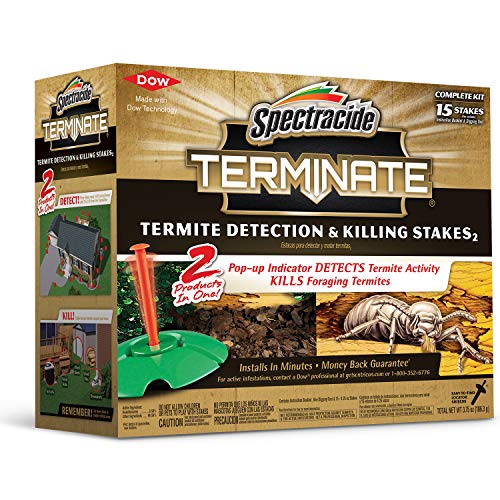


As an Amazon Associate, we earn from qualifying purchases.
Price as of Sep 16, 2026. Product prices and availability are accurate as of the date indicated and are subject to change. Any price and availability information displayed on Amazon at the time of purchase will apply.
Termite treatment costs $850 to $1,600 for most US homes in 2026: liquid soil barriers run $3 to $20 per linear foot ($1,000 to $3,200 whole-home), bait stations $1,500 to $3,500 plus $300 to $500 a year monitoring, and whole-home tent fumigation $2,000 to $8,000.
Most US homeowners pay $850 to $1,600 for professional termite treatment in 2026, with a national average near $750 for a single targeted treatment. The figure swings widely by method: a localized spot treatment runs $300 to $750, a full liquid soil barrier around the foundation runs $1,000 to $3,200, a monitored bait-station system runs $1,500 to $3,500 to install, and whole-home tent fumigation runs $2,000 to $8,000. Termite species, home perimeter, and how far the colony has spread all move the price within those bands.
| Method | Typical Cost | Best For |
|---|---|---|
| Spot / local treatment | $300 to $750 | Light, single-area infestation |
| Liquid soil barrier | $1,000 to $3,200 | Subterranean termites |
| Bait stations (monitored) | $1,500 to $3,500 | Long-term prevention |
| Tent fumigation | $2,000 to $8,000 | Drywood / whole-home |
Liquid soil-barrier treatment, the most common method for subterranean termites, is priced per linear foot of foundation perimeter at $3 to $20 per foot, with $6 to $10 being typical. An average home with a 150 to 200 foot perimeter therefore lands around $1,000 to $3,200. Bait-station systems are priced similarly at $7 to $12 per linear foot. Because pricing is per foot, a large rambling single-story home can cost more to barrier-treat than a compact two-story with the same square footage.
| Perimeter | Liquid Barrier ($8/ft) | Bait Stations ($10/ft) |
|---|---|---|
| 120 ft (small home) | ~$960 | ~$1,200 |
| 180 ft (average home) | ~$1,440 | ~$1,800 |
| 250 ft (large home) | ~$2,000 | ~$2,500 |
Yes, because different termites live in different places and demand different methods. Subterranean termites nest in the soil and are treated with liquid barriers or bait at $500 to $2,500. Drywood termites live inside the wood itself and usually require whole-home tent fumigation or heat treatment at $1,200 to $4,000 or more. Formosan termites are an aggressive subterranean variety common in the Gulf South that builds huge colonies, so treatment often combines barrier and bait and runs at the high end of the subterranean range or beyond.
After the initial treatment, most companies offer an annual renewal or monitoring plan that costs $200 to $500 per year, and bait-station systems in particular depend on ongoing monitoring to keep working. A liquid-barrier renewal warranty runs $100 to $300 a year. Monitoring is not just upkeep, it is insurance: a lapsed bait plan lets a colony rebound, and skipping the renewal often voids the treatment warranty. Budget the recurring fee as part of the true cost, not an optional extra.
DIY termite products such as foam, bait stakes, and liquid concentrate cost $50 to $400, but they rarely reach the colony nest and almost never qualify for a warranty or a real-estate clearance letter. Professional treatment costs $850 to $1,600 because it includes a licensed inspection, proper application, and a warranty. Given that termites cause $500 to $30,000 in structural damage when left to spread, the professional route is usually cheaper over the life of the home, especially when a sale or refinance requires a clearance letter a DIY job cannot provide.
Inputs
Result
180 linear feet of foundation at $7 to $10 per foot lands at $1,260 to $1,800 for a moderate, established subterranean colony. A renewal warranty adds $150 to $300 a year.
Inputs
Result
Drywood termites live inside the wood, so a localized barrier will not reach them. Tenting a 2,000 sq ft home at $1 to $4 per square foot runs $2,000 to $8,000; mid-severity here lands $2,000 to $4,000, plus a couple nights out of the house.
Inputs
Result
A newly detected colony confined to one area can be spot-treated for $300 to $750. If a follow-up inspection finds the colony has spread, the job upgrades to a full perimeter barrier for $1,000 or more.
Treatment cost = Linear footage x Price per footLiquid barrier treatment is priced by the foundation perimeter in linear feet, multiplied by a per-foot rate that varies with the product and the local labor market. Measure the perimeter, not the square footage, to estimate this method.
Where:
Linear footage= Perimeter of the home's foundation in feet, typically 150 to 200 for an average housePrice per foot= $3 to $20 per linear foot for liquid barrier ($6 to $10 typical); $7 to $12 for bait stationsFumigation cost = Home square footage x Rate per sq ftWhole-home tent fumigation for drywood termites is priced by the cubic volume of the structure, which scales with square footage. Add lodging for the two to three nights the home must be vacated.
Where:
Home square footage= Total conditioned area of the home; an average treated home is about 2,000 sq ftRate per sq ft= $1 to $4 per square foot for gas fumigation, $1 to $3 for heat treatmentFirst-year cost = Initial treatment + Annual monitoringThe true first-year outlay combines the one-time treatment with the recurring monitoring or renewal plan that keeps the warranty active. Bait-station systems in particular carry an ongoing fee.
Where:
Initial treatment= One-time method cost: $300 to $750 spot, $1,000 to $3,200 barrier, $2,000 to $8,000 fumigationAnnual monitoring= $200 to $500 per year for bait or full monitoring; $100 to $300 for a barrier renewal warrantyTermite treatment is one of those home expenses that arrives with no warning and a wide price tag, which is exactly why a realistic estimate matters before you take the first quote. In 2026, most US homeowners pay $850 to $1,600 for professional termite treatment, with a national average closer to $750 for a single targeted job. That headline range hides an enormous spread, because the word "treatment" covers everything from a $300 spot application in one corner of a crawl space to an $8,000 whole-home tent fumigation that requires the family to move out for three days.
The single biggest driver is the treatment method, and the method is dictated by the termite species and how far the colony has spread. A localized spot treatment runs $300 to $750. A full liquid soil barrier injected around the foundation perimeter runs $1,000 to $3,200. A monitored bait-station system such as Sentricon runs $1,500 to $3,500 to install. Whole-home tent fumigation, the standard for drywood termites, runs $2,000 to $8,000. Use the calculator above to land on a figure for your method, home size, and severity, then read on to understand what each input is really pricing.
It also pays to know what the quoted price does and does not include. A treatment quote usually covers the inspection, the chemical or bait application, and a warranty of one to ten years. It typically excludes the annual monitoring or renewal plan that keeps that warranty active, any structural repair of damaged wood, and lodging if the home must be tented. When you compare two bids, confirm whether the warranty and first-year monitoring are bundled or billed separately, because that one detail can swing the true first-year cost by several hundred dollars.
| Treatment Method | Typical Cost | Best For | Warranty |
|---|---|---|---|
| Spot / local treatment | $300 to $750 | Light, single-area colony | 1 year |
| Liquid soil barrier | $1,000 to $3,200 | Subterranean termites | 1 to 5 years |
| Bait stations (monitored) | $1,500 to $3,500 | Long-term prevention | Ongoing |
| Tent fumigation | $2,000 to $8,000 | Drywood / whole-home | Up to 10 years |
Always confirm the termite species with a professional inspection before choosing a method. Treating drywood termites with a soil barrier, or subterranean termites with fumigation alone, wastes money on a method that cannot reach where the colony actually lives.
More than any other factor, the type of termite you have determines which treatment you need and what it costs. The three species that account for nearly all US damage live in different places and demand fundamentally different approaches, so identifying the species is the first real step in pricing a job. A wood-destroying organism inspection costs $75 to $150 and is worth every dollar, because matching the method to the species is what separates a treatment that works from one that simply spends money.
Subterranean termites are the most common in the United States. They nest in the soil and tunnel up into a structure, which makes them treatable with a liquid soil barrier or an in-ground bait system at $500 to $2,500. Drywood termites live entirely inside the wood with no soil contact, so a perimeter barrier never reaches them; they usually require whole-home tent fumigation or heat treatment at $1,200 to $4,000 or more. Formosan termites are an especially aggressive subterranean variety concentrated in the Gulf South that builds colonies in the millions, so effective treatment often layers a liquid barrier with bait and lands at the high end of the subterranean range or beyond.
Geography is a useful shortcut for what you are likely facing. Subterranean termites appear in nearly every state. Drywood termites concentrate along the coasts and the warm Southwest. Formosan termites cluster around the Gulf Coast states from Texas through Florida. If you live in a high-pressure region, the correct question is usually not whether you will ever need treatment but when, which is why many homeowners in those areas pay for a preventive bait system before any visible damage appears.
Drywood and Formosan infestations are the expensive surprises. If you are in a coastal or Gulf-South region, budget toward the upper end of these ranges and treat a clean inspection as a reason to install prevention, not a reason to skip it.
Two homes on the same street can receive termite quotes that differ by more than a thousand dollars, and the variance is rarely random. Exterminators price from the method and then adjust for the workload your specific structure creates: the more perimeter, the more square footage, and the deeper the infestation, the more chemical, labor, and follow-up the job demands. Read every quote against the list below, and if a provider cannot explain how your perimeter or severity maps to their number, treat the bid as a placeholder that will be revised upward once they inspect.
Home size shows up twice, because barrier treatments price by linear feet of foundation perimeter while fumigation prices by the cubic volume of the structure, which tracks square footage. A large single-story ranch can cost more to barrier-treat than a compact two-story with the same floor area, simply because it has more perimeter. Severity is the other swing factor: a colony caught early in one wall is a fraction of the work of one that has spread through the subfloor and into load-bearing framing.
Ask whether the quote assumes a specific perimeter or square-footage tier. The most common surprise on a termite bill is a re-measure that bumps the home into a higher tier after the contract is signed.
Once you know your species, the choice of method comes down to how the infestation behaves and how much ongoing involvement you want. Liquid soil barriers create a treated zone in the soil that kills termites as they cross it, work fast, and carry a multi-year warranty, but they require trenching and drilling around the foundation and a renewal to stay effective. They are the workhorse choice for active subterranean infestations. Bait stations take a slower, lower-disruption approach, using monitored in-ground stations that termites carry poison back to the colony; they excel at long-term prevention and at homes where drilling a slab is impractical.
Fumigation is a different category entirely. For drywood termites living deep inside the framing, tenting the whole structure and filling it with gas is often the only method that reaches every gallery. It is the most disruptive and usually the most expensive option, requiring the home to be sealed and vacated for two to three days, but it delivers a complete kill that spot methods cannot match. Heat treatment is a chemical-free alternative for drywood that raises the structure's internal temperature to lethal levels, useful for smaller or localized drywood problems. After any method that follows structural repair, the junk removal service cost calculator helps price hauling away the damaged wood and drywall.
Most homeowners end up sequencing methods rather than choosing one forever. A common path is an initial liquid barrier or fumigation to knock down an active infestation, followed by a bait system for ongoing prevention. Because termites so often share the damp, dark conditions that breed other problems, it is worth checking related risks at the same time: the mold remediation service cost calculator and the foundation repair cost calculator cover the moisture and structural issues that frequently surface in the very crawl spaces where subterranean termites are found.
| Method | How It Works | Cost | Best For |
|---|---|---|---|
| Liquid barrier | Treated soil zone | $1,000 to $3,200 | Active subterranean |
| Bait stations | Colony-carried poison | $1,500 to $3,500 | Prevention, slab homes |
| Tent fumigation | Whole-home gas | $2,000 to $8,000 | Drywood, whole-home |
| Heat treatment | Lethal internal heat | $2,000 to $6,000 | Localized drywood |
Spend on the method your species and severity require, not the most aggressive one available. Tenting a home for a small, localized subterranean problem overspends; spot-treating an advanced drywood infestation underspends and lets the colony rebound.
The sticker price of a termite treatment is rarely the whole story, and the homeowners who avoid surprises are the ones who price the recurring and repair costs up front. Annual monitoring or renewal runs $200 to $500 a year, and for bait systems it is not optional: the stations only work while someone is checking and refilling them, and a lapsed plan usually voids the warranty. Structural repair is the bigger wildcard. Minor cosmetic fixes to trim and baseboards run $500 to $2,000, moderate repairs to floor joists and subfloor run $2,000 to $8,000, and extensive reconstruction of load-bearing framing can exceed $10,000 to $30,000. Catching termites early is overwhelmingly a money-saving decision.
DIY is tempting at $50 to $400 for foam, stakes, and concentrate, but those products rarely reach the underground nest, carry no warranty, and cannot produce the clearance letter that a home sale or refinance often requires. A general home inspection usually flags termite risk but stops short of a full evaluation; the home inspection cost calculator prices that first look, after which a dedicated WDO inspection confirms the species and extent. For an active or extensive infestation, professional treatment with a warranty is almost always cheaper over the life of the home than a DIY attempt that lets the colony keep eating.
When you hire, vet on transparency rather than headline price. Get two or three written quotes that state the method, the assumed perimeter or square footage, the warranty length, and whether the first year of monitoring is included. Confirm the company is licensed and that its technicians are certified applicators, ask exactly what the warranty covers and what voids it, and make sure the bid spells out re-treatment terms if termites return. A quote that is dramatically below the others usually assumes a smaller home tier or excludes the warranty, and that gap tends to reappear as a change order within the first season.
Never choose a termite company on price alone. A treatment that misses part of the colony or lapses its warranty costs far more in returning termites and structural damage than the few hundred dollars you saved on the lowest bid.
Get a WDO inspection
Pay $75 to $150 to confirm the species and the extent of the infestation before requesting any treatment quotes.
Collect two to three bids
Insist each one states the method, assumed home size, warranty length, and whether first-year monitoring is included.
Verify licensing
Confirm the company is state-licensed and its applicators are certified for the chemicals or fumigants they will use.
Read the warranty
Clarify the warranty term, what voids it, and whether re-treatment is free if termites return within the coverage period.
Budget for monitoring
Add the $200 to $500 annual renewal to your true cost and confirm whether it is bundled or billed separately.
Read our guide
Read our guide
Read our guide
Price pest treatment, foundation and mold work, inspections, and home repairs, then plan and budget your next project with confidence.
Last Updated: Sep 16, 2026
This calculator is provided for informational and educational purposes only. Results are estimates and should not be considered professional financial, medical, legal, or other advice. Always consult a qualified professional before making important decisions. UseCalcPro is not responsible for any actions taken based on calculator results.