UseCalcPro
Home
MathFinanceHealthConstructionAutoPetsGardenCraftsFood & BrewingToolsSportsMarineEducationTravel
Blog
  1. Home
  2. Construction

Tile Calculator

Plan your tiling project

Units

Boxes Needed

14

Tiles

140

Waste

10%

Cost

$350.00

Total: 120 sq ft

You Need

14

boxes

(140 tiles total)

Estimated Cost

$350.00

Calculation Details

Area120 sq ft
Tiles (exact)120 tiles
+ 10% Waste132 tiles
Coverage per Box10.0 sq ft

Tile Quantity Breakdown

Tiles Needed (exact)120 tiles
+ 10% Waste132 tiles
Total Purchased (14 boxes)140 tiles

Pattern Preview

What You'll Need

48 Inch Manual Tile Cutter Heavy-Duty Steel

48 Inch Manual Tile Cutter Heavy-Duty Steel

$160-$1754.6
View on Amazon
16 inch Manual Tile Cutting Machine Porcelain

16 inch Manual Tile Cutting Machine Porcelain

$100-$1154.5
View on Amazon
Montolit Masterpiuma EVO3 Tile Cutter 36 inch

Montolit Masterpiuma EVO3 Tile Cutter 36 inch

$680-$7004.6
View on Amazon
BOSCH GLM20 Blaze 65ft Laser Distance Measure

BOSCH GLM20 Blaze 65ft Laser Distance Measure

$30-$504.6
View on Amazon
Stanley FatMax 25ft Magnetic Tape Measure

Stanley FatMax 25ft Magnetic Tape Measure

$20-$304.6
View on Amazon
Heavy Duty Laminate Vinyl Floor Cutter 13 inch

Heavy Duty Laminate Vinyl Floor Cutter 13 inch

$125-$1354.7
View on Amazon
48 Inch Manual Tile Cutter Heavy-Duty Steel

48 Inch Manual Tile Cutter Heavy-Duty Steel

$160-$1754.6
View on Amazon
16 inch Manual Tile Cutting Machine Porcelain

16 inch Manual Tile Cutting Machine Porcelain

$100-$1154.5
View on Amazon
Montolit Masterpiuma EVO3 Tile Cutter 36 inch

Montolit Masterpiuma EVO3 Tile Cutter 36 inch

$680-$7004.6
View on Amazon
BOSCH GLM20 Blaze 65ft Laser Distance Measure

BOSCH GLM20 Blaze 65ft Laser Distance Measure

$30-$504.6
View on Amazon
Stanley FatMax 25ft Magnetic Tape Measure

Stanley FatMax 25ft Magnetic Tape Measure

$20-$304.6
View on Amazon
Heavy Duty Laminate Vinyl Floor Cutter 13 inch

Heavy Duty Laminate Vinyl Floor Cutter 13 inch

$125-$1354.7
View on Amazon

As an Amazon Associate, we earn from qualifying purchases.

Frequently Asked Questions

Q

How do I calculate how many tiles I need?

Area (sq ft) ÷ Tile size (sq ft per tile) = tiles needed. Add 10-20% waste. Example: 100 sq ft floor with 12×12 tiles (1 sq ft each) = 100 tiles + 10% = 110 tiles. Always round UP and buy from same lot.

  • Formula: Room sq ft ÷ Tile sq ft = Tiles needed
  • Add 10% waste for straight lay
  • Add 15% waste for diagonal pattern
  • Add 20% waste for complex patterns or mosaic
  • Buy extra from same lot (dye lots vary)
Tile SizeSq Ft per TileTiles per 100 sq ftWith 10% Waste
6×6 inch0.25400 tiles440 tiles
12×12 inch1.0100 tiles110 tiles
12×24 inch2.050 tiles55 tiles
18×18 inch2.2545 tiles50 tiles
24×24 inch4.025 tiles28 tiles
Q

How much grout do I need?

Grout needed depends on tile size, grout joint width, and tile thickness. Larger tiles with narrow joints need less grout. Small mosaic with wide joints needs more. 25 lb bag covers 50-200 sq ft depending on these factors.

  • Sanded grout: For joints 1/8" or larger
  • Unsanded grout: For joints smaller than 1/8"
  • Epoxy grout: Waterproof, stain-proof (bathrooms)
  • Buy 10-20% extra grout for repairs later
Tile Size1/8" Joint1/4" Joint3/8" Joint
6×6 inch100 sq ft/25lb60 sq ft/25lb40 sq ft/25lb
12×12 inch180 sq ft/25lb100 sq ft/25lb70 sq ft/25lb
12×24 inch200 sq ft/25lb120 sq ft/25lb80 sq ft/25lb
18×18 inch220 sq ft/25lb140 sq ft/25lb95 sq ft/25lb
Q

How much thin-set mortar do I need?

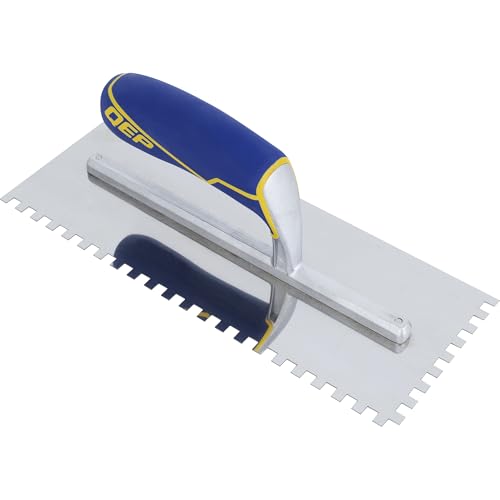
Thin-set coverage: 50 lb bag covers 50-75 sq ft (1/4" trowel) or 30-50 sq ft (1/2" trowel). Larger tiles need larger trowel notches. Uneven substrate uses more thin-set. Back-buttering large tiles adds 20-30%.

  • Large format tile (12×24+): Back-butter + trowel floor
  • Uneven floor: May need self-leveling compound first
  • Floor use: Use polymer-modified thin-set
  • Shower: Use waterproofing membrane + thin-set
Trowel SizeCoverage (50 lb bag)Best for Tile Size
1/4" × 1/4"75-100 sq ftMosaic, 4×4 to 6×6
1/4" × 3/8"50-75 sq ft8×8 to 12×12
1/2" × 1/2"40-55 sq ft12×12 to 16×16
3/4" × 3/4"25-35 sq ft18×18 and larger
Q

What tile size is best for my space?

Larger tiles make rooms look bigger but require flatter floors. 12×24 is currently most popular. Small bathrooms: 12×12 or 12×24. Large rooms: 18×18 or 24×24. Smaller tiles are easier to curve around obstacles.

  • Larger tiles: Fewer grout lines, harder to install
  • 12×24: Versatile, works almost anywhere
  • Mosaic: Best for shower floors (conforms to slope)
  • Hexagon: Trendy, more cutting, more waste
SpaceRecommended SizePatternNotes
Small bathroom12×12, 12×24Straight layLarger tiles = fewer grout lines
Large bathroom12×24, 18×18Brick layMix sizes for interest
Kitchen floor12×12, 12×24Brick layConsider maintenance
Living room18×18, 24×24Straight layDramatic, modern look
Shower floor2×2 mosaicN/ASlopes to drain easily
Q

How much does tile installation cost?

DIY material: $1-15/sq ft (tile) + $50-100 (thin-set, grout, tools). Professional install: $5-15/sq ft labor. Total pro cost: $8-25/sq ft installed. Complex patterns and small tiles cost more.

  • Large format tile: Higher labor cost
  • Diagonal/herringbone: 20-30% more labor
  • Demolition/removal: Add $2-4/sq ft
  • DIY rental: Tile saw ~$50-75/day
ComponentBudgetMid-RangePremium
Tile (per sq ft)$1-3$3-8$8-20+
Thin-set (per sq ft)$0.30$0.30$0.50
Grout (per sq ft)$0.20$0.20$0.40
Labor (per sq ft)$5-8$8-12$12-20
Total installed$7-12$12-22$22-40+
Q

How much tile waste should I plan for?

10% minimum for straight layout. 15% for brick/offset pattern. 20% for diagonal or herringbone. 25%+ for complex patterns or small spaces with many cuts. Keep leftover tiles for future repairs.

  • Always buy from same lot (dye lot variations)
  • Keep 5-10% of tiles for future repairs
  • Measure twice, cut once
  • Plan layout on paper first to minimize waste
Pattern TypeWaste %ReasonTips
Straight grid10%Minimal cutsEasiest layout
Brick/offset15%Staggered endsMost popular
Diagonal20%Angled edge cutsMakes room look larger
Herringbone20-25%Many angled cutsLabor intensive
Chevron25%Parallelogram cutsHigh waste, stunning look

Find a Contractor Near You

Get free quotes from licensed contractors in your area

Angi
Angi4.7/5

Verified reviews & background checks

Get Free Quotes

Showing results for your area

Example Calculations

1Bathroom Floor with 12×12 Tiles (Straight Lay)

Inputs

Area Length10 ft
Area Width12 ft
Tile Size12" × 12"
PatternStraight (+10% waste)
Tiles per Box10
Price per Box$25

Result

Boxes Needed14 boxes
Area120 sq ft
Tiles (exact)120 tiles
Tiles with 10% waste132 tiles
Total Tiles (14 boxes)140 tiles
Estimated Cost$350.00

Area = 10 × 12 = 120 sq ft. Each 12×12 tile = 1 sq ft, so 120 tiles needed. With 10% straight-lay waste: 120 × 1.10 = 132 tiles. At 10 per box: ceil(132/10) = 14 boxes. Cost: 14 × $25 = $350.

2Kitchen Floor with 18×18 Tiles (Diagonal)

Inputs

Area Length15 ft
Area Width12 ft
Tile Size18" × 18"
PatternDiagonal (+15% waste)
Tiles per Box10
Price per Box$40

Result

Boxes Needed10 boxes
Area180 sq ft
Tiles (exact)80 tiles
Tiles with 15% waste92 tiles
Total Tiles (10 boxes)100 tiles
Estimated Cost$400.00

Area = 15 × 12 = 180 sq ft. Each 18×18 tile = 2.25 sq ft, so 180/2.25 = 80 tiles. With 15% diagonal waste: 80 × 1.15 = 92 tiles. At 10 per box: ceil(92/10) = 10 boxes. Cost: 10 × $40 = $400.

Formulas Used

Tiles Needed (exact)

Tiles = Area / Tile Area

Divides total floor area by the area of one tile to get the exact number of tiles.

Where:

Area= Floor area (Length × Width) in sq ft
Tile Area= Area of one tile in sq ft (tile width × tile height / 144)

Tiles with Waste

Tiles with Waste = Tiles × (1 + Waste% / 100)

Adds waste percentage based on the installation pattern (straight 10%, diagonal 15%, herringbone 20%).

Where:

Waste%= Waste percentage based on pattern type

Boxes Needed

Boxes = ceil(Tiles with Waste / Tiles per Box)

Rounds up to the next full box to ensure full coverage.

Where:

Tiles per Box= Number of tiles in each box

Complete Guide to Tile Estimation and Installation Planning

1

Why Tile Waste Factor Changes by Pattern

A straight-lay pattern on a 120 sq ft bathroom floor wastes roughly 10% of tiles — 12 extra tiles for a 12×12” format. Switch to diagonal and waste jumps to 15% (18 tiles), because every edge tile must be cut at 45°, creating unusable triangular offcuts. Herringbone pushes waste to 20–25%, with complex angled cuts on nearly every perimeter tile.

The financial impact compounds quickly. At $3/tile for porcelain, the difference between 10% and 20% waste on a 180 sq ft kitchen (80 tiles for 18×18) is 8 additional tiles — $24 in material. But at $15/tile for natural stone, those same 8 tiles cost $120. Pattern choice should factor in both aesthetics and budget.

Beyond the pattern, small rooms waste more proportionally than large rooms. A 40 sq ft powder room has a high perimeter-to-area ratio, meaning more edge cuts. Add 5% extra to the standard waste factor for rooms under 50 sq ft, and order from a single dye lot to ensure color consistency across all tiles.

Always keep 5–10% of your tile order as spares for future repairs. Dye lots change, and matching tiles years later is often impossible.

2

Tile Size Selection for Different Spaces

12×24” tiles are the most popular format in 2025, offering a modern look with fewer grout lines than 12×12”. They work in bathrooms, kitchens, and living areas, but require a floor flat to 1/8” over 10 ft — a stricter standard than smaller tiles. Lippage (uneven tile edges) becomes visible at 1/32” on large-format tiles, versus 1/16” on standard sizes.

Shower floors are an exception: 2×2” mosaic tiles conform to the slope toward the drain, whereas larger tiles create voids under the edges. Shower walls work well with 12×24” or larger, creating a clean, spa-like appearance with minimal grout maintenance. For outdoor areas, choose tiles rated for frost resistance (PEI 4+) and textured surfaces for slip resistance.

Tile SizeSq Ft per TileTiles for 100 sq ftWith 10% Waste
6×6”0.25400440
12×12”1.00100110
12×24”2.005055
18×18”2.254550
24×24”4.002528
3

Total Installation Cost Breakdown

Tile installation costs $8–$25 per sq ft fully installed, depending on tile quality and labor complexity. Materials break down to: tile ($1–$20/sq ft), thinset ($0.30–$0.50/sq ft), grout ($0.20–$0.40/sq ft), and underlayment/backer board ($1–$2/sq ft for wet areas). Labor adds $5–$15/sq ft, with higher rates for diagonal and herringbone patterns.

DIY installers save $5–$15/sq ft on labor but need tools: a tile saw rental at $50–$75/day, spacers ($5–$10), a notched trowel ($8–$15), a grout float ($10–$15), and a mixing bucket. For a 120 sq ft bathroom at mid-range materials ($5/sq ft tile), total DIY cost is about $900 versus $2,400 professionally installed.

Hidden costs catch most first-timers: demolition of existing flooring ($2–$4/sq ft), floor leveling compound ($25–$45 per bag), waterproofing membrane for showers ($1.50–$3/sq ft), and baseboard removal/reinstallation. Budget an extra 20% beyond raw material costs for these items.

  • Budget tier ($7–$12/sq ft installed) — ceramic tile, straight pattern, standard grout
  • Mid-range ($12–$22/sq ft installed) — porcelain tile, brick-lay pattern, color-matched grout
  • Premium ($22–$40+/sq ft installed) — natural stone, herringbone, epoxy grout
  • Demo/removal adds $2–$4/sq ft — budget separately from installation
  • Tile saw rental — $50–$75/day, essential for any cuts beyond simple straight edges
4

How to Calculate Tiles, Boxes, and Cost

The calculation follows three steps: (1) total area in sq ft, (2) tiles needed with waste, and (3) boxes rounded up. For a 15 × 12 ft kitchen with 18×18” tiles on a diagonal pattern: area = 180 sq ft, each tile = 2.25 sq ft, exact tiles = 80, with 15% diagonal waste = 92, at 10 tiles per box = 10 boxes. Cost at $40/box = $400.

Grout is a separate calculation based on tile size, joint width, and tile thickness. Larger tiles with narrow 1/8” joints need less grout: roughly 180 sq ft per 25 lb bag for 12×12” tile. Small 6×6” tiles with 1/4” joints consume grout much faster at 60 sq ft per bag. Use grout calculators for precision, and always buy sanded grout for joints 1/8” or wider.

  1. 1

    Measure the area

    Length × Width in feet. For L-shaped rooms, split into rectangles, calculate each, and add totals.

  2. 2

    Calculate exact tiles

    Area (sq ft) ÷ tile area (sq ft per tile). For 12×24” tile: 12 × 24 / 144 = 2.0 sq ft per tile.

  3. 3

    Add waste factor

    Multiply by 1.10 (straight), 1.15 (diagonal/brick), or 1.20 (herringbone). Round up to whole tiles.

  4. 4

    Calculate boxes needed

    Divide tiles with waste by tiles per box. Always round UP — partial boxes are not sold.

  5. 5

    Estimate total cost

    Boxes × price per box. Add thinset ($15–$25/bag), grout ($12–$20/bag), and spacers ($5–$10).

Related Calculators

Area Calculator

Calculate area

Flooring Calculator

Calculate flooring materials

Paint Calculator

Calculate paint needed

Backsplash Tile Calculator

Calculate backsplash tiles, material costs, and labor estimates for your kitchen. Covers subway, mosaic, porcelain, glass, and natural stone tile types.

Brick Calculator

Calculate how many bricks you need for walls, patios, and projects. Enter wall dimensions and brick size to get accurate material and mortar estimates.

Countertop Calculator

Calculate countertop square footage, edge profiling length, cutouts, and installed cost for granite, quartz, marble, laminate, or butcher block materials.

Related Resources

How Many Tiles Do I Need? Tile Calculator Guide for Floors & Walls

Read our guide

How Much Does Tile Flooring Cost in 2026? (National Averages & Real Pricing)

Read our guide

Flooring Calculator: How Much Hardwood, Laminate, or LVP Do You Need?

Read our guide

Percentage Calculator

Calculate percentages easily

Area Calculator

Calculate area of shapes

Volume Calculator

Calculate volume of 3D shapes

Construction Tools

Plan your project

View All

Last Updated: Mar 26, 2026

This calculator is provided for informational and educational purposes only. Results are estimates and should not be considered professional financial, medical, legal, or other advice. Always consult a qualified professional before making important decisions. UseCalcPro is not responsible for any actions taken based on calculator results.

UseCalcPro
FinanceHealthMath

© 2026 UseCalcPro