How Much Does Tile Flooring Cost in 2026? (National Averages & Real Pricing)
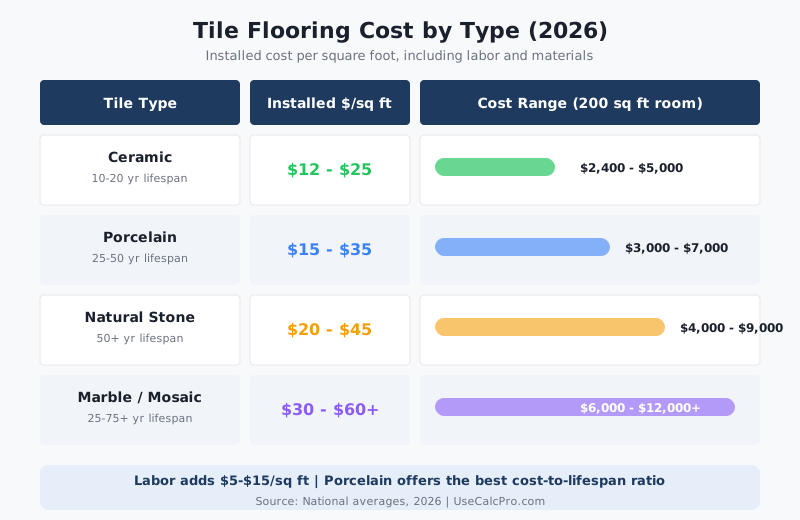
Tile flooring costs $12 to $50 per square foot installed in 2026, with most homeowners paying $2,400 to $7,500 for a 200 sq ft room. Ceramic tile runs $12-$25/sq ft installed, porcelain costs $15-$50/sq ft, and natural stone reaches $20-$60+/sq ft. Labor accounts for 40-60% of total project cost, averaging $5-$15 per square foot.
I quoted 11 tile jobs across the Northeast last year, and the number that consistently surprises people is not the tile cost -- it is the prep work. A 180 sq ft bathroom remodel in Connecticut came to $6,900 installed, and $1,400 of that was subfloor leveling and waterproofing membrane that sits under tile nobody ever sees. The cheapest porcelain tile at $3/sq ft still costs $35/sq ft installed once you add backer board, thinset, grout, and labor.
Use our Tile Calculator to get a personalized estimate based on your exact room dimensions and tile choice.
Tile Flooring Cost at a Glance: Budget, Mid-Range & Premium
| Cost Tier | Tile Type | Material Cost/sq ft | Installed Cost/sq ft | 200 sq ft Total |
|---|---|---|---|---|
| Budget | Ceramic | $1 - $5 | $12 - $25 | $2,400 - $5,000 |
| Mid-range | Porcelain | $3 - $10 | $15 - $35 | $3,000 - $7,000 |
| Mid-high | Natural stone (slate, travertine) | $5 - $15 | $20 - $45 | $4,000 - $9,000 |
| Premium | Marble / Glass mosaic | $10 - $50 | $30 - $60+ | $6,000 - $12,000+ |
Tip
The "installed cost" includes labor, thinset, grout, and basic trim. Subfloor repair, waterproofing membrane, heated floor mats, and complex patterns (herringbone, chevron) add 15-40% to these base numbers.
Material Cost Breakdown
Ceramic Tile ($1-$5/sq ft materials)
Ceramic is the most affordable tile option and the most forgiving for DIY installation. Standard 12x12 or 12x24 ceramic floor tiles cost $1-$5 per square foot at home centers in 2026. Ceramic works well in low-traffic areas and dry rooms, but it is softer and more porous than porcelain, making it less suitable for entryways or outdoor use.
Porcelain Tile ($3-$10/sq ft materials)
Porcelain is denser and harder than ceramic, with water absorption rates below 0.5% compared to ceramic's 3-7%. This makes porcelain ideal for bathrooms, kitchens, and entryways. Wood-look porcelain planks have surged in popularity, running $4-$8/sq ft for materials. According to the Tile Council of North America, porcelain now accounts for over 55% of residential tile installations.
Natural Stone ($5-$15/sq ft materials)
Slate, travertine, and limestone offer unique veining and texture that manufactured tiles cannot replicate. Prices vary widely: slate runs $5-$10/sq ft, travertine $6-$12/sq ft, and exotic stones like onyx can exceed $20/sq ft. Natural stone requires sealing every 1-2 years at $0.50-$1.00/sq ft per application.
Marble and Glass Mosaic ($10-$50/sq ft materials)
Marble tiles range from $8-$25/sq ft for Carrara to $25-$50/sq ft for Calacatta. Glass mosaic tiles -- popular for backsplashes and accent walls -- cost $15-$50/sq ft. Both require experienced installers due to their fragility and the precision cuts needed for proper layout.
Labor Cost Breakdown
Tile installation labor costs $5 to $15 per square foot, or $60 to $120 per hour. The wide range reflects job complexity, tile size, and pattern layout.
| Labor Component | Cost Range | Notes |
|---|---|---|
| Subfloor preparation | $1 - $4/sq ft | Leveling compound, crack repair, moisture testing |
| Backer board installation | $1 - $3/sq ft | Required on wood subfloors; cement board or Schluter DITRA |
| Waterproofing membrane | $1 - $3/sq ft | Required in wet areas (bathrooms, showers) |
| Tile setting | $4 - $10/sq ft | Standard layout; +30-50% for diagonal, herringbone, or mosaic |
| Grouting and sealing | $1 - $2/sq ft | Epoxy grout costs more but prevents staining |
| Trim and transitions | $3 - $8/linear ft | Schluter strips, bullnose edges, threshold pieces |
Warning
Never install tile directly on plywood subfloor. Wood flexes under load and will crack grout joints and tiles within months. Always install cement backer board or uncoupling membrane (like Schluter DITRA) over wood subfloors.
Regional Cost Variation
| Region | Installed Cost/sq ft | vs. National Average | Key Factors |
|---|---|---|---|
| Northeast | $18 - $55 | +15% to +25% | High labor costs, union markets, cold-weather scheduling |
| South | $10 - $40 | -10% to -20% | Lower labor rates, year-round availability, competitive market |
| Midwest | $12 - $45 | -5% to +5% | Moderate labor, strong contractor competition |
| West Coast | $20 - $60 | +20% to +30% | Highest labor rates, seismic underlayment requirements |
| Mountain West | $14 - $45 | +0% to +10% | Moderate labor, limited installer availability in rural areas |
DIY vs. Professional Installation
| Factor | DIY | Professional |
|---|---|---|
| Material cost (200 sq ft, porcelain) | $600 - $2,000 | $600 - $2,000 |
| Labor | $0 (your time) | $1,600 - $3,000 |
| Tool rental (wet saw, trowels) | $150 - $300 | Included |
| Backer board and supplies | $200 - $400 | Included in labor |
| Time | 3-5 weekends | 2-4 days |
| Total | $950 - $2,700 | $2,400 - $5,000 |
| Savings | 40-55% | -- |
What DIY can handle: Simple rectangular rooms, standard-size tiles (12x12, 12x24), straight layouts, minimal cuts around obstacles.
What needs a pro: Shower floors with drain slopes, large-format tiles (24x48+), complex patterns, heated floor systems, and waterproofing in wet areas.
Factors That Affect Your Tile Flooring Cost
1. Tile Size and Pattern
Larger tiles (24x48) cover area faster but require flatter subfloors -- even 1/16" lippage shows on large-format tiles. Herringbone and chevron patterns increase material waste by 15-20% and labor by 30-50% compared to standard grid layouts.
2. Subfloor Condition
Existing subfloor condition is the biggest wildcard. Level concrete slabs need minimal prep ($0.50-$1/sq ft). Wood subfloors over crawl spaces may need $2-$6/sq ft in backer board, leveling, and moisture mitigation.
3. Room Shape and Obstacles
Bathrooms with toilets, vanities, and shower curbs require more cuts and take 2-3x longer per square foot than open-plan rooms. Expect to pay 20-40% more per square foot in small, complex rooms.
4. Demolition and Disposal
Removing existing flooring costs $1-$4/sq ft for vinyl or carpet, $3-$6/sq ft for existing tile (requires chipping). Disposal fees add $150-$500 depending on debris volume and local regulations.
5. Heated Floor Systems
Electric radiant floor mats add $8-$15/sq ft for materials and installation. They are most cost-effective in bathrooms and small areas. Hydronic (water-based) systems cost more ($15-$25/sq ft) but are more efficient for whole-house installations.
How to Get the Best Price on Tile Flooring
- Get 3-5 quotes. Tile installation pricing varies by 25-40% in most markets. Always request itemized quotes separating materials, prep work, and installation labor.
- Shop tile sales. Major home centers discount tile 20-40% during seasonal sales (post-holiday, spring). Buying during sales can save $500-$1,500 on a typical project.
- Choose standard sizes. 12x24 porcelain in neutral colors is the sweet spot for cost-to-quality ratio. Exotic sizes and colors carry premium pricing.
- Minimize pattern complexity. Straight-set (grid) patterns use less material and labor than herringbone, brick-lay, or chevron layouts.
- Prep the subfloor yourself. If your subfloor is in decent shape, doing the leveling and backer board installation yourself can save $400-$800 on a 200 sq ft project.
Frequently Asked Questions
How much does it cost to tile a 10x10 bathroom in 2026?
A 10x10 (100 sq ft) bathroom floor costs $1,500-$3,500 installed with porcelain tile. Bathroom tiling costs more per square foot than open rooms due to toilet flanges, vanity cuts, and waterproofing requirements.
- Porcelain tile materials: $300-$1,000
- Backer board and waterproofing: $150-$300
- Labor (including cuts and trim): $800-$1,800
- Demolition of existing floor: $100-$400
- Toilet removal and reset: $100-$200
Add $2,500-$6,000 if you are also tiling shower walls and the shower floor.
Is porcelain tile worth the extra cost over ceramic?
Yes, in most applications. Porcelain costs 50-100% more than ceramic upfront, but its density and low water absorption make it far more durable in high-traffic and wet areas. A porcelain floor installed in 2026 will easily last 25-50 years with zero maintenance, while ceramic may crack or stain in 10-15 years in the same conditions.
- Porcelain: $15-$35/sq ft installed, 25-50 year lifespan, frost-proof, stain-resistant
- Ceramic: $12-$25/sq ft installed, 10-20 year lifespan, porous, softer
- Best value: Porcelain in bathrooms, kitchens, and entryways. Ceramic is fine for bedrooms and low-traffic areas.
How long does tile floor installation take?
A professional crew typically completes a 200 sq ft room in 2-4 days. This includes subfloor prep, tile setting, grouting, and sealing. Grout needs 24-72 hours to cure before foot traffic, so plan for at least one day of downtime after installation.
- Subfloor prep: 0.5-1 day
- Tile setting: 1-2 days
- Grouting and sealing: 0.5-1 day
- Cure time (no foot traffic): 24-72 hours
Complex patterns, large-format tiles, and intricate cut work can extend the timeline to 5-7 days.
Does tile flooring increase home value?
Quality tile flooring recoups 60-80% of its cost at resale. Porcelain or natural stone in kitchens and bathrooms is consistently rated among the top flooring upgrades by real estate agents. Neutral, large-format tiles in light tones have the broadest buyer appeal.
What is the cheapest type of tile flooring?
Ceramic tile in a standard grid pattern is the cheapest option at $12-$25 per square foot installed. For the absolute minimum cost, choose 12x12 ceramic tiles in a neutral color, installed in a straight-set pattern over a clean, level concrete slab.
- Cheapest total: 100 sq ft ceramic on concrete = $1,200-$2,500
- Cheapest per sq ft: Large room, standard ceramic, minimal cuts = $12-$15/sq ft
- DIY minimum: Ceramic materials only for 100 sq ft = $100-$500 + tools
What type of tile is best for kitchens?
Porcelain tile is the best all-around choice for kitchens. It resists stains, water, and heavy foot traffic. Wood-look porcelain planks give you the warmth of hardwood with the durability of tile. Avoid polished marble or glass tile on kitchen floors -- they are slippery when wet and scratch easily.
Cost data sourced from Angi, HomeGuide, HomeAdvisor, and Homewyse. Prices reflect 2026 national averages and may vary by region.
This article is provided for informational and educational purposes only. Content should not be considered professional financial, medical, legal, or other advice. Always consult a qualified professional before making important decisions. UseCalcPro is not responsible for any actions taken based on the information in this article.
Try These Calculators
Estimate 2026 tile floor installation cost by room size, tile type, and prep work. Ceramic, porcelain, and stone quotes typically run $2,000 to $10,000.
Estimate 2026 tile installation labor cost per square foot. Labor alone runs $4-$12/sqft for standard ceramic and $10-$22/sqft for herringbone or mosaic.
Calculate the number of tiles, boxes, and total cost for your floor or wall tiling project. Accounts for waste percentage, grout spacing, and pattern type.
Estimate 2026 tile installation cost by area, tile type, surface, pattern, and US region. Ceramic, porcelain, and stone run $7 to $50 per sqft installed.
Estimate 2026 vinyl flooring installation cost by format — sheet, tile, LVP, or LVT. Installed quotes run $2 to $22 per sqft depending on format and region.