How Much Does Stucco Cost in 2026? (New Installation & Repair Pricing)
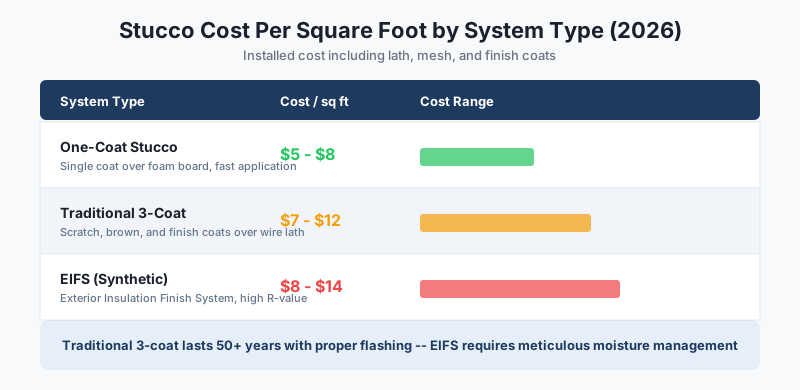
New stucco installation costs $7 to $12 per square foot in 2026, with materials running $5-$9/sq ft and labor adding $2-$8/sq ft depending on system type and wall complexity. A full stucco job on a 2,000 sq ft exterior typically lands between $14,000 and $24,000. Traditional three-coat stucco remains the most common system at $7-$12/sq ft, EIFS (synthetic stucco) runs $9-$15/sq ft, and one-coat stucco comes in at $5-$8/sq ft for simpler applications.
The number one thing homeowners underestimate is prep work. On a $19,000 stucco job in Allentown, the stucco material itself cost about $4,200. The remaining $14,800 covered lath installation, flashing, weep screeds, control joints, scaffolding, and labor. The cement mix is straightforward. Making it bond properly to a wall and shed water for 50 years is where the skill and money go.
Use our Stucco Calculator to estimate material quantities and total cost for your project based on wall dimensions, system type, and finish.
Stucco Cost at a Glance
The table below shows installed cost per square foot and typical whole-house cost for the three main stucco systems in 2026.
| Stucco System | Installed Cost/sq ft | Materials/sq ft | Labor/sq ft | Whole House (2,000 sq ft) |
|---|---|---|---|---|
| Traditional 3-coat | $7 - $12 | $5 - $7 | $2 - $5 | $14,000 - $24,000 |
| EIFS (synthetic) | $9 - $15 | $6 - $9 | $3 - $6 | $18,000 - $30,000 |
| One-coat stucco | $5 - $8 | $3 - $5 | $2 - $3 | $10,000 - $16,000 |
Tip
These prices include lath, flashing, weep screeds, and standard finish application. They do not include scaffolding for multi-story homes ($1-$3/sq ft extra), extensive substrate repair, or decorative color coats. Always request an itemized bid that separates materials, labor, and prep work.
New Stucco Installation Costs
The system you choose determines both the upfront cost and the long-term maintenance profile. Here is what each option involves and what it costs.
Traditional Three-Coat Stucco ($7-$12/sq ft installed)
This is the standard system that has been used for over a century. It consists of a scratch coat, a brown coat, and a finish coat applied over metal lath attached to the wall sheathing. Total thickness is about 7/8 inch. The scratch coat keys into the lath and provides the mechanical bond. The brown coat builds thickness and creates a flat plane. The finish coat delivers the texture and color.
A 2,000 sq ft exterior in traditional three-coat stucco runs $14,000-$24,000 installed. The system is extremely durable -- properly applied three-coat stucco lasts 50-80 years. It handles impact well, breathes moisture out of the wall assembly, and can be repaired in sections without visible patches. The downside is application time. Three coats with curing time between each means 7-14 days of on-site labor, which drives the cost up compared to one-coat systems.
EIFS / Synthetic Stucco ($9-$15/sq ft installed)
Exterior Insulation and Finish System (EIFS) uses rigid foam insulation boards adhered to the wall, covered with a fiberglass mesh base coat and a thin acrylic finish coat. Total thickness is 1.5-4 inches depending on the insulation board. EIFS provides R-4 to R-16 insulation value, which traditional stucco does not.
A 2,000 sq ft EIFS job runs $18,000-$30,000 installed. The higher cost buys you energy savings -- homes with EIFS typically see 10-25% lower heating and cooling costs compared to traditional stucco over uninsulated sheathing. The trade-off is moisture sensitivity. Early EIFS systems (1990s-era "barrier" EIFS) developed a reputation for trapping moisture behind the foam, causing rot. Modern "drainable" EIFS includes a drainage plane and weep holes that largely solve this problem. If your home is in a humid climate, insist on a drainable EIFS system.
One-Coat Stucco ($5-$8/sq ft installed)
One-coat stucco is a fiber-reinforced Portland cement mix applied in a single 3/8-inch pass over metal lath. It is faster to apply than three-coat stucco because there is no curing time between coats. A 2,000 sq ft exterior in one-coat stucco runs $10,000-$16,000 installed.
One-coat stucco is most common in the Southwest and in tract housing where speed matters. It performs well in dry climates but is more prone to cracking than three-coat in areas with significant freeze-thaw cycles. The thinner application also provides less impact resistance. For a primary residence in a cold or wet climate, three-coat is the better investment. For a garage, outbuilding, or home in Arizona, one-coat is a solid value.
Stucco Repair Costs
Stucco repair costs vary dramatically based on the type and extent of damage. Small crack repairs are straightforward. Large section repairs that involve removing and replacing lath are essentially new installation at a small scale, which carries a premium.
| Repair Type | Cost/sq ft | Typical Job Cost | Notes |
|---|---|---|---|
| Hairline crack repair | $8 - $12 | $200 - $500 | Caulk and color match |
| Moderate crack repair | $12 - $20 | $400 - $1,200 | Cut, patch, blend texture |
| Large section repair | $20 - $50 | $1,000 - $2,650 | Remove lath, re-lath, full 3-coat |
| Full re-stucco | $7 - $12 | $14,000 - $24,000 | Strip to sheathing, new system |
| Water damage / rot repair | $25 - $50+ | $1,500 - $5,000+ | Includes sheathing replacement |
Tip
Average stucco repair jobs run $600-$2,650. The wide range reflects the difference between patching a few cracks and replacing a full wall section. Get at least three bids for any repair over $500, and ask contractors to explain whether they are patching over existing stucco or cutting back to the lath.
Small cracks under 1/8 inch are normal -- stucco is a rigid material and will develop hairline cracks as the building settles and moves with temperature changes. These can be sealed with elastomeric caulk and touched up with matching paint. Cracks wider than 1/4 inch, diagonal stair-step cracks, or cracks that grow over time indicate structural movement and need professional evaluation before cosmetic repair.
Stucco Finish Options and Pricing
The finish coat is the visible surface of the stucco and has the biggest impact on the final appearance. Most finishes cost the same in materials -- the price difference is in labor time and skill level required.
| Finish Type | Added Cost/sq ft | Texture | Best For |
|---|---|---|---|
| Smooth (Santa Barbara) | +$1 - $3 | Flat, plaster-like | Modern/contemporary homes |
| Dash | +$0 | Rough, pebbled surface | Traditional, low maintenance |
| Lace | +$0.50 - $1 | Swirled pattern, medium texture | Most popular residential finish |
| Sand | +$0.50 - $1 | Fine grit, consistent texture | Mediterranean and Spanish styles |
| Skip trowel | +$1 - $2 | Irregular, hand-applied | High-end custom homes |
Dash finish is the cheapest because it is the simplest to apply -- the finish coat is literally thrown at the wall with a hopper gun or by hand. Smooth finish is the most expensive because it requires multiple passes with a steel trowel and shows every imperfection. A good smooth finish applicator can do about 200 sq ft per day; a dash finish applicator can cover 500-800 sq ft per day. That labor difference is why smooth costs $1-$3 more per square foot.
Lace and sand finishes are the most common for residential work. They hide minor imperfections, are easy to repair and match, and look clean from the street. Skip trowel produces a distinctive hand-crafted look popular in high-end construction but is difficult to match during repairs.
Labor Cost Breakdown
Labor accounts for roughly 30-50% of total stucco installation cost, depending on the system and building complexity. Here is where the labor money goes on a typical three-coat job:
| Labor Component | Cost/sq ft | Notes |
|---|---|---|
| Scaffolding setup | $1 - $3 | Multi-story homes only; single-story uses ladders |
| Lath and flashing | $1 - $2 | Metal lath, weep screeds, control joints, corner bead |
| Scratch coat | $0.50 - $1 | First coat, scored for bonding |
| Brown coat | $0.50 - $1 | Leveling coat, must cure 7+ days |
| Finish coat | $1 - $3 | Texture application, highest skill requirement |
| Cleanup | $0.25 - $0.50 | Material removal, scaffold breakdown |
Total labor typically runs $2-$8 per square foot. Single-story homes with simple rectangular walls land at the low end. Multi-story homes with dormers, arched windows, and decorative details push toward the high end. Every window, door, and architectural detail requires cutting and finishing around the opening, which is slow, precise work.
The curing schedule also affects labor cost. Traditional three-coat stucco requires each coat to cure before the next is applied -- typically 48 hours for the scratch coat and 7 days for the brown coat in favorable weather. That means the crew returns to your site multiple times, which costs more in mobilization than a one-coat system where the crew finishes in a single visit.
Regional Cost Variation
Stucco pricing varies by region due to labor rates, material availability, and climate-driven demand. Areas where stucco is the dominant siding material tend to have more competitive pricing.
| Region | Installed Cost/sq ft | Key Factors |
|---|---|---|
| Southwest (AZ, NM, NV) | $6 - $10 | Highest demand, most experienced crews, dry climate favors stucco |
| Southern California | $8 - $14 | High labor rates but deep stucco labor pool |
| Southeast (FL, TX coast) | $7 - $12 | Hurricane codes require enhanced fastening; EIFS popular |
| Northeast | $9 - $15 | Higher labor rates, shorter work season, freeze-thaw concerns |
| Midwest | $8 - $13 | Less common; fewer specialized crews drives price up |
| Pacific Northwest | $9 - $14 | Rain and moisture require careful drainage detailing |
In Phoenix and Tucson, stucco is the default exterior finish on 80%+ of homes, which means dozens of experienced crews competing for work. In the Northeast and Midwest, stucco is a specialty material, and you may wait weeks for a qualified crew. That scarcity alone adds $1-$3/sq ft to the installed price.
Factors That Affect Cost
Beyond system type and region, several project-specific factors can move your total cost significantly.
Surface Area and Wall Height
This is the obvious driver. A 1,500 sq ft single-story ranch costs less to stucco than a 1,500 sq ft two-story colonial, even though the exterior square footage is similar. Multi-story walls require scaffolding ($1-$3/sq ft added), material hoisting, and slower application rates. Every additional story adds roughly 15-20% to the per-square-foot labor cost.
Substrate Condition
Stucco can be applied over concrete block, brick, wood sheathing with lath, foam sheathing with lath, and poured concrete. Each substrate requires different prep. Applying over clean concrete block is the simplest -- no lath needed, just a bonding agent and direct application. Applying over wood sheathing requires building paper, metal lath, and proper flashing at every penetration. If the existing substrate has rot, water damage, or structural issues, repair costs can add $5-$15/sq ft before any stucco is applied.
Architectural Details
Every window, door, soffit return, roof intersection, and decorative element adds labor time. A simple box-shaped house with six windows costs far less to stucco than a same-sized house with 20 windows, arched openings, decorative bands, and multiple roof planes. Budget an additional 10-25% for homes with complex architecture.
Climate and Season
Stucco cannot be applied when temperatures are below 40 degrees F or when rain is expected within 24 hours. In cold climates, the work season is limited to roughly April through October, which compresses demand and raises prices. Some contractors add a cold-weather surcharge of 10-15% for jobs in the shoulder season that require frost protection measures like insulated blankets over curing stucco.
Stucco vs Other Siding
Stucco is one of several exterior cladding options. Here is how it compares on cost, lifespan, and maintenance for a 2,000 sq ft exterior.
| Siding Type | Installed Cost/sq ft | Total (2,000 sq ft) | Lifespan | Maintenance |
|---|---|---|---|---|
| Vinyl siding | $3 - $8 | $6,000 - $16,000 | 20-40 years | Low -- wash annually |
| Traditional stucco | $7 - $12 | $14,000 - $24,000 | 50-80 years | Seal every 5-10 years |
| Fiber cement (Hardie) | $6 - $13 | $12,000 - $26,000 | 30-50 years | Paint every 10-15 years |
| EIFS (synthetic stucco) | $9 - $15 | $18,000 - $30,000 | 30-50 years | Inspect annually, seal cracks |
| Brick veneer | $10 - $20 | $20,000 - $40,000 | 75-100+ years | Repoint mortar every 25-50 years |
| Natural stone veneer | $15 - $30 | $30,000 - $60,000 | 75-100+ years | Minimal |
Traditional stucco hits a strong middle ground -- it costs less than brick or stone but lasts significantly longer than vinyl or fiber cement. On a cost-per-year-of-life basis, stucco at $7-$12/sq ft lasting 50-80 years works out to $0.09-$0.24 per square foot per year. Vinyl at $3-$8/sq ft lasting 20-40 years works out to $0.08-$0.40 per square foot per year. Over a 50-year ownership horizon, stucco is often the cheaper option.
DIY vs Professional
Stucco is one of the hardest exterior finishes to apply well. Unlike painting or vinyl siding, stucco application requires mastering material mixing ratios, lath attachment patterns, consistent coat thickness, proper curing timing, and finish texture matching. A bad stucco job does not just look wrong -- it fails structurally within 5-10 years.
Realistic DIY candidates:
- Small patch repairs under 10 sq ft (pre-mixed stucco patch, $15-$25 per bucket)
- Crack sealing with elastomeric caulk ($5-$10 per tube)
- Applying sealant/waterproofing to existing stucco ($0.15-$0.25/sq ft for materials)
- Color coat touch-ups on small areas
Hire a professional for:
- Any new stucco installation -- lath, flashing, and weep screed installation require building science knowledge
- Section repairs larger than 10 sq ft -- matching existing texture and color is a skill that takes years to develop
- Any work on multi-story walls -- fall risk plus the difficulty of working at height
- EIFS installation -- improper detailing causes moisture problems that cost thousands to remediate
Material cost for a DIY three-coat stucco job is roughly $5-$7/sq ft (lath, paper, cement, sand, lime, color coat). Professional installation adds $2-$8/sq ft in labor. On a small 200 sq ft garden wall, you might save $400-$1,600 by doing it yourself. On a whole house, the risk of moisture intrusion, cracking, and poor adhesion from amateur application far outweighs any savings. Homes where a previous owner attempted DIY stucco commonly need a full re-stucco after ending up with delamination within five years.
Frequently Asked Questions
How much does it cost to stucco a 2,000 square foot house?
Stuccoing a 2,000 sq ft exterior costs $14,000-$24,000 for traditional three-coat stucco, $16,000-$28,000 for EIFS, or $10,000-$16,000 for one-coat stucco in 2026. The wide range reflects differences in wall height, architectural complexity, substrate condition, and regional labor rates.
- Single-story ranch (simple walls): $14,000-$18,000 for 3-coat
- Two-story colonial (moderate detail): $18,000-$24,000 for 3-coat
- Two-story with dormers and arches: $22,000-$30,000+ for 3-coat
- EIFS on any style: Add 15-25% over traditional stucco
- Scaffolding for multi-story: $2,000-$6,000 additional
The best way to get an accurate estimate is to measure your exterior wall area (height times perimeter, minus windows and doors) and multiply by the per-square-foot rate for your region. Our Stucco Calculator does this math automatically and accounts for waste, openings, and system type.
How long does stucco last?
Traditional three-coat stucco lasts 50-80 years with proper maintenance, making it one of the longest-lasting exterior cladding options available. EIFS lasts 30-50 years, and one-coat stucco typically lasts 25-40 years. These lifespans assume the stucco was properly applied over a sound substrate with correct flashing and drainage.
- Traditional 3-coat on block: 60-80+ years (the best substrate for longevity)
- Traditional 3-coat on wood frame: 50-70 years (depends on moisture management)
- EIFS (modern drainable): 30-50 years
- One-coat stucco: 25-40 years
- Key maintenance: Seal every 5-10 years, inspect annually for cracks, repair cracks before water enters
- Failure causes: Water intrusion behind the stucco (from failed flashing or unsealed cracks), foundation settling, improper mixing ratios during application
The homes with the longest-lasting stucco share two traits: proper initial installation with correct flashing details, and owners who seal cracks within the first year of appearance rather than waiting until water damage is visible from inside.
Is stucco cheaper than siding?
Stucco costs more upfront than vinyl siding ($7-$12 vs $3-$8/sq ft) but less than brick ($10-$20/sq ft) and is comparable to fiber cement ($6-$13/sq ft). However, stucco's 50-80 year lifespan means you may never replace it, while vinyl siding typically needs replacement every 20-40 years.
- Stucco vs vinyl: Stucco costs 50-100% more upfront but lasts 2-3 times longer
- Stucco vs fiber cement: Similar upfront cost; stucco lasts longer but fiber cement is easier to repair
- Stucco vs brick: Brick costs 40-70% more but lasts 75-100+ years
- 50-year cost comparison (2,000 sq ft): Stucco $14,000-$24,000 one time vs vinyl $6,000-$16,000 installed twice ($12,000-$32,000 total)
- Insurance: Some insurers offer lower premiums for stucco over vinyl due to fire resistance and wind ratings
For a home you plan to live in for 20+ years, stucco is often the better value despite the higher initial cost. For a rental property or a home you plan to sell within 10 years, vinyl siding offers a lower entry cost and acceptable durability.
Can you stucco over existing siding?
In most cases, no -- existing siding should be removed before stucco is applied. Stucco needs a solid, flat substrate to bond to, and applying it over old siding creates moisture trapping risks, uneven surfaces, and adhesion problems. There are limited exceptions.
- Stucco over concrete block or brick: Yes, this is a standard application with proper bonding agent
- Stucco over existing stucco: Yes, if the existing stucco is sound and well-bonded. Apply a bonding agent and new finish coat ($3-$5/sq ft)
- Stucco over wood siding: No. Remove siding, inspect sheathing, apply building paper and lath
- Stucco over vinyl siding: No. Remove completely
- Stucco over foam sheathing: Yes, with proper lath system. This is essentially how EIFS works
- Cost to remove old siding first: $1-$3/sq ft for vinyl, $2-$5/sq ft for wood
Attempting to apply stucco over old siding is one of the most common shortcuts that leads to expensive failures. The old siding traps moisture, the stucco cannot bond properly to the uneven surface, and within a few years you are looking at delamination and rot. Pay the $1-$5/sq ft to remove the old siding properly.
What is the best time of year to apply stucco?
The ideal stucco application window is late spring through early fall, when temperatures stay between 50-90 degrees F and rain probability is low. Stucco needs consistent warm temperatures and dry conditions to cure properly. Each coat needs 24-48 hours before the next can be applied, and the final coat needs 7-10 days of favorable weather to fully cure.
- Best months (most regions): May through September
- Acceptable with precautions: April and October (watch overnight temps)
- Avoid: November through March in cold climates
- Minimum temperature: 40 degrees F and rising at time of application
- Rain window: No rain expected for 24 hours after application
- Hot weather risk: Above 95 degrees F, stucco can cure too fast and crack. Crews mist the surface to slow curing
Scheduling your project for the optimal window can also save money. Stucco contractors in cold climates are busiest from June through August. Booking for May or September, when demand dips slightly, can sometimes yield 5-10% lower bids. Avoid the temptation to push into late October or November -- cold-weather stucco applications require insulated blankets, heaters, and extended curing time that add 10-15% to the project cost and still produce an inferior bond.
How much does stucco repair cost?
Most stucco repairs cost $600-$2,650, with small crack repairs starting at $200 and large section replacements running up to $5,000+ when underlying sheathing damage is involved. Crack repair runs $8-$20 per square foot, and full section replacement (remove old stucco, re-lath, apply new three-coat system) costs $20-$50 per square foot.
- Hairline cracks (under 1/8 inch): $200-$500 for a typical repair visit
- Moderate cracks (1/8 to 1/4 inch): $400-$1,200 depending on length and location
- Large section replacement (10-50 sq ft): $1,000-$2,650
- Water damage with sheathing rot: $2,500-$5,000+ (stucco repair plus carpentry)
- Full re-stucco (entire house): $14,000-$24,000 for 2,000 sq ft
- DIY crack repair supplies: $15-$50 (elastomeric caulk, patching compound, paint)
The key with stucco repair is addressing cracks early. A $200 crack repair that is ignored for two years can become a $3,000 water damage remediation project. Inspect your stucco annually -- particularly around windows, at roof-wall intersections, and at the foundation line where weep screeds should be visible and clear of debris. Sealing the entire exterior with a breathable elastomeric coating every 5-10 years at $0.50-$1.50/sq ft is the single best preventive investment you can make.
Cost data sourced from Angi, HomeGuide, This Old House, HomeWyse, HomeAdvisor, and Stucco Safe. Prices reflect 2026 national averages and may vary by region.
This article is provided for informational and educational purposes only. Content should not be considered professional financial, medical, legal, or other advice. Always consult a qualified professional before making important decisions. UseCalcPro is not responsible for any actions taken based on the information in this article.
Try These Calculators
Calculate stucco materials and costs for your project. Estimate cement, sand, lath, labor, and total installed price for traditional, 1-coat, or EIFS stucco.
Estimate new home construction costs by square footage, quality level, and region. Get detailed material and labor cost breakdowns for building your house.
Estimate 2026 deep house cleaning cost by home size, condition, and bathrooms. A first-time deep clean runs $200-$600, about $0.20-$0.40 per square foot.
Estimate 2026 pressure washing service costs by surface, square footage, and method. Driveways run $100 to $350, siding $250 to $600, roof soft-wash $500+.
Estimate 2026 brick siding cost by home size, veneer type, and region. Thin brick veneer, full veneer, and solid brick ranges $8 to $30 per square foot.